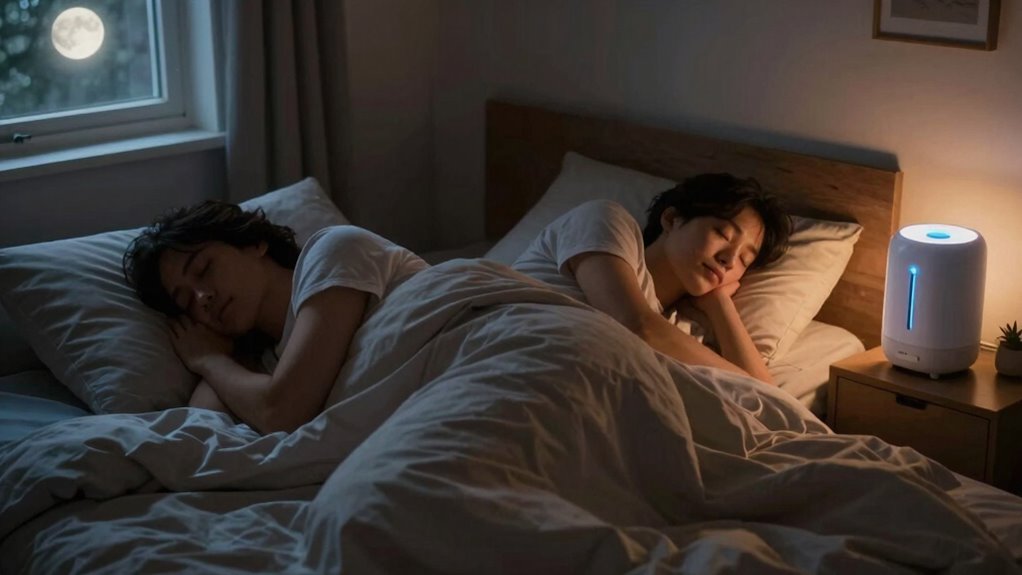

Balancing temperature and light with your partner can be tricky, but small compromises make a big difference. Try adjusting the thermostat slightly or use separate blankets to satisfy different warmth preferences. For light issues, blackout curtains or eye masks can create a darker environment for one person, while adjustable lamps help those with different schedules. Communicating openly about your needs and experimenting with these solutions can lead to more peaceful, restful nights together—you’ll find more tips and tricks if you continue exploring.

Turn your quiet moments into listening time
- Thousands of audiobooks, podcasts and originals
- Listen on your phone, tablet or Echo — also offline
- Cancel anytime
Key Takeaways
- Communicate openly about individual temperature and light preferences to identify practical adjustments.
- Use separate blankets, adjustable thermostats, or cooling/heating pads for personalized comfort.
- Incorporate blackout curtains, eye masks, or dimmable lighting to create a sleep-friendly environment.
- Establish consistent bedtime routines that accommodate both partners’ needs for a smoother transition to sleep.
- Foster cooperation by making small, respectful adjustments to temperature and lighting for mutual comfort.

Sleeping peacefully alongside a partner can sometimes be more challenging than it seems. Small differences in your sleep environment can turn a restful night into a series of restless tosses and turns. One of the biggest factors is temperature. You might prefer a cozy, warmer bed, while your partner sleeps better in a cooler room. This mismatch can cause frequent disruptions, making it hard for either of you to get the quality sleep you need. To find a compromise, try adjusting the thermostat or using separate blankets. Some couples find that a weighted blanket or a cooling pad helps create a comfortable sleep environment for both. It’s also worth considering individual preferences about sleepwear, as this can influence how warm or cool you feel throughout the night. Communicating openly about your needs is essential; don’t assume your partner’s comfort levels are the same as yours.
Small sleep environment differences can disrupt rest; find compromises like separate blankets and adjustable settings for better shared sleep.
Another key aspect is establishing effective bedtime routines that set the stage for good sleep. When your routines are aligned, it helps signal to your body that it’s time to wind down, reducing the chances of sleep disturbances caused by late-night activities or distractions. For example, if one of you likes to read or meditate before bed while the other prefers watching TV, it could lead to conflicting routines that interfere with sleep quality. Finding a common routine—like dimming the lights, avoiding screens an hour before bed, or doing gentle stretches—can make a big difference. Consistency is vital. Going to bed and waking up at the same time every day helps regulate your internal clock, making it easier to fall asleep and stay asleep through the night.
Light plays a significant role in your sleep environment, too. Bright lights or inconsistent lighting patterns can throw off your circadian rhythm, especially if one partner stays up late or wakes early. Using blackout curtains or eye masks can help create a dark, cozy environment conducive to sleep. If you and your partner have different sleep schedules, consider separate light controls or adjustable lamps so each of you can customize your space without disturbing the other. Additionally, understanding the impact of sleep environment factors like sleep environment and how to optimize them can significantly improve your sleep quality.
Balancing these factors—temperature, light, and routines—requires patience and cooperation. It’s about understanding each other’s needs and making small adjustments that improve your shared sleep environment. When you’re both committed to creating a peaceful, comfortable space, it becomes easier to navigate partner sleep differences and enjoy restful nights together. After all, good sleep isn’t just a solo pursuit; it’s a shared journey that benefits both of you in the long run.
As an affiliate, we earn on qualifying purchases.
Frequently Asked Questions
How Can Couples Balance Differing Sleep Schedules Effectively?
To balance differing sleep schedules, you can establish separate bedtime routines that suit each person’s needs, helping both of you wind down comfortably. Use blackout curtains or sleep masks to minimize light disruptions, and keep the room at a comfortable temperature for each partner. Be mindful of sleep allergies by cleaning bedding regularly and avoiding allergens. Communicating openly about your sleep preferences guarantees mutual understanding, making it easier to find effective compromises.
What Are the Best Sleep Apps for Couples?
You should try sleep apps like Sleep Cycle, Pillow, or Calm, which offer sleep tracking and relaxation techniques to improve your rest. These apps help you monitor your sleep patterns, identify disruptions, and incorporate calming sounds or guided meditation to promote better sleep for both partners. By using them consistently, you can better understand each other’s sleep needs and create a more peaceful, restful environment together.
How Does Sleep Position Impact Partner Comfort?
Your sleep position greatly impacts your partner’s comfort by influencing sleep posture and movement coordination. If you tend to toss and turn, it can disturb their rest. Choosing a sleep posture that minimizes movement and maintains a stable position helps both of you stay comfortable and undisturbed. Side sleeping or using supportive pillows can enhance movement coordination, promoting a more restful night for both partners.
Can Shared Sleep Environments Improve Relationship Quality?
Sharing a bed is like weaving two threads into a stronger fabric—enhancing your relationship with intimacy and connection. When you customize your sleep environment, adjusting temperature and light, you create a sanctuary where both partners feel safe and cherished. This shared space fosters trust, reduces conflicts, and deepens bonds, proving that thoughtful sleep environment choices can transform nightly routines into a foundation for a healthier, happier relationship.
Are There Specific Sleep Strategies for Couples With Different Circadian Rhythms?
Yes, you can adopt sleep strategies tailored for couples with different circadian rhythms. Adjust your sleep environment by setting separate bedtimes or using blackout curtains to optimize light levels. Establish bedtime routines that respect each other’s schedules, like winding down separately before shared sleep. These steps help you both get quality rest, improve your relationship, and accommodate individual sleep needs without sacrificing intimacy or comfort.
As an affiliate, we earn on qualifying purchases.
Conclusion
Imagine sharing a bed like two musicians trying to tune their instruments together. Even small differences in temperature or light can create discord, but with some patience and adjustments, harmony is possible. Studies show that couples who compromise on sleep conditions experience better rest and relationship satisfaction. Remember, just like a symphony, it’s about finding the right balance—sometimes tuning your partner’s preferences can turn discord into a peaceful, restful melody for both of you.
As an affiliate, we earn on qualifying purchases.
As an affiliate, we earn on qualifying purchases.
Fall Picks
fall essentials
As an affiliate, we earn on qualifying purchases.