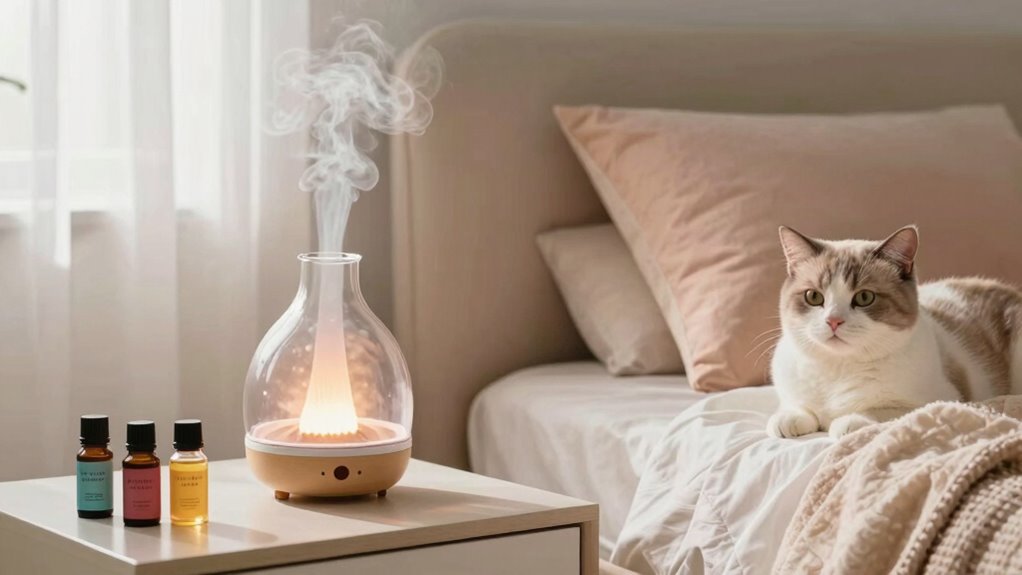

When using essential oils in bedrooms with pets, always prioritize safety by following manufacturer guidelines, diluting oils properly, and diffusing in well-ventilated areas. Keep diffusers out of your pet’s reach and avoid high concentrations to prevent respiratory issues or toxicity. Opt for pet-safe oils like lavender and chamomile, and monitor your animals for any signs of distress. To guarantee you’re taking all necessary precautions, discover how to keep your pets safe while enjoying the benefits of aromatherapy.
Key Takeaways
- Use pet-safe essential oils like lavender and chamomile, avoiding toxic ones such as eucalyptus and citrus.
- Follow manufacturer guidelines for dilution, duration, and placement to prevent excessive airborne oil concentrations.
- Keep diffusers out of pets’ reach and in well-ventilated areas to minimize inhalation and skin contact risks.
- Monitor pets for signs of distress like coughing, sneezing, or lethargy, and remove diffuser immediately if symptoms appear.
- Consult a veterinarian before diffusing essential oils in bedrooms to ensure safety for your specific pets.
Are you aware of the potential risks associated with using essential oils? Many people love diffusing their favorite scents to create a calming bedroom environment, but it’s crucial to understand the importance of diffusing safety, especially when pets are around. Essential oils are concentrated substances, and while they can enhance your space, improper use or exposure can pose health risks for your animals. Pets can be particularly sensitive to certain oils, even in small amounts, so knowing how to protect them is vital.
When it comes to diffusing safety, the key is moderation and awareness. Always follow the manufacturer’s guidelines for dilution and duration. Using too much oil or diffusing for extended periods can lead to overwhelming concentrations of airborne particles, which might irritate your pet’s respiratory system or cause other health issues. Make sure your diffuser is placed in a well-ventilated room and not directly in your pet’s usual resting area. This way, you minimize the risk of pet exposure to high concentrations of essential oils, which can cause symptoms like coughing, sneezing, or lethargy.
Pet exposure to essential oils doesn’t just happen through inhalation; some oils can be absorbed through the skin or ingested if pets lick or nibble on diffusers or nearby surfaces. That’s why it’s vital to keep diffusers out of reach of animals and to be vigilant about any signs of distress. If you notice your pet coughing, pawing at their face, or displaying unusual behavior, it’s best to remove the diffuser and seek veterinary advice promptly.
Another aspect of diffusing safety involves choosing pet-safe oils. Not all essential oils are safe for animals—lavender and chamomile tend to be safer options, but many oils like tea tree, eucalyptus, and citrus oils are known to be toxic to pets. Always research thoroughly or consult with a veterinarian before diffusing any oil in a space shared with pets. Remember, even oils deemed safe can become problematic if used improperly or in high doses.
Frequently Asked Questions
Are Certain Essential Oils Safe for Use Around All Types of Pets?
Certain essential oils are not safe for all pets due to potential toxicity and pet allergy awareness. You should avoid using oils like tea tree, eucalyptus, and citrus around cats and dogs, as they can be toxic. Always research each oil’s safety, consult your veterinarian, and consider your pet’s specific allergies. This helps prevent accidental poisoning and guarantees a safe environment for your furry friends.
How Can I Detect if My Pet Reacts Negatively to Essential Oils?
Imagine your pet sniffing the air, suddenly sneezing or pawing at their face—that’s a sign they might react negatively. You should watch for pet allergy symptoms like difficulty breathing, vomiting, or unusual behavior changes such as hiding or agitation. Keep a close eye after using essential oils, and if you notice these signs, remove the oils promptly and consult your veterinarian to guarantee your pet’s safety.
Can Essential Oils Be Diffused Overnight in a Pet-Friendly Bedroom?
You should avoid diffusing essential oils overnight in a pet-friendly bedroom because pet allergies and sensitivities can cause reactions. Even low oil concentrations might trigger issues, especially if your pet has pre-existing sensitivities. It’s safer to diffuse only for short periods and monitor your pet closely. If you notice any signs of discomfort, stop immediately. Always prioritize your pet’s health and consult a vet if you’re uncertain.
What Are the Safest Methods to Apply Essential Oils in a Pet Household?
You can keep your pets safe by choosing diffusion techniques that minimize risks, like using smaller diffusers in well-ventilated areas and diffusing for limited periods. For application methods, dilute essential oils properly and avoid direct skin contact, especially with pets. Always opt for pet-safe oils and consult a veterinarian for guidance. This approach guarantees your household enjoys the benefits without compromising your pets’ health.
Are There Specific Essential Oils to Avoid in Bedrooms With Small Children and Pets?
Sure, you should definitely avoid essential oils like eucalyptus, tea tree, and cinnamon in bedrooms with small children and pets—ironic, isn’t it? These oils pose pet allergy considerations and can be irritating even when diluted properly. To stay safe, always use essential oil dilution and keep oils out of reach. Remember, just because it’s natural doesn’t mean it’s safe for everyone, especially your little ones and furry friends.
Conclusion
As you breathe in the calming scents of your bedroom, remember to keep safety in mind, especially with pets nearby. Imagine the gentle aroma swirling through the air, creating a peaceful sanctuary—yet, a single cautious step guarantees that this haven remains safe for everyone. By choosing and using essential oils thoughtfully, you protect your loved ones while enjoying nature’s soothing touch. Turn your space into a safe, tranquil retreat where both you and your pets can rest peacefully.