
To manage nighttime screen time effectively, set limits through your device’s parental controls or screen management features. Enable night mode and blue light filters to soften your display and support better sleep. Use Do Not Disturb or Focus modes to block notifications during essential hours. Schedule auto-shutdown times and bedtime reminders to guarantee you disconnect on time. For extra control, explore third-party apps that let you customize restrictions and monitor use—discover more ways to create healthier habits.

Turn your quiet moments into listening time
- Thousands of audiobooks, podcasts and originals
- Listen on your phone, tablet or Echo — also offline
- Cancel anytime
Key Takeaways
- Use device’s parental controls or screen management features to set strict nightly limits and schedules.
- Activate night mode and blue light filters to reduce eye strain and improve sleep quality.
- Enable Do Not Disturb and Focus Modes to block notifications during sleep hours.
- Schedule auto-shutdown and bedtime reminders to disconnect devices automatically at night.
- Utilize third-party apps for customized controls, remote management, and activity monitoring during evening hours.
Products Worth Considering

Philips Hue Bridge Pro Smart Lighting Hub

Samsung 85-Inch M70H Series Mini LED 4K Smart TV (2026)

Dyson V8 Cordless Vacuum
As an affiliate, we earn on qualifying purchases.
Setting Up Screen Time Limits on Your Devices
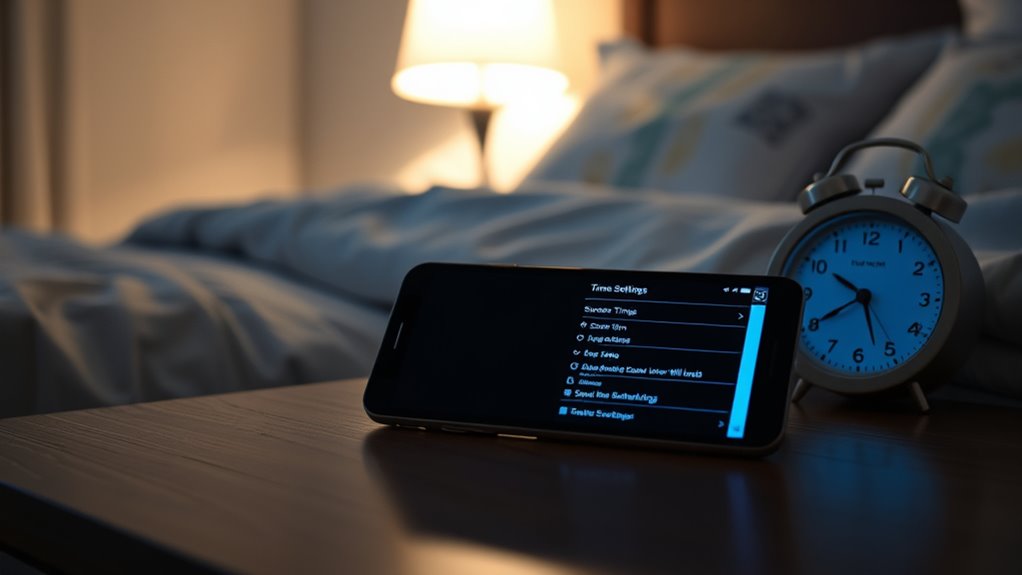
To effectively manage your child’s nighttime screen use, you need to set clear screen time limits on their devices. Start by exploring the device’s built-in parental controls or screen time management features. Most smartphones and tablets let you specify daily usage caps or schedule specific times when screens are off-limits. You can also customize restrictions for certain apps or websites to prevent late-night access. Be consistent in enforcing these limits, and communicate the reasons behind them to your child. Make sure the limits are reasonable and align with your family’s routines. Regularly review and adjust the settings as needed, especially if your child’s needs or routines change. Incorporating local automation features can help enforce these limits seamlessly across devices. Utilizing advanced technology within these systems can further enhance their effectiveness and adaptability. Implementing screen time limits effectively can significantly reduce reliance on willpower and promote healthier habits. Clear boundaries help create a healthy balance and reduce reliance on willpower, especially when combined with behavioral strategies. Additionally, understanding the different cookie categories and managing cookie preferences can improve your overall device control and privacy management.
Enabling Night Mode and Blue Light Filters

After setting screen time limits, it’s important to address the impact of screens on your child’s sleep quality. Enabling night mode and blue light filters can make a real difference. These settings reduce blue light exposure, which interferes with melatonin production and disrupts sleep. By activating night mode, you create a warmer, softer display that’s easier on the eyes. Here are four reasons to enable these features:
- Enhances sleep quality by minimizing disruptive light.
- Reduces eye strain during nighttime use.
- Supports healthy circadian rhythms for better rest.
- Prepares the mind for sleep, making it easier to wind down. Additionally, understanding how light exposure management like lavender and eucalyptus can promote relaxation can further improve your child’s sleep environment. Incorporating sleep-friendly practices such as maintaining a consistent bedtime routine and creating a calming environment can also support restful sleep. Using screen settings that limit blue light exposure is a simple step to help your child transition more smoothly into sleep. Implementing these simple adjustments, including blue light reduction strategies, can help your child sleep more peacefully and wake up refreshed.
Utilizing Do Not Disturb and Focus Modes
Utilizing Do Not Disturb and Focus Modes helps minimize distractions during your child’s bedtime and study time. By activating Do Not Disturb, you prevent notifications from interrupting sleep or focus, creating a peaceful environment. Focus Modes allow you to customize which apps and contacts can send alerts, ensuring your child isn’t tempted by social media or games. Setting these modes before bed helps establish boundaries, encouraging your child to wind down without constant interruptions. These features also reduce the urge to check devices, supporting healthier screen habits. You can schedule Focus Modes to turn on automatically at bedtime, making it easier to stick to routines. Overall, leveraging these settings promotes better sleep quality and concentration, making screens less tempting and more manageable during critical times. Additionally, understanding the role of privacy management helps you configure device settings to protect your child’s personal information while using these modes. Incorporating digital boundaries further enhances your child’s ability to develop healthier screen habits and maintain focus. Properly managing these features also helps prevent unwanted interruptions, creating a more consistent and calming environment for your child’s nightly routine. Understanding how device settings interact with these modes can optimize their effectiveness and ensure your child’s safety.
Scheduling Auto-Shutdown and Bedtime Reminders
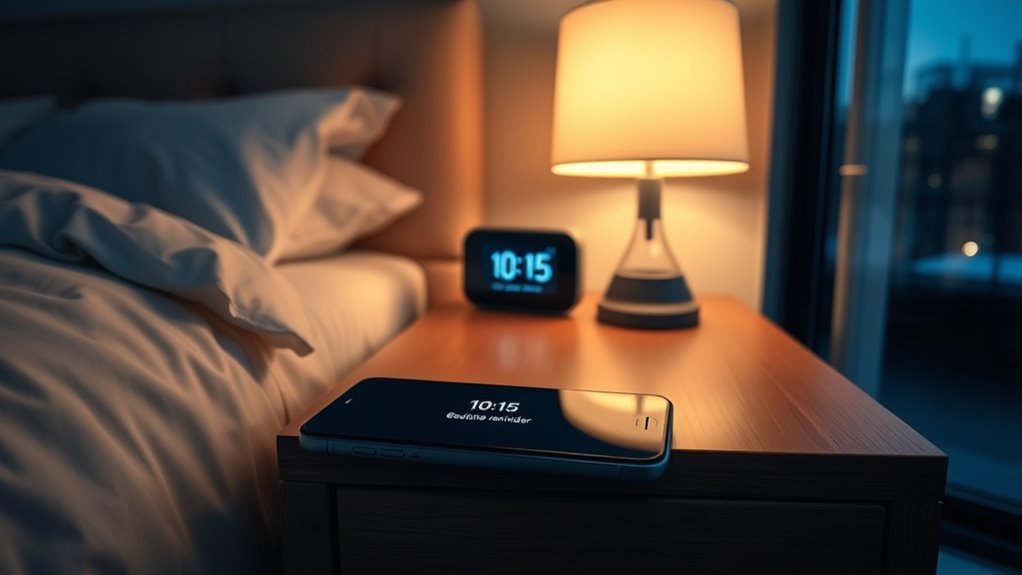
Scheduling auto-shutdown and bedtime reminders helps reinforce your child’s screen routines by prompting them to disconnect at the right times. This feature guarantees screens turn off automatically, reducing the temptation to stay up late. It also acts as a gentle nudge, helping your child develop healthy habits without constant nagging. Incorporating connected devices can further enhance these routines by enabling real-time monitoring and adjustments. Leveraging energy-efficient cloud solutions can support this process by securely managing data and providing seamless updates across devices. Additionally, utilizing smart scheduling tools allows for more personalized and adaptive routines that respond to your child’s sleep patterns. Implementing automatic shutdown features ensures the routines are consistent and reliable, fostering healthier screen habits over time. Using user-friendly interfaces can make it easier for both parents and children to customize and manage these settings effectively.
Using Third-Party Apps for Enhanced Control

Third-party apps offer powerful tools to give you more control over your child’s screen time at night. These apps let you set customized schedules, block distracting apps, and restrict internet access, even when built-in device controls fall short. With features like remote management, you can adjust settings from your phone without needing access to your child’s device. Many apps also provide activity reports, helping you monitor usage patterns and identify potential issues. Some popular options include Qustodio, Norton Family, and Bark, each offering different levels of control and monitoring capabilities. By using these tools, you can enforce limits more effectively and reduce arguments or temptations around bedtime. Third-party apps empower you to create a safer, more structured environment for your child’s nighttime screen habits.
Frequently Asked Questions
Can Screen Time Settings Be Customized for Different Apps?
Yes, you can customize screen time settings for different apps. Most devices let you set limits or schedules for individual apps, so you can restrict social media, gaming, or streaming separately. Simply go into your device’s settings, find the screen time or app management section, and adjust the limits for each app to match your needs. This way, you control your usage more precisely without relying solely on willpower.
How Do I Prevent Children From Bypassing These Controls?
You can prevent children from bypassing controls by setting strong, unique passcodes on device restrictions and ensuring only you know them. Enable features like app lock, disable easy access to settings, and regularly update passwords. Use parental control apps with remote management, monitor device activity, and have open conversations about responsible usage. Consistent enforcement and keeping controls updated make it harder for children to find workarounds.
Do These Settings Affect Device Performance or Battery Life?
These settings don’t substantially impact your device’s performance or battery life. In fact, a recent study shows they may even extend battery life slightly by reducing background activity. You might notice minimal effects, but overall, enabling bedtime controls won’t slow down your device or drain your battery faster. Instead, they help you manage screen time more effectively without sacrificing device performance or longevity.
Are There Specific Settings for Blue Light Reduction on Older Devices?
Yes, older devices often have built-in blue light reduction settings. You can typically find these options in the display or brightness settings menu, sometimes labeled as “Night Mode” or “Blue Light Filter.” If your device doesn’t have these features, you can download third-party apps that reduce blue light emissions. Activating these settings helps protect your eyes and improve sleep quality without impacting device performance or battery life considerably.
How Can I Monitor My Sleep Quality Related to Screen Time?
You can monitor your sleep quality related to screen time by using sleep tracking apps or device features like Apple’s Sleep app or Fitbit’s sleep tracker. These tools analyze your sleep patterns and can correlate disruptions with screen usage before bedtime. Keep a journal to note screen habits and sleep quality, or set reminders to limit screen time, helping you see how your habits impact your rest and adjust accordingly.
Conclusion
By setting limits, enabling night modes, activating focus features, scheduling shutdowns, and exploring third-party apps, you create an all-encompassing approach to reducing screen time at night. These tools work together to protect your sleep, improve your well-being, and restore balance to your evenings. Embrace these settings not just as barriers, but as habits that foster healthier routines, better rest, and a more mindful relationship with your devices. Ultimately, it’s about making intentional choices for your health and peace of mind.