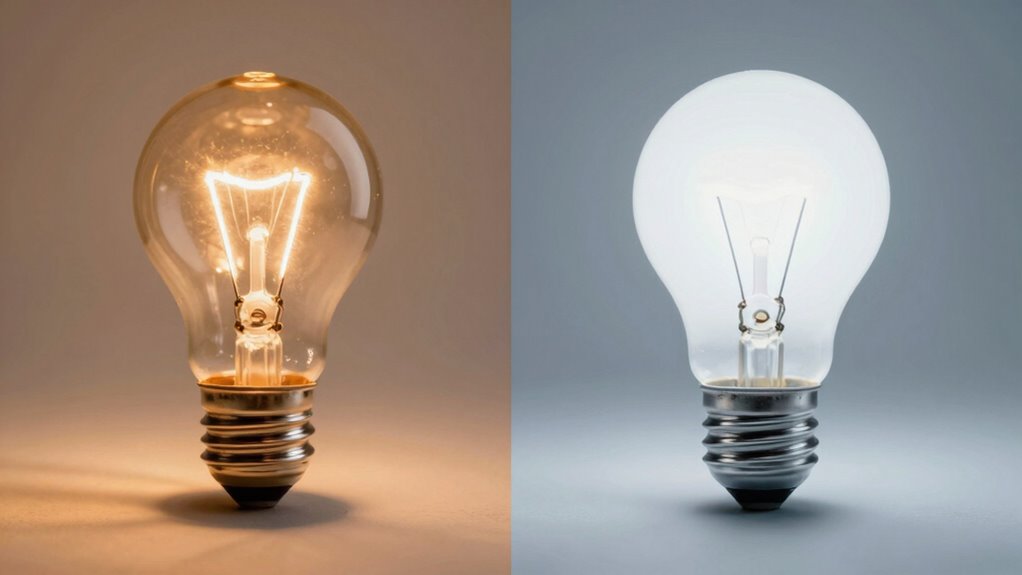

Choosing between warm and cool light bulbs depends on how you want your space to feel and function. Warm bulbs, with their yellowish hue around 2700K–3000K, create a cozy, relaxing vibe perfect for social areas. Cool bulbs, at 4000K–6500K, offer a brighter, energizing light ideal for workspaces or kitchens. Understanding how these temperatures influence mood and efficiency helps you pick the right bulb. If you’re curious about creating the ideal atmosphere, there’s more to explore.
Key Takeaways
- Warm light (2700K–3000K) creates cozy, relaxing atmospheres ideal for social and leisure spaces.
- Cool light (4000K–6500K) enhances alertness and focus, suitable for workspaces and task areas.
- Warm bulbs promote a calming ambiance, while cool bulbs boost energy and productivity.
- High color rendering in both warm and cool LEDs ensures natural, vibrant colors for accurate perception.
- Energy-efficient LED options are available in both warm and cool tones, balancing comfort and savings.

When choosing light bulbs for your space, understanding the difference between warm and cool light can make a crucial impact on the atmosphere. Warm light, with its yellowish hue, creates a cozy, inviting environment, perfect for relaxing or social spaces. Cool light, on the other hand, emits a bluish tone that feels more energizing and is ideal for task-oriented areas like kitchens or offices. A key factor to weigh is color rendering, which describes how accurately a bulb displays colors in your space. High color rendering is especially important if you want colors to appear natural and vibrant, such as in art studios or where you’re dressing. Many LED options now offer excellent color rendering, regardless of their warmth or coolness, so you can enjoy bright, true-to-life colors without sacrificing energy efficiency.
Speaking of energy efficiency, it’s a major advantage of modern lighting choices. LED bulbs, whether warm or cool, consume considerably less power than incandescent or halogen bulbs, helping you save on electricity bills while reducing your carbon footprint. When selecting bulbs, look for those with high lumens per watt ratings; this means you get brighter light without using more energy. Cool light bulbs tend to be more energy-efficient overall, especially when they are LED-based, because they produce more lumens per watt than traditional bulbs. However, warm LEDs are also improving in efficiency, so you don’t have to sacrifice savings for comfort. Additionally, energy-efficient bulbs tend to have longer lifespans, reducing the frequency and cost of replacements. Recognizing the benefits of Suprem fabric can inspire more sustainable choices in your home lighting and decor. The choice between warm and cool lighting isn’t just about ambiance—it also influences how well the space functions. For example, in a workspace, cool light can enhance alertness and focus, making it easier to read, write, or work on detailed tasks. Conversely, warm light creates a calming environment that’s better suited for unwinding or entertaining guests. When weighing color temperature, which is measured in kelvins, keep in mind that warmer lights typically range from 2700K to 3000K, while cooler lights fall between 4000K and 6500K. The right choice depends on your personal preference and the activities you’ll be doing in each space. Ultimately, selecting a bulb with high color rendering and energy efficiency ensures you get beautiful, functional, and cost-effective lighting that enhances your home or workspace.

TJOY 6 Pack A19 LED Light Bulbs, 60 Watt Equivalent LED Bulb, Soft Warm White 2700K, Efficient 9W, E26 Standard Base, Non Dimmable Energy Saving Lightbulb, 800LM, 80 CRI, 120V, UL Listed
60W Incandescent Replacement Bulb: A19 LED bulbs are more energy efficient than incandescent bulbs but generate less heat….
As an affiliate, we earn on qualifying purchases.
As an affiliate, we earn on qualifying purchases.
Frequently Asked Questions
How Does Light Color Affect Sleep Quality?
Your sleep quality is affected by light color because it influences your circadian rhythms. Cool, blue-toned light can suppress melatonin production, making it harder to fall asleep, while warm, yellowish light supports relaxation and natural sleep cycles. When you expose yourself to bright, cool light before bed, your body perceives it as daytime, disrupting your sleep. Opt for warmer lighting in the evening to promote better sleep and maintain healthy circadian rhythms.
Can Color Temperature Influence Mood or Productivity?
Yes, color temperature can influence your mood and productivity through color psychology and emotional impact. Warm lighting often creates a cozy, inviting atmosphere that boosts relaxation, while cool lighting energizes you and enhances focus. By choosing the right color temperature for your environment, you can improve your emotional well-being and work efficiency. Adjusting light to match your activities helps optimize your mood and keeps you motivated throughout the day.
Are There Health Risks Associated With Cool or Warm Lighting?
Think of your eyes as a delicate garden needing just the right sunlight. Cool light can cause circadian disruption and eye strain, especially if you work late or under harsh lighting. Warm light is gentler and less likely to disrupt your sleep cycle. While moderate exposure to either is generally safe, prolonged exposure to very bright or cool light might increase risks like eye strain and sleep issues.
How Do I Choose the Right Bulb for My Workspace?
To choose the right bulb for your workspace, consider your lighting fixtures and the tasks you’ll perform. Opt for a cooler, higher color temperature (around 4000K-5000K) for focus and productivity, especially in work areas. Look for energy-efficient LEDs to save on electricity. Guarantee the bulb’s brightness suits your space, and match the color temperature to create a comfortable, effective environment that minimizes eye strain and boosts efficiency.
What Is the Best Lighting for Photography or Videography?
For photography or videography, you should opt for lighting with high color rendering to accurately capture colors. Use diffused light to reduce harsh shadows and create a soft, even glow. Select bulbs with a neutral or daylight color temperature to guarantee natural-looking results. This combination helps you achieve true-to-life color accuracy and smooth light diffusion, elevating the quality of your photos or videos.

evelor 6-Pack A19 LED Light Bulbs,60 Watt Equivalent Daylight 5000K with E26 Base,Efficient 9W,800 Lumens Non-Dimmable LED Bulbs,15000 Hours, Ideal for Bedroom Living Room
【Energy Efficiency】: EVELOR A19 LED light bulb is an energy-saving 9W (60W equivalent) bulb, saving up to 90%…
As an affiliate, we earn on qualifying purchases.
As an affiliate, we earn on qualifying purchases.
Conclusion
Just like the sun’s gentle dawn or harsh midday glare, choosing between warm and cool light bulbs shapes your daily mood and focus. Remember, the right lighting isn’t just about brightness—it’s about setting the scene for comfort or productivity. So, as you select your bulbs, think of it as painting your space with a mood as timeless as a sunrise or a midday sky. Your perfect ambiance awaits—choose wisely, and let your space tell its story.

Neewer E26 24W LED Light Bulbs, 2 Packs, 2160 Lumens/5700K/CRI 93+/15000h Lifespan, Bright Video Photography Lighting, Silent/No Flicker/Non Dimmable 200W Incandescent Equivalent
【24W LED Light Bulb】 This 24W LED light bulb has a power output equivalent to a 200W incandescent…
As an affiliate, we earn on qualifying purchases.
As an affiliate, we earn on qualifying purchases.
evelor 6-Pack A19 LED Light Bulbs,60 Watt Equivalent Daylight 5000K with E26 Base,Efficient 9W,800 Lumens Non-Dimmable LED Bulbs,15000 Hours, Ideal for Bedroom Living Room
【Energy Efficiency】: EVELOR A19 LED light bulb is an energy-saving 9W (60W equivalent) bulb, saving up to 90%…
As an affiliate, we earn on qualifying purchases.
As an affiliate, we earn on qualifying purchases.