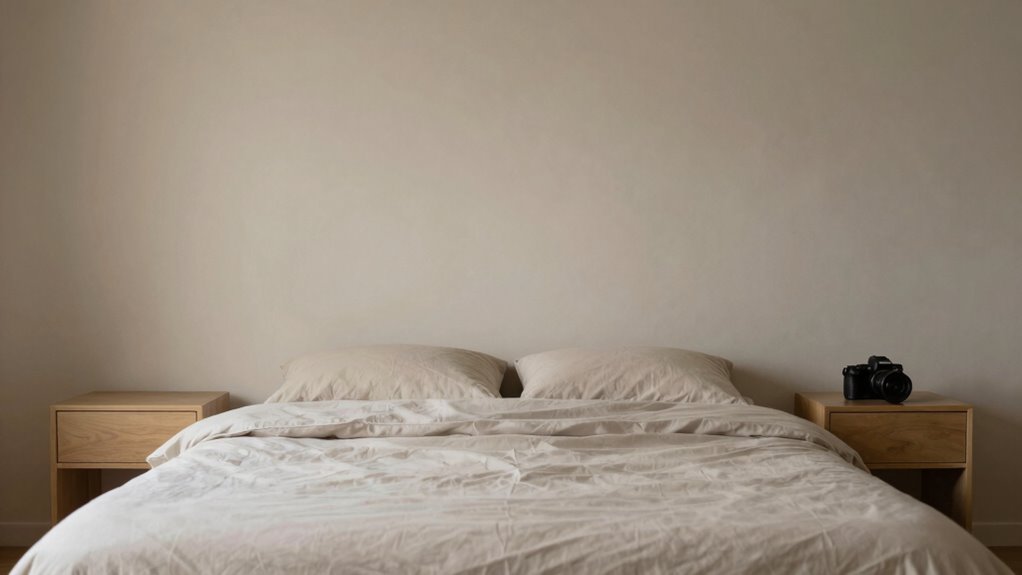

To create a calm bedroom, place your nightstands close to the bed but keep them simple and unobtrusive to avoid clutter. Make certain clear, unobstructed pathways from the door to the bed, along walls, and away from the center to promote openness. Use minimal decorative elements to reduce visual noise, and opt for soft, layered lighting. Choosing soothing colors reinforces tranquility. Keep these principles in mind, and you’ll find more tips to transform your space into a peaceful retreat.

Turn your quiet moments into listening time
- Thousands of audiobooks, podcasts and originals
- Listen on your phone, tablet or Echo — also offline
- Cancel anytime
Key Takeaways
- Place nightstands close to the bed with simple designs to enhance accessibility and reduce visual clutter.
- Keep pathways clear and central, avoiding obstruction to promote a sense of openness and ease of movement.
- Incorporate layered, dimmable lighting to create soft, relaxing illumination and prevent harsh or distracting brightness.
- Use calming, muted color schemes throughout to minimize visual noise and foster a tranquil atmosphere.
- Arrange furniture along walls and maintain a clean, organized space to support a peaceful, clutter-free environment.

Creating a calm bedroom starts with thoughtful layout choices that promote relaxation and tranquility. One of the most impactful aspects is how you arrange your nightstands, walkways, and overall visual flow. When designing your space, consider how lighting design and color schemes work together to foster serenity. The way you position your nightstands influences not only accessibility but also the room’s balance, so keep them close enough for convenience but not so close that they clutter the space. Choose nightstands that are simple in design, avoiding overly ornate or bulky pieces, which can add visual noise. A clean, uncluttered setup helps your mind relax as you prepare for sleep.
Paths within your bedroom should be clear and unobstructed. You want to move freely without maneuvering around furniture or feeling boxed in. A central pathway from the door to the bed should be wide enough to feel open, but not so broad that it feels empty. Keep larger furniture along walls to create a sense of order, and avoid placing items in the middle of the room that can break up the space and generate visual clutter. This helps your mind relax by providing a sense of spaciousness and simplicity. When planning your layout, think about how lighting can shape these paths. Soft, layered lighting—such as bedside lamps, wall sconces, or dimmable overhead fixtures—adds depth without overwhelming the senses. Proper lighting design ensures that you’re not distracted by harsh or uneven illumination, which can disturb your calm. Additionally, visual noise reduction through thoughtful arrangement can significantly enhance your sense of peace in the room.
Color schemes play a vital role in establishing a peaceful environment. Stick to calming hues like muted blues, gentle greens, warm neutrals, or soft grays. These colors are easy on the eyes and help reduce stress, making it easier to unwind. Avoid overly bright or contrasting shades, as they can create visual noise and keep your mind alert rather than relaxed. Consistent color schemes across your bedding, walls, and furniture promote harmony and visual cohesion. When combined with thoughtful lighting design, these colors will reinforce a tranquil atmosphere, making it easier to relax and fall asleep.
minimalist nightstands for bedroom
As an affiliate, we earn on qualifying purchases.
As an affiliate, we earn on qualifying purchases.
Frequently Asked Questions
How Can Lighting Affect Bedroom Calmness?
Lighting greatly impacts your bedroom’s calmness by setting the mood. You should use soft, ambient lighting to create a relaxing atmosphere, avoiding harsh overhead lights. Natural light during the day boosts your mood and helps regulate sleep, so keep windows unobstructed. At night, rely on warm, dim lamps or bedside lights to wind down peacefully. Proper lighting reduces visual noise, making your space feel more tranquil and inviting.
What Colors Promote a Restful Bedroom Environment?
Soft blues and gentle greens, unlike bold or bright hues, promote a restful bedroom environment. Color psychology shows these shades calm your mind and lower stress levels. When choosing paint, opt for muted, cool tones that create a soothing atmosphere. You want your space to feel peaceful, so steer clear of harsh reds or yellows that can energize rather than relax. Your paint selection sets the tone for tranquility.
How Does Clutter Impact Sleep Quality?
Clutter considerably impacts your sleep quality by increasing mental clutter, making it harder to relax. It creates visual distraction, which prevents your mind from winding down at night. When your bedroom is tidy, you reduce mental noise, helping you feel calmer and more prepared for restful sleep. Clearing clutter allows your brain to associate the space with relaxation, making it easier to fall asleep and stay asleep throughout the night.
What Are the Best Materials for Calming Bedding?
Think of calming bedding as a gentle stream—your textile textures and bedding colors create its flow. Opt for soft cotton or linen for a smooth, breathable feel, and choose soothing hues like pastels or neutrals to promote relaxation. These materials and colors work together, reducing sensory overload and fostering tranquility in your sleep space. Prioritize natural fibers and muted tones for a serene, restful environment.
How Can Soundproofing Improve Bedroom Tranquility?
Soundproofing considerably boosts your bedroom tranquility by reducing external noise. You can install acoustic panels on walls to absorb sound and minimize echoes, creating a calmer environment. Additionally, applying door seals prevents noise leaks through gaps, ensuring your space stays quiet. Together, these measures help you rest peacefully, block out disturbances, and maintain a serene atmosphere perfect for relaxation and better sleep.
dimmable layered bedroom lighting
As an affiliate, we earn on qualifying purchases.
As an affiliate, we earn on qualifying purchases.
Conclusion
Creating a calm bedroom isn’t just about aesthetics; it’s about designing a space that promotes peace and relaxation. The theory that clutter and visual noise increase stress holds true—research shows a tidy, well-organized room can reduce anxiety. By thoughtfully arranging nightstands, clear pathways, and minimizing distractions, you support your mental well-being. Trust the science: a calm environment truly helps you unwind, making your bedroom a true sanctuary.
calming color schemes for bedroom
As an affiliate, we earn on qualifying purchases.
As an affiliate, we earn on qualifying purchases.
As an affiliate, we earn on qualifying purchases.
Halloween Picks
halloween
As an affiliate, we earn on qualifying purchases.