
Technology as a design element transforms how you create and experience spaces, blending innovative materials, smart lighting, and immersive environments. You can incorporate responsive surfaces, adaptive lighting, and IoT-connected devices to craft dynamic, personalized experiences. Digital fabrication and AI-driven systems enable rapid customization and smarter decision-making. As technology evolves, it pushes design boundaries toward sustainability and interactivity. Keep exploring to discover how these innovations continue shaping the future of design in exciting ways.
Key Takeaways
- Technology enables dynamic, responsive surfaces and materials that transform visual and tactile experiences in design.
- Smart lighting and environmental systems create adaptable atmospheres, enhancing functionality and aesthetic appeal.
- Interactive and immersive environments use AR, VR, and IoT to deepen user engagement and facilitate real-time customization.
- Digital tools and automation streamline design processes, improve precision, and foster innovative, boundary-pushing creative solutions.
- Integration of advanced technologies influences cultural expression, sustainability, and ethical considerations within modern design practices.
The Evolution of Technology in Design
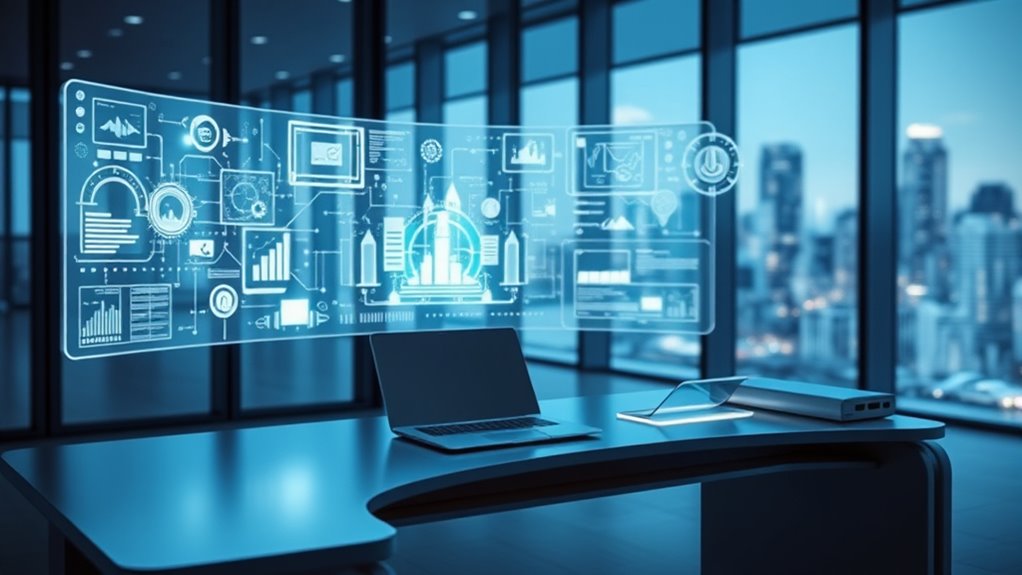
The evolution of technology in design has transformed the way creators approach their work, enabling new possibilities and pushing boundaries. Throughout history, technological advances have been shaped by historical influences, reflecting the cultural adaptations of each era. For example, the use of early tools and materials was influenced by available resources and societal needs, embedding cultural identity into designs. As technology progressed, innovations like the printing press or industrial machinery further influenced design styles and techniques. These shifts allowed designers to reinterpret traditional forms and incorporate new ideas inspired by their cultural contexts. Today, digital tools and automation continue to evolve, driven by cultural adaptations to modern life. This ongoing evolution highlights how technology and cultural influences together shape the creative landscape. Additionally, the integration of European cloud innovation supports sustainable and secure solutions, demonstrating how modern technology continues to influence design philosophy and practice. The ongoing development of home theatre projectors exemplifies how technological innovations extend into entertainment spaces, blending functionality with aesthetic appeal. Furthermore, emerging technologies such as virtual reality are opening up new immersive possibilities for designers, allowing for innovative conceptualizations and presentations. Moreover, advancements in sustainable technology emphasize the importance of environmentally conscious design practices in contemporary work.
Smart Materials and Their Impact on Aesthetics
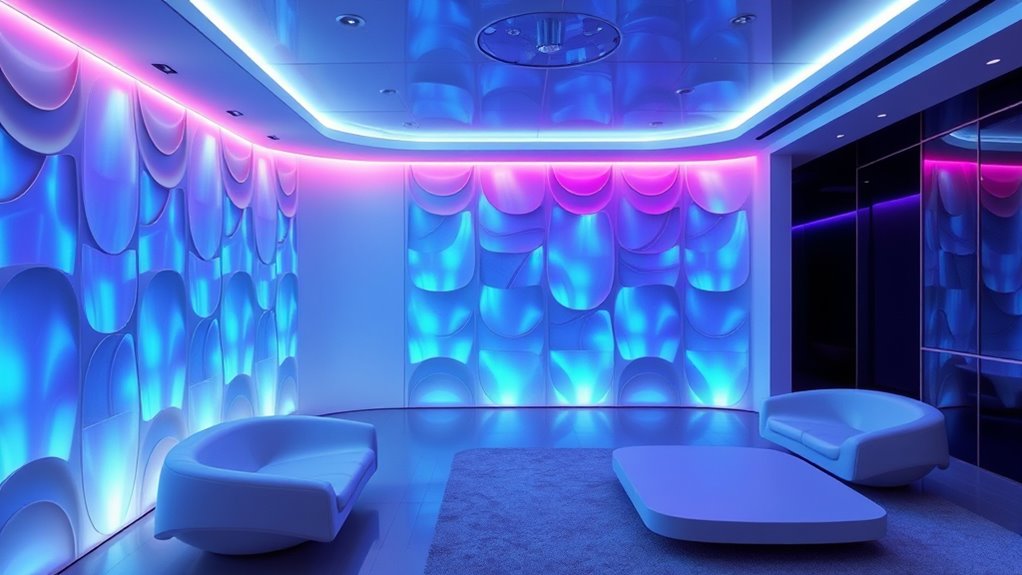
How do smart materials revolutionize aesthetics in design? They transform surfaces through their unique molecular architecture, allowing materials to respond dynamically to environmental changes. Adaptive surfaces, a key feature of smart materials, can shift color, texture, or transparency, creating visually striking effects that evolve over time. This technology enables designers to craft structures that are not static but fluid, engaging viewers with constantly changing appearances. Additionally, the molecular architecture of smart materials enables precise control over their responsive behaviors, opening new avenues for innovative design. Smart material properties blur the line between form and function, making aesthetics more interactive and personalized. They offer a seamless integration of technology and art, enhancing visual appeal while serving practical purposes. By harnessing molecular architecture, you’re able to push boundaries, creating innovative designs that captivate and inspire through their intelligent, adaptive qualities. Additionally, the integration of responsive surfaces allows for new levels of customization and user engagement in modern design. Incorporating material responsiveness further elevates the potential for creating dynamic, immersive environments that adapt to user needs and environmental conditions.
Interactive Environments: Blurring Boundaries
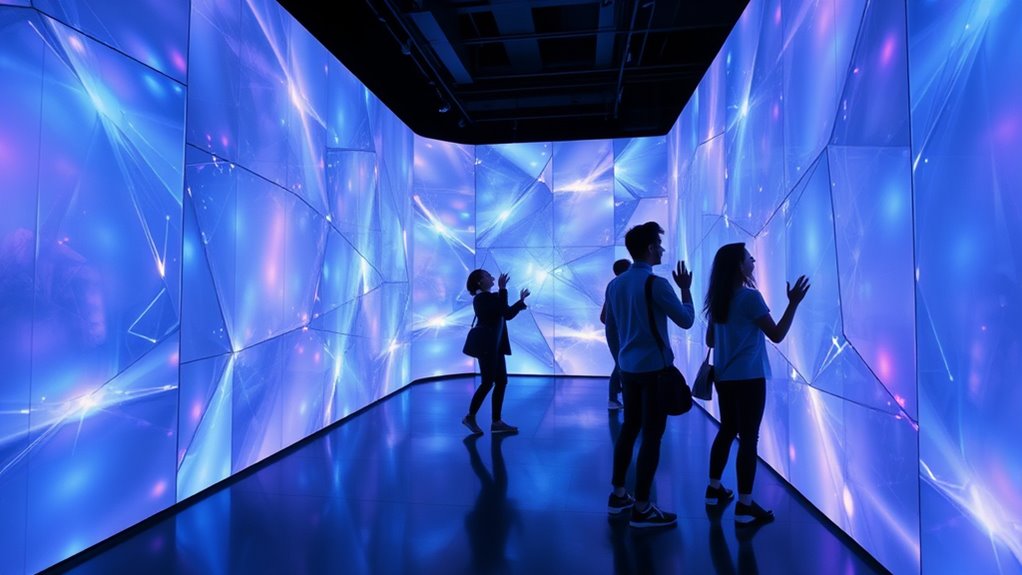
Interactive environments actively engage you by dissolving the traditional boundaries between spaces, technology, and human experience. They create seamless experiences that respond to your presence through features like haptic feedback, allowing you to feel textures or vibrations, enhancing immersion. Immersive sound surrounds you, deepening the sense of involvement and making interactions more visceral. These elements blur the lines between physical and digital worlds, encouraging exploration and emotional connection. As you move through these environments, technology adapts in real-time, making the space feel alive and responsive. This integration fosters a sense of agency and personalization, transforming ordinary spaces into dynamic, interactive landscapes. The focus shifts from passive observation to active participation, redefining how you perceive and engage with your surroundings. Additionally, navigation and mapping technologies enable these environments to adapt to your movements, ensuring a smooth and intuitive experience. Incorporating sensor technology further enhances responsiveness by collecting real-time data about your interactions, creating a truly immersive experience. To enhance these experiences, adaptive algorithms are employed to predict and respond to user behavior, making environments even more intuitive and engaging. Furthermore, integrating AI-driven personalization allows environments to tailor themselves to individual preferences, increasing comfort and engagement. Moreover, understanding the importance of user-centered design can help optimize interactive environments for a wide range of users and needs.
Technology-Driven Lighting Solutions
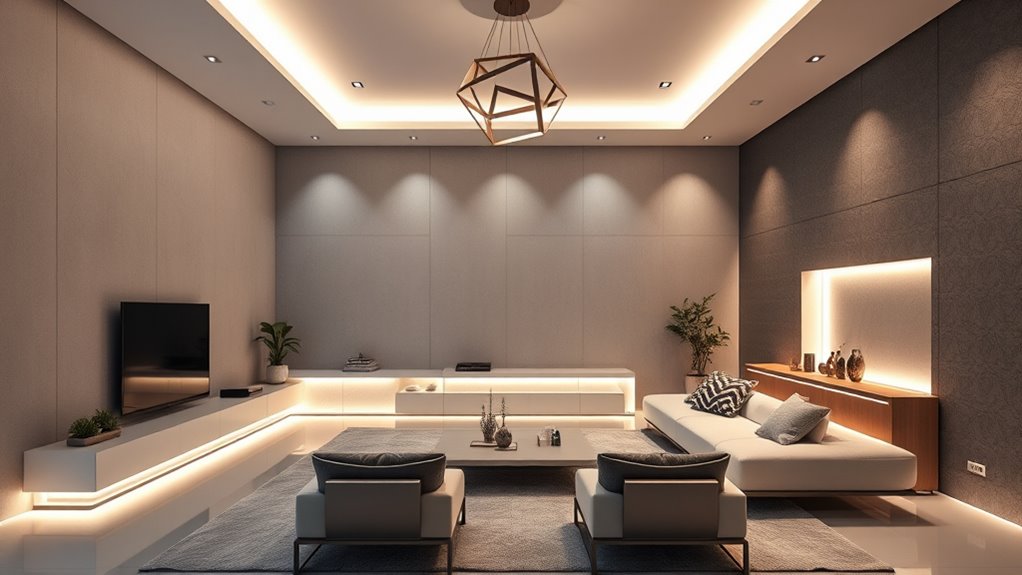
You can transform any space by integrating smart lighting systems that adapt to your needs automatically. Automated controls let you customize lighting schedules and moods effortlessly, enhancing both comfort and energy efficiency. Exploring these solutions reveals how technology can seamlessly elevate your environment’s functionality and ambiance. Additionally, future-focused design emphasizes integrating innovative technologies to create adaptable and sustainable living spaces. Incorporating reliable backup power solutions ensures your lighting remains operational during outages, maintaining safety and convenience at all times. Understanding safe installation practices can further enhance the reliability and security of your smart lighting systems, especially in complex electrical setups. Embracing smart home integration further enhances the cohesiveness and ease of managing your lighting environment. Considering thermal behavior can also help in designing lighting solutions that optimize energy use and prevent overheating of fixtures.
Smart Lighting Integration
Have you ever wondered how smart lighting transforms a space? It’s all about customization and adaptability. With smart lighting, you can easily adjust the color temperature to set the perfect mood, whether warm and cozy or cool and energizing. This flexibility enhances the ambiance and supports different activities. Additionally, fixture scalability allows you to expand or modify your lighting system as your needs evolve. You can start with a few key fixtures and seamlessly add more without hassle. Smart lighting integration makes it simple to create dynamic, responsive environments that reflect your style and functionality. By combining adjustable color temperature and scalable fixtures, you gain control over your space’s atmosphere, making it more comfortable and personalized. Understanding lighting system scalability can help you plan future upgrades more effectively. Exploring energy-efficient models can further optimize your setup while reducing costs. Incorporating automated controls can also improve convenience and energy savings. Moreover, choosing compatible devices ensures smooth integration with your existing smart home ecosystem.
Automated Lighting Controls
How do automated lighting controls enhance your space? They optimize energy efficiency by adjusting lighting based on occupancy and natural daylight, reducing waste and lowering energy bills. These controls also provide user personalization, allowing you to set preferences for brightness, color, and timing to suit your mood or activity. With smart sensors and timers, lighting adapts seamlessly to your routines, eliminating the need for manual switches. This creates a more comfortable, efficient environment that responds to your needs and minimizes energy consumption. Automated lighting controls integrate effortlessly with other smart systems, offering convenience and sustainability. Ultimately, they transform your space into a more intelligent, personalized, and energy-conscious environment.
Digital Fabrication and Customization
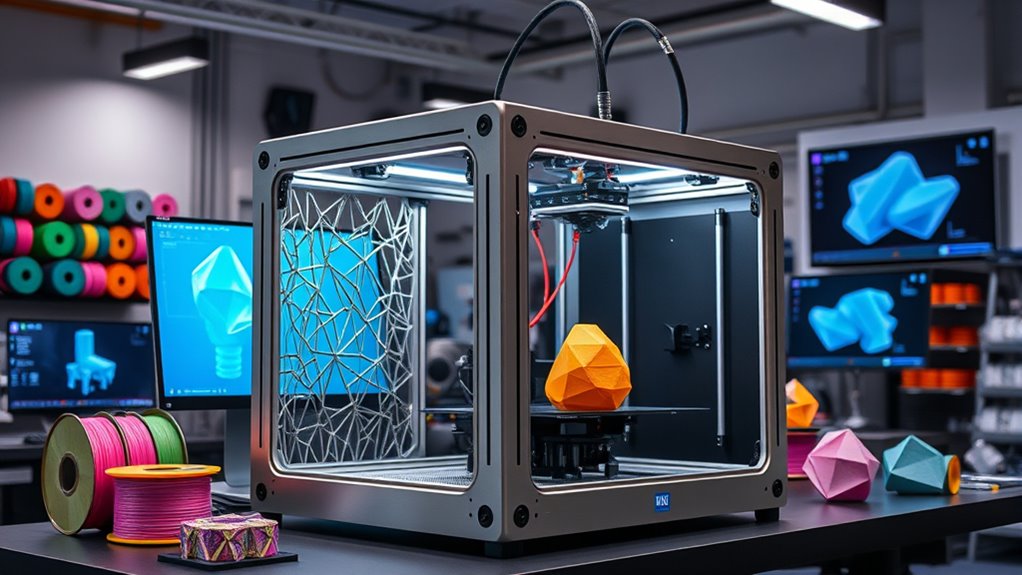
Digital fabrication has revolutionized the way designers approach customization, enabling rapid production of tailored solutions with precision and flexibility. You can now create complex, bespoke objects that meet exact specifications, thanks to technologies like 3D printing and CNC machining. This process allows for integrating innovative materials such as biodegradable composites, reducing environmental impact while maintaining durability. Additionally, haptic feedback technology can enhance user interaction with custom-designed prototypes, making adjustments easier and more intuitive. You can experiment with unique textures and forms that were previously impossible to produce. This approach empowers you to develop personalized products efficiently, supporting sustainable practices and innovative user experiences. Embracing digital fabrication transforms your design process, making customization faster, more precise, and environmentally conscious.
Augmented Reality and Virtual Reality in Design Processes
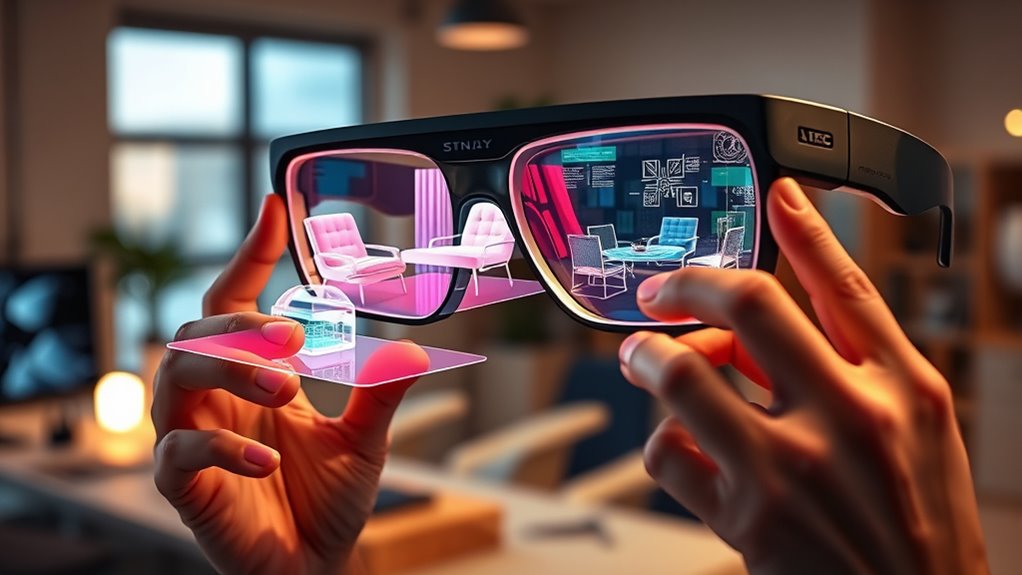
Did you know that augmented reality (AR) and virtual reality (VR) are transforming the way designers visualize and refine their ideas? These technologies enhance user interaction by immersing you directly within your designs, allowing you to explore concepts in real time. With AR, you can overlay digital models onto physical spaces, making adjustments on the fly and gaining a clearer understanding of spatial relationships. VR takes this further by creating fully immersive storytelling environments that let you walk through your designs as if they were real, fostering intuitive feedback and collaboration. This shift streamlines the design process, reduces errors, and helps clients better grasp complex ideas. Ultimately, AR and VR empower you to craft more engaging, precise, and innovative solutions.
Integrating IoT for Enhanced Functionality
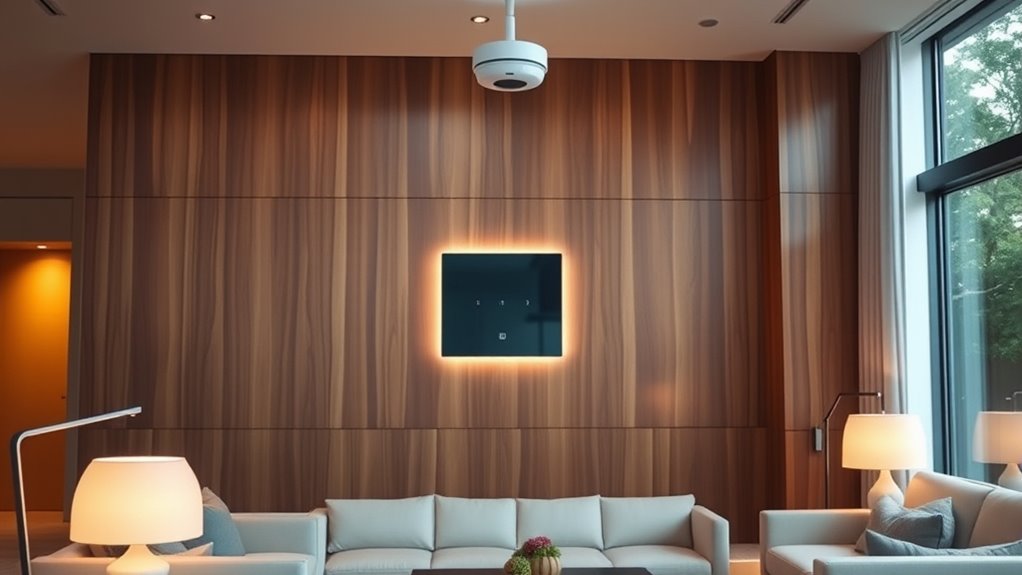
Integrating IoT into your design can create seamless connectivity solutions that keep everything interconnected effortlessly. You’ll also uncover intelligent automation features that make operations smoother and more responsive. By focusing on these aspects, you enhance both functionality and user experience in your projects.
Seamless Connectivity Solutions
Have you ever wondered how everyday devices communicate seamlessly to improve your experience? It’s thanks to seamless connectivity solutions that leverage wireless networks and device interoperability. These systems allow your smart devices to work together effortlessly, creating a cohesive environment. You benefit from reduced setup time and fewer compatibility issues, making your interactions smooth and intuitive.
- Devices automatically connect through reliable wireless networks
- Data flows seamlessly between gadgets, no manual effort needed
- Compatibility ensures all your devices work together without fuss
- Constant updates optimize performance and security
Intelligent Automation Features
By harnessing the power of IoT, intelligent automation transforms your smart environment into a responsive and efficient space. It seamlessly integrates devices with robotic aesthetics, creating a sleek, cohesive look that emphasizes function and style. Algorithmic ornamentation plays a key role, where complex algorithms optimize operations, from lighting to climate control, adapting to your preferences in real time. These features enable your environment to anticipate your needs, reducing manual adjustments and enhancing comfort. Automation systems communicate effortlessly, ensuring everything from security to energy management runs smoothly. This integration not only boosts convenience but also elevates the design, making technology an invisible yet crucial element that complements your space’s aesthetics. Ultimately, intelligent automation turns your environment into a harmonious blend of form and function.
Sustainable Technologies in Architectural Design

Sustainable technologies are transforming architectural design by making buildings more energy-efficient and environmentally friendly. You can incorporate renewable energy sources like solar panels and wind turbines to reduce reliance on fossil fuels. Using eco-friendly materials, such as recycled steel, bamboo, and low-VOC paints, minimizes environmental impact. These innovations help lower energy consumption and promote healthier indoor environments.
Sustainable design boosts energy efficiency and eco-friendliness with renewable materials and innovative technologies.
- Integrate solar thermal systems for heating and cooling
- Use green roofs to improve insulation and manage stormwater
- Install smart windows that adjust transparency based on sunlight
- Choose locally sourced, sustainable materials to cut down on transportation emissions
The Role of Data and Analytics in Space Planning

Advancements in data collection and analytics are reshaping how architects approach space planning, building on the eco-friendly innovations discussed previously. By leveraging predictive analytics, you can forecast space needs based on user behavior and occupancy patterns. Data visualization helps you interpret complex datasets, revealing insights that guide efficient layouts and resource allocation. These tools enable you to optimize space utilization, reduce waste, and enhance occupant experience. You can identify underused areas, anticipate future demands, and make informed decisions quickly. Incorporating real-time data ensures your designs remain adaptable and responsive. Here’s a visual overview of how data and analytics impact space planning:
| Data Collection | Analytics Techniques | Outcomes |
|---|---|---|
| Occupancy sensors | Predictive analytics | Optimized layouts |
| Usage patterns | Data visualization | Improved efficiency |
| Environmental data | Space utilization | Cost savings |
| User feedback | Trend analysis | Enhanced comfort |
| IoT devices | Scenario modeling | Informed design choices |
Future Trends: AI and Autonomous Design Systems

AI is transforming how you approach creativity and decision-making in design. Autonomous systems can now generate ideas and make choices without constant human input. This shift will redefine your role, making collaboration with technology more seamless than ever.
AI-Driven Creativity
How will AI-driven creativity reshape the future of design? You’ll notice that AI aesthetics and algorithmic artistry open new domains of possibility, pushing the boundaries of conventional design. AI tools can generate innovative visuals, inspiring fresh ideas and styles that blend human intuition with machine precision. This fusion accelerates the creative process and offers unique, often unexpected results. As a designer, you’ll experiment with algorithms that adapt to your input, creating personalized and dynamic designs.
- Generate diverse visual concepts effortlessly
- Explore novel styles through AI aesthetics
- Collaborate with machines to enhance creativity
- Push the limits of traditional design norms
Autonomous Design Decisions
As autonomous design systems become more sophisticated, they’re increasingly capable of making complex decisions without human intervention. These systems analyze vast amounts of data to optimize user experience, adapting designs in real-time based on user behavior. However, this raises important questions about design ethics—ensuring decisions align with societal values and avoid bias. You must consider how autonomous systems impact user trust and transparency, making sure users understand how their data influences design choices. While these systems can enhance efficiency and personalization, they also challenge traditional notions of human oversight. Balancing autonomous decision-making with ethical considerations is essential to create designs that serve users effectively and responsibly, shaping future interfaces that are both innovative and trustworthy.
Frequently Asked Questions
How Does Technology Influence User Emotional Responses in Design?
Technology influences your emotional responses in design by creating emotional engagement and boosting user satisfaction. When you interact with intuitive features and seamless interfaces, you feel more connected and valued. Innovative tech can evoke positive feelings like excitement or trust, making your experience memorable. As a result, you’re more likely to stay engaged, enjoy the process, and develop loyalty, ultimately enhancing how you perceive and respond to the overall design.
What Ethical Considerations Arise From Integrating AI in Design Processes?
You should consider that over 80% of consumers worry about data privacy, making ethical AI use essential. When integrating AI in design, you’re responsible for addressing AI bias, which can reinforce stereotypes or unfair treatment. Prioritize transparency and data privacy to build trust. Ignoring these issues risks alienating users and facing legal consequences, so always guarantee your AI-driven designs are fair, respectful, and ethically sound.
How Can Technology Enhance Accessibility for Diverse User Groups?
You can enhance accessibility by incorporating assistive interfaces that cater to diverse needs, such as voice commands or screen readers. Adaptive environments also play a vital role, adjusting lighting, sound, or layout based on individual preferences. By leveraging these technologies, you create inclusive spaces where everyone can navigate and interact comfortably. This proactive approach guarantees that your designs accommodate a broad spectrum of users, fostering equality and ease of use.
What Are the Challenges of Maintaining Technological Updates in Long-Term Designs?
Maintaining technological updates is like tending a garden—you need constant care to prevent weeds. You’ll face software obsolescence, where outdated tools no longer support your design, and maintenance challenges, which demand time and resources. Staying current requires proactive planning, regular updates, and flexibility to adapt. Without this, your long-term design risks becoming obsolete, leaving users frustrated and your project vulnerable to security issues and functionality gaps.
How Does Technological Integration Impact Architectural Heritage Preservation?
You’re directly impacted by technological integration as it enables digital restoration and heritage digitization, making preservation more precise and accessible. You can use advanced tools to document and restore architectural heritage while maintaining authenticity. However, you must balance innovation with respect for original designs, ensuring that digital methods complement traditional preservation. Ultimately, technology helps safeguard heritage, but it requires careful application to honor historical integrity.
Conclusion
As you explore the evolving landscape of design, imagine stepping into spaces where technology seamlessly weaves into every detail—lighting that responds to your mood, walls that adapt with smart materials, and environments that intuitively meet your needs. You’re invited to embrace these innovations, transforming ordinary spaces into dynamic, sustainable, and personalized experiences. The future of design isn’t just about technology—it’s about creating environments that feel alive, intuitive, and uniquely yours.