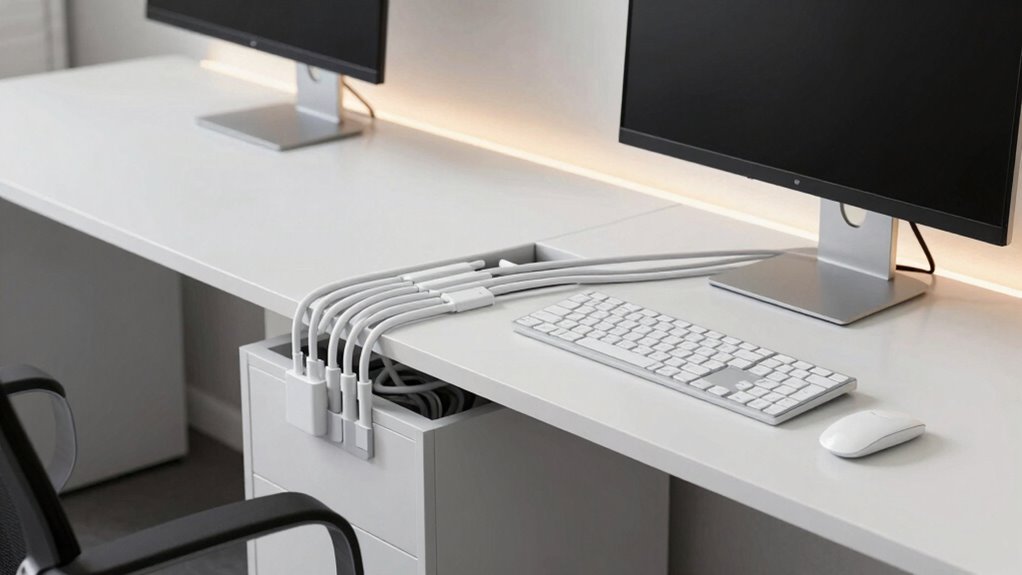

To achieve a clean interior, start by planning where cables run and measure their lengths. Use clips, sleeves, and raceways to organize and hide cords behind furniture or walls. Label cables for easy identification and bundle related wires neatly with Velcro straps or zip ties. Regularly inspect and adjust your setup to prevent clutter from reappearing. For a professional look and stress-free management, explore detailed tips that can help keep your space tidy.

Turn your quiet moments into listening time
- Thousands of audiobooks, podcasts and originals
- Listen on your phone, tablet or Echo — also offline
- Cancel anytime
Key Takeaways
- Plan cable routes during setup, considering device placement and future expansion to maintain a tidy appearance.
- Use cable clips, sleeves, and raceways to conceal and organize cords along walls, furniture, or behind equipment.
- Label cables clearly for easy identification and quick troubleshooting, enhancing overall interior neatness.
- Secure cables with Velcro straps or zip ties, ensuring neat bundling and preventing tangling or damage.
- Regularly review and declutter cables, removing unnecessary cords to sustain a clean and organized interior.
Products Worth Considering

Samsung 85 M80H Series Mini LED 4K Smart TV (2026)

Levoit Core 400S-P Smart Air Purifier for Large Rooms

Dyson V8 Cyclone Cordless Vacuum
As an affiliate, we earn on qualifying purchases.
Assessing Your Cable Needs and Planning Your Setup
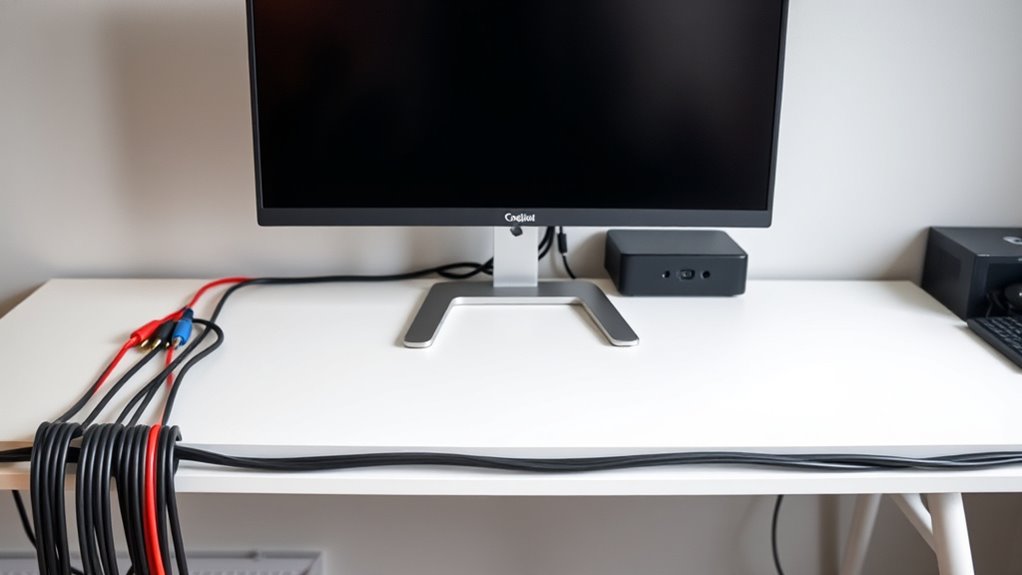
Before you begin organizing your cables, it’s essential to assess your needs and plan your setup carefully. Start by identifying all the devices you’ll connect and determine their cable lengths. Measure the distance between your equipment and power outlets to avoid excess slack or tight fits. Think about how often you’ll access certain devices; this can influence where you route cables for easy reach. Consider any future expansions or upgrades, leaving room for additional cables. Create a rough layout of your space, noting the best paths for cables to run along walls or behind furniture. Planning ahead helps you avoid clutter, tangles, and the need for rework later. Incorporating cable management techniques into your plan ensures your cable management is both efficient and aesthetically pleasing. Additionally, taking the time to design your setup can reduce potential damage to cables and prolong their lifespan. A well-thought-out plan also supports European cloud innovation efforts by enabling flexible and scalable infrastructure arrangements. Being mindful of support breakfast options can also inspire creative ways to organize and conceal cables behind decorative elements or furniture. Integrating knowledge of sound healing science can even inspire innovative ways to incorporate calming elements into your workspace, promoting focus and well-being.
Selecting the Right Cable Management Tools and Accessories
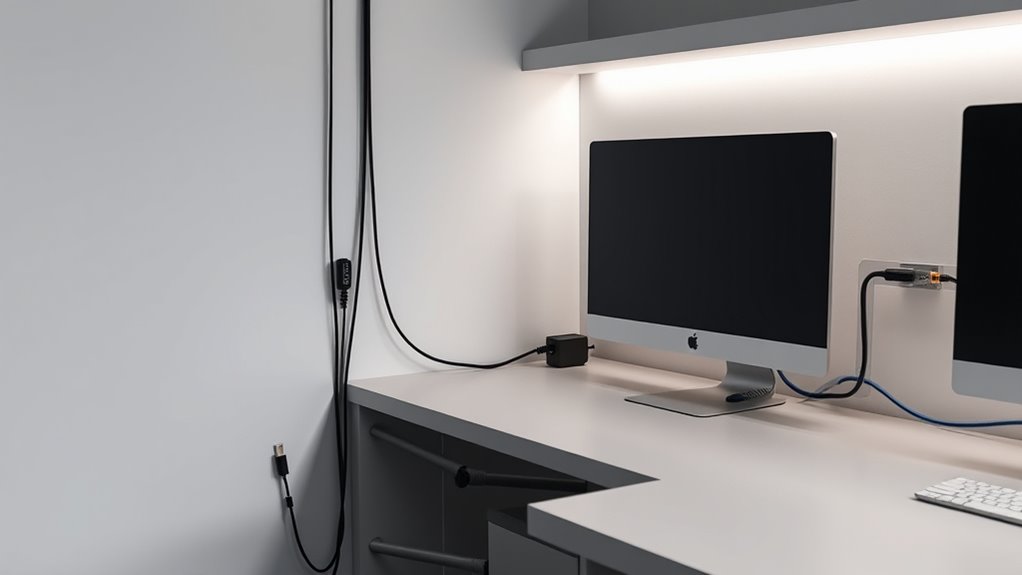
Choosing the right tools and accessories is essential for effective cable management. You’ll want to contemplate options like cable clips and holders, sleeves and wraps, as well as Velcro and zip ties. Each offers unique benefits to keep your cables neat, secure, and easily accessible. Incorporating natural materials can also help create a more eco-friendly and sustainable setup. Using eco-friendly materials can reduce environmental impact and promote sustainability in your organization. Additionally, understanding auditory processing techniques can assist in designing environments that minimize noise distractions and improve overall organization. Considering cable routing strategies can further enhance the clarity and functionality of your cable setup, especially when integrated with smart home automation systems that can monitor and manage cables dynamically.
Cable Clips and Holders
Selecting the right cable clips and holders is essential for keeping your cables organized and secure. Choose clips that match your cable sizes to prevent slipping or damage. Adhesive-backed clips are easy to install on desks, walls, or inside cabinets, offering a quick way to keep cables tidy. For more stability, consider screw-in clips, especially for heavier cables or high-traffic areas. Cable holders that clamp or clip onto surfaces help prevent tangling and keep cables accessible. Use multiple clips along lengthy cables to prevent sagging and reduce wear. Additionally, opt for flexible or adjustable holders when managing cables of various sizes or when you anticipate future changes. Proper selection guarantees your cables stay neat, protected, and easy to access whenever needed. Incorporating modern kitchen technology such as smart cable management tools can further enhance your space’s organization and safety. Understanding cable management techniques can also help you design a more efficient and safe setup for your environment, especially when integrating with other home organization solutions. Utilizing heat-resistant materials in cable management accessories can improve durability in environments exposed to higher temperatures, ensuring long-term performance and safety. Being aware of small appliance safety can also inform your choice of cable clips to prevent overheating and electrical issues over time.
Cable Sleeves and Wraps
Cable sleeves and wraps are versatile tools that help you organize multiple cables into a single, neat bundle. They protect cables from damage, prevent tangling, and improve interior aesthetics. When choosing a cable sleeve, consider flexibility, material, and ease of installation. Wraps are great for quick adjustments and securing cables in tight spaces. Use sleeves for longer runs or bundled setups, and wraps for temporary or dynamic arrangements. Here’s a quick comparison:
| Feature | Cable Sleeves | Cable Wraps |
|---|---|---|
| Material | Neoprene, nylon, fabric | Velcro, plastic strips |
| Best Use | Long-term organization | Temporary securing |
| Flexibility | Highly flexible | Moderately flexible |
| Installation | Slide cables inside | Wrap around cables |
Choosing the right cable management tools can make a significant difference in maintaining a clutter-free and efficient space. Proper cable management not only enhances the visual appeal of your space but also prolongs the lifespan of your cables by reducing wear and tear. Additionally, selecting suitable tools helps prevent cable damage, which can be costly to repair or replace. Incorporating innovative nanotechnology-based solutions in cable protection materials is emerging as a promising trend to further enhance durability and performance.
Velcro and Zip Ties
Velcro and zip ties are essential tools for organizing cables efficiently and securely. Velcro straps are great for adjustable, reusable bundling, making future changes easy. They prevent damage and keep cables neat without crushing wires. Zip ties, on the other hand, provide a tight, permanent hold, ideal for securing cables in fixed positions. When selecting, consider the environment: Velcro is better for areas needing frequent adjustments, while zip ties suit permanent setups. Make sure to choose the right size and strength for your cables to avoid damage. Always cut zip ties carefully to prevent injury or damage to cables. Using these tools properly helps maintain a clean, organized interior, improves airflow, and simplifies troubleshooting or upgrades. Proper tool choice ensures a tidy, professional-looking cable setup. Additionally, selecting the appropriate power tools and equipment can make installing and managing cable systems safer and more efficient. For added convenience, consider cable management accessories that can further streamline your setup and enhance durability. Incorporating cable management best practices can also ensure long-term organization and accessibility, especially when integrated with smart home systems for enhanced control and monitoring.
Grouping and Bundling Cables for a Neat Appearance
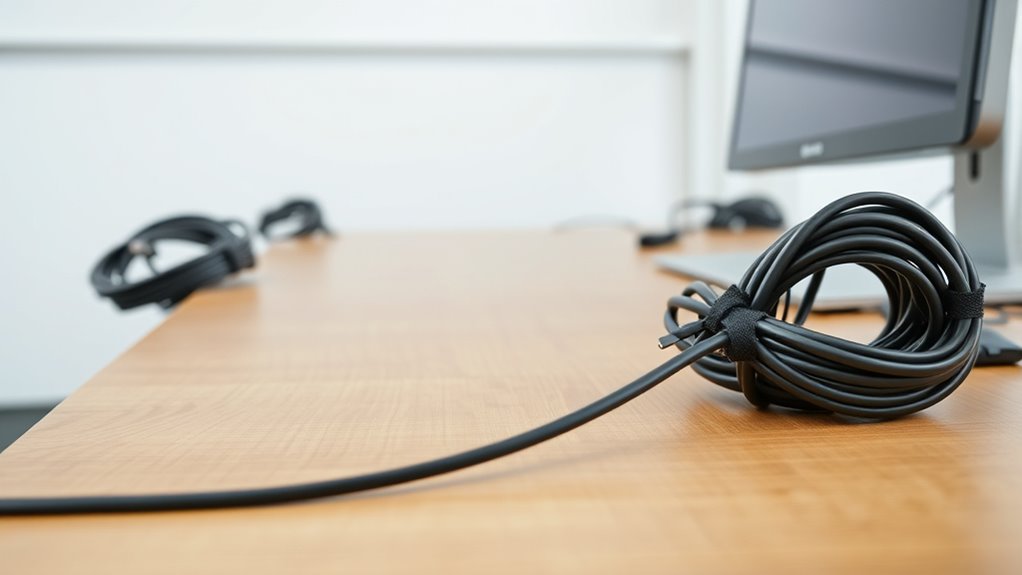
To keep your workspace tidy and prevent tripping hazards, grouping and bundling cables is essential. Start by gathering cables that run in the same direction or connect to related devices. Use cable ties or Velcro straps to secure these cables together, keeping them organized and preventing tangling. Keep bundles neat by aligning cables parallel and avoiding tight bends that could damage wires. When possible, route cables along edges or behind furniture to hide them from view. Remember to leave some slack for movement and ventilation. Consistent bundling not only improves the appearance but also makes future adjustments easier. Additionally, understanding cable quality can help ensure that bundled cables remain durable and safe over time. By effectively grouping and bundling, you create a cleaner, safer, and more efficient environment that’s easier to maintain.
Using Cable Trays, Raceways, and Cable Clips
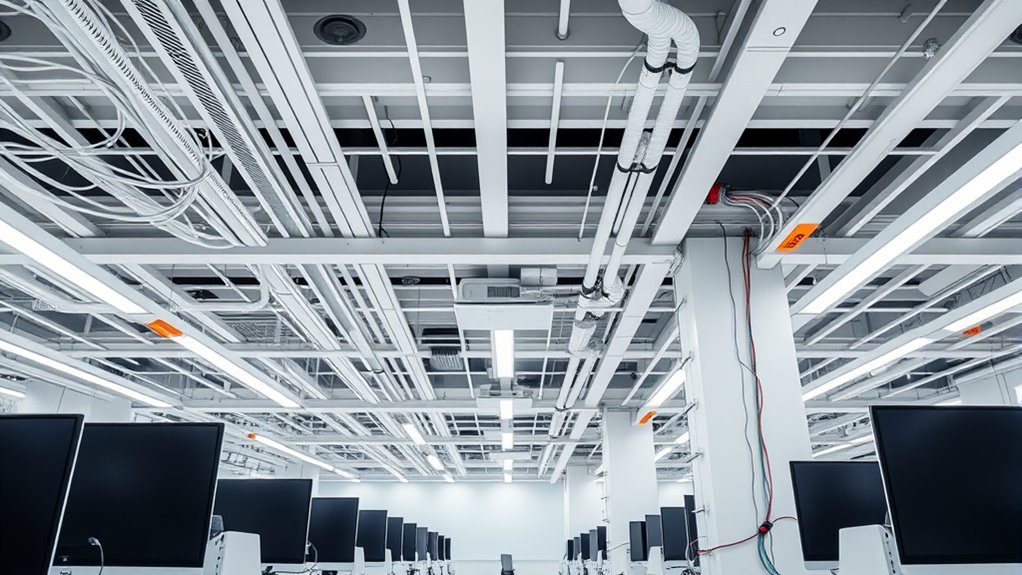
Using cable trays, raceways, and clips helps you route wires efficiently and keep them organized. These solutions also guarantee your cables stay securely mounted, preventing accidents or damage. By choosing the right mounting options, you can improve both safety and accessibility in your setup.
Efficient Cable Routing
Efficient cable routing is essential for maintaining a clean and organized setup, preventing tangles and reducing potential hazards. Start by planning your cable paths carefully, identifying the most direct routes between devices. Use cable trays and raceways to keep cables elevated and protected, avoiding clutter on desks or floors. Secure cables with cable clips along walls, furniture, or behind equipment to prevent movement and accidental disconnections. Keep cables neatly aligned and avoid crossing them unnecessarily, which can cause confusion and wear. Label your cables for easy identification during troubleshooting or upgrades. Regularly check your routing system to guarantee cables remain secure and organized. Proper routing not only improves aesthetics but also enhances safety and simplifies future maintenance tasks.
Secure Mounting Solutions
Secure mounting solutions like cable trays, raceways, and cable clips are essential for maintaining a tidy and safe setup. They keep your cables organized, preventing tangles and accidental disconnections. Cable trays provide a sturdy channel for multiple cables, making it easy to add or remove wires without hassle. Raceways conceal cables, protecting them from dust and damage while giving your interior a sleek look. Cable clips are versatile and easy to install, securing individual cables along walls or ceilings. By choosing the right mounting solutions, you reduce clutter and improve airflow, which helps prevent overheating. Properly fastening your cables not only enhances safety but also simplifies maintenance and future upgrades. Investing in these solutions ensures your interior remains clean, professional, and efficient.
Concealing Cables Behind Walls or Furniture

Concealing cables behind walls or furniture can dramatically improve the look of your space by hiding clutter and creating a clean, streamlined appearance. It not only enhances aesthetics but also reduces tripping hazards and protects cables from damage. To get started, consider these options:
- Install in-wall cable raceways for a seamless look
- Use outlet boxes or recessed power outlets
- Build false walls or panels to hide wiring
- Mount furniture or cabinetry to conceal cables behind them
- Employ cable sleeves or conduits to organize and hide cords effectively
These methods require some planning and, in some cases, minor construction work, but they deliver a polished, professional finish. Properly concealed cables make your space safer, neater, and more inviting.
Labeling Cables for Easy Identification
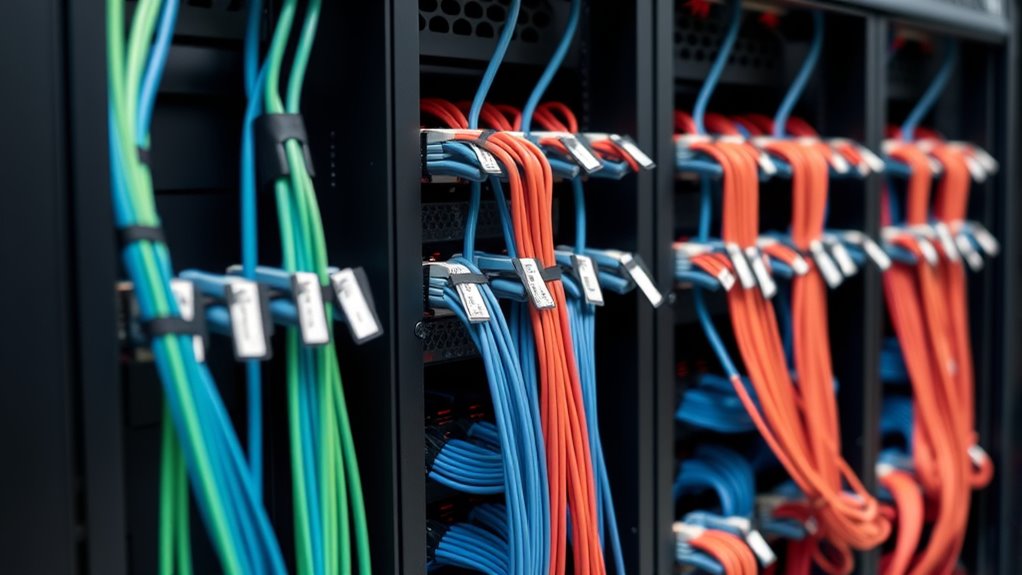
Labeling your cables clearly helps you identify them quickly and avoid confusion. Using color-coding techniques or easy-to-read labels makes maintenance simpler and faster. Choose durable label materials so your labels stay intact over time, even in busy or humid environments.
Clear Labeling Strategies
Clear labeling is essential for efficient cable management, especially when dealing with numerous wires running in tight spaces. To keep things organized, use clear, consistent labels that are easy to read at a glance. Consider writing labels directly on cables with permanent markers or using adhesive tags. Make sure labels include essential information like device names, ports, or purpose. Keep labels aligned and avoid overlapping or cluttered text. Use a legible font size and contrast colors for visibility. Regularly update labels if configurations change. Here are some effective strategies:
- Use waterproof, durable labels for longevity
- Stick labels close to connectors for quick identification
- Include serial numbers or dates for tracking
- Avoid overcrowding labels; keep them simple
- Use consistent naming conventions throughout your setup
Color-Coding Techniques
Color-coding is a highly effective way to quickly identify and differentiate cables within complex setups. By assigning specific colors to different functions or devices, you can streamline troubleshooting and maintenance. For example, use red for power cables, blue for network, and yellow for audio connections. Consistent color schemes help you recognize cables at a glance, reducing errors and saving time. You can implement color-coding with colored cable sleeves, heat-shrink tubing, or colored cable ties. Be sure to keep your color scheme simple and well-documented so others can easily understand it. Regularly review and update your color codes as your setup evolves. Effective color-coding minimizes confusion, keeps your interior neat, and ensures quick access to the right cables when you need them.
Durable Label Materials
Choosing the right materials for your cable labels is essential to guarantee they stay attached and legible over time. Durable label materials ensure your labels resist wear, moisture, and temperature changes, maintaining clarity and adhesion. Consider these options for long-lasting labels:
- Vinyl labels for flexibility and water resistance
- Polyester labels for high durability and heat resistance
- Polyimide labels for extreme temperature environments
- Laminated labels for extra protection against abrasion
- Non-adhesive tags with tie-wraps for temporary labeling
Selecting high-quality materials prevents labels from peeling, fading, or tearing, saving you time and effort in re-labeling. Properly chosen labels keep your cable management organized and professional-looking, making future troubleshooting and maintenance easier. Durability is key to maintaining a clean, efficient interior.
Implementing Cable Sleeves and Wraps for a Tidy Look
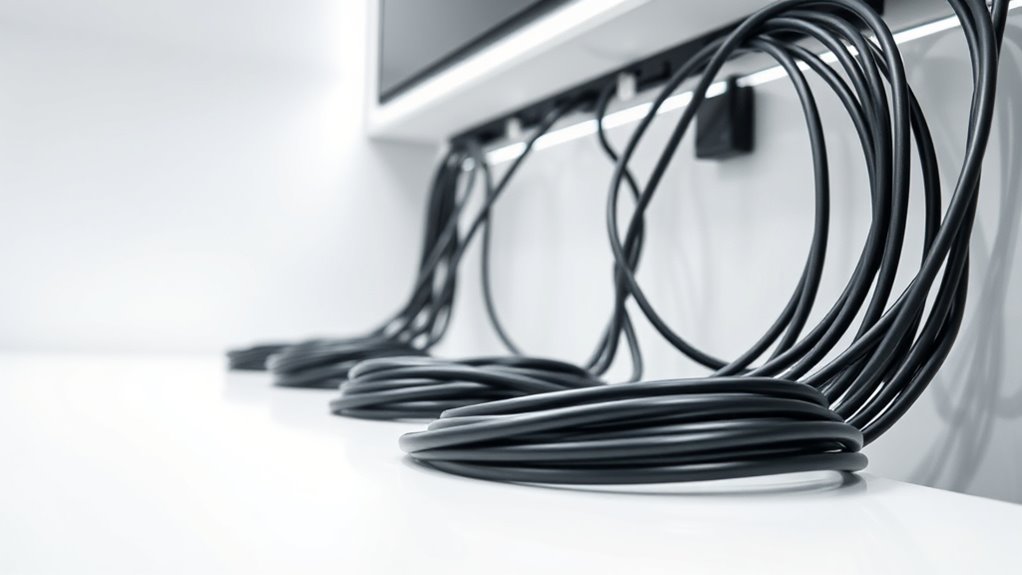
To achieve a clean and organized appearance for your cables, implementing cable sleeves and wraps is an effective solution. These accessories bundle multiple cables into a single, neat conduit, reducing clutter. Choose flexible sleeves made from materials like nylon or silicone to easily slide over cables or enclose groups. Wraps, such as spiral or velcro straps, secure cables individually or in groups, allowing for quick adjustments. Use the table below to compare options:
| Feature | Cable Sleeves | Wraps | Best For |
|---|---|---|---|
| Material | Nylon, silicone | Velcro, spiral | Bundling multiple cables |
| Flexibility | High | Moderate | Temporary or adjustable setups |
| Installation | Slide over cables | Wrap around cables | Quick organization |
Implementing these tools enhances your cable management, making your space look tidy and professional.
Managing Cables on Desks and Workstations
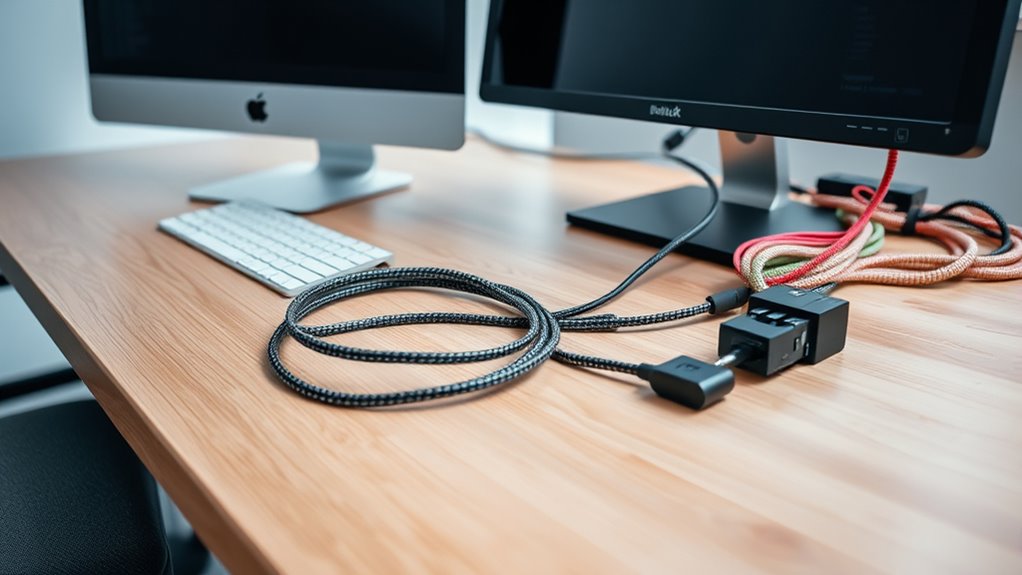
Ever wonder how to keep your desk tidy and free of tangled cables? Managing cables on your workstation is key to a clean look and improved efficiency. Start by using cable clips or adhesive mounts to secure cords along the desk edge or underneath. Group related cables together with Velcro straps to prevent clutter. Use a cable tray or box to hide power strips and excess cords out of sight. Label cables for easy identification during adjustments. Lastly, position devices close to power outlets to minimize cable length and slack. Consider these tips:
- Attach cable clips to desk edges
- Use Velcro straps for bundling
- Hide power strips in cable trays
- Label cables for quick recognition
- Keep devices near outlets to reduce slack
Regular Maintenance and Adjustments for Long-Term Organization

Maintaining an organized cable setup requires regular attention and adjustments to prevent clutter from creeping back in. Schedule weekly checks to ensure cables stay secure and untangled. Tighten zip ties, reposition loose cords, and remove unnecessary ones. Use labels to identify cables easily during adjustments. Consider cable slack management to avoid strain or accidental disconnections.
| Task | Frequency |
|---|---|
| Inspect for loose cables | Weekly |
| Re-secure or replace ties | Every 2-3 weeks |
| Remove unused cables | Monthly |
| Adjust slack for neatness | As needed |
Tips for Preventing Cable Clutter in Future Setups
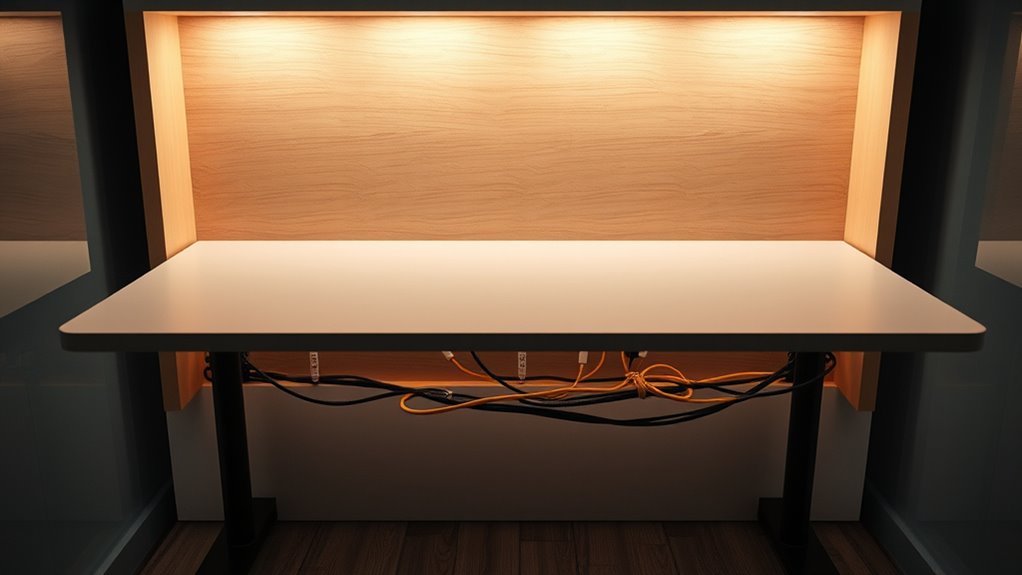
Planning your setup carefully from the start can considerably reduce future cable clutter. Think about your device placement and how cables will run before plugging everything in. Use cable management tools like clips, sleeves, or raceways to keep cords organized from the beginning. Label cables to identify them easily when adjustments are needed later. Opt for wireless options when possible to eliminate unnecessary cords. Regularly review and declutter your setup to prevent accumulation of unused cables. Additionally, invest in modular or detachable cables that are easier to manage and replace. By applying these strategies, you create a cleaner, more efficient space that minimizes the need for frequent reorganization. Remember, a proactive approach saves time and effort down the line.
Frequently Asked Questions
How Can I Hide Cables in Open-Concept Spaces Effectively?
To hide cables in open-concept spaces effectively, you should use cable channels or raceways that blend with your walls or floors. Conceal cords behind furniture or run them along baseboards for a tidy look. Consider installing a cable management box or under-desk trays to keep wires out of sight. Using decorative covers or paint-matching conduits also helps maintain a clean, organized appearance without cluttering your space.
What Are Eco-Friendly Options for Cable Management Solutions?
Eco-friendly cable management options are like a breath of fresh air for your space. You can opt for biodegradable cable sleeves, made from natural materials that break down over time. Recycle existing cable ties or choose reusable Velcro strips to reduce waste. Using bamboo or reclaimed wood cable organizers adds a natural touch while being sustainable. These choices help you keep your space tidy without harming the environment.
How Do I Handle Cable Management for Multiple Devices With Different Power Needs?
You should start by grouping your devices based on their power needs and using separate power strips or surge protectors for each group. Label cables clearly to avoid confusion, and consider using adjustable cable ties or Velcro straps to keep cords organized and prevent tangling. Make sure each power source can handle the combined load, and regularly check connections to guarantee safety and efficiency.
Can Cable Management Solutions Affect Wi-Fi Signal Strength?
Yes, cable management solutions can affect your Wi-Fi signal strength if they block or interfere with your router’s antennas or vents. When you organize cables, make sure they don’t obstruct airflow or the router’s placement. Keep cables away from Wi-Fi devices and avoid tight bundling that might cause heat buildup. Proper cable routing enhances both safety and signal quality, helping your Wi-Fi perform at its best.
What Safety Precautions Should I Follow During Cable Installation?
You should always turn off power before starting cable installation to prevent shocks. Use proper tools and wear safety gear like gloves and goggles. Avoid overloading outlets and ensure cables are securely fastened to prevent tripping hazards. Keep cables away from heat sources and water to avoid damage or short circuits. Check for existing wiring issues and follow manufacturer instructions to guarantee a safe, efficient installation process.
Conclusion
Think of your cable setup as tending a garden. With careful planning and regular maintenance, you’ll nurture a space that’s both beautiful and functional. Tame the wild tangle, prune unnecessary cables, and watch your space flourish. A tidy environment isn’t just about looks—it’s about creating harmony and peace of mind. Keep tending your cable garden, and enjoy the serene, clutter-free sanctuary you’ve cultivated.