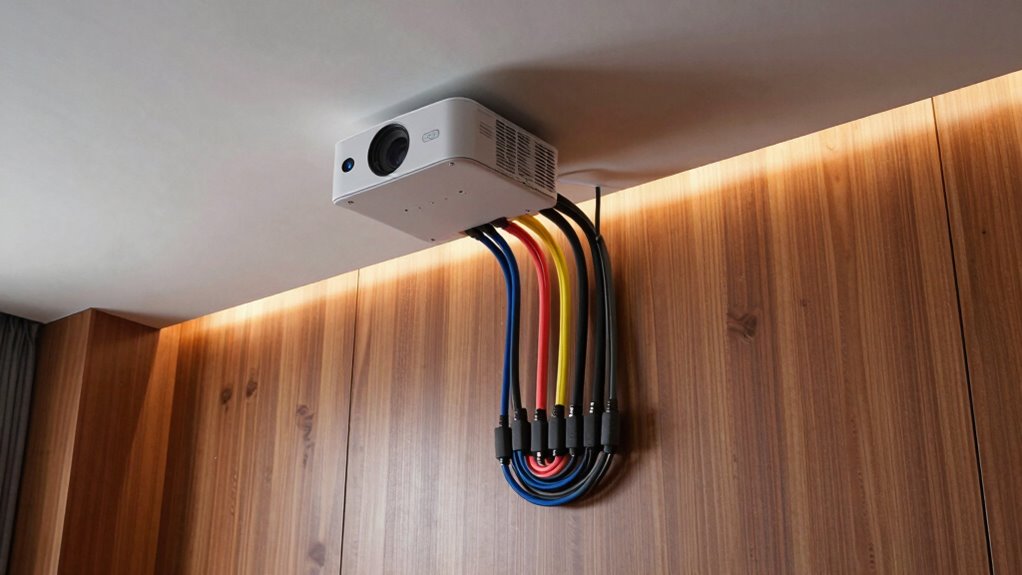

To future-proof your home theater wiring, assess both your current needs and anticipated upgrades, like 8K TVs or enhanced audio systems. Choose high-quality cables such as fiber optic and CAT6A that support higher bandwidths, with flexible pathways for expansion. Strategically route and label cables for easy access, and incorporate modular components that can be upgraded over time. If you want your setup to stay modern and reliable, keep exploring these smart wiring strategies.
Key Takeaways
- Plan for scalable wiring pathways with extra conduit runs and flexible cables to accommodate future upgrades.
- Use high-quality, high-bandwidth cables like HDMI 2.1, fiber optic, and Cat 6a for compatibility with evolving technology.
- Incorporate accessible conduit systems and proper labeling to simplify future maintenance and expansion.
- Select equipment with upgrade-friendly features, such as modular AV receivers and multiple HDMI ports.
- Prioritize durable, shielded cables and high-quality connectors to ensure longevity and optimal signal integrity over time.
Assessing Your Current and Future Needs
Before installing new wiring, it’s essential to evaluate your current setup and anticipate your future needs. Take stock of your existing devices, connections, and how you use your home theater. Are you planning to add more speakers, a 4K or 8K TV, or a gaming console? Think about future upgrades and how they might require additional wiring or bandwidth. Consider your viewing habits and whether you’ll want immersive sound, multiple screens, or streaming services. By understanding your current setup and projecting your needs, you guarantee your wiring supports both today’s demands and future technology. Incorporating high-quality wiring components ensures optimal performance and longevity for your home theater system. Additionally, reviewing wiring standards and safety guidelines helps prevent issues and ensures your system’s reliability. Planning for local automation integration can further enhance your setup by allowing seamless control of your devices through smart home systems. Being aware of body jewelry measurements and materials can also help when selecting components for any custom wiring or modifications needed. Considering outdoor wiring considerations is important if your setup extends to patios or outdoor entertainment areas. This proactive approach helps you avoid costly rewiring later and creates a seamless, high-performance home theater experience.
Choosing the Right Cabling Materials and Types
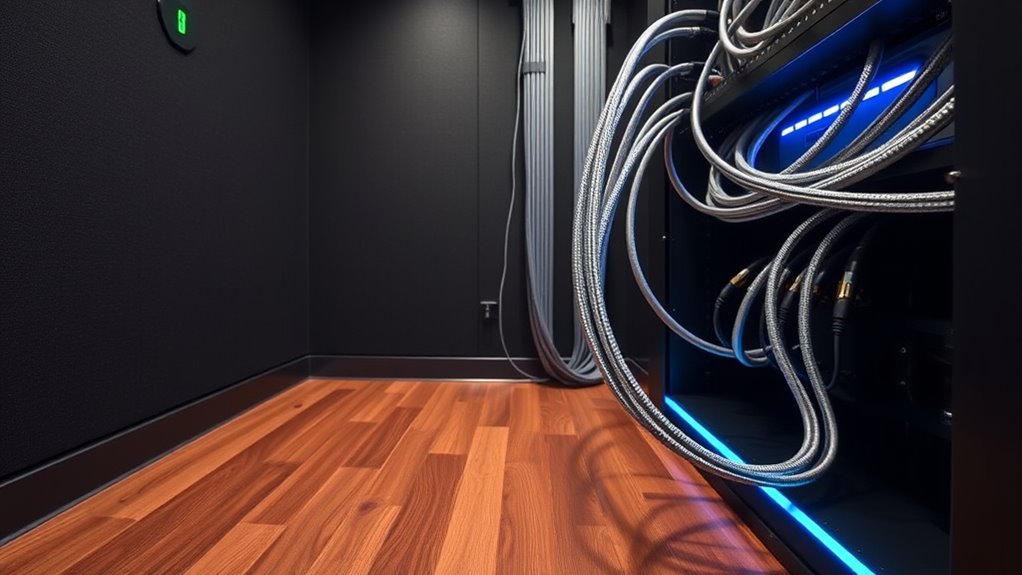
Selecting the right cabling materials and types is key to ensuring your home theater setup performs at its best now and in the future. Choose high-quality HDMI cables for transmitting 4K or higher resolutions, and opt for fiber optic cables if you plan to upgrade to ultra-high-definition formats. Use speaker wires with appropriate gauge ratings to handle your system’s power demands, ensuring clear audio without distortion. Consider CAT6 or CAT6A Ethernet cables for reliable, high-speed internet connections, especially if streaming or smart features are involved. Avoid cheap, low-quality cables that can introduce interference or degrade signal quality. By selecting durable, future-proof materials now, you reduce the need for frequent upgrades and maintain top-notch performance as your home theater evolves. Additionally, understanding the materials and construction of cables can help you choose options with better shielding and durability, ensuring longer-lasting and more reliable connections. Investing in cables with proper shielding can also protect against electromagnetic interference, which is crucial for maintaining high-quality audio and video signals over time. Moreover, choosing cables with robust connectors can prevent connection issues and improve overall reliability. Also, selecting cables with appropriate length can help minimize signal loss and clutter for a cleaner setup. Being mindful of cable management techniques can further enhance your system’s longevity and performance, keeping everything organized and accessible.
Planning for Adequate Cable Capacity and Bandwidth
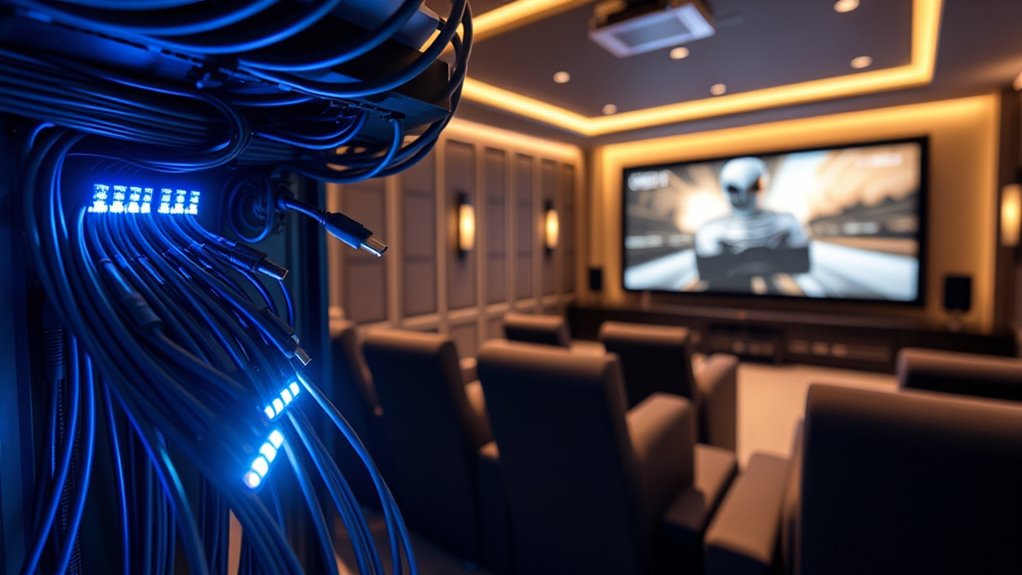
Planning for adequate cable capacity and bandwidth is vital to guarantee your home theater system runs smoothly as technology advances. You need to anticipate future demands to avoid bottlenecks and ensure seamless performance. Consider these key factors:
- Assess current and future device requirements – Understand your equipment’s data and power needs to select cables that can handle increased loads. Incorporating future-proofing strategies now can save you time and money later on. Additionally, evaluating network infrastructure ensures your setup can support multiple high-bandwidth devices simultaneously.
- Choose higher bandwidth cables – Opt for HDMI 2.1, fiber optic, or Cat 6a cables to support higher resolutions, faster refresh rates, and advanced audio formats.
- Plan for scalable wiring pathways – Install extra cable runs and conduits now, allowing easy upgrades without extensive rewiring later.
- Incorporate flexible wiring solutions—such as conduit systems—so your setup can adapt as your technology needs evolve over time. Additionally, selecting energy-efficient cables can help reduce overall power consumption and support sustainable home infrastructure.
Incorporating Modular and Expandable Components
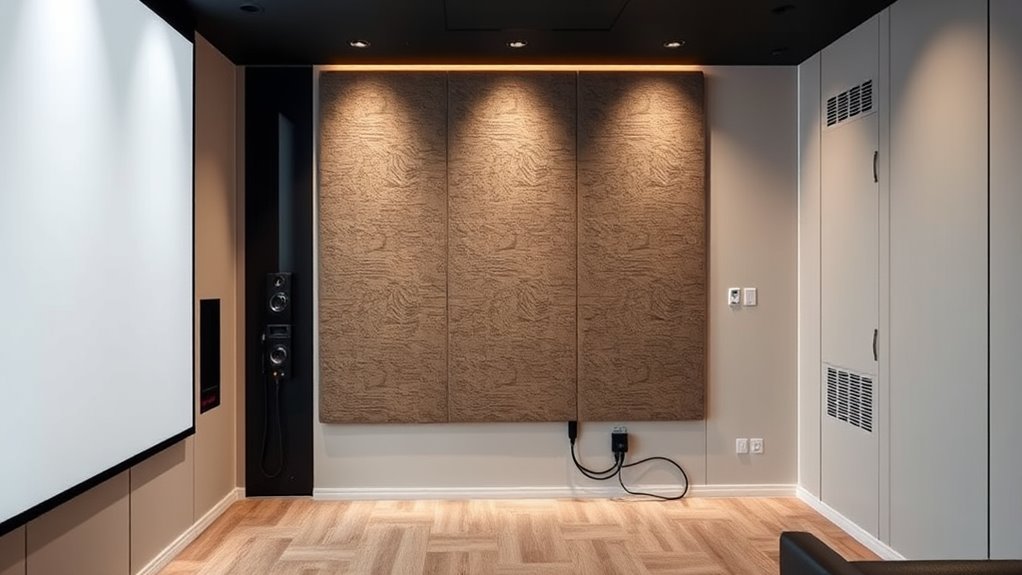
To guarantee your home theater remains adaptable to technological advancements and evolving entertainment needs, incorporating modular and expandable components is essential. You should choose equipment with built-in upgrade paths, such as AV receivers with multiple HDMI ports and room for future additions. Modular speakers allow you to add or upgrade channels without replacing entire systems, saving money and effort. Opt for wireless or easily reconfigurable components whenever possible, so you can adapt your setup without extensive rewiring. Keep in mind that having accessible connections and standardized interfaces makes future upgrades smoother. By planning for expansion now, you ensure your home theater can grow with new technologies, providing flexibility and longevity without costly overhauls. Additionally, considering smart‑home integrations can help you seamlessly control and automate your system as it evolves. Incorporating universal connectivity standards can further simplify future upgrades and compatibility. Being aware of future-proofing strategies can help you make smarter, more sustainable choices now. For instance, selecting equipment with modular design can facilitate easier repairs and component replacements, extending your system’s lifespan. Maintaining a well-organized wiring system also ensures that future modifications are less disruptive. This approach keeps your entertainment system future-proof and responsive to your changing needs.
Strategically Routing Cables for Accessibility and Safety
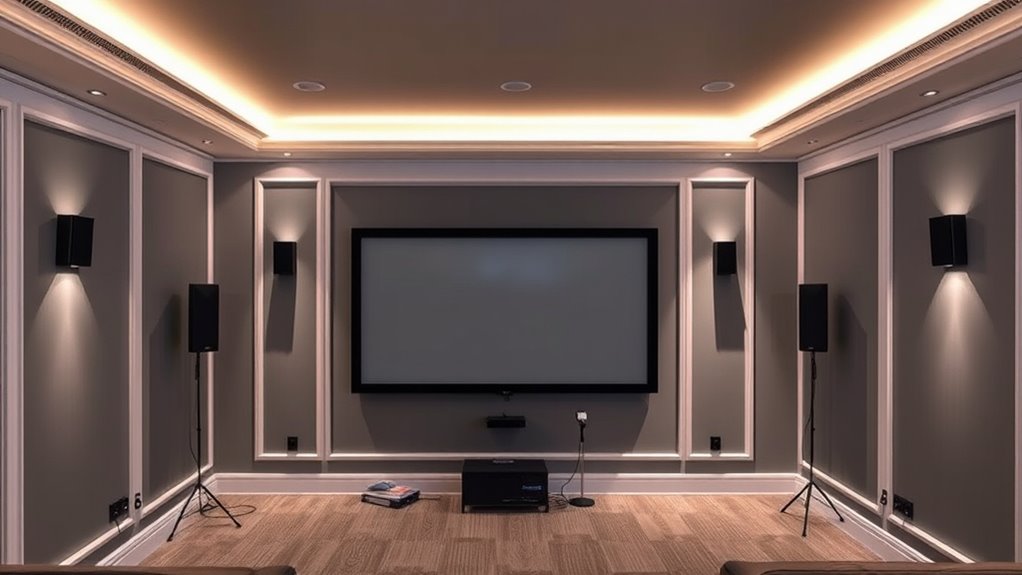
To guarantee your home theater wiring remains safe and accessible, you should focus on effective concealment techniques and choosing ideal cable pathways. Planning for easy access makes future upgrades simpler and reduces the risk of damage. With careful routing, you can create a clean setup that’s both safe and ready for any expansion. Incorporating evidence‑informed guidance ensures your wiring practices are based on proven strategies that promote safety and longevity, including proper circuit load calculations to prevent overloads. Additionally, considering building codes and standards during planning helps ensure compliance and long-term safety of your wiring system. Incorporating proper planning from the outset can also minimize the need for disruptive repairs later. Employing proper cable management techniques can further enhance safety and ease of maintenance over time.
Concealment Techniques for Safety
Strategically routing your home theater cables is essential for both safety and accessibility. Proper concealment prevents tripping hazards and protects cables from damage. To enhance safety, consider these techniques:
- Use floor cable covers or raceways to hide cables along walls or baseboards, reducing trip risks.
- Run cables through wall cavities or conduits to keep them out of sight and away from foot traffic.
- Mount cables along ceiling joists or behind crown molding for a clean look and added protection.
Optimal Cable Pathways Design
Designing ideal cable pathways guarantees your home theater setup is both safe and accessible. Start by planning routes that minimize sharp bends and avoid interference from furniture or structural elements. Use conduits or raceways to protect cables from damage and reduce tripping hazards. Keep pathways clear of high-traffic areas to prevent accidental disconnections or injuries. Elevate cables where possible to prevent wear and tear or accidental pulls. Label cables at both ends for easy identification during future upgrades or troubleshooting. Consider routing cables along walls, ceilings, or behind built-in features for a tidy appearance. Properly planned pathways ensure your cables remain organized, safe, and easy to access, making future modifications or repairs simpler and reducing potential hazards.
Accessibility for Future Upgrades
Planning your cable routes with future upgrades in mind guarantees you can easily access and modify your home theater system down the line. To guarantee accessibility and safety, consider the following:
- Use accessible conduits or raceways that can be opened or expanded later without disturbing walls or ceilings.
- Maintain extra slack in cables so you can disconnect or replace equipment without pulling on tight wires.
- Label cables clearly at both ends, making future identification and troubleshooting quick and simple.
Using Proper Connectors and Terminations for Longevity
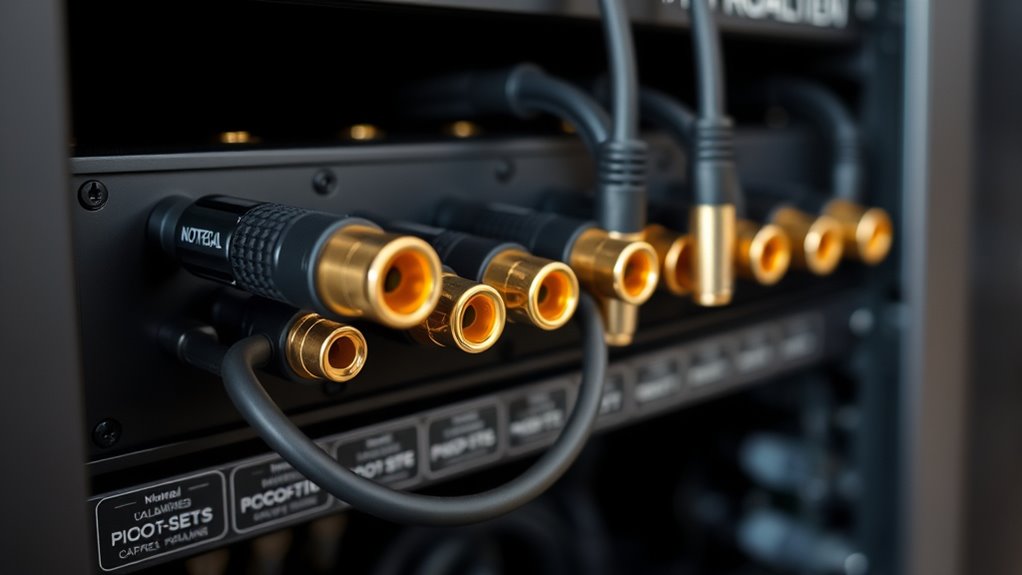
Choosing high-quality connectors and ensuring proper terminations are key to maintaining your home theater system’s performance over time. Using shielded cables can protect against interference, while correct techniques prevent signal loss and damage. Investing in the right components now saves you from future troubleshooting and upgrades.
Quality Connector Selection
Selecting the right connectors and ensuring proper terminations are crucial steps in creating a reliable home theater wiring system. High-quality connectors prevent signal loss and corrosion, ensuring consistent performance over time. When choosing connectors, consider options like gold-plated contacts for durability, weatherproof designs for longevity, and compatibility with your cables. To maximize system lifespan, pay attention to these key factors:
- Choose connectors with solid construction and secure locking mechanisms to prevent disconnections.
- Opt for corrosion-resistant materials, such as gold or nickel plating, to endure environmental factors.
- Verify compatibility with your cable type and system components to avoid signal degradation.
Making informed choices in connector quality safeguards your investment and maintains ideal audio and video quality for years to come.
Proper Termination Techniques
Have you ever experienced signal loss or interference because of poor cable terminations? Proper termination techniques guarantee reliable connections and long-term durability. Use high-quality connectors suited for your cable type, and always strip cables cleanly without nicking the conductors. Crimp or solder connections securely, then shield or insulate properly. Consistent, tight terminations prevent signal degradation and corrosion over time.
| Technique | Benefit |
|---|---|
| Secure Crimping/Solder | Ensures stable, low-resistance connection |
| Proper Insulation | Prevents short circuits and corrosion |
Shielded Cable Usage
Ever wonder why shielded cables tend to last longer and resist interference better? The key lies in using proper connectors and guaranteeing solid terminations. High-quality connectors create a tight, reliable connection that prevents signal loss. When terminating shielded cables, always fold back the shield and secure it to prevent noise infiltration. Properly stripping the cable avoids damaging the conductors and maintains integrity.
Here are three essential tips:
- Use connectors designed specifically for shielded cables to guarantee a proper fit.
- Make sure the shield is grounded correctly to reduce electromagnetic interference.
- Avoid over-tightening connectors, which can damage the cable and degrade performance.
These steps help maximize longevity and maintain optimal sound and picture quality.
Implementing Smart Home Integration Compatibility

To guarantee your home theater system can seamlessly integrate with your smart home setup, you need to plan for compatibility from the start. Begin by choosing devices and components that support common communication protocols like Z-Wave, Zigbee, or Wi-Fi. Ensure your wiring infrastructure can handle the bandwidth demands of smart devices, such as robust Ethernet runs for hubs and controllers. Incorporate dedicated ports for future expansions, and opt for versatile connectors like HDMI or Ethernet that support smart features. Consider centralizing control points with a smart home hub or controller to simplify management. By prioritizing compatibility during wiring and component selection, you future-proof your system, enabling effortless integration with new smart devices and automation platforms as technology advances.
Labeling and Documentation for Easy Maintenance
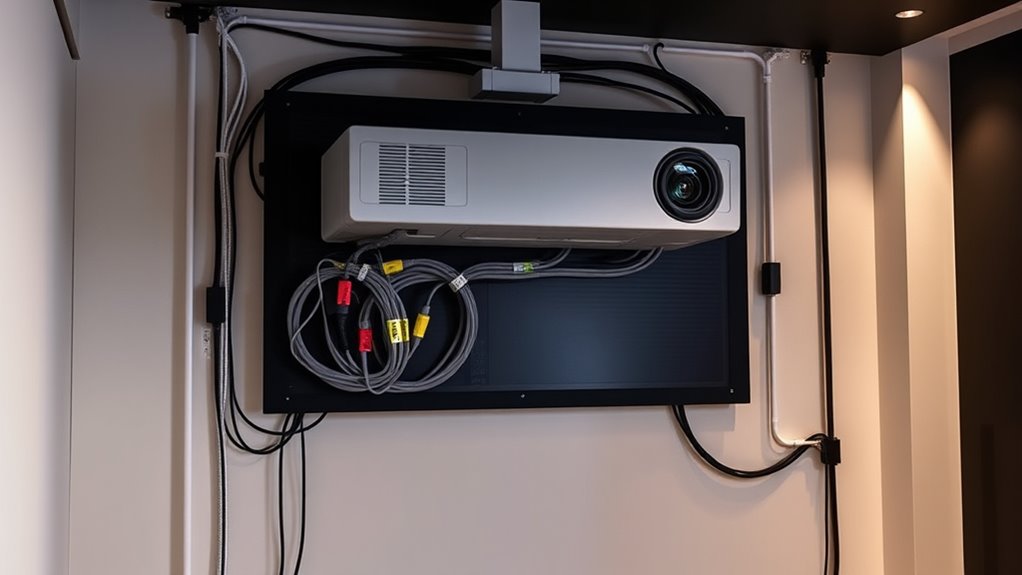
Once you’ve established a solid wiring setup and verified compatibility with your smart home devices, maintaining that system becomes much easier with proper labeling and documentation. Clear labels help you quickly identify cables, panels, and connections, saving time during troubleshooting or upgrades. Detailed diagrams and notes ensure you remember the purpose of each wire, port, and device, reducing errors. To maximize effectiveness, consider these steps:
Effective labeling and documentation simplify maintenance and future upgrades.
- Label each cable with a descriptive tag, indicating its destination and function.
- Create a wiring diagram that maps out your entire setup, including labels and port information.
- Keep an updated documentation file that records changes, upgrades, and equipment details for future reference.
This approach minimizes confusion and streamlines maintenance, keeping your home theater system future-proof.
Regularly Reviewing and Updating Your Wiring System

Regularly reviewing and updating your wiring system is essential to guarantee it continues to meet your home theater’s evolving needs. Technology changes fast, and what works today might be outdated tomorrow. Make it a habit to inspect your wiring annually, checking for wear, damage, or loose connections. As you add new devices or upgrade equipment, update your wiring plan to accommodate additional cables or higher bandwidth requirements. Keep an inventory of existing cables and connectors to identify obsolete or incompatible components. By staying proactive, you reduce the risk of signal loss, interference, or equipment failure later on. Regular maintenance also simplifies troubleshooting, ensures safety, and keeps your home theater setup running smoothly for years to come.
Frequently Asked Questions
How Can I Future-Proof My Home Theater Wiring Against Technological Advancements?
To future-proof your home theater wiring, you should install higher-capacity cables like Cat6 or fiber optic cables now, so they can handle increased bandwidth and new technologies. Include extra runs of wiring and outlets in your plans, and consider conduit or trunking for easy upgrades later. Also, add dedicated power lines to support future high-powered devices, ensuring your setup remains flexible as technology evolves.
What Are the Most Cost-Effective Ways to Upgrade Existing Wiring Systems?
You can upgrade your wiring system cost-effectively by installing high-quality, flexible cables that support multiple standards, like HDMI and Ethernet, in accessible conduits. Opt for modular connectors and panels so you can easily swap out outdated components later. Additionally, running extra conduits or conduits with larger capacities now conserves money on future upgrades. Prioritize quality over quantity to ensure longevity and compatibility with upcoming technology, saving you money long-term.
How Do I Ensure Compatibility Between New Cables and Legacy Equipment?
To guarantee compatibility between new cables and your legacy equipment, check the specifications of both. Look for common connector types and supported standards. Use adapters if needed, and verify the cable ratings match your device requirements. Always consult the manufacturer’s guidelines to avoid mismatched connections. Testing your setup before final installation helps identify issues, ensuring seamless integration and ideal performance of your existing and new components.
What Safety Precautions Should I Follow During Wiring Upgrades?
Safety first, as they say, “better safe than sorry.” When upgrading your wiring, always turn off power at the breaker before starting. Use insulated tools and wear rubber gloves to prevent shocks. Keep your work area dry and clear of clutter. Double-check all connections before turning the power back on. If you’re unsure, consult a professional. Your safety is worth the extra effort.
How Can I Minimize Disruptions to My Home During Wiring Renovations?
To minimize disruptions during wiring renovations, plan ahead and communicate your schedule with everyone involved. Schedule work during times when it least impacts daily routines, like evenings or weekends. Keep a clear workspace and mark areas under renovation to avoid accidents. Use temporary barriers if needed to contain dust and debris. Regularly check in with your contractor to stay updated and make certain the project stays on track, reducing overall disturbance.
Conclusion
So, there you have it—your foolproof plan to future-proof your home theater wiring. Because nothing says “cutting-edge” like rerouting cables in a decade or fumbling through unlabeled wires while your blockbuster plays. Embrace the chaos now, and maybe someday, you’ll thank yourself for all that meticulous planning… or at least avoid a full-blown wiring remix. Happy wiring, and may your signals stay strong through every future upgrade!