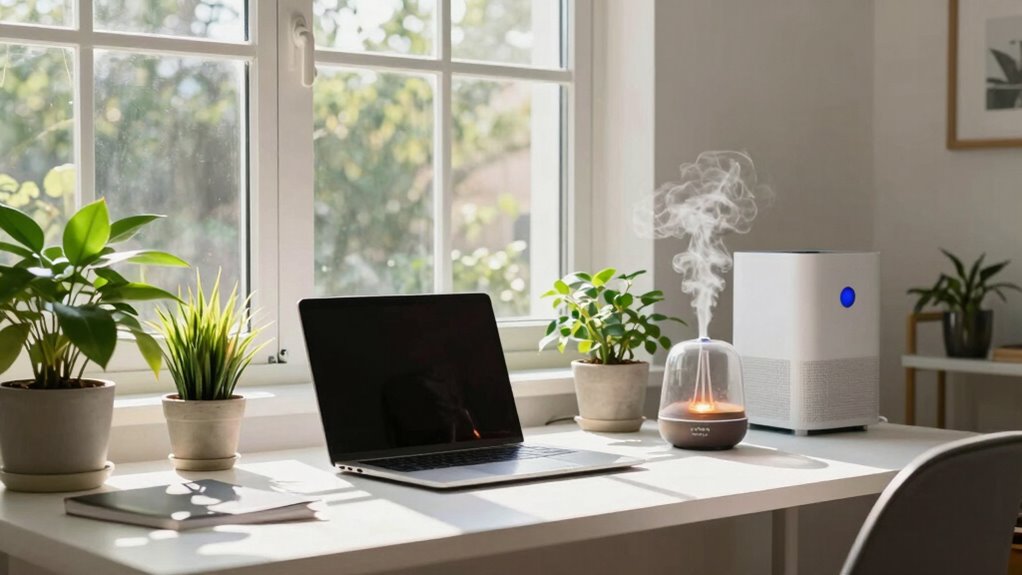
To boost your productivity at home, guarantee good air quality by ventilating your space regularly and using air purifiers with HEPA filters. Keep humidity below 50% to prevent mold, and manage indoor pollution by dusting often and avoiding harsh cleaners. Adding houseplants can also help filter toxins and increase oxygen. Staying on top of filter maintenance and monitoring air levels can make a big difference—continue exploring ways to create a healthier workspace.

Turn your quiet moments into listening time
- Thousands of audiobooks, podcasts and originals
- Listen on your phone, tablet or Echo — also offline
- Cancel anytime
Key Takeaways
- Ensure proper ventilation by opening windows or using air purifiers to reduce indoor pollutants.
- Regularly clean surfaces and vacuum with HEPA filters to minimize dust, pet dander, and allergens.
- Maintain humidity below 50% to prevent mold growth and airborne spore release.
- Use natural or low-emission cleaning products to reduce VOCs and chemical pollutants.
- Monitor indoor air quality with devices and schedule routine maintenance of ventilation systems.
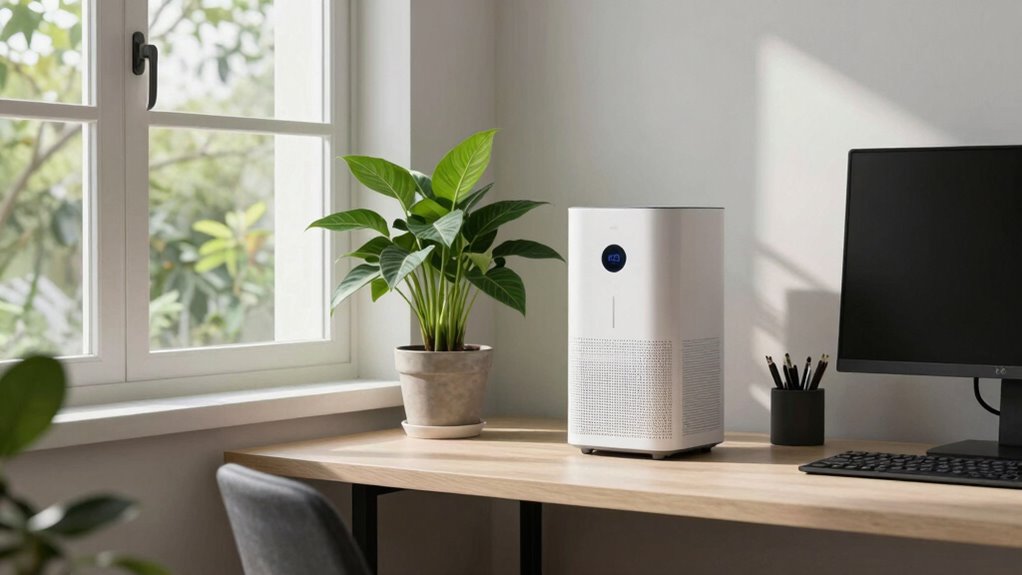
With more people working from home than ever before, maintaining good air quality in your home office has become vital. Poor air quality can lead to indoor pollution, which may cause headaches, fatigue, and decreased productivity. To create a healthy workspace, you need to focus on reducing indoor pollution and making ventilation improvements. Indoor pollution includes dust, pet dander, volatile organic compounds (VOCs), and other airborne contaminants that can accumulate in enclosed spaces. These pollutants can diminish your focus and even impact your long-term health if left unaddressed.
Good air quality in your home office boosts focus, health, and productivity by reducing indoor pollutants and improving ventilation.
One of the most effective ways to combat indoor pollution is by enhancing ventilation. Ventilation improvements help exchange stale indoor air for fresh outdoor air, diluting pollutants and reducing their concentration. If your home office has limited airflow, consider opening windows regularly to allow natural air exchange. Even a few minutes of fresh air each hour can make a noticeable difference. If outdoor air quality is poor, using exhaust fans or air purifiers with HEPA filters can help remove airborne particles and VOCs, ensuring the air remains clean and safe to breathe. Improving ventilation efficiency can significantly impact indoor air quality, making your workspace healthier.
You should also pay attention to the sources of indoor pollution. Keep your workspace clean by regularly dusting surfaces, vacuuming with a HEPA filter, and washing your hands after handling pets or cleaning supplies. Avoid using harsh chemical cleaners that emit VOCs, and opt for natural or low-emission products whenever possible. Adding houseplants to your office can also improve air quality, as some plants filter toxins and increase oxygen levels, creating a more invigorating environment. Additionally, understanding the importance of indoor air quality and its impact on health can motivate you to prioritize these improvements. Regularly inspecting and cleaning your air filters is another crucial step to maintain air purification effectiveness, especially if you rely on mechanical ventilation systems. Incorporating air quality monitoring devices can also help you stay informed about pollutant levels and adjust your strategies accordingly. Proper humidity control is essential, as fluctuations can influence the buildup of indoor pollutants and the growth of mold, which further degrades air quality.
Controlling humidity levels is another vital aspect of maintaining good air quality. Too much moisture can foster mold growth, which releases spores into the air and exacerbates indoor pollution. Use a dehumidifier if necessary to keep humidity below 50%, especially in basements or areas prone to dampness. Proper insulation and sealing leaks can also prevent drafts that contribute to poor ventilation and temperature fluctuations, which can affect air quality. When considering ventilation systems, ensuring they are correctly installed and maintained is key to sustaining a healthy environment. Additionally, avoiding clutter and dust-collecting items can further reduce potential sources of indoor pollutants.
Finally, make it a habit to regularly check and maintain your ventilation systems, whether it’s replacing filters or inspecting vents for blockages. These small but consistent efforts will help sustain good air quality and support your productivity. When your home office environment is free from indoor pollution and benefits from proper ventilation improvements, you’ll notice increased alertness, fewer health issues, and a more comfortable workspace overall. Creating a well-ventilated, clean environment isn’t just about comfort — it’s about optimizing your ability to work efficiently and stay healthy in the long run.
HEPA air purifier for home office
As an affiliate, we earn on qualifying purchases.
As an affiliate, we earn on qualifying purchases.
Frequently Asked Questions
How Often Should I Replace My Air Filters?
You should replace your air filters every 1 to 3 months to guarantee ideal filter maintenance and maintain good air quality. Regular replacement schedules depend on your filter type, household size, and air quality conditions. If you notice dust buildup, decreased airflow, or allergies worsening, it’s time for a replacement. Sticking to these schedules helps keep your home office air fresh and your productivity high.
Do Air Purifiers Improve Concentration or Just Air Quality?
Air purifiers do more than improve air quality; they also boost concentration enhancement. The benefits of using an air purifier include reducing pollutants and allergens that can distract you or cause fatigue. When the air is cleaner, you can focus better and work more efficiently. So, investing in an air purifier offers both air quality improvement and notable concentration benefits, helping you stay productive in your home office.
Can Indoor Plants Significantly Improve Air Quality at Home?
They say, “A green thumb is a great healer.” Indoor plants can substantially improve air quality through natural air purification, especially if you choose the right plant selection. Some plants, like snake plants or pothos, absorb toxins and release oxygen, making your workspace healthier. While plants help, combining them with proper ventilation ensures better air quality, boosting your focus and productivity at home.
What Are the Signs of Poor Indoor Air Quality?
You’ll notice signs of poor indoor air quality if you experience frequent coughing, sneezing, or headaches. Airborne allergens can trigger allergies, while VOC emissions from paints or cleaning products cause dizziness or irritation. You might also notice a stale smell or stuffy feeling in your space. If these symptoms persist, it’s a clear sign to improve ventilation and reduce sources of airborne allergens and VOCs to breathe cleaner air.
How Does Humidity Affect Indoor Air Quality and Productivity?
High humidity levels can make your indoor air feel stuffy and uncomfortable, leading to decreased productivity. It also encourages the growth of airborne allergens like mold and dust mites, which can cause allergies or respiratory issues. Conversely, low humidity can dry out your skin and irritate your throat. Maintaining balanced humidity levels helps reduce airborne allergens, keeps the air fresh, and creates a healthier, more productive home office environment.
air quality monitor for indoor air
As an affiliate, we earn on qualifying purchases.
As an affiliate, we earn on qualifying purchases.
Conclusion
If you ignore your home office air quality, you risk turning your workspace into a toxic wasteland that saps your energy and crushes your productivity. Prioritize fresh air, proper ventilation, and air purifiers to create a sanctuary where your productivity can soar to new heights—like an eagle breaking free from its cage. Your focus, creativity, and well-being depend on it. Don’t let poor air quality hold you back from achieving greatness in your home office.
houseplants for air purification
As an affiliate, we earn on qualifying purchases.
As an affiliate, we earn on qualifying purchases.
As an affiliate, we earn on qualifying purchases.
Halloween Picks
halloween
As an affiliate, we earn on qualifying purchases.