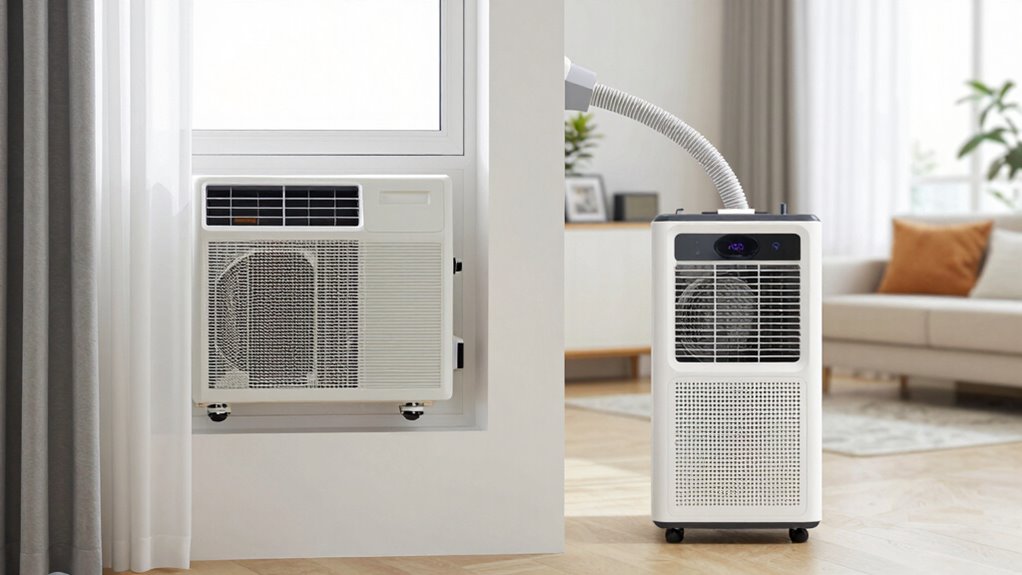

If you prioritize energy efficiency and are okay with a straightforward install, a window AC is your best choice, especially for large spaces. Portable units offer quick setup and flexibility but tend to use more energy and be noisier, making them less ideal for long-term use. Consider your living situation and how much effort you want to invest. For more details on these tradeoffs, keep exploring the key differences to find what suits your needs best.

Turn your quiet moments into listening time
- Thousands of audiobooks, podcasts and originals
- Listen on your phone, tablet or Echo — also offline
- Cancel anytime
Key Takeaways
- Window ACs are more energy-efficient and better suited for long-term cooling; portable units are easier to set up and move.
- Installing window units requires window compatibility and some effort, while portable units need proper venting but are more flexible.
- Window units are ideal for large spaces and permanent installation; portable units are better for rentals or temporary needs.
- Portable models often include extra features like air purifiers but tend to be noisier and less efficient.
- Long-term savings favor window ACs, whereas portable units prioritize convenience and quick deployment.
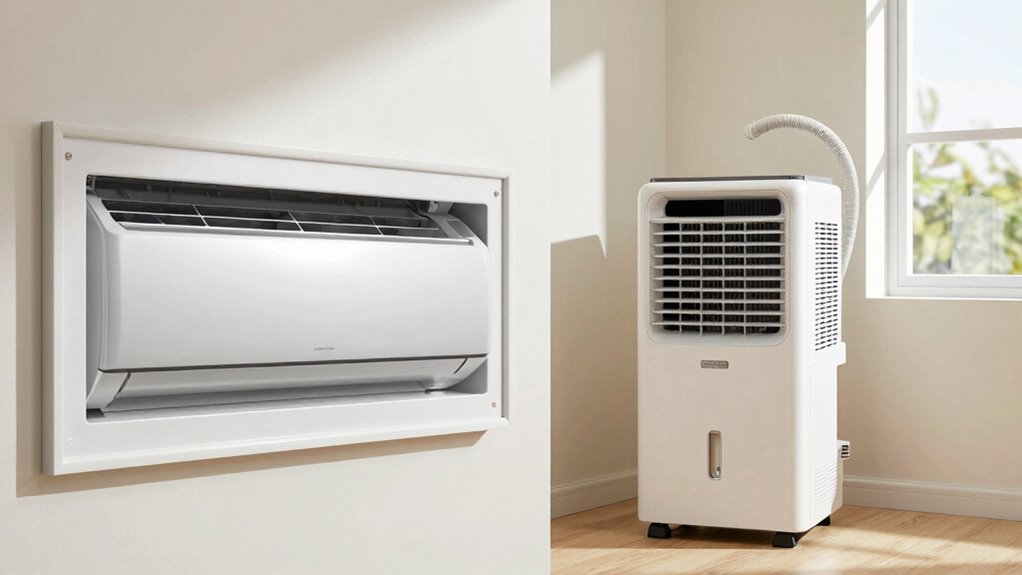
Are you trying to decide between a window air conditioner and a portable unit? If so, you’ll want to weigh a few key factors to determine which fits your needs best. One of the first points to evaluate is energy efficiency. Generally, window units tend to be more energy-efficient than portable air conditioners. Because they sit tightly in a window frame, they form a better seal against outside air, which helps them cool more effectively with less energy. Portable units, on the other hand, often have to work harder to cool a space due to less effective sealing and additional energy used by their exhaust hoses. If minimizing your energy bill is a priority, a window AC might be the better choice, especially for long-term use.
Another important aspect to think about is installation complexity. Window units are relatively straightforward to install, but they do require you to have a suitable window that can support the weight of the unit. You’ll need to remove the window sash or modify the window frame to fit the AC, which might involve some DIY effort or professional help. Once installed, they stay in place and require minimal maintenance. Portable units are designed for easy setup—you just roll them into the room, vent the exhaust hose through a window or doorway, and you’re ready to go. They’re ideal if you want a temporary cooling solution or if you rent your home and can’t make permanent modifications. However, the tradeoff is that portable units can be less effective at cooling large spaces and may be noisier due to their internal fan and compressor. Additionally, venting exhaust hoses can sometimes be challenging in certain room configurations, affecting overall efficiency. Proper venting is essential for optimal performance and energy use. It’s also worth noting that some portable models feature additional features like dehumidifiers or air purifiers, which can enhance comfort but may impact efficiency. When considering air circulation, portable units often rely on internal fans, which can contribute to increased noise levels compared to window ACs.
When thinking about installation complexity, consider your living situation. If you own your home and want a long-term, energy-efficient solution, a window AC could be worth the effort to install properly. If you’re in a rental or want flexibility, the portable unit offers convenience and portability with less hassle. Keep in mind that while portable ACs are easier to set up, their energy efficiency may not match that of window units, leading to higher running costs over time. Additionally, the noise level is often higher in portable models, which could be a factor if you’re sensitive to sound. Ultimately, your choice depends on your priorities: if you want maximum cooling efficiency and don’t mind a more involved installation, go for a window AC. If you prefer quick setup and portability, a portable unit might be the better fit.
energy efficient window air conditioner
As an affiliate, we earn on qualifying purchases.
As an affiliate, we earn on qualifying purchases.
Frequently Asked Questions
Which Type Is More Energy-Efficient Long-Term?
A window AC unit is generally more energy-efficient long-term compared to a portable AC. It consumes less energy because it’s designed to cool a specific area more effectively, reducing overall energy consumption. This translates to better cost efficiency over time, especially if you run it regularly. Portable units tend to use more energy due to their less efficient design and higher power draw, making them a less suitable choice for long-term energy savings.
Can Portable AC Units Cool Multiple Rooms?
They say “don’t put all your eggs in one basket,” and that’s true for cooling multiple rooms with a portable AC. While some models can handle more than one space, they often lack the energy savings and installation ease of dedicated units. Portable ACs are best for single rooms or small areas. To cool multiple rooms efficiently, consider window units or central air, which deliver better energy savings and easier installation.
How Noisy Are Each Type During Operation?
You’ll find that window AC units are generally quieter, producing lower sound levels with better noise reduction, making them more suitable for bedrooms or quiet spaces. Portable ACs tend to be noisier, as their compressors and fans generate more sound during operation. If noise is a major concern, a window AC might be your best choice. However, modern models often include noise reduction features to minimize disturbance.
Are There Specific Installation Requirements for Window Units?
You need to take into account window mounting and installation ease when setting up a window unit. Most units require you to secure them securely in your window frame, which may involve adjusting the window sash or using additional brackets. Make sure your window can support the weight, and follow the manufacturer’s instructions carefully. Proper sealing is essential to prevent air leaks, making installation straightforward but requiring attention to detail for maximum efficiency.
What Are the Maintenance Differences Between Them?
You’ll find that window units generally need less maintenance, but you should keep an eye on the filter lifespan and clean it regularly to maintain efficiency. Portable ACs might require more attention, especially with refrigerant recharge over time. Both units benefit from seasonal checks, but portable models often need extra care for their hoses and filters. Staying on top of these tasks guarantees your AC runs smoothly and lasts longer.
portable air conditioner with air purifier
As an affiliate, we earn on qualifying purchases.
As an affiliate, we earn on qualifying purchases.
Conclusion
When choosing between a window AC and a portable unit, consider your space and needs. For example, if you live in a small apartment, a portable AC might be convenient for flexible cooling, but a window unit could cool more efficiently. Picture someone moving into a rental—using a portable AC avoids permanent installation, making it a quick fix. Ultimately, weigh the tradeoffs based on your lifestyle to find the best cooling solution for you.
best portable AC units for small rooms
As an affiliate, we earn on qualifying purchases.
As an affiliate, we earn on qualifying purchases.
As an affiliate, we earn on qualifying purchases.
Halloween Picks
halloween
As an affiliate, we earn on qualifying purchases.