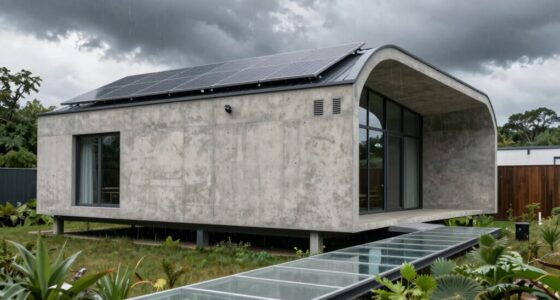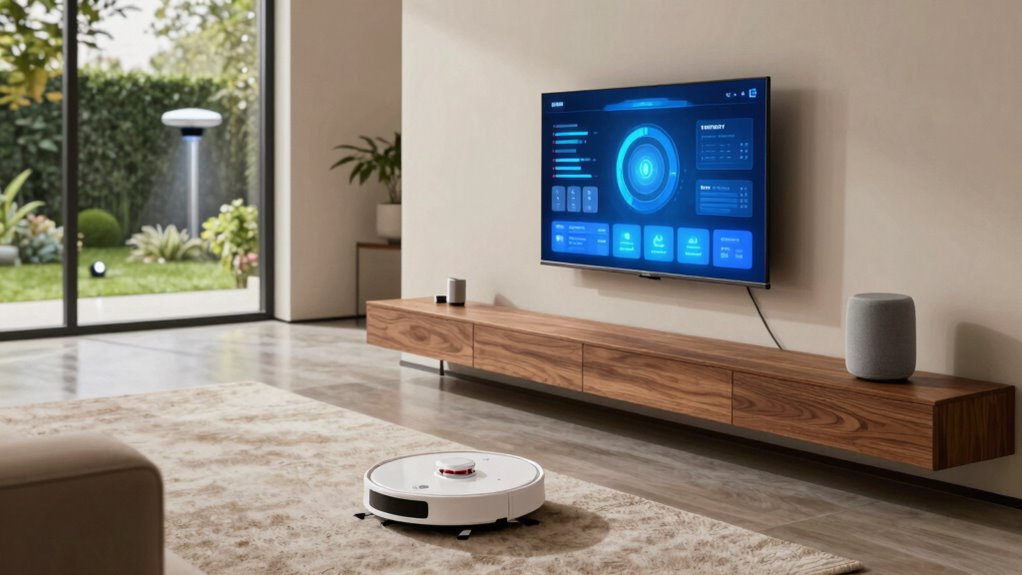

Future home technology stacks will connect smart devices seamlessly, offering advanced automation, climate, and lighting control that adapt to your habits. Security systems will be more intelligent with facial recognition and real-time alerts, while robust Wi-Fi 6/6E and mesh networks guarantee reliable connectivity. Voice, gesture, AR, and VR will make managing your home intuitive. As these trends evolve, you’ll discover innovative ways to create a secure, energy-efficient, and personalized living space.

Get books, candles and calm essentials delivered free — and shop member deals
- Fast, free delivery on millions of items
- Access to Prime Big Deal Days deals on October 6–7
- Prime Video, Amazon Music and more included
Key Takeaways
- Integration of AI-powered habit learning and environment adjustment for personalized automation.
- Adoption of advanced connectivity protocols like Wi-Fi 6/6E, mesh networks, and edge computing for reliable device communication.
- Implementation of secure networking, firewalls, and encryption to protect smart home systems from cyber threats.
- Utilization of voice, gesture, AR, and VR technologies for intuitive and immersive home management.
- Scalability of systems to incorporate new devices, standards, and future technological innovations seamlessly.
As an affiliate, we earn on qualifying purchases.
The Evolution of Smart Home Devices
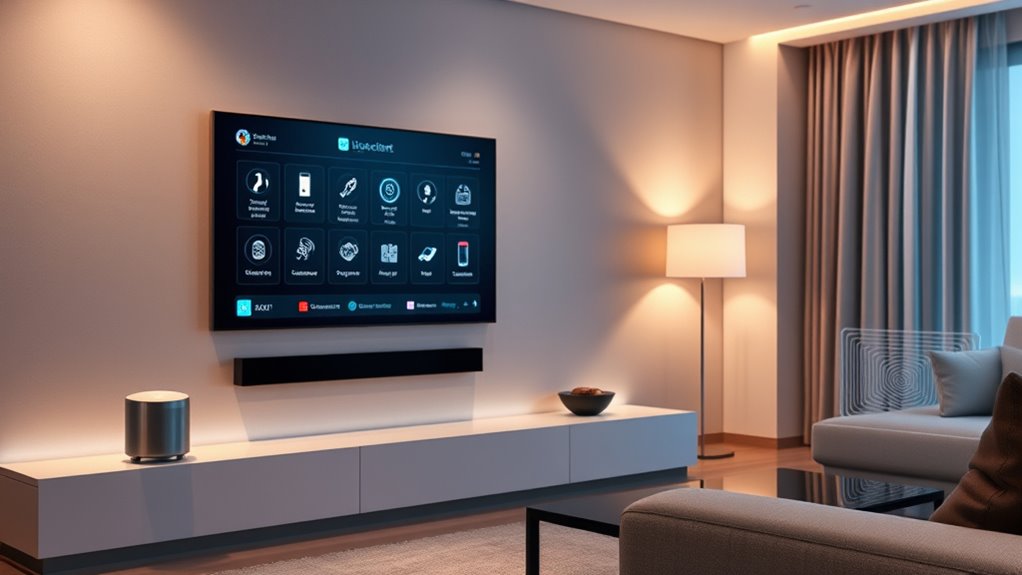
The evolution of smart home devices has transformed how you interact with your living space, making it more connected and automated than ever before. You’ve gone from simple remote controls to intelligent gadgets that learn your habits and preferences. Devices like smart thermostats, lights, and security cameras now communicate seamlessly, creating a cohesive environment. Advances in sensor technology and connectivity have enabled these devices to respond instantly to your commands and environmental changes. You no longer need to manually adjust settings; instead, your home anticipates your needs. Over time, these innovations have made smart homes more intuitive, energy-efficient, and secure. The progression reflects rapid technological growth focused on enhancing your convenience, safety, and overall quality of life, including local automation that enables customized routines and cross-platform integration for a unified smart home experience. Additionally, understanding kitchen science & materials can help you optimize the placement and operation of smart appliances for better performance and safety, especially as new home theater projectors become more integrated with smart home ecosystems. Incorporating reliable backup power solutions can further ensure your smart devices remain operational during outages, safeguarding your connected environment. Integrating European cloud servers can further enhance the security and reliability of your smart home network, ensuring your data remains protected.
smart home security camera with facial recognition
As an affiliate, we earn on qualifying purchases.
As an affiliate, we earn on qualifying purchases.
Integrated Automation Systems
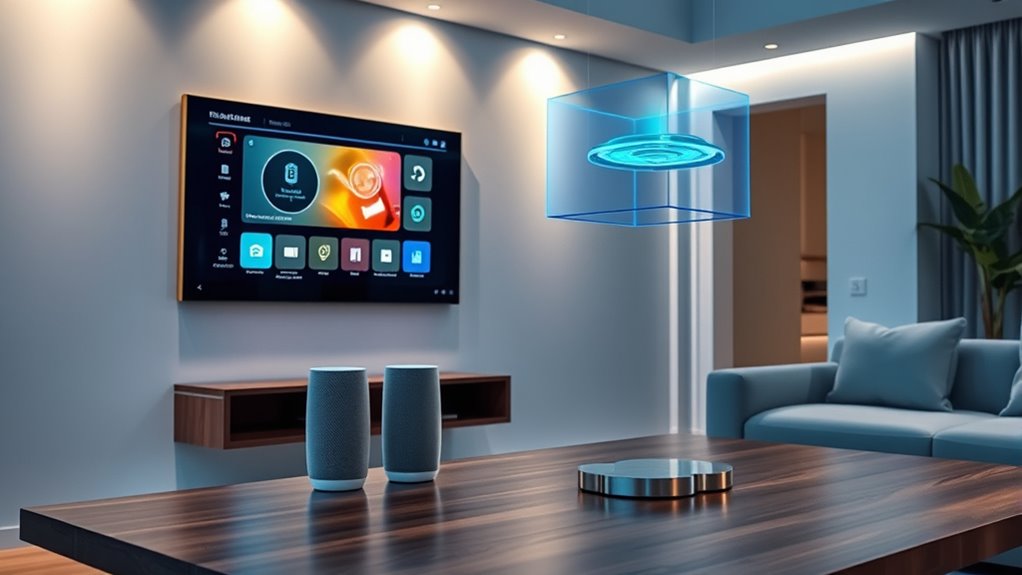
Integrated automation systems connect your smart devices seamlessly, making sure they work together effortlessly. You’ll want a centralized platform that simplifies control and allows easy access to all your gadgets. Custom automation scenarios let you tailor your home’s functions to fit your lifestyle perfectly. Incorporating smart appliance integration enhances the overall efficiency and responsiveness of your connected home. Additionally, leveraging Free Floating concepts can help optimize system performance and energy efficiency. Ensuring that your system supports safe installation practices is essential for both performance and security. A comprehensive approach to system scalability can future-proof your smart home as new devices and technologies emerge. Considering interoperability standards can further improve device compatibility and ease of system expansion.
Smart Device Compatibility
Ensuring smart devices work seamlessly together is essential for creating a truly integrated automation system in your home. Compatibility issues can lead to frustration, device failures, or limited functionality. To avoid this, choose devices that support common standards like Zigbee, Z-Wave, or Wi-Fi, which facilitate interoperability. Verify that your devices are compatible with your existing or planned automation hubs and platforms. Keep firmware updated to maintain compatibility and security. Consider devices from reputable brands known for open standards, making integration easier. Additionally, look for products that support voice assistants like Alexa, Google Assistant, or Siri, ensuring you can control everything effortlessly. Properly matching your smart devices guarantees smooth operation, simplifies management, and enhances the overall smart home experience. Incorporating the best soil for string of hearts plants can also improve the health of indoor greenery, complementing your smart home environment. Understanding the security zone info can help you prioritize and protect your smart home network effectively. Paying attention to vetted compatibility ensures your devices work reliably and securely within your smart home ecosystem, reducing the risk of Compatibility issues and ensuring a cohesive user experience. Being aware of device interoperability standards can further streamline the setup process and future upgrades.
Centralized Control Platforms
Centralized control platforms serve as the backbone of a smart home, allowing you to manage all your devices from a single interface. With these systems, you gain a unified dashboard that connects lights, thermostats, security cameras, and more, making automation straightforward. You can set schedules, monitor device status, and troubleshoot issues without switching between multiple apps. These platforms often support voice commands and mobile access, giving you control anytime, anywhere. They also facilitate firmware updates and security patches, ensuring your system remains reliable and safe. By centralizing control, you reduce complexity and improve efficiency, making it easier to expand your smart home over time. Additionally, a well-designed control platform can incorporate outdoor safety features that enhance security and monitor environmental conditions around your property. This centralization also simplifies the integration of household cleaning robots, streamlining your home maintenance tasks through a single system. Incorporating period-specific design elements can further enhance the vintage aesthetic of your home, seamlessly blending new technology with classic styles. Implementing standardized protocols ensures compatibility across diverse devices, which is crucial for a cohesive smart home experience. Ultimately, a good control platform simplifies device management and enhances your overall home automation experience, especially when integrating new devices becomes part of your home system.
Custom Automation Scenarios
Custom automation scenarios enable you to tailor your smart home’s behavior to fit your lifestyle. You can set specific triggers and actions that activate automatically, making everyday routines seamless. For example, you might program lights to turn on and the thermostat to adjust when you arrive home, or set your blinds to close at sunset. These scenarios give you control over multiple devices simultaneously, creating a personalized environment. With integrated automation systems, you don’t need to manually manage each device; instead, you craft workflows that respond to your habits and preferences. Incorporating comfort-focused design principles into your automation helps support your well-being and productivity. Implementing energy efficiency strategies within your automation can further reduce your utility costs while maintaining comfort. By leveraging smart device integration, you can create more cohesive and responsive automation workflows that enhance your daily living. Understanding system compatibility is essential for building effective automation, ensuring all devices work seamlessly together. This level of customization enhances convenience, energy efficiency, and security, ensuring your smart home adapts perfectly to your needs without constant manual input.
voice-controlled smart lighting system
As an affiliate, we earn on qualifying purchases.
As an affiliate, we earn on qualifying purchases.
Intelligent Climate and Lighting Control
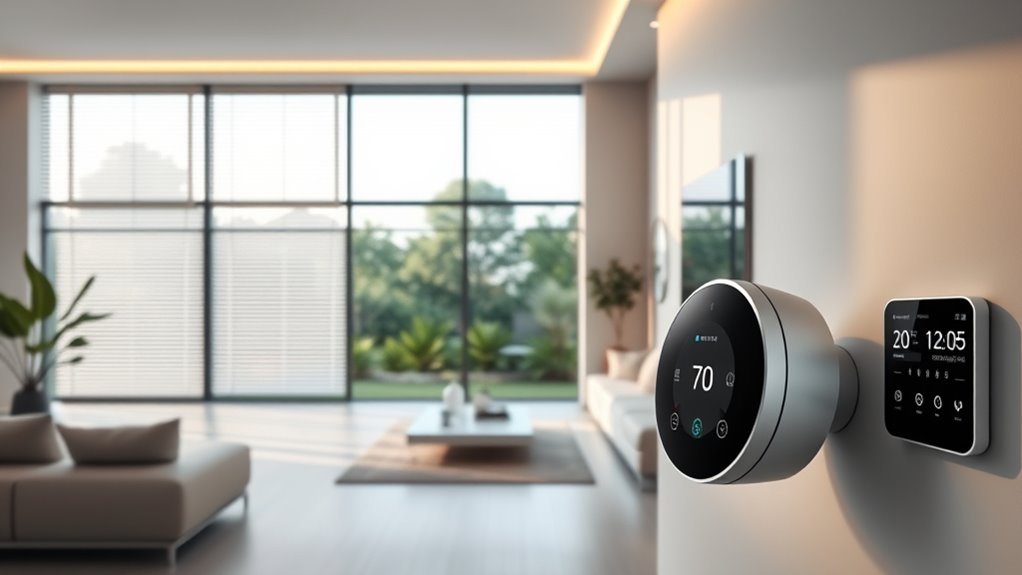
Imagine your home adjusting its temperature automatically to keep you comfortable and save energy. With automated light dimming, your spaces become cozy or bright without lifting a finger. These smart controls optimize energy use while enhancing your daily comfort.
Adaptive Temperature Regulation
Adaptive temperature regulation leverages intelligent systems that automatically adjust your home’s climate and lighting based on your preferences and occupancy patterns. These systems learn from your daily routines, ensuring comfort while optimizing energy use. You’ll notice consistent warmth in winter and coolness in summer without manual adjustments. The system uses sensors to detect occupancy, adjusting settings when rooms are empty, saving energy. Additionally, it can adapt to changes in weather or your schedule, providing seamless climate control. This intelligent approach also considers device integration, enabling you to customize your environment remotely.
- Learns your preferred temperature and lighting settings over time
- Detects occupancy to optimize energy efficiency
- Adjusts automatically based on weather and time of day
- Provides remote control via smartphone apps
Automated Light Dimming
Automated light dimming systems dynamically adjust your home’s lighting levels based on occupancy, natural light, and time of day. By sensing when a room is in use or detecting daylight levels, the system guarantees optimal brightness without wasting energy. You can set preferred lighting scenes for different activities, like relaxing or working, and the system smoothly transitions between them. These controls can be integrated with smart home hubs for centralized management or operated through mobile apps for convenience. Automated dimming not only enhances comfort but also reduces electricity consumption by avoiding unnecessary lighting. With adaptive sensors and programmable schedules, you gain effortless control over your home’s ambiance, creating a more comfortable, energy-efficient living space.
Energy Efficiency Optimization
Have you ever considered how smart climate and lighting controls can slash your energy bills? These systems automatically adjust temperature and lighting based on your schedule, preferences, and occupancy, optimizing energy use. By integrating sensors and AI, they prevent unnecessary heating, cooling, or lighting when rooms are unoccupied. This not only saves money but also reduces your carbon footprint. Key features include:
- Adaptive scheduling that learns your routines
- Occupancy sensors that turn off unused devices
- Dimming controls that adjust brightness based on natural light
- Real-time energy consumption monitoring
With these tools, you gain greater control over your home’s efficiency, making your living space both smarter and more sustainable. Implementing intelligent climate and lighting controls guarantees you use less energy without sacrificing comfort.
smart thermostat with AI learning
As an affiliate, we earn on qualifying purchases.
As an affiliate, we earn on qualifying purchases.
Advanced Security and Surveillance
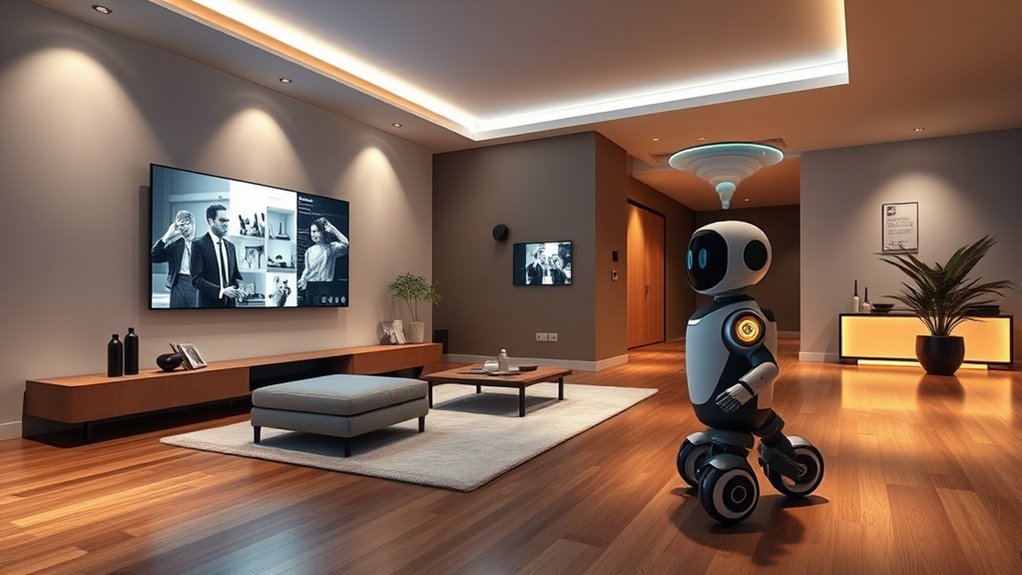
How can your home stay secure in an increasingly connected world? Advanced security and surveillance systems offer real-time monitoring, smart alerts, and facial recognition to keep you protected. You can access live feeds from your smartphone, receive instant notifications about unusual activity, and control cameras remotely. These systems integrate seamlessly with other smart devices, creating a extensive security network.
| Device Type | Feature | Benefit |
|---|---|---|
| Smart Cameras | Motion detection, night vision | 24/7 monitoring, clear images |
| Smart Locks | Biometric access, remote control | Keyless entry, enhanced control |
| Sensors & Alarms | Glass break, door/window sensors | Immediate alerts, deterrence |
Connectivity and Network Infrastructure
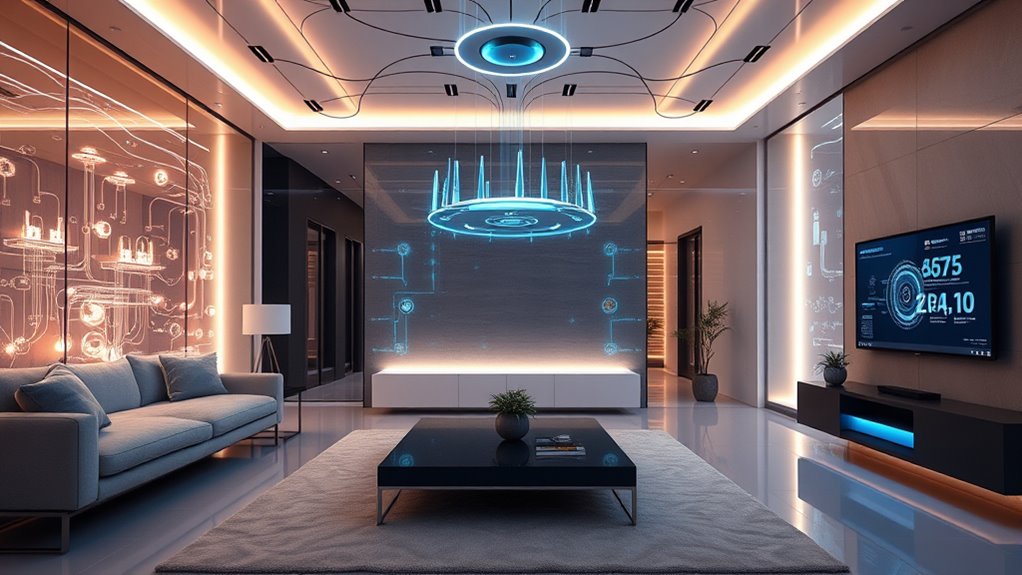
A robust connectivity and network infrastructure is the backbone of a smart home, ensuring that all devices communicate seamlessly and operate efficiently. Without it, your smart devices can experience lag, disconnections, or reduced functionality. To build a reliable network, consider these key components:
- High-speed Wi-Fi 6 or Wi-Fi 6E for faster, more reliable connections
- Ethernet wiring for stable, wired links to critical devices
- Mesh network systems to expand coverage and eliminate dead zones
- Secure routers and firewalls to protect your smart home from cyber threats
Future Trends and Emerging Technologies
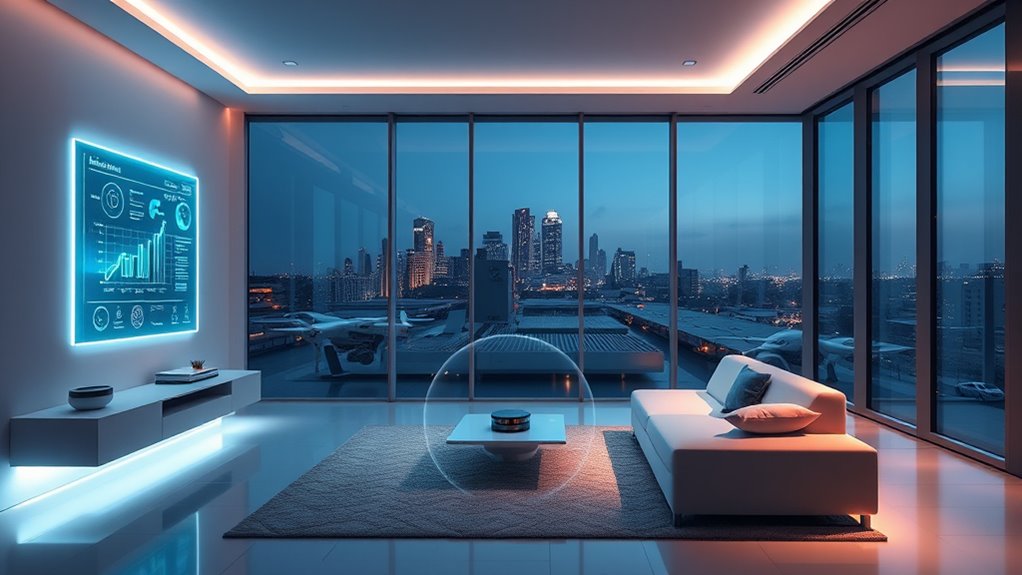
Emerging technologies are set to revolutionize home automation, making your smart home more intuitive, efficient, and secure. AI-powered systems will learn your habits, adjusting lighting, temperature, and security to fit your lifestyle seamlessly. The rise of edge computing will process data locally, reducing latency and enhancing privacy. Voice and gesture recognition will become more sophisticated, allowing you to control devices effortlessly. Smart sensors will provide real-time monitoring of your environment, alerting you to potential issues before they escalate. Integration of augmented reality (AR) and virtual reality (VR) will enable immersive interfaces for managing your home. As these technologies evolve, your home will become an intelligent ecosystem that adapts to your needs, offering unprecedented convenience and safety.
Frequently Asked Questions
How Will AI Personalize Future Home Experiences?
AI will personalize your future home experiences by learning your habits and preferences, then adjusting settings automatically. It will optimize lighting, temperature, and even music to match your mood or activity. You’ll get tailored notifications and reminders, making daily routines smoother. With voice commands, you’ll control everything effortlessly. Over time, AI adapts to your evolving needs, creating a seamless, comfortable environment that feels uniquely yours every moment.
What Are the Privacy Implications of Advanced Home Sensors?
You might unknowingly share more than you intend with advanced home sensors, raising privacy concerns. These sensors collect data about your habits, movements, and preferences, which could be misused or hacked. It’s like having a constant observer in your home. To safeguard yourself, you should understand what data is collected, control access, and stay informed about security features. Staying vigilant helps ensure your privacy isn’t compromised as technology advances.
Will Smart Home Devices Become More Energy-Efficient?
Yes, smart home devices will become more energy-efficient as technology advances. You’ll notice smarter sensors, improved algorithms, and better power management features that reduce energy waste. Manufacturers focus on optimizing device performance while minimizing energy consumption, helping you save on utility bills. As innovations continue, your smart home will operate more sustainably, giving you peace of mind knowing you’re reducing your carbon footprint without sacrificing convenience or comfort.
How Accessible Will Future Home Technology Be for All Users?
You’ll find future home tech more accessible than ever, even if you worry about complexity. Advances in user-friendly interfaces, voice controls, and customization mean you can effortlessly manage devices, regardless of your tech skills. Manufacturers aim to make smart home features inclusive, with affordability and simplicity at the forefront. So, instead of feeling overwhelmed, you’ll enjoy seamless integration that enhances your daily life without requiring technical expertise.
What Standards Will Ensure Interoperability Among New Devices?
Standards like Zigbee, Z-Wave, and Thread will guarantee interoperability among new devices. These protocols create common communication languages, so your devices can seamlessly connect and work together. Expect industry organizations to continue developing and updating these standards, making it easier for you to integrate various brands and technologies into your smart home. By adhering to these standards, your devices will remain compatible, reliable, and easy to manage.
Conclusion
Imagine walking into your smart home, where everything responds seamlessly—like a well-orchestrated symphony. As technology advances, your home becomes more intuitive, efficient, and secure. Just as a maestro guides each instrument to create harmony, your future home will integrate devices effortlessly, enhancing your daily life. Embrace these innovations, and you’ll find your living space transforming into a personalized sanctuary—smart, connected, and ready for tomorrow.
Halloween Picks
halloween
As an affiliate, we earn on qualifying purchases.