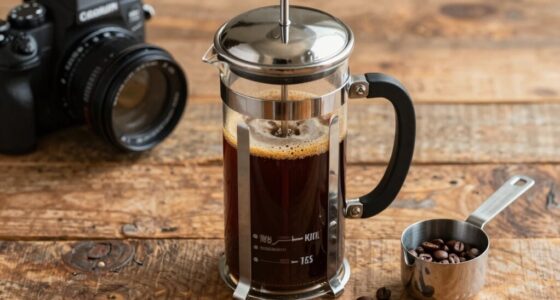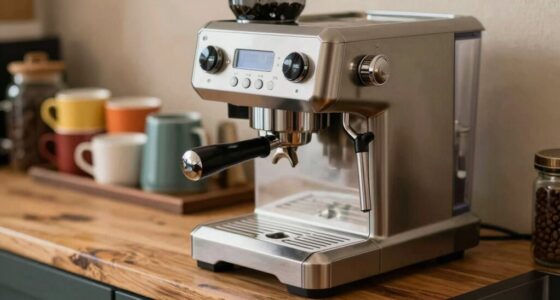

To stop bitter coffee at home, start by choosing light or medium roasts instead of dark, which can release more bitterness. Store your beans properly in airtight, light-proof containers and use them within a few weeks. Adjust your brewing temperature to between 195°F and 205°F to avoid extracting bitter compounds. Also, guarantee your grind size matches your brewing method, and measure your coffee accurately using 1 to 2 tablespoons per six ounces of water. Taking these steps can make a noticeable difference—learn more for even better results.

Turn your quiet moments into listening time
- Thousands of audiobooks, podcasts and originals
- Listen on your phone, tablet or Echo — also offline
- Cancel anytime
Key Takeaways
- Use light or medium roast beans and buy fresh, storing them properly to maintain optimal flavor.
- Brew at temperatures between 195°F and 205°F to prevent over-extraction and bitterness.
- Adjust grind size and brewing time to avoid over-extraction and ensure balanced flavor.
- Measure coffee accurately, using 1-2 tablespoons per six ounces of water, to prevent excessive strength.
- Avoid over-roasting beans and choose reputable roasters for balanced, less bitter coffee.

If your coffee tastes bitter, there are simple adjustments you can make at home to improve its flavor. One of the main factors affecting bitterness is how you handle the coffee bean roasting process. If your beans are roasted too dark, they release more bitter compounds, which can overpower the smooth, nuanced flavors you want. Opt for a lighter roast if you’re roasting your own beans, or buy beans labeled as light or medium roast from the store. Freshly roasted beans also matter; the longer they sit after roasting, the more their flavors dull, and bitterness can become more pronounced. To minimize this, buy smaller quantities and use them within a few weeks of roasting or purchase from a reputable roaster known for balanced roasts. Additionally, choosing proper roasting levels can significantly influence the flavor profile of your coffee. Being aware of roast freshness is also essential, as stale beans tend to produce more bitterness and a flat taste. Proper storage practices, such as keeping beans in an airtight container away from light, can help maintain their freshness longer.
Choosing lighter, fresher roasts reduces bitterness and enhances complex flavors in your coffee.
Adjusting your brewing temperature is another key step. If your water is too hot—say, above 205°F (96°C)—it extracts more bitter compounds from the coffee grounds. To prevent this, aim for a brewing temperature between 195°F and 205°F (90°C to 96°C). Using a kettle with temperature control or a brewing method that naturally maintains ideal temperatures, like pour-over or AeroPress, can help. If you’re using a French press or drip coffee maker, check if your machine has adjustable temperature settings. Lowering the temperature slightly can make a noticeable difference in reducing bitterness, allowing the sweeter, more delicate flavors to come through.
Another aspect to think about is the brewing process itself. Over-extraction occurs when water is in contact with coffee grounds for too long or at too high a temperature, pulling out bitter compounds. To fix this, experiment with shorter brewing times or coarser grind sizes. A coarser grind slows extraction, preventing over-extraction and bitterness. Similarly, if you’re using a drip machine, avoid overfilling the basket or tamping the grounds too tightly. Ensuring even, controlled extraction helps produce a balanced cup. Proper brewing technique can make a significant difference in flavor clarity and bitterness reduction. Additionally, paying attention to the coffee grind size and ensuring it matches your brewing method can further improve flavor and reduce bitterness.
Lastly, pay attention to your coffee-to-water ratio. Using too much coffee can also lead to bitterness because the concentration becomes too strong. Measure your coffee precisely—about 1 to 2 tablespoons per six ounces of water—and adjust as needed. By controlling the roasting level, brewing temperature, grind size, and coffee amount, you can notably reduce bitterness and enjoy a smoother, more flavorful cup every time.
coffee bean airtight storage container
As an affiliate, we earn on qualifying purchases.
As an affiliate, we earn on qualifying purchases.
Frequently Asked Questions
Can the Type of Coffee Bean Affect Bitterness?
Yes, the type of coffee bean affects bitterness. Coffee bean varieties like Arabica tend to be less bitter, while Robusta beans often have a stronger, more bitter flavor. Roasting levels also play a role; dark roasts are usually more bitter than light roasts. Choosing the right bean variety and roasting level helps you control bitterness, ensuring your coffee tastes smooth and enjoyable.
Does Water Quality Impact Coffee Bitterness?
Ever wondered if water quality influences bitterness? It definitely does. Like tea infusions, water with high mineral content can intensify coffee’s acidity and bitterness. Using filtered or bottled water might be your secret weapon, balancing flavors and reducing harshness. Don’t underestimate this simple change; it could transform your brew from bitter to beautifully smooth, revealing nuanced flavors you’ve never noticed before. Sometimes, the key to perfect coffee is just better water.
Are There Specific Brewing Methods That Reduce Bitterness?
Yes, certain brewing methods can reduce bitterness by optimizing flavor extraction and controlling brew temperature. Using pour-over or AeroPress methods allows you to fine-tune extraction, resulting in a smoother taste. Keep your brew temperature around 195-205°F, as higher temperatures can extract bitter compounds. Shortening brew time or adjusting grind size can also minimize bitterness, helping you achieve a balanced, flavorful cup.
How Does Storage Affect Coffee’s Flavor Profile?
Storage conditions greatly impact your coffee’s flavor profile. Keep your beans in an airtight container, away from light, heat, and moisture to preserve freshness. Proper storage prevents oxidation, which dulls flavors and intensifies bitterness. When you store coffee correctly, you retain its aromatic oils and flavor nuances longer. This freshness preservation ensures every cup you brew tastes vibrant, balanced, and less bitter, giving you a more enjoyable coffee experience.
Can Adding Milk or Sugar Completely Mask Bitterness?
Adding milk or sugar can mask some bitterness, but it doesn’t completely eliminate it. Sweeteners masking the bitter notes, making the coffee taste smoother, while milk enhancement helps balance flavors and adds creaminess. However, if your coffee is overly bitter, it’s better to adjust brewing methods or coffee beans first. Remember, while milk and sugar improve taste, they don’t fix underlying issues causing bitterness.
As an affiliate, we earn on qualifying purchases.
Conclusion
Now that you know how to tame bitter coffee, you’ll be brewing perfect cups every time. Remember, even the most seasoned barista had to start somewhere — so don’t be discouraged if your first few attempts are a tad off. Keep experimenting, and soon you’ll be enjoying coffee as smooth as a well-placed jester’s jest. With these tips, your mornings will become as delightful as a knight’s feast — no more bitter brew to ruin your day!
As an affiliate, we earn on qualifying purchases.
As an affiliate, we earn on qualifying purchases.
Halloween Picks
halloween
As an affiliate, we earn on qualifying purchases.