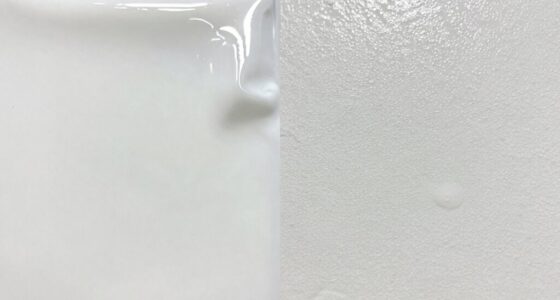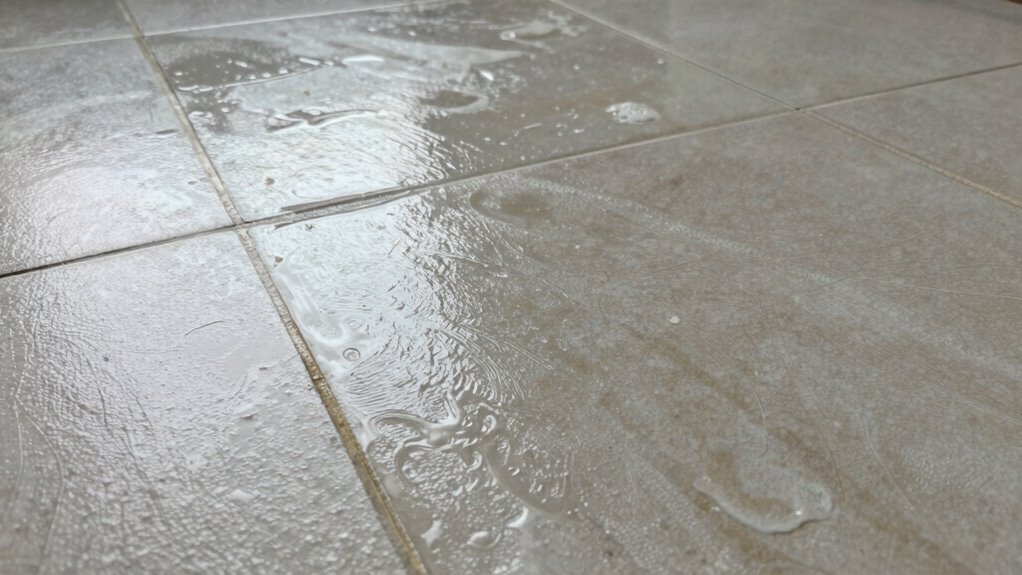

Using too much soap on your tile floors leaves behind residue that dulls their natural shine and causes a cloudy, hazy look. Excess soap is hard to rinse away completely, trapping dirt and grime in the grout lines. This buildup not only dulls the surface but can also make future cleaning less effective. To keep your floors looking bright, it’s best to use less soap and rinse thoroughly—keep exploring to discover more tips for shiny, spotless tiles.

Turn your quiet moments into listening time
- Thousands of audiobooks, podcasts and originals
- Listen on your phone, tablet or Echo — also offline
- Cancel anytime
Key Takeaways
- Excess soap creates residue that dulls tile surfaces and reduces their natural shine.
- Soap buildup traps dirt and grime, making tiles appear dirty even after cleaning.
- Residues from overusing soap are difficult to rinse away completely, leading to cloudiness.
- Soap residue settles into grout lines, causing discoloration and darkening the grout.
- Using too much soap diminishes the reflective quality of tiles, resulting in a dull, hazy appearance.
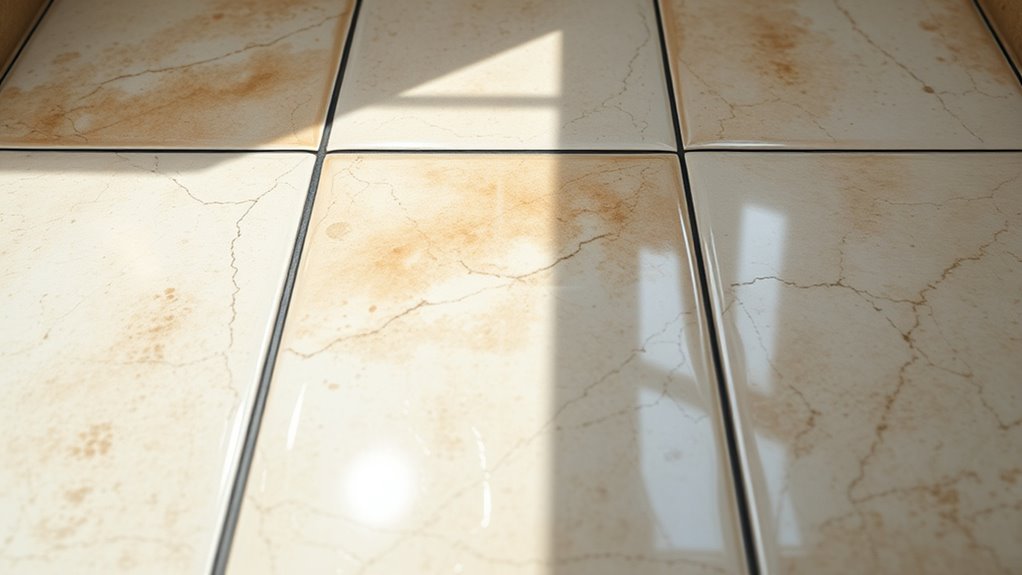
Have you ever wondered how to keep your tile floors looking spotless and fresh? One common mistake many homeowners make is using too much soap when cleaning. While soap can seem like a quick fix to cut through dirt, overusing it can lead to a dull, hazy appearance that diminishes your tile’s natural shine. The problem lies in soap’s tendency to leave behind residue, especially if not rinsed thoroughly. This residue builds up over time, trapping dirt and making your tiles look cloudy, even if they’re physically clean. To avoid this, opt for gentle, pH-neutral cleaners specifically designed for tile and grout, and remember that less is more. Using too much soap often worsens grout discoloration, making grout lines appear darker or stained, which can be frustrating to fix later.
Another key aspect to maintaining bright, clean tiles involves proper tile sealing techniques. Sealing your tiles acts as a barrier that prevents dirt, moisture, and stains from penetrating the surface. When you neglect sealing or apply it improperly, grout becomes prone to discoloration and staining, leaving your floors looking dull and unkempt. Before applying a sealant, ensure your tiles and grout are thoroughly cleaned and dry. Proper sealing not only enhances the appearance but also makes future cleaning easier, as dirt and soap residue won’t cling so readily. When you use high-quality sealants and follow recommended application procedures, you safeguard your floors against future grime buildup, helping them stay vibrant longer. Additionally, understanding water quality and using appropriate cleaning methods can significantly impact how well your floors maintain their shine over time.
It’s also important to understand that soap residue is often why your tiles seem dull after cleaning. After washing, make sure you rinse thoroughly with clean water to remove any leftover soap or cleaning solution. Skipping this step allows residues to settle into the grout lines and tile surface, dulling the overall look. Regularly inspecting and re-sealing your grout is equally essential; over time, sealants can wear down, making grout discoloration more likely and your floors less radiant. By combining gentle cleaning techniques with proper sealing, you preserve the natural beauty of your tile floors and avoid the cycle of dullness caused by over-cleaning with soap.
Frequently Asked Questions
How Often Should I Clean My Tile Floors?
You should clean your tile floors weekly to keep them looking their best. Use a gentle cleaner to avoid soap buildup, which can dull the surface. Regular grout sealing prevents dirt from seeping in, making cleaning easier. After cleaning, consider tile polishing to restore shine. Avoid excessive soap, and rinse thoroughly to prevent residue. This routine keeps your floors bright, clean, and well-maintained over time.
Can I Use Vinegar on All Tile Types?
You can’t throw vinegar at all tile types without a second thought, so don’t jump the gun. Vinegar safety varies, especially if your tiles are sensitive—natural stone, for example, can get damaged. Always test a small area first. For ceramic or porcelain, vinegar works fine and cuts through grime. Remember, when in doubt, check your tile’s manufacturer guidelines so you don’t end up with a costly mistake.
What’s the Best Mop for Tile Floors?
You should choose a microfiber mop for tile floors, as its soft material cleans effectively without scratching. Microfiber mops are easy to maneuver and trap dirt well. Use this mop with a suitable cleaning solution, and clean your tiles regularly—ideally once a week—to prevent buildup. Avoid heavy soap use, which can make your tiles look dull. This approach keeps your tiles shiny and well-maintained over time.
How Do I Remove Tough Stains From Tiles?
Think of tough stains as stubborn weeds in your tile garden. To remove mildew and grout discoloration, mix a paste of baking soda and water, then apply it to the stains. Let it sit, scrub gently with a soft brush, and rinse thoroughly. For extra power, add vinegar for mildew removal. This natural approach brightens your tiles, making stains fade like shadows in the morning sun.
Are There Eco-Friendly Cleaning Options for Tiles?
Yes, you can use eco-friendly cleaners for tiles. Look for sustainable options like vinegar and baking soda, which are effective and safe for the environment. Avoid harsh chemicals that can damage your tiles and harm the planet. These natural solutions not only clean thoroughly but also prevent dullness caused by soap residue. By choosing eco-friendly cleaners, you protect your home and contribute to a healthier planet.
Conclusion
Remember, using too much soap when cleaning your tile floors is like pouring a flood of confusion over your space—your floors will look dull and grimy, no matter how much you scrub. Keep your cleaning routine simple and use just enough cleaner to do the job. That way, you’ll prevent build-up and keep your tiles shining brighter than a diamond. Trust me, your floors deserve the glow of a thousand suns—don’t let soap dull their brilliance!
Halloween Picks
halloween
As an affiliate, we earn on qualifying purchases.