
To reduce dust in your home this weekend, focus on hidden sources like underneath furniture, behind decor, and inside air vents and ducts. Clean electronics, soft furnishings, and cluttered surfaces with damp microfiber cloths. Improve airflow by opening windows, using exhaust fans, and replacing HVAC filters. Sealing gaps and maintaining regular cleaning routines help prevent long-term buildup. Keep going, and you’ll discover even more simple strategies to keep dust at bay effortlessly.
Key Takeaways
- Clean behind and under furniture, including beds and couches, to remove hidden dust and allergens.
- Regularly vacuum and wipe electronics, light fixtures, and air vents to prevent dust buildup.
- Remove and clean vent covers and ducts to improve airflow and reduce dust circulation.
- Dust household textiles like curtains, rugs, and bedding with damp microfiber cloths to trap airborne particles.
- Maintain proper ventilation by opening windows, using exhaust fans, and replacing HVAC filters every 1-3 months.
Hidden Dust Collectors in Your Living Spaces

Many people overlook the often unnoticed spots in their homes where dust quietly accumulates. Your furniture, especially underneath and behind it, acts as a magnet for dust particles. Over time, dust settles on shelves, picture frames, and decorative objects, creating hidden layers of grime. Ceiling fans and light fixtures are prime collectors, gathering dust in hard-to-reach spots that often go unnoticed during regular cleaning. Electronics, like TVs and gaming consoles, attract dust due to static buildup, yet many skip cleaning them thoroughly. Even vents and air return grilles trap dust that circulates through your home, but they’re often neglected. Regularly inspecting and cleaning these hidden areas prevents dust buildup and keeps your living space cleaner and healthier. Additionally, dust accumulation can impact indoor air quality and exacerbate allergies if not addressed regularly. Using air purifiers can significantly reduce airborne dust and improve overall air quality in your home, especially when combined with proper ventilation and filtration practices. Incorporating HEPA filters in your air purifiers can further enhance dust removal efficiency and promote cleaner indoor air. Ensuring regular cleaning of these hidden dust collectors not only maintains a cleaner environment but also reduces potential health issues related to indoor air quality.
Overlooked Areas in Your Cleaning Routine

You might be missing dust hiding in hidden vent ducts and under furniture that’s often overlooked. These areas collect debris quietly and can impact your home’s air quality. Taking a few extra moments to clean them can make a noticeable difference. Regularly inspecting and cleaning hard-to-reach areas such as vent ducts and beneath furniture can help reduce allergens and improve indoor air cleanliness. Using appropriate power tools like rotary brushes or dust extractors during this cleaning can enhance efficiency and ensure thorough removal. Incorporating attention to detail into your cleaning routine ensures even the most concealed dust is effectively eliminated. Additionally, understanding how contrast ratio affects your home’s lighting can help you optimize your living spaces for comfort and clarity. To further improve air quality, consider using air purifiers equipped with HEPA filters to capture fine particles that traditional cleaning might miss.
Hidden Vent Ducts
Hidden vent ducts often go unnoticed during routine cleaning, yet they can harbor significant dust buildup over time. Dust settles inside these ducts, reducing air quality and making your HVAC system work harder. To tackle this, turn off your system and remove vent covers. Use a vacuum with a brush attachment to clean inside the ducts thoroughly. For deep cleaning, consider using a long, flexible brush or hiring a professional duct cleaning service. Don’t forget to clean or replace filters regularly to prevent dust from circulating. Sealing any leaks around vents can also improve efficiency and reduce dust infiltration. Regular maintenance of your vent ducts keeps dust at bay, improves indoor air quality, and helps your HVAC system function smoothly—all achievable over a weekend. Additionally, energy-efficient solutions can help reduce dust circulation by optimizing your system’s performance. Incorporating proper ventilation can further enhance air quality and mitigate dust accumulation in your home. Using air purifiers with HEPA filters can also capture airborne dust particles and improve overall indoor air quality. Understanding the importance of air quality management can guide you in making effective upgrades for a healthier home environment. Being aware of natural filtration systems can also contribute to maintaining cleaner indoor air.
Under Furniture Spaces
While cleaning vent ducts addresses dust hidden behind walls and fixtures, overlooked areas like the spaces under furniture often gather just as much debris. These hidden spots trap dust, pet hair, and allergens that can circulate in your home. To tackle this, regularly move furniture when possible, or use a long-handled duster or vacuum attachment to reach underneath. Pay attention to corners and tight crevices where dirt tends to settle. Don’t forget to clean underneath beds, couches, and dressers, as these areas are prime dust collectors. Maintaining this habit helps reduce allergens and keeps your home cleaner and healthier. Incorporating effective airflow into your routine can also help prevent dust accumulation by promoting better ventilation in your space. Using air filtration systems can further improve indoor air quality by capturing airborne particles. Additionally, integrating smart home automation can remind you to perform these cleaning tasks regularly. Incorporating this step into your routine at least once a month for a noticeable difference in dust levels and overall cleanliness.
Common Household Items That Accumulate Dust

Many common household items quickly become dust magnets, making it essential to know which surfaces and objects tend to trap particles. Items like plush upholstered furniture, curtains, and rugs attract dust easily because their fibers trap airborne particles. Electronics such as TVs, computers, and stereo equipment also gather dust on their screens and vents, often unnoticed. Cluttered surfaces, including countertops and tabletops, can accumulate dust rapidly, especially if they aren’t cleaned regularly. Bedding, pillows, and stuffed animals hold dust and skin flakes, providing a perfect environment for dust mites. Additionally, decorative items like picture frames, candles, and vases collect dust on their surfaces. Regular dusting and cleaning of these objects can notably reduce dust buildup, improving indoor air quality and creating a healthier living space. Understanding dust sources can help you target cleaning efforts more effectively. Being aware of dust accumulation patterns allows for more strategic cleaning routines to maintain a cleaner home environment, especially considering how fabric surfaces can trap and hold dust particles over time. Recognizing airborne particles and their tendency to settle on certain objects can further enhance your cleaning strategy. Incorporating a high-efficiency vacuum with a HEPA filter can significantly reduce dust levels and improve overall air quality in your home.
The Role of Ventilation and Air Circulation
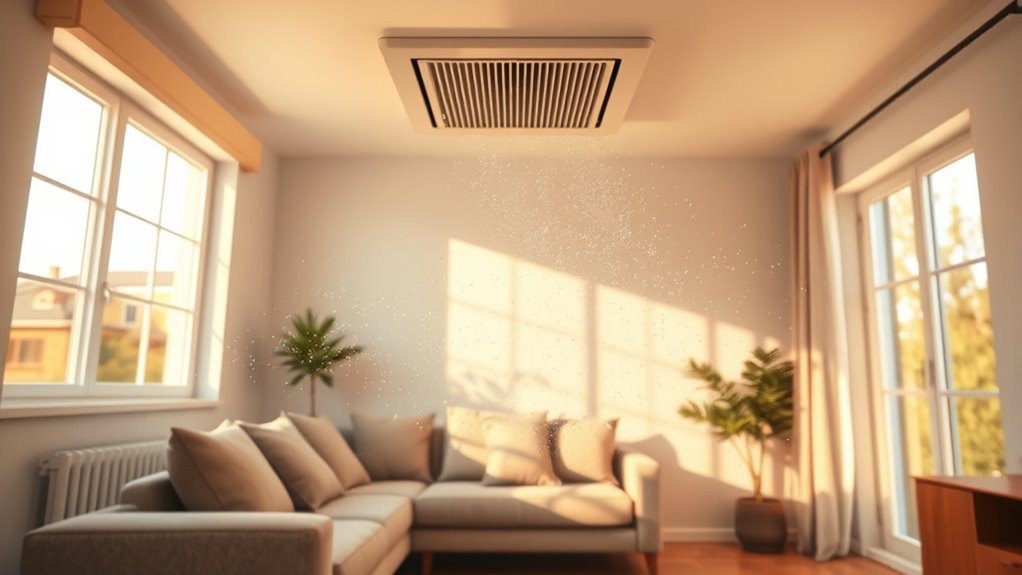
Good ventilation keeps dust from building up and improves your home’s air quality. Using proper techniques, like opening windows or running exhaust fans, boosts airflow efficiency. Don’t forget to change your air filters regularly to maintain clean, fresh air throughout your space.
Proper Ventilation Techniques
Proper ventilation is essential for maintaining a healthy home environment because it helps remove dust, mold, and other airborne pollutants. To achieve effective airflow, consider these techniques:
- Open windows daily to create cross-ventilation, which replaces stale indoor air with fresh outdoor air.
- Use exhaust fans in kitchens and bathrooms to vent humidity and airborne particles outside.
- Arrange furniture to avoid blocking vents and air returns, ensuring unobstructed airflow.
- Regularly replace or clean HVAC filters to maintain optimum air quality and circulation.
Implementing these strategies ensures consistent air exchange, reducing dust buildup and improving overall indoor air quality. Proper ventilation isn’t just about comfort; it’s a crucial step to keep your home healthier and safer.
Enhancing Airflow Efficiency
To maximize airflow efficiency in your home, focus on optimizing how air moves through each space. Properly positioned vents, open windows, and ceiling fans help promote circulation, reducing dust buildup. Guarantee vents aren’t blocked by furniture or curtains, and use exhaust fans in kitchens and bathrooms. Improving airflow not only disperses dust more effectively but also refreshes indoor air quality. Consider this quick guide:
| Airflow Tip | Benefit | Implementation |
|---|---|---|
| Use ceiling fans | Circulates air evenly | Install or activate ceiling fans |
| Open windows regularly | Freshens indoor air | Open windows daily |
| Clear vents and registers | Prevents blockages, boosts flow | Remove obstructions from vents |
| Maintain unclogged ducts | Enhances overall circulation | Schedule duct cleaning |
Enhancing airflow keeps dust at bay and makes your home healthier.
Regular Air Filter Changes
Regularly changing your air filters is essential for maintaining effective ventilation and circulation in your home. Fresh filters ensure air moves freely, reducing dust buildup and preventing allergens from circulating. Neglecting this task can lead to decreased airflow, higher energy bills, and compromised indoor air quality. To maximize benefits, consider these practices:
- Replace filters every 1-3 months, or more often if you have pets or allergies.
- Choose high-efficiency filters suited for your HVAC system.
- Check for signs of dirt or clogging regularly.
- Maintain proper air circulation by ensuring vents and registers are unobstructed.
DIY Tips for Reducing Dust Build-Up
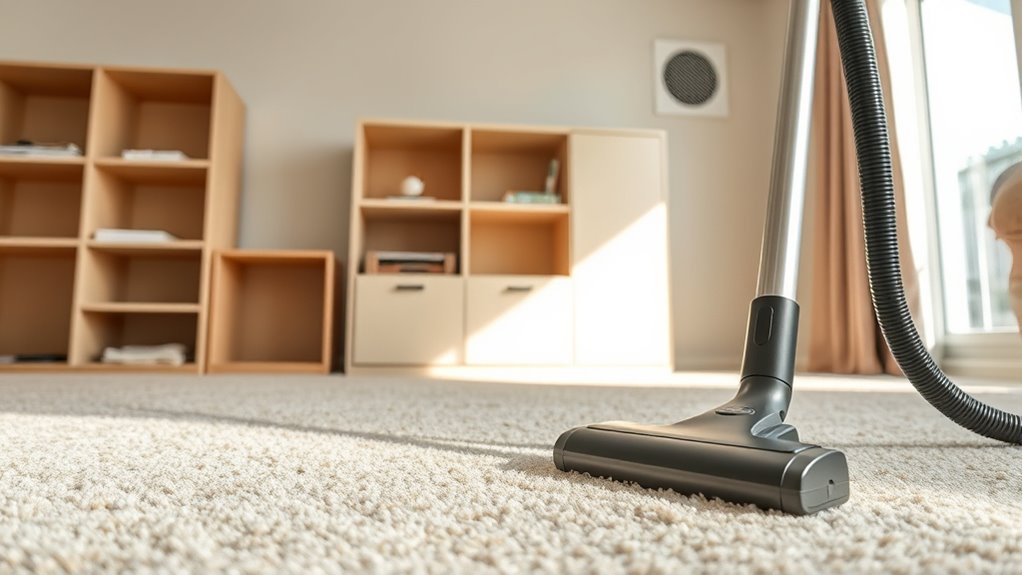
Dust can quickly accumulate in your home if you don’t stay on top of it, but there are simple DIY tricks to keep it at bay. Start by regularly wiping down surfaces with a damp cloth to trap dust instead of just spreading it around. Use microfiber cloths or dusters, which attract particles more effectively. Vacuum carpets and rugs at least once a week using a vacuum with a HEPA filter to remove dust from deep within fibers. Consider dust-proofing pillows and mattress covers to reduce dust mites. Declutter each room to minimize dust traps, and clean ceiling fans and vents monthly. Finally, keep shoes off in the house to prevent tracking in dirt and dust from outdoors. Small, consistent efforts make a big difference in maintaining a dust-free home.
Simple Fixes to Keep Dust at Bay Long-Term
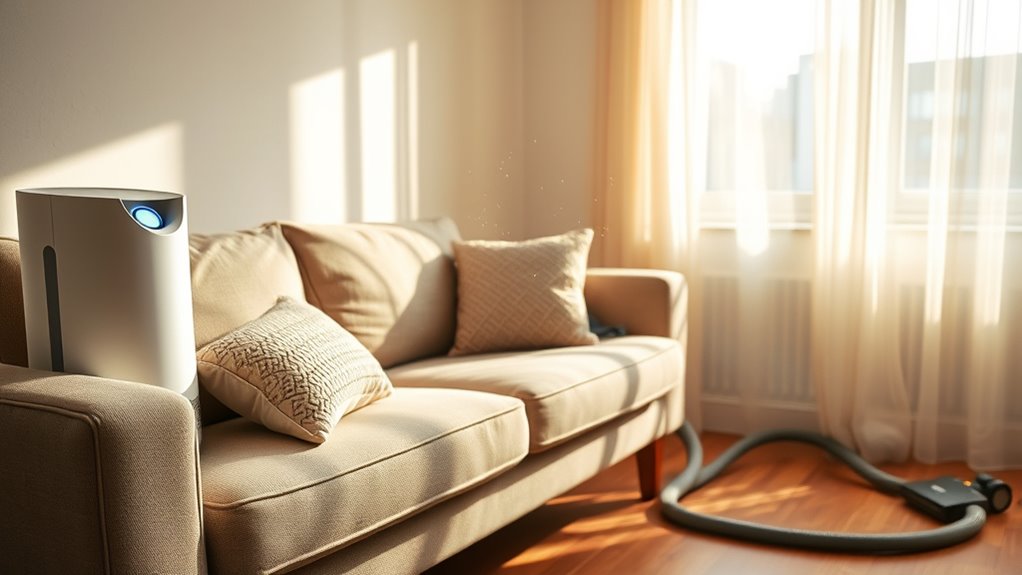
Implementing long-term solutions can substantially reduce dust buildup in your home. Start by establishing a regular cleaning routine, including dusting surfaces with a damp cloth to trap particles effectively. Consider investing in high-quality air purifiers with HEPA filters to continuously filter airborne dust. Seal gaps around windows and doors to prevent dust infiltration from outside. Finally, replace or upgrade HVAC filters every three months to guarantee optimal airflow and dust removal. These simple yet effective measures create a cleaner environment, reduce allergen buildup, and improve indoor air quality over time. By committing to these practices, you’ll maintain a healthier, dust-free home with less effort in the long run.
Frequently Asked Questions
How Often Should I Replace Air Filters to Reduce Dust?
You should replace your air filters every 1 to 3 months to effectively reduce dust. If you have pets, allergies, or live in a dusty area, consider changing them more frequently. Regularly swapping out filters keeps your HVAC system running efficiently and improves indoor air quality. Check your filter monthly, especially during peak usage seasons, to make sure you’re maintaining a dust-free, healthier home environment.
Can Houseplants Help Improve Indoor Air Quality?
Houseplants can help improve indoor air quality by absorbing toxins and increasing humidity. When you choose plants like pothos, peace lilies, or snake plants, you actively filter pollutants and boost oxygen levels. Keep them healthy with proper watering and light, and you’ll notice fresher air. Incorporating houseplants into your space is a simple, natural way to reduce dust and enhance your home’s overall air quality.
Are There Eco-Friendly Cleaning Products That Minimize Dust?
Absolutely, eco-friendly cleaning products are your secret weapon against dust. They’re like the superheroes of the cleaning world—powerful yet gentle, fighting grime without poisoning your air. With natural ingredients like vinegar, baking soda, or plant-based cleaners, you’ll minimize dust and toxins. Plus, your conscience stays as clean as your home, making these products the guilt-free way to keep your space sparkling and dust-free without harming the planet.
How Does Humidity Level Affect Dust Accumulation?
Maintaining proper humidity levels helps control dust accumulation. When your home’s humidity is around 40-50%, dust particles settle more quickly and are less likely to become airborne. Too low humidity causes dry air, increasing dust and static. Too high creates a damp environment that encourages mold and dust mites. Use a hygrometer to monitor humidity and adjust with a humidifier or dehumidifier to keep dust levels manageable effortlessly.
What Are the Best Tools for Quick Dust Removal?
You should grab a microfiber cloth, a handheld vacuum, and an extendable duster for quick dust removal. Microfiber cloths trap dust effectively and are reusable, making them eco-friendly. Use a handheld vacuum for surfaces like upholstery and floors, and an extendable duster to reach high corners and ceiling fans effortlessly. These tools make cleaning faster, easier, and more efficient, helping you keep your home dust-free in no time.
Conclusion
By giving your home a gentle refresh this weekend, you’re gently guiding dust to stay out of sight and out of mind. A few simple tweaks can transform your space into a cozy haven, where dust takes a backseat. Embrace these easy habits, and you’ll find your home feels fresher and more inviting. After all, a little effort now keeps the air clearer, making every breath you take a bit more delightful.