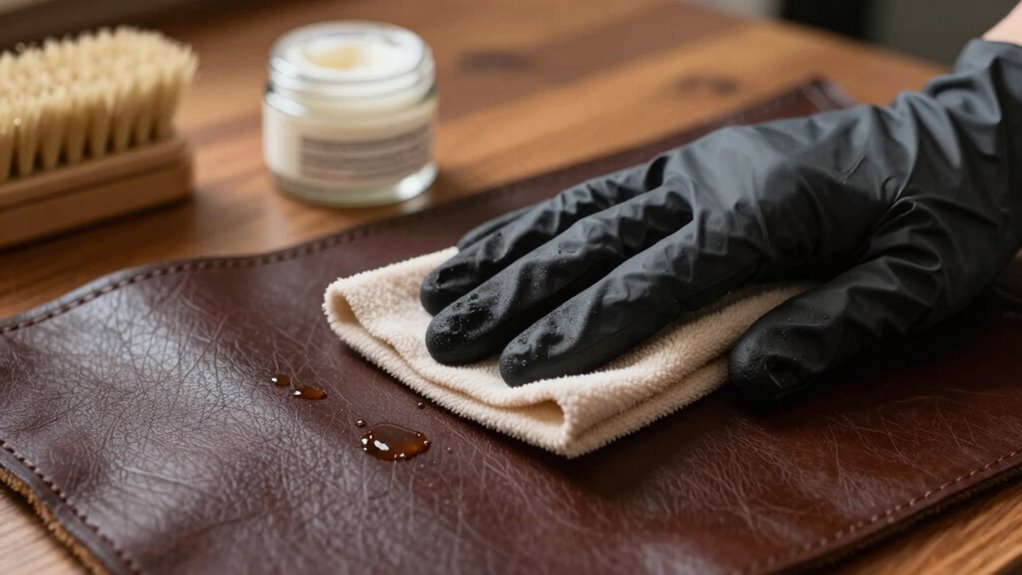

To clean leather without drying it out, use a soft, damp cloth to gently wipe away dirt and dust regularly. Avoid harsh soaps or excess water, as they can strip natural oils. Instead, opt for a mild soap solution if needed, and always follow with a leather conditioner to keep the fibers supple and protected. Proper cleaning combined with regular conditioning will help maintain its shine and flexibility over time—discover more tips to keep your leather looking their best.
Key Takeaways
- Use a damp, not soaked, cloth to clean leather regularly, avoiding excessive water that can strip oils.
- Apply a leather conditioner after cleaning to restore moisture and maintain flexibility.
- Avoid harsh detergents; opt for mild soap solutions or specialized leather cleaners.
- Blot spills immediately with a dry cloth, and avoid rubbing to prevent deeper damage.
- Regularly conditioning leather prevents drying out and cracking over time.
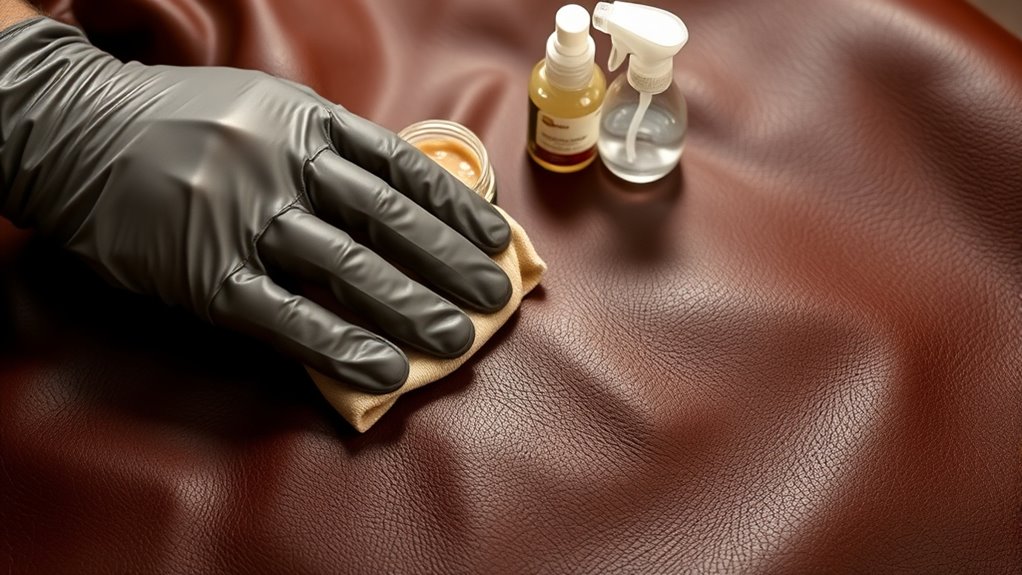
Have you ever wondered how to keep your leather items looking their best? The key lies in understanding proper cleaning and maintenance practices that preserve the material’s natural beauty without drying it out. Leather conditioning plays a pivotal role here, helping to keep the fibers supple and preventing cracks. Regular conditioning ensures your leather stays moisturized, maintaining its flexibility and luster over time. When it comes to stain removal techniques, acting quickly is essential. The moment you notice a spill or smudge, gently blot the area with a clean, dry cloth—avoid rubbing, which can spread the stain or push it deeper. For more stubborn stains, a mild soap solution or specialized leather cleaner can be used carefully, always testing a small, inconspicuous area first. To effectively remove stains, you need to understand what caused them. For water-based stains, sometimes simply wiping the area with a damp cloth is enough, followed by drying with a soft towel. Oil or grease stains, however, require a different approach. Sprinkle a small amount of cornstarch or baking soda on the stain and let it sit for several hours to absorb the oil, then brush it off gently. For ink or dye stains, you might need a commercial leather stain remover, but always follow the product’s instructions and test it beforehand. Remember, harsh chemicals can damage leather, so it’s better to stick with gentle, proven stain removal techniques. Regular cleaning with a damp cloth helps prevent dirt buildup, which can be especially damaging for leather fibers over time. Cleaning your leather regularly with a damp cloth keeps dust and dirt from settling into the pores, which can cause long-term damage if neglected. Avoid using excessive water or harsh detergents, as these can strip away natural oils and lead to dryness. After cleaning, apply a good quality leather conditioner to restore moisture and suppleness. This step is essential in preventing the leather from drying out and cracking, especially in dry or cold environments. Conditioning also creates a protective barrier against future stains and dirt, making subsequent cleaning easier.

LEVOIT Air Purifier for Home Large Room Up to 1073Ft² with Air Quality Monitor, AHAM VERIFIDE, Smart WiFi, Washable Pre-Filter, HEPA Sleep Mode for Pets, Allergies, Dust, Pollen, Vital 100S-P, White
𝐖𝐇𝐘 𝐂𝐇𝐎𝐎𝐒𝐄 𝐀𝐇𝐀𝐌 𝐕𝐄𝐑𝐈𝐅𝐈𝐃𝐄 𝐀𝐈𝐑 𝐏𝐔𝐑𝐈𝐅𝐈𝐄𝐑𝐒: AHAM (Association of Home Appliance Manufacturers) is an ANSI-accredited organization that sets...
As an affiliate, we earn on qualifying purchases.
Frequently Asked Questions
Can I Use Household Products to Clean Leather?
You shouldn’t use household cleaners for DIY leather care, as they can damage the material. Many household products contain harsh chemicals that dry out or discolor leather. Instead, opt for gentle, specially formulated leather cleaners. If you want to try DIY leather care, use a soft cloth and mild soap diluted with water. Always test a small, hidden area first to prevent any unwanted damage.
How Often Should I Condition Leather Items?
You might think leather maintenance is a once-in-a-while task, but it’s actually more like a regular date. Condition your leather items every 3 to 6 months to keep them supple and prevent cracking. Proper storage helps too—store in a cool, dry place away from sunlight. Over-conditioning can do more harm than good, so don’t overdo it. Think of it as giving your leather a little daily love.
Is It Safe to Use Water on All Leather Types?
Using water on all leather types isn’t always safe because of water damage and leather absorption. You should avoid soaking or using too much water on delicate or untreated leather, as it can cause staining, warping, or cracking. For regular cleaning, use a damp cloth sparingly and test on a small area first. Properly caring for your leather helps prevent water damage and keeps it looking great longer.
What Are Signs of Over-Cleaning Leather?
If you over-clean leather, you’ll notice it looks as dry as a desert and feels stiff as cardboard. Signs include color fading, cracks, and a rough texture. Using abrasive cleaners or excessive scrubbing strips away natural oils, causing damage. If your leather starts to look dull or brittle, you’re likely overdoing it. Always clean gently, avoiding harsh products and vigorous scrubbing, to keep your leather soft and supple.
Can I Restore Old, Dried-Out Leather Easily?
Yes, you can restore dried-out leather with proper leather restoration techniques. Start by gently cleaning the leather to remove dirt and oils, then apply a high-quality leather conditioner to rehydrate the material. Use a soft cloth to evenly distribute the conditioner and let it absorb. This process helps revitalize dried-out leather, restoring its suppleness and appearance, making your leather look fresh and well-maintained again.

KNKA Air Purifier for Home Bedroom Large Room Up to 1,695 Ft² in 1 Hr, HEPA Air Cleaner with Washable Pre-Filter, AQI Display, ECO Mode, Sleep Mode, Pet Mode for Pets, Dust, Pollen, APH4000
𝐇𝐢𝐠𝐡 𝐂𝐀𝐃𝐑 𝐕𝐚𝐥𝐮𝐞: This air purifier provides reliable performance with a Smoke/Dust/PM2.5 CADR of 226 CFM (384 m³/h)...
As an affiliate, we earn on qualifying purchases.
Conclusion
Remember, treating your leather with gentle care keeps it looking sharp for years. Use the right cleaning products and avoid over-drying—think of it like tending to a fine steed; patience and gentle hands are key. Don’t let your leather become like a dried-up scroll—fragile and worn. With consistent, careful maintenance, your leather will remain supple and beautiful, just as a well-loved manuscript remains timeless. Keep up the good work, and your leather will thank you!

LEVOIT Air Purifiers for Home Large Room Up to 1875 Ft² with Washable Pre-Filter, AHAM VERIFIDE, Air Quality Monitor, HEPA Sleep Mode for Allergies, Pet Hair in Bedroom, Vital 200S-P, White
𝐖𝐇𝐘 𝐂𝐇𝐎𝐎𝐒𝐄 𝐀𝐇𝐀𝐌 𝐕𝐄𝐑𝐈𝐅𝐈𝐃𝐄 𝐏𝐑𝐎𝐃𝐔𝐂𝐓𝐒: AHAM (Association of Home Appliance Manufacturers) is an ANSI-accredited organization that sets strict...
As an affiliate, we earn on qualifying purchases.

Dreo Smart Humidifiers for Bedroom, Top Fill 4L Supersized Humidifier Large Room with 28 dB, 36H Runtime, Touch/APP/Voice Control, Nightlight, Cool Mist Humidifiers for Baby, Plants, Indoor, Black
𝐏𝐫𝐞𝐜𝐢𝐬𝐞 𝐀𝐮𝐭𝐨 𝐇𝐮𝐦𝐢𝐝𝐢𝐭𝐲, 𝐕𝐨𝐢𝐜𝐞 & 𝐀𝐩𝐩 𝐂𝐨𝐦𝐦𝐚𝐧𝐝: Stop guessing the right humidity. With enhanced sensing precision for more...
As an affiliate, we earn on qualifying purchases.