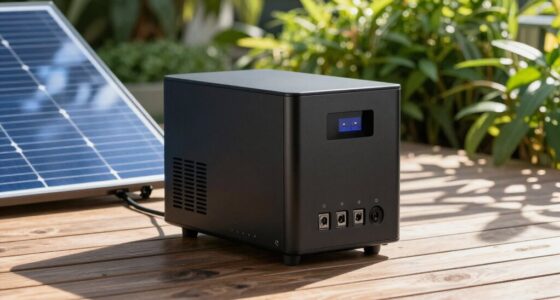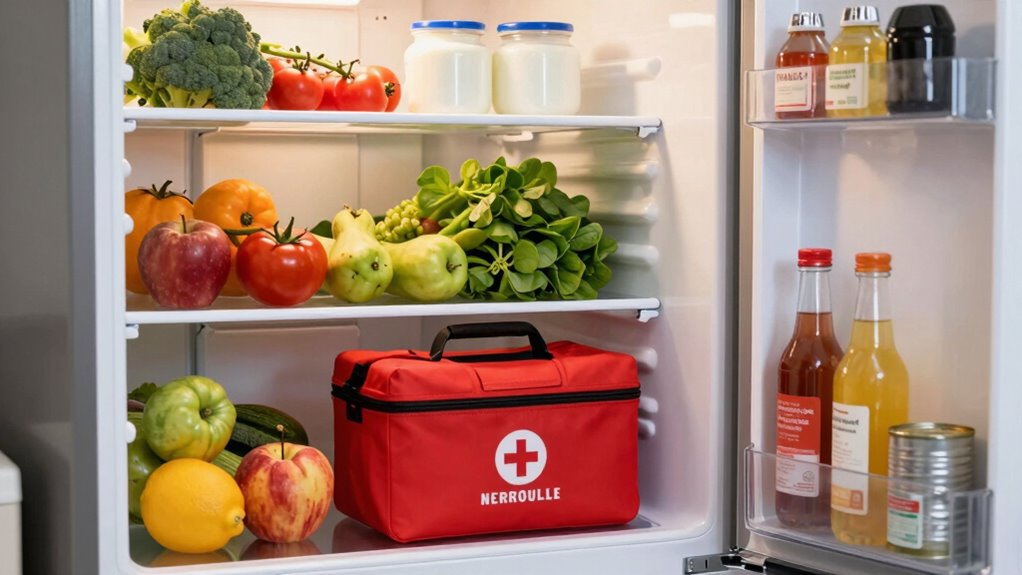

Start with an energy-efficient portable cooler or mini-fridge as your top priority because it offers a quick, reliable way to keep perishables safe during power outages. These appliances use less power, making them suitable for backup generators or batteries, and help prevent food spoilage. They’re essential for preserving dairy, meats, and other perishables, ensuring you’re ready for emergencies. Keep going to discover how to maximize your food storage and backup plan.

Turn your quiet moments into listening time
- Thousands of audiobooks, podcasts and originals
- Listen on your phone, tablet or Echo — also offline
- Cancel anytime
Key Takeaways
- Invest in an energy-efficient portable cooler or mini-fridge to ensure food preservation during outages.
- Prioritize appliances compatible with backup power sources like portable generators or batteries.
- Choose appliances that generate minimal heat to maintain internal temperatures effectively.
- Implement proper food storage techniques to extend freshness and reduce spoilage risks.
- Develop a backup power plan to ensure continuous operation of essential cooling appliances.

Have you ever considered what happens to your food if your refrigerator suddenly stops working? It’s a frustrating thought, especially when you realize that your fresh groceries could spoil in a matter of hours. That’s why planning for a refrigerator backup is essential. When I think about what I’d buy first, I focus on practical, high-impact solutions that keep my food safe and reduce energy consumption. The first thing I’d invest in is an energy-efficient portable cooler or mini-fridge. These appliances use less power and can be a lifesaver during a power outage, especially if you’re able to keep them running with a portable generator or even battery packs. They’re perfect for storing dairy, meats, and other perishable items, giving you extra time before food goes bad.
Alongside that, I’d look into proper food storage techniques. How you pack your food can make a huge difference in how long it stays fresh. For example, wrapping meats tightly in plastic wrap or aluminum foil helps prevent cross-contamination and dehydration. Using airtight containers for leftovers and perishables minimizes exposure to air, which accelerates spoilage. If you have a deep freezer, plan to fill it up as much as possible—frozen foods stay safe longer when there’s less air inside. Also, keeping your fridge at the right temperature—around 37°F or 3°C—maximizes food safety and energy efficiency. Proper food storage techniques combined with energy-efficient appliances allow you to better manage your resources and protect your food during outages. Additionally, understanding the importance of energy-efficient appliances can help you make smarter choices that extend your backup capacity. Incorporating proper food storage techniques can significantly reduce waste and keep food fresher for longer periods. Embracing biodiversity in your food choices can also support more resilient and sustainable food systems that are better prepared for emergencies.
Proper food storage, like airtight containers and filling freezers, extends freshness and enhances energy efficiency during outages.
Choosing energy-efficient appliances isn’t just about saving on electricity bills; it’s also about being prepared for emergencies. Modern portable coolers and small fridges with high energy efficiency can run longer on battery power, making them ideal for backup plans. They also generate less heat, which helps maintain the internal temperature more effectively. When you combine this with smart food storage techniques—like labeling leftovers, keeping items organized, and understanding which foods are most vulnerable—you create a system that minimizes waste and preserves your food longer. Developing a backup power plan can ensure that your appliances continue to operate smoothly during outages, further safeguarding your food supply.
Ultimately, your first purchase should be an energy-efficient cooling solution that complements good food storage techniques. This combo ensures you’re ready to handle unexpected outages, protecting your groceries and reducing waste. Being proactive with these investments means you won’t be caught off guard when the power goes out, and your food will stay fresher, longer. It’s about making smart choices now so you can enjoy peace of mind later, knowing your food is safe regardless of technical hiccups. Additionally, understanding the benefits of energy-efficient appliances can help you choose the best options for your backup plans and overall energy management.
Products Worth Considering

Philips Hue Play HDMI Sync Box

Shark PowerDetect Robot Vacuum and Mop Combo with 60-Day Self-Emptying Base (AV2800ZE)

Arlo Pro Wireless Security Camera, 2K HDR, 6th Generation, 4-Camera Set
As an affiliate, we earn on qualifying purchases.
Frequently Asked Questions
How Long Can My Refrigerator Keep Food Cold During a Power Outage?
During a power outage, your refrigerator can keep food cold for about 4 to 6 hours if unopened, maintaining food safety and proper temperature. To maximize power preservation, avoid opening the door frequently. If the outage lasts longer, consider using ice packs or a generator to keep the fridge cold. Monitoring the temperature helps prevent spoilage and guarantees your food stays safe until power is restored.
What Are the Most Energy-Efficient Backup Refrigeration Options?
Imagine a sleek, compact generator humming quietly next to your fridge, providing reliable backup. For energy savings and cooling efficiency, consider small inverter generators or energy-efficient portable coolers. These options use less power, reducing your electricity bills while maintaining proper refrigeration. By choosing appliances designed for maximum energy use, you guarantee your food stays fresh during outages without wasting resources, making your backup plan both effective and eco-friendly.
How Much Does a Portable Refrigerator or Cooler Typically Cost?
A portable refrigerator or cooler typically costs between $100 and $300, depending on size and features. You should consider models with temperature monitoring for precise control and reliable power sources like AC, DC, or battery options to guarantee consistent cooling during outages. Investing in a unit with these features helps you keep perishables safe, even when your main fridge fails, offering peace of mind and practical backup planning.
Are There Any Safety Concerns With Using Backup Refrigerators?
You might worry about appliance safety and food safety, but backup refrigerators are generally safe if used properly. Make sure they’re clean, well-maintained, and kept at the right temperature. Avoid overloading, which can cause malfunctions, and always follow manufacturer instructions. By taking these precautions, you minimize safety concerns and keep your food fresh and safe, giving you peace of mind during emergencies or outages.
How Often Should I Test My Backup Refrigeration System?
You should test your backup refrigeration system at least once a month to guarantee it functions properly. During these tests, focus on temperature monitoring to confirm the unit maintains the correct temperature. Stick to a regular maintenance schedule, including checking seals and cleaning coils, to keep the system reliable. Regular testing helps you identify issues early, so you can address them before your backup fridge becomes unusable during an emergency.
Conclusion
So, if you want your fridge to survive a zombie apocalypse, blackout, or alien invasion, start with that backup plan now. Invest in a power inverter, a generator, or a fancy new cooler — whatever keeps your perishables from turning into a science experiment. Because, let’s face it, whether it’s a tiny power outage or an apocalyptic event, you don’t want your leftover pizza and milk to become extinct! Stay prepared, and keep your fridge forever loyal!