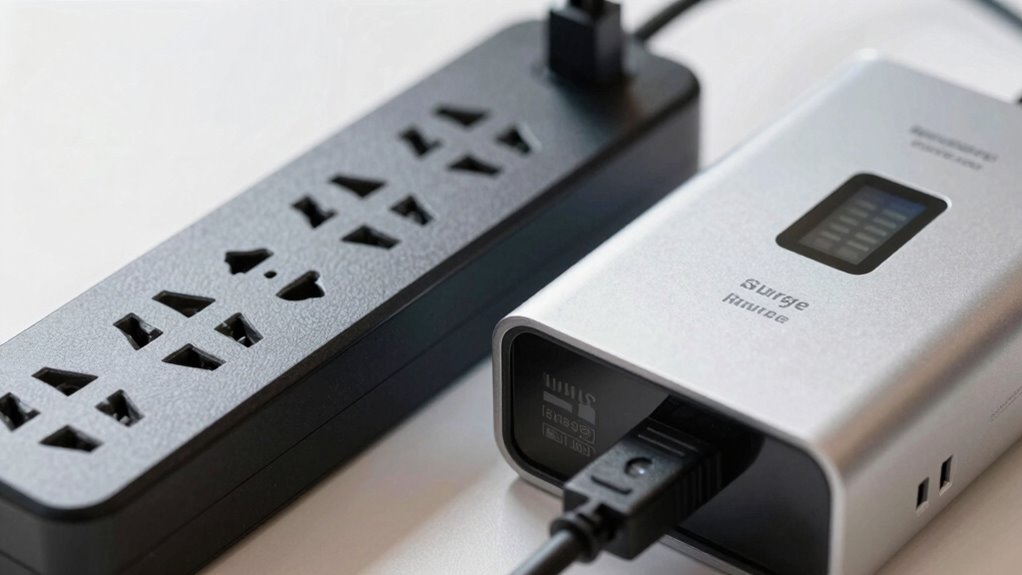

When choosing between a power strip and surge protector, look for key labels like joule ratings, clamping voltage, response time, and safety certifications such as UL or ETL. Higher joules mean better protection, while lower clamp voltage offers quicker response to surges. Certifications guarantee the device meets safety standards. If you want reliable safety and device protection, understanding these labels helps you make smarter choices. Exploring these labels further reveals how to maximize your electrical safety.
Key Takeaways
- Surge protectors have labels indicating joule ratings, clamping voltage, and response time, crucial for assessing protection level.
- Power strips typically lack detailed safety labels, focusing mainly on outlet extension without surge protection info.
- Look for safety certifications like UL, ETL, or CSA on surge protectors to ensure compliance and reliable protection.
- Labels highlighting surge protection features, such as MOV components or surge protection indicator lights, signify safety benefits.
- Child safety covers and overload protection labels on surge protectors enhance safety beyond basic power strips.
Understanding the Basic Differences Between Power Strips and Surge Protectors

While power strips and surge protectors may look similar, they serve different purposes. A power strip simply extends the number of outlets, allowing you to plug in multiple devices. It doesn’t offer any protection against power fluctuations or voltage spikes. Surge protectors, on the other hand, include components like metal-oxide varistors (MOVs) that help absorb excess energy during surges. This means they not only give you more outlets but also shield your electronics from potential damage caused by power spikes. If you want to safeguard sensitive devices like computers or home entertainment systems, a surge protector is the better choice. Power strips are mainly for convenience, while surge protectors are designed with safety and longevity in mind. Knowing this difference helps you choose the right device for your needs. Additionally, contrast ratio plays a crucial role in the visual quality of home theater projectors, especially for creating deep blacks and vivid images. Understanding the importance of electrical safety features can further enhance the protection of your valuable electronics. For example, proper grounding is essential to ensure that surge protectors function effectively and safely. Incorporating additional safety features like circuit breakers can provide an extra layer of protection against electrical faults.
The Significance of Joules in Surge Protection Ratings
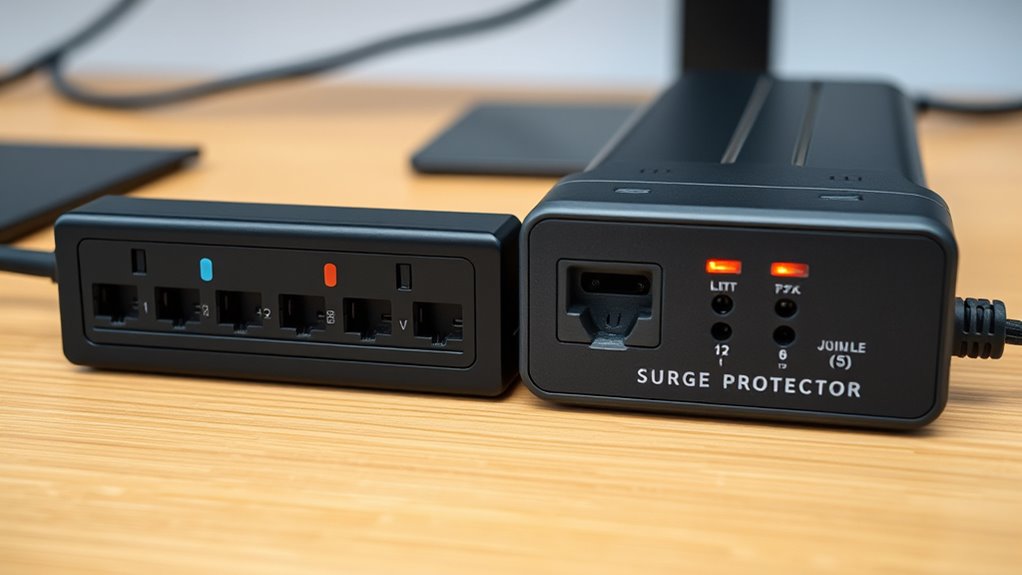
Joules measure the energy a surge protector can absorb before it fails, making this rating essential when selecting the right device. A higher joule rating indicates better protection, as it can handle more powerful surges without breaking down. If you experience frequent electrical storms or power fluctuations, look for a surge protector with a joule rating of at least 1,000. For more sensitive electronics, aim for 2,000 joules or higher. Remember, joules don’t tell you everything about protection, but they give a clear indication of how much energy the device can handle. Choosing a surge protector with a suitable joule rating helps ensure your devices stay safe during unexpected power surges, preventing damage and extending their lifespan. Understanding surge ratings can help you make more informed choices when selecting protective devices, especially considering the power output of electric bikes and other high-energy devices. A proper understanding of surge protector maintenance is also crucial for maintaining optimal performance over time. Additionally, selecting a device with an appropriate clove or peppermint oil rating can ensure comprehensive protection against electrical and environmental hazards. Moreover, joule ratings are an important factor in evaluating the overall reliability of surge protectors, especially for sensitive modern electronics.
Clamping Voltage: What It Means for Your Devices

Clamping voltage is a key factor in how effectively a surge protector defends your devices. It determines the voltage level at which the protector activates to block excess energy. A lower clamping voltage means the surge protector reacts sooner, reducing the risk of damage to sensitive electronics. For example, a clamp voltage of 400 volts will trigger earlier than one at 600 volts, offering better protection. However, if it’s too low, it might trip unnecessarily during minor power fluctuations. When choosing a surge protector, look for a clamping voltage around 400 to 500 volts for ideal performance. This balance ensures your devices stay safe without false triggers. Proper surge protector selection can prevent unnecessary interruptions and extend your devices’ lifespan. Understanding clamping voltage helps you select the right surge protector for your equipment’s safety, especially considering surge protection standards that define safe operational thresholds. Additionally, being aware of lightning strike risks can help you better appreciate the importance of appropriate surge protection. Properly rated surge protectors can also account for environmental factors, ensuring consistent protection in various conditions.
The Role of Response Time in Protecting Electronics

Response time is crucial because it determines how quickly a surge protector reacts to voltage spikes. When a surge occurs, every millisecond counts in protecting your electronics. A faster response time means the surge protector can detect the spike almost immediately and disconnect or divert excess voltage before it reaches your devices. If the response is slow, your equipment may be exposed to damaging voltage levels, increasing the risk of permanent damage or data loss. Look for surge protectors with response times measured in nanoseconds; these act swiftly to shield your electronics. Remember, even a small delay can make a significant difference in safeguarding sensitive gadgets like computers or TVs. Understanding surge protector specifications can help you make informed choices for optimal device safety, especially since response time directly impacts the effectiveness of the protection. Additionally, being aware of proper installation practices ensures that the surge protection functions as intended and provides maximum safety for your electronics. Being familiar with surge protection standards can further ensure you select reliable devices that meet safety regulations.
The Importance of UL Certification and Other Safety Labels
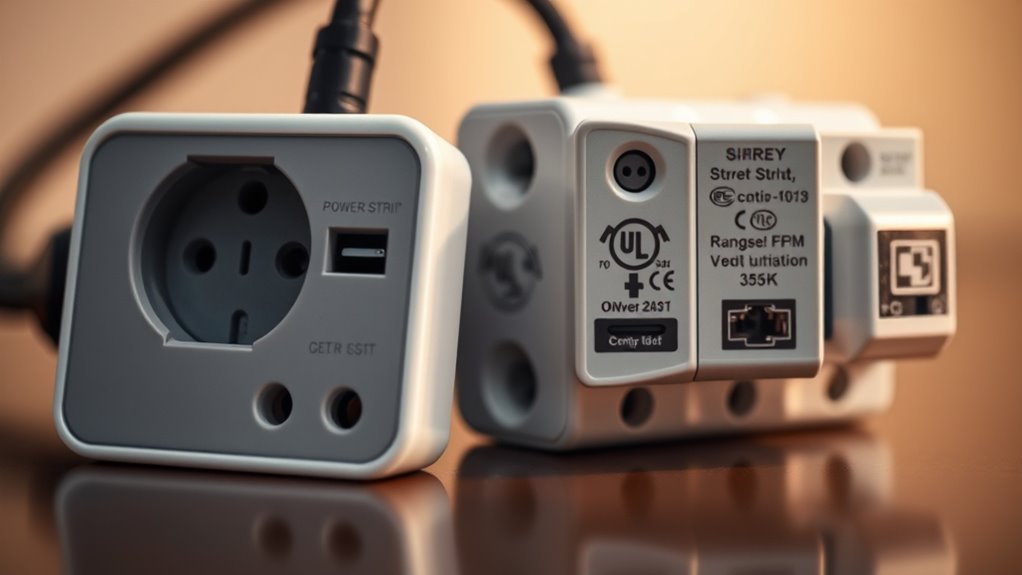
When selecting a surge protector or power strip, verifying safety certifications is just as important as considering response times. Safety labels like UL certification indicate that the product has undergone rigorous testing for safety and performance standards. UL, or Underwriters Laboratories, ensures the device can handle electrical surges without risking fire or damage. Other labels, such as ETL or CSA, also verify compliance with safety regulations. These certifications give you confidence that the product meets established safety benchmarks, reducing the risk of electrical hazards. Proper wicking materials used in surge protectors and power strips contribute to efficient heat dissipation and overall safety. Additionally, understanding the role of credit card security highlights the importance of reliable and certified products in protecting electronic devices. These certifications are especially crucial when selecting home safety devices, ensuring they provide trustworthy protection. Always check for these labels before purchasing. A surge protector with proper certifications provides peace of mind, knowing your electronics are protected by a product that has been independently tested and verified for safety.
Additional Features That Can Enhance Protection and Convenience

Adding extra features to your power strip or surge protector can substantially boost both protection and convenience. These added functionalities can make your setup safer and more user-friendly. For example, consider these features:
- Built-in USB ports – allow you to charge devices without extra adapters.
- Child safety covers – prevent accidental shocks and keep little fingers safe.
- Resettable circuit breakers – let you quickly restart power after overloads without unplugging everything.
- Indicator lights – show the surge protection status, so you know your devices are safe. Incorporating features like surge protection can also help safeguard sensitive electronic equipment from voltage spikes. Additionally, selecting a device with overload protection can prevent damage caused by power surges or overloads, ensuring longevity for your electronics. Furthermore, choosing a power strip with smart home integration can add a layer of automation and remote control for enhanced convenience and monitoring. For added ease of use, some models come with cord management features, which help keep cables organized and reduce clutter.
Frequently Asked Questions
Can a Power Strip Provide Surge Protection Without a Surge Protector Label?
No, a power strip can’t provide surge protection without a surge protector label. If it doesn’t have that label, it likely lacks the necessary components to absorb voltage spikes. Relying on a power strip without surge protection can put your devices at risk during electrical surges or lightning strikes. Always check for the surge protector label to confirm your electronics are properly safeguarded.
Are All UL Certifications Equally Reliable for Surge Protectors?
You might think all UL certifications are equally reliable, but that’s not true. Not all UL marks on surge protectors mean the same thing; some only certify the product’s safety, while others verify surge protection capabilities. Look for specific UL listings like UL 1449, which confirm the device effectively protects against power surges. Don’t assume all certifications are equal—check what each label truly guarantees before trusting your devices’ safety.
How Often Should I Replace My Surge Protector for Optimal Safety?
You should replace your surge protector every 3 to 5 years to guarantee maximum safety. Over time, its components wear out and become less effective at protecting your devices from power surges. Regularly inspect for signs of damage, such as frayed cords or scorch marks, and consider replacing it sooner if you notice any issues. Staying proactive helps prevent potential electrical damage and keeps your devices safe.
Do Built-In USB Ports Affect the Surge Protection Capabilities?
Built-in USB ports typically don’t affect the surge protection capabilities of your device. Surge protectors are designed to safeguard your devices from voltage spikes, and the USB ports are usually isolated in the circuitry. However, it is crucial to check the joule rating of the surge protector; if it’s high enough, it will still provide excellent protection regardless of USB ports. Always choose a quality surge protector with sufficient joules for your needs.
What Are the Signs That a Surge Protector or Power Strip Is Failing?
If your surge protector or power strip is failing, you’ll notice frequent tripping of circuit breakers, persistent burning smell, or visible damage like scorch marks or frayed cords. Devices may also stop working suddenly or experience power interruptions. If the unit feels unusually hot or shows signs of wear, it’s time to replace it. Regularly inspecting for these signs helps guarantee your devices stay protected and safe.
Conclusion
Choosing between a power strip and a surge protector depends on your needs. For example, plugging your expensive gaming PC into a surge protector with high joules and quick response can save it during a lightning storm. Always check for UL certification and key labels—they’re your guarantee of safety. By understanding these features, you assure your devices stay protected, letting you focus on what matters most without worry.