Daisy chaining multiple power strips is dangerous because it can cause overheating, which increases fire risk. Overloading power strips exceeds their capacity, generating excessive heat and damaging cords or internal components. Always avoid plugging strips into each other and verify each strip has proper surge protection and a circuit breaker. Proper placement and not exceeding wattage ratings keep your devices safe. To learn more about safe practices and prevention tips, continue exploring how to use power strips responsibly.
Key Takeaways
- Avoid daisy chaining multiple power strips to prevent overload and excessive heat buildup.
- Always use power strips within their rated wattage to minimize fire and damage risk.
- Ensure proper ventilation and keep power strips away from heat-trapping materials to avoid overheating.
- Regularly inspect for signs of damage, melting, or frayed cords, and replace damaged units immediately.
- Do not plug high-wattage appliances into power strips; use dedicated outlets for heavy devices.
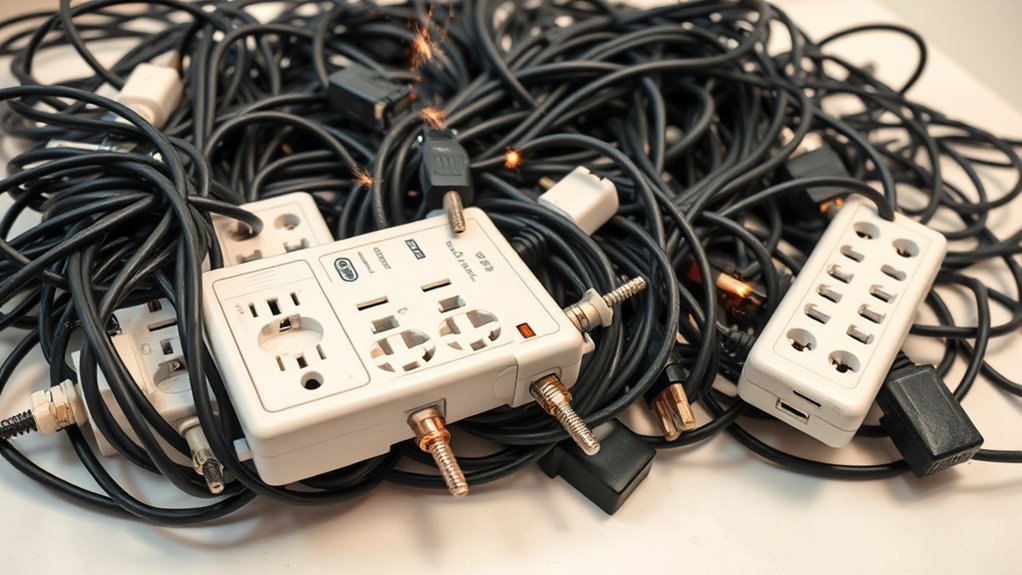
Power strips are convenient tools that let you expand your outlet capacity, but they also pose safety risks if not used properly. When you plug multiple devices into a single strip, it’s tempting to think you’re maximizing convenience, but this can lead to dangerous overloads. To protect your electronics and home, you should look for power strips with built-in surge protection. Surge protection helps guard your devices against sudden voltage spikes caused by lightning strikes or power fluctuations. Without this feature, your expensive electronics could be damaged during a power surge. However, surge protection alone isn’t enough; overload prevention is equally essential. Overloading a power strip happens when the combined wattage of all plugged-in devices exceeds the strip’s rated capacity, causing the internal wiring to heat up excessively. This heat buildup can lead to melting, damage to the strip’s insulation, or even electrical fires.
If you frequently connect multiple devices, make sure your power strip is rated for the total load you plan to use. Always check the maximum wattage or amperage listed on the power strip and compare it to your devices’ power requirements. Avoid the temptation to connect a daisy chain of multiple power strips, as this is a common cause of overloads. Daisy chaining increases the risk of exceeding safe electrical limits because the combined load can easily surpass what the circuit and the strips can handle. Instead, use a power strip with sufficient capacity or add a dedicated outlet for high-power devices. Remember, the goal is to prevent overloads before they happen—not just to rely on safety features like circuit breakers.
Heat is another significant concern with power strips, especially when they’re used improperly or overloaded. Excess heat can cause the plastic casing to degrade, increasing the risk of fire. You should always place power strips in well-ventilated areas, away from carpets, rugs, or other materials that can trap heat. Never cover a power strip with a cloth or other objects, and avoid running cords under rugs or furniture where airflow is restricted. Regularly inspect your power strips for signs of wear, such as discoloration, melting, or frayed cords. Replacing damaged strips promptly helps prevent accidental fires. Also, avoid plugging high-wattage appliances like space heaters or microwaves into power strips, as their high current draw can overload the strip and generate dangerous heat. Being aware of electrical safety principles can further help you prevent potential hazards.
Frequently Asked Questions
Can I Plug a Power Strip Into Another Power Strip Safely?
You shouldn’t plug a power strip into another one, as daisy chain dangers increase fire risk and overload your circuits. Power strip stacking can cause overheating, damage devices, and even start fires. Always plug power strips directly into wall outlets, and avoid chaining multiple strips together. This keeps your electrical setup safe, prevents overheating, and reduces the chance of fire hazards. Stay cautious and prioritize safety when managing power sources.
What Signs Indicate My Power Strip Is Overheating?
If your power strip is overheating, you’ll notice safety indicators like a burning smell, excessive heat, or warm-to-the-touch surfaces. Overheating symptoms also include discoloration or melting plastic. Don’t ignore these signs, as they threaten your safety. Always unplug the strip immediately if you see or feel these indicators, and avoid plugging in too many devices. Proper ventilation and avoiding daisy chaining help prevent overheating and potential fire hazards.
Are There Specific Power Strip Brands With Higher Safety Standards?
Yes, some power strip brands are known for higher safety standards. Look for brands with strong reliability reputations, like Belkin or APC, and check for safety certifications such as UL or ETL. These certifications indicate the product has been tested for safety. Choosing a trusted brand with proper certifications helps reduce the risk of overheating, fires, and electrical hazards, giving you peace of mind when plugging in multiple devices.
How Long Can a Power Strip Be Used Continuously?
You should avoid using a power strip continuously for more than 24 hours to prevent electrical overload and reduce fire risk. Extension cords and power strips aren’t designed for long-term use or high loads, so leaving them plugged in too long can cause overheating. Always unplug unused power strips, and don’t overload them with too many devices. Regularly inspect for heat or damage, and replace if needed for safety.
Is It Safe to Leave Devices Charging Overnight Through a Power Strip?
Leaving devices charging overnight through a power strip isn’t safe because it risks overload and overheating. For example, a family’s surge protector caught fire after being left connected all night, showing how heat buildup can cause dangers. To prevent this, use a power strip with overload prevention and surge protection, and avoid leaving devices plugged in continuously. Always unplug chargers when not in use to keep your home safe.
Conclusion
Remember, power strips are like delicate bridges—if overloaded or chained carelessly, they can collapse into sparks and flames. Think of them as tiny electrical gardens; overcrowd them, and you risk choking the life out of your safety. Stay vigilant, avoid daisy chaining, and respect their limits. When handled wisely, you keep your home’s energy flowing smoothly, like a well-orchestrated symphony—powerful, safe, and free from the destructive storm of fire hazards.