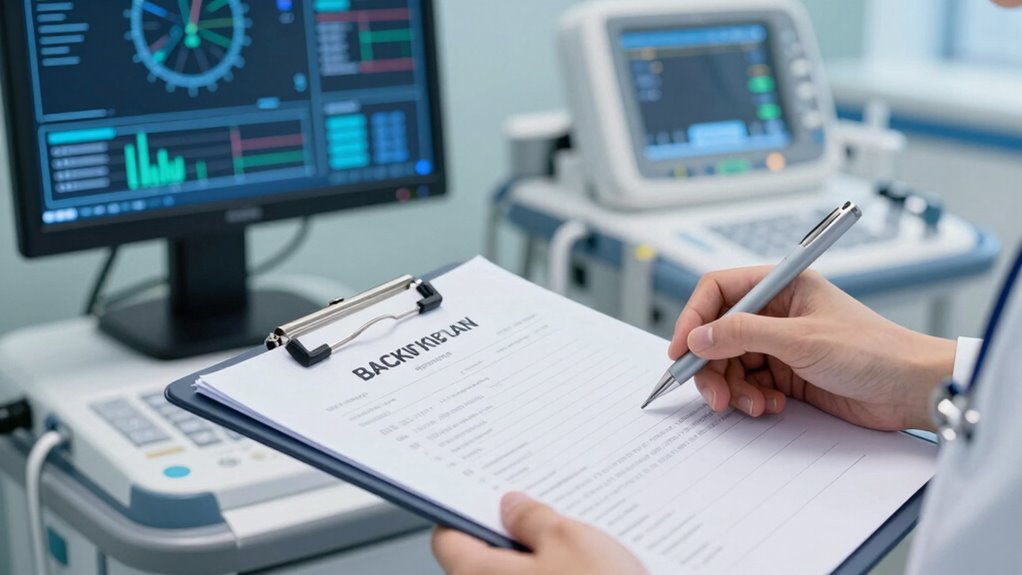

To make certain your medical device remains reliable, ask your provider early about their backup and disaster recovery plans. Inquire if they have detailed protocols for data loss, hardware failure, or power outages, and whether these plans are tested regularly. Confirm if they use secure off-site backups and adhere to industry standards like FDA or ISO. Understanding their risk mitigation strategies can help you feel more confident in continuous, safe care. Keep exploring to learn more about safeguarding your device.
Key Takeaways
- Inquire about the provider’s disaster recovery plans tailored for specific medical devices and their testing procedures.
- Confirm the existence of secure, off-site backups for device configurations, software, and patient data.
- Ask how vulnerabilities are identified and managed through routine risk assessments and failover systems.
- Ensure compliance with industry standards like FDA or ISO for disaster recovery and backup protocols.
- Request information on training, drills, and procedures to ensure rapid device restoration during emergencies.

Ensuring that your medical devices have a solid backup plan is essential for maintaining patient safety and uninterrupted care. When you’re dealing with critical healthcare technology, any failure can have serious consequences. That’s why early planning and asking the right questions about disaster recovery and risk mitigation are indispensable. You need to partner with providers who prioritize these aspects, so you’re prepared for unexpected events that could compromise device functionality. A comprehensive backup plan isn’t just about having spare parts or alternative power sources—it’s about guaranteeing continuity during emergencies, whether they’re power outages, cyberattacks, or natural disasters.
Start by asking your provider how they approach disaster recovery specifically for your devices. Find out if they have a detailed plan that addresses different scenarios, including data loss, hardware failure, or network interruptions. A good provider should have tested protocols in place that can be quickly activated to restore device operation. This not only minimizes downtime but also safeguards sensitive patient data. Clarify whether they perform regular drills or simulations to ensure their disaster recovery strategy remains effective and up-to-date. Knowing this can give you confidence that your devices will remain operational when it matters most.
Ask your provider about their detailed, tested disaster recovery plans and regular drills to ensure device resilience.
Another key question revolves around risk mitigation strategies. Ask how your provider assesses vulnerabilities within your device ecosystem. Do they conduct routine risk analyses to identify potential weak points? Are there measures in place, such as redundant systems or failover mechanisms, to prevent single points of failure? Understanding their approach helps you gauge how well they’ve prepared for potential disruptions. It’s imperative that risk mitigation isn’t treated as an afterthought but integrated into the entire lifecycle of your medical devices. This proactive stance reduces the likelihood of catastrophic failures and ensures quicker recovery if issues do occur.
You should also inquire about backup procedures for data and device settings. Confirm whether your provider maintains secure, off-site backups that can be retrieved rapidly. These backups should include configurations, software versions, and patient data, so you can restore devices swiftly without losing critical information. Additionally, ask how often they validate these backups through testing. Regular testing guarantees that recovery processes will work smoothly when needed, rather than just existing as theoretical plans.
Finally, ask about compliance with industry standards and regulations related to disaster recovery and risk management. Your provider should adhere to recognized frameworks, such as those from the FDA or ISO standards, to ensure best practices are followed. This alignment not only enhances safety but also minimizes legal and regulatory risks. Incorporating power tools and heavy-duty equipment into your risk mitigation strategies can help streamline setup and maintenance processes. By asking these questions early, you ensure that your medical device backup planning is thorough, resilient, and ready to face any unforeseen challenge, ultimately safeguarding your patients and your practice.
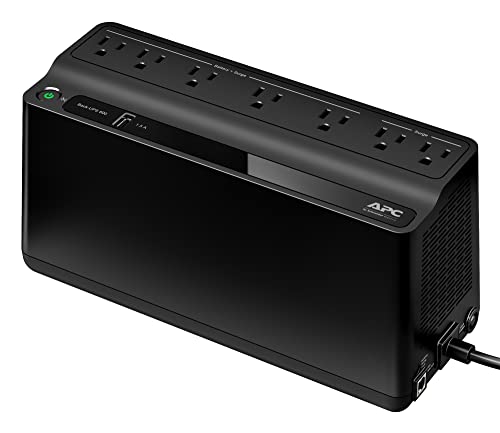
APC UPS 600VA / 330W UPS Battery Backup & Surge Protector, 7 Outlets (NEMA 5-15R), USB Charging Port, BE600M1 Uninterruptible Power Supply for Computers, Wi-Fi Routers, and Home Office Electronics
KEEP YOUR COMPUTER, WI-FI AND ROUTER RUNNING THROUGH POWER OUTAGES: Supplies short‑term battery power during outages to maintain…
As an affiliate, we earn on qualifying purchases.
As an affiliate, we earn on qualifying purchases.
Frequently Asked Questions
What Are the Latest Backup Technologies Available for Medical Devices?
You should consider the latest backup technologies like cloud storage solutions, which offer scalable and remote data access. Guarantee these systems use strong data encryption to protect sensitive medical information. Modern backup options also include automated, real-time backups and secure off-site storage, minimizing data loss risks. These technologies help you maintain compliance and ensure patient safety, giving you peace of mind knowing your device data is protected and readily recoverable.
How Often Should Backup Plans Be Reviewed and Updated?
Before you know it, your backup plans could be as outdated as a floppy disk. You should review and update your disaster recovery and data encryption strategies at least annually or whenever there’s a significant change in your medical devices or procedures. Regularly revisiting your backup plan guarantees it stays effective, minimizes data loss, and keeps patient information secure in case of emergencies or system failures.
What Are the Costs Associated With Different Backup Solutions?
You should conduct a thorough cost analysis and vendor comparison to understand the costs associated with different backup solutions. These costs can include initial setup, ongoing maintenance, and potential upgrade expenses. By comparing vendors, you can identify the most cost-effective option that meets your medical device backup needs. Asking your provider for detailed quotes and evaluating the long-term value guarantees you choose a solution that fits your budget and safety requirements.
How Do Backup Strategies Vary Between Device Types?
You’ll find that backup strategies vary based on device types, especially with device integration and recovery protocols. For implantable devices like pacemakers, you need robust, secure backups that can quickly restore function without risking patient safety. Hospital equipment, such as infusion pumps, require detailed recovery protocols to minimize downtime. Tailoring your backup plan to each device guarantees seamless operation and quick recovery, reducing potential risks and improving overall patient care.
What Training Is Provided for Staff on Backup Procedures?
You might think staff training on backup procedures is straightforward, but often, it’s more about reading procedure documentation than actual hands-on practice. Your provider should offer thorough training sessions that cover real scenarios, not just manuals. It’s ironic how often staff rely solely on documentation, yet proper backup procedures require active learning. Make sure your team receives ongoing training to stay sharp and confident in backup strategies, avoiding costly mistakes.
off-site data backup for medical devices
As an affiliate, we earn on qualifying purchases.
As an affiliate, we earn on qualifying purchases.
Conclusion
Think of your medical device backup plan as the safety net beneath a tightrope walker. By asking the right questions early, you guarantee that when challenges arise, you’ve got solid support to catch you. Don’t wait until the moment of crisis—prepare now, so your healthcare journey remains steady and secure. With a well-crafted backup plan, you’re building a safety net that keeps you balanced, no matter what surprises come your way.

Ready America 70380 72 Hour Emergency Kit, 4-Person, 3-Day Backpack, Includes First Aid Kit, Survival Blanket, Emergency Food Portable Disaster Preparedness Go-Bag for Earthquake, Fire, Flood
Emergency kit or disaster preparedness: Stay prepared for emergency situations everywhere you go. Ready America emergency survival kits…
As an affiliate, we earn on qualifying purchases.
As an affiliate, we earn on qualifying purchases.
medical device failover system
As an affiliate, we earn on qualifying purchases.
As an affiliate, we earn on qualifying purchases.