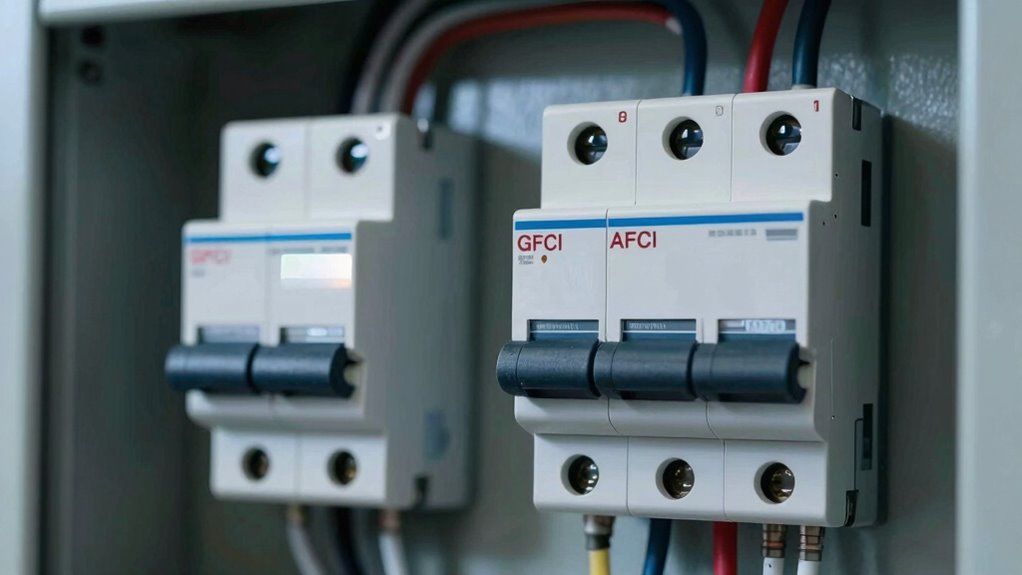

GFCI and AFCI breakers protect you from different electrical hazards. GFCIs prevent shocks by detecting small current leaks to the ground, especially in damp areas like bathrooms and kitchens. AFCIs stop fires caused by arc faults, which happen when wiring becomes damaged or worn. Both are essential for safety, but they serve different purposes. Continue to learn how these breakers work together to keep your home safe from electrical risks.
Key Takeaways
- GFCI breakers protect against electrical shocks from ground faults, preventing electrocution in moist environments.
- AFCI breakers prevent electrical fires caused by arc faults from damaged or deteriorating wiring.
- GFCIs trip instantly to cut power when tiny current leaks are detected; AFCIs detect and respond to arcing faults over time.
- GFCIs are mainly installed in bathrooms, kitchens, and outdoor outlets; AFCIs are used in bedrooms and living areas.
- Both breakers provide critical, but distinct, safety functions, and are often installed together for comprehensive electrical protection.
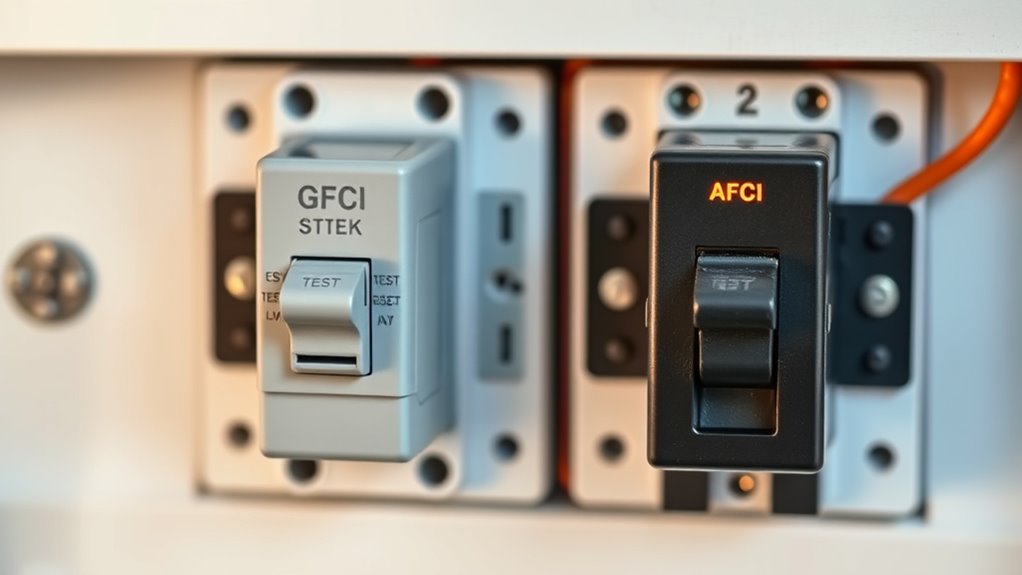
When it comes to protecting your home’s electrical system, understanding the differences between GFCI and AFCI breakers is essential. Both types of circuit protection are designed to keep you safe, but they target different hazards and serve unique purposes. Knowing what each breaker guards against helps you make informed decisions about your electrical safety and guarantees your home is well-protected.
Understanding GFCI and AFCI breakers is key to ensuring your home’s electrical safety.
GFCI breakers, or Ground Fault Circuit Interrupters, are primarily designed to prevent electrical shocks and protect against ground faults. These faults occur when electricity unintentionally flows outside its intended path, often through a person or a conductive object, increasing the risk of severe injury or electrocution. GFCI breakers detect even tiny imbalances in the current—typically just a few milliamps—and trip instantly to cut off power. You’ll usually find GFCIs installed in areas prone to moisture, like bathrooms, kitchens, garages, and outdoor outlets, where the risk of electric shock is higher. Their quick response is indispensable for electrical safety, especially in environments with water, which can conduct electricity and amplify hazards. Proper installation of GFCI breakers is crucial for ensuring their effectiveness and safety.
On the other hand, AFCI breakers, or Arc Fault Circuit Interrupters, focus on preventing electrical fires caused by arcing faults. An arc fault occurs when electrical wiring or devices develop cracks or damage, creating sparks or electrical arcs that can ignite surrounding materials. These faults are often invisible and can occur over time without obvious signs, making AFCIs critical for early detection. When an arc fault is detected, AFCI breakers trip to disconnect the circuit, stopping potential fires before they start. Installing AFCIs in bedrooms, living rooms, and other living spaces greatly reduces the risk of electrical fires, providing peace of mind for your household.
While GFCIs protect you from shocks caused by ground faults, AFCIs prevent fires from arc faults. Both are indispensable for thorough electrical safety and should be incorporated into your home’s electrical system where appropriate. Their installation not only safeguards your family but also helps you comply with electrical codes and standards. Remember, these breakers are not interchangeable—they serve different roles but work together to enhance your home’s overall safety. By understanding their functions, you can guarantee your home’s electrical system is fully protected against common hazards, giving you confidence that your environment is safe from shocks and fires alike.

SIEMENS QF120A Gfci Circuit Breaker, Plug In, Self Testing, 20 Amp, 1-Pole, 120 Volt
Single pole, 20 Amp, type QPF2 GFCI Circuit Breaker
As an affiliate, we earn on qualifying purchases.
As an affiliate, we earn on qualifying purchases.
Frequently Asked Questions
Can GFCI and AFCI Breakers Be Used Together?
Yes, you can use GFCI and AFCI breakers together, but wiring compatibility and breaker compatibility are key. Make sure your electrical panel supports both types, and follow manufacturer instructions. Installing them properly guarantees you get protection from ground faults and arc faults. Keep in mind, some panels might need adapters or specific wiring adjustments. Always consult a licensed electrician to ensure safe, code-compliant installation and proper functioning.
How Often Should GFCI and AFCI Breakers Be Tested?
An ounce of prevention is worth a pound of cure. You should test your GFCI and AFCI breakers monthly to guarantee they’re functioning properly. Regular testing is crucial for safety, so follow maintenance tips like pressing the test button and resetting once tested. If they don’t trip or reset correctly, replace them immediately. Staying proactive keeps your home safe and helps avoid potential electrical hazards.
Are AFCI Breakers Required in All Home Circuits?
AFCI breakers aren’t required in all home circuits, but they’re mandatory in bedrooms, living rooms, and similar areas to protect against arc faults that could cause fires. These breakers detect dangerous arc faults, while GFCIs prevent ground faults. You should check local electrical codes to see where AFCIs are required, and consider installing them in other circuits for added safety. Always consult a professional electrician for compliance and proper installation.
What Are the Signs of a Faulty GFCI or AFCI Breaker?
Like a broken compass, a faulty GFCI or AFCI breaker signals trouble. You might notice frequent trips, persistent reset issues, or a burning smell, indicating a ground fault or arc fault. Sometimes, the breaker won’t reset at all, or it flickers unexpectedly. These signs show the breaker isn’t protecting you properly, and you should replace it immediately to prevent electrical hazards and keep your home safe.
Do GFCI or AFCI Breakers Need Special Wiring?
You don’t need special wiring for GFCI or AFCI breakers, but grounding requirements are essential. Make certain your panel is properly grounded to activate these breakers’ safety features. Also, check breaker compatibility with your panel to avoid issues. If your wiring isn’t up to code or incompatible, consult an electrician. Proper grounding and compatible breakers ensure maximum protection and safe operation of your electrical system.
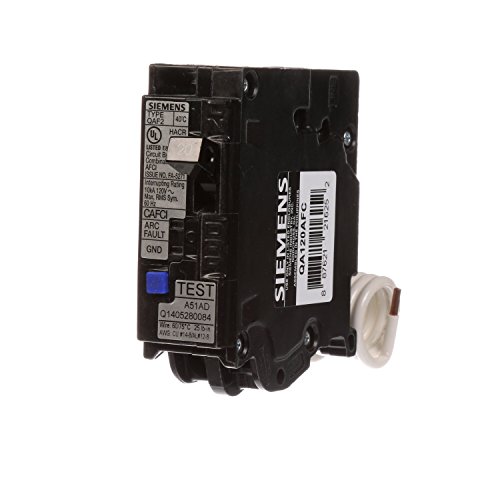
Siemens QA120AFC 20-Amp Single Pole 120-volt Plug-On Combination AFCI Breaker
Single pole, 20 Amp, Combination type AFCI circuit breaker
As an affiliate, we earn on qualifying purchases.
As an affiliate, we earn on qualifying purchases.
Conclusion
In the end, understanding the difference between GFCI and AFCI breakers helps you stay ahead of potential hazards. Both are essential for protecting your home, but they serve different purposes—like two sides of the same coin. Don’t wait until it’s too late; being informed is your best bet. Remember, it’s better to be safe than sorry, so guarantee you have the right breakers installed to keep your loved ones secure.

Leviton GFCI Switch Outlet Combo, 15 Amp, Self Test, Tamper-Resistant with LED Indicator Light, Saves Space, GFSW1-W, White
Designed to improve immunity for reduced High Frequency (HF) nuisance tripping. providing increased compatibility with appliances and other…
As an affiliate, we earn on qualifying purchases.
As an affiliate, we earn on qualifying purchases.

ELEGRP GFCI Outlet 20 Amp, Self-Test GFI Electrical Outlet with Thinner Design, TR Tamper Resistant GFCI Receptacle, Ground Fault Circuit Interrupters with Wall Plate, UL Listed, Matte White, 1 Pack
✅【Innovative Dual Protection System】Features twin solenoid and double silicon controlled rectifier (SCR), ensuring an always-on GFCI protection to…
As an affiliate, we earn on qualifying purchases.
As an affiliate, we earn on qualifying purchases.