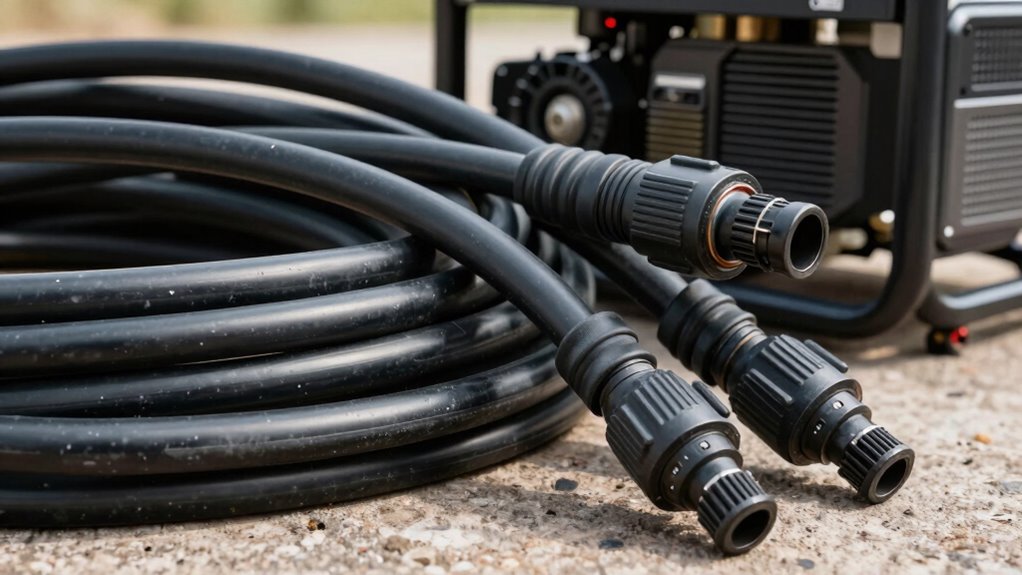

A “heavy duty” label on an extension cord doesn’t guarantee it’s safe or suitable for generator use. Safety depends on the cord’s gauge, power capacity, and construction, not just labels. An improperly rated cord can overheat, cause electrical issues, or even become a fire hazard. To make certain of safe operation, you need to pick cords rated for your generator’s output and your devices’ demands. Want to learn how to choose the right one? Keep going for more helpful tips.
Key Takeaways
- “Heavy duty” labels do not guarantee the cord’s gauge, power capacity, or suitability for generator use.
- Proper extension cords depend on specific gauge, ampacity, and construction, not just labels.
- Over-reliance on “heavy duty” labels can lead to unsafe overloads and equipment damage.
- Always verify cord specifications match your generator’s output and the connected devices’ demands.
- Safety comes from checking actual ratings and construction, not just marketing terms like “heavy duty.”
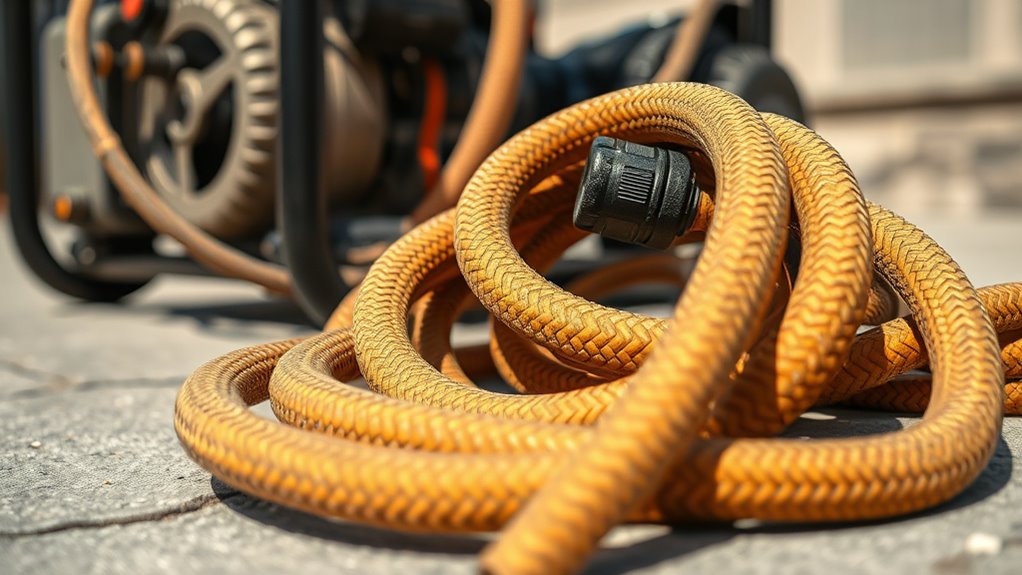
When using a generator, having the right extension cord can make all the difference in guaranteeing safe and efficient power delivery. Choosing the proper cord isn’t just about length or durability; it’s about safety and performance. Before plugging in, you need to understand that not all extension cords labeled “heavy duty” are created equal. Many assume that the “heavy duty” tag guarantees safety or suitability, but in reality, it’s just a marketing term that can be misleading. Instead, focus on the cord’s gauge, power capacity, and construction to match your generator’s output and the demands of your appliances.
Choose extension cords based on gauge and capacity, not just labels, for safe generator use.
One of the most critical aspects of using extension cords with generators is adhering to safety precautions. Overloading a cord can cause overheating, fires, or damage to your equipment. Always check the cord’s ampacity and compare it with your generator’s output. Never assume that a longer cord can carry the same load as a shorter one; longer cords often have higher resistance and can reduce voltage, which may harm your devices or cause them to malfunction. Use cords rated for outdoor use, and ensure they have proper grounding to prevent electrical shocks.
Cord management plays a crucial role in maintaining safety and preventing accidents. Keep cords neatly arranged and out of walkways or high-traffic areas to avoid tripping hazards. Avoid running cords across doorways, under rugs, or through water, as these practices increase the risk of electrical shock or damage. When connecting multiple cords or using extension cords with your generator, make sure the connections are secure and protected from moisture. Use cord organizers or tape to prevent accidental unplugging or disconnection, and regularly inspect your cords for frays, tears, or other damage. Additionally, understanding the importance of proper electrical setup can help prevent dangerous situations and ensure your power supply remains reliable.
Properly managing cords also involves understanding your power load. Don’t overload a single extension cord by plugging in too many devices. Spread out your power demand across multiple cords if necessary, and never connect a generator to a cord that’s not rated for the total load. Remember, safety isn’t just about the cord itself; it’s about how you use it. Always follow manufacturer instructions and safety guidelines, and if in doubt, consult a professional electrician.

POWGRN 50 ft 12/3 Outdoor Extension Cord Waterproof Heavy Duty with Lighted Indicator End 12 Gauge 3 Prong, Flexible Cold-Resistant Long Power Cord Outside, 15Amp 1875W SJTW Yellow ETL Listed
Up to 1875W Applications: Outdoor extension cord waterproof 12 gauge, 15 amp, 125 volts, 1875 watts, NEMA 5-15P…
As an affiliate, we earn on qualifying purchases.
As an affiliate, we earn on qualifying purchases.
Frequently Asked Questions
Can I Use Indoor Extension Cords Outdoors for My Generator?
You shouldn’t use indoor extension cords outdoors for your generator. Indoor cords lack outdoor safety features like proper insulation and weather resistance, making them unsafe in outdoor conditions. Outdoors, cords need to withstand moisture, temperature changes, and UV exposure. Using indoor cords outdoors can cause electrical hazards, short circuits, or fires. Always choose extension cords rated for outdoor use to guarantee safety and reliable power for your generator.
What Is the Maximum Length Safe for a Generator Extension Cord?
You can safely use a generator extension cord up to about 100 feet, but wire gauge selection is essential. Thicker gauges like 10 or 12 AWG reduce voltage drop over longer distances, ensuring your generator’s power stays steady. Always check cord insulation ratings—outdoor-rated cords with heavy-duty insulation resist moisture and wear. Beyond 100 feet, voltage loss risks increase, so stay within recommended lengths to keep your generator running smoothly and safely.
Are There Specific Color Codes for Heavy-Duty Generator Cords?
You’ll find that heavy-duty generator cords often follow specific color coding based on manufacturer standards to guarantee safety and proper usage. Typically, red or orange cords indicate outdoor, heavy-duty use, making them easily identifiable. Always check the manufacturer’s guidelines for color coding details, as standards can vary. Using the correct color-coded cord helps prevent electrical hazards and ensures you’re complying with safety protocols during power outages or construction projects.
How Do I Determine the Right Gauge for My Generator’s Power Needs?
Don’t guess your gauge selection; it can lead to hazards. To determine the right gauge for your generator’s power needs, start with a power calculation based on your load, then consult a gauge chart to match the amperage and distance. Thicker gauges handle higher power and longer runs safely, ensuring you avoid overheating or voltage drops. Always prioritize safety and follow manufacturer recommendations for peak performance.
Can Portable Extension Cords Handle High Surge Loads From Generators?
Portable extension cords can handle high surge loads from generators if they have sufficient surge capacity and cord durability. You need cords rated for the peak power your generator supplies, guaranteeing they won’t overheat or fail during surges. Look for heavy-duty cords with thick insulation and robust connectors, designed to withstand frequent use and high loads. Always match the cord’s specifications with your generator’s power needs to ensure safety and performance.

POWGRN 100 ft 12/3 Outdoor Extension Cord Waterproof Heavy Duty with Lighted Indicator End 12 Gauge 3 Prong, Flexible Cold-Resistant Long Power Cord Outside, 15Amp 1875W SJTW Yellow ETL Listed
Up to 1875W Applications: Outdoor extension cord waterproof 100ft 12 gauge, 15 amp, 125 volts, 1875watts; Male power…
As an affiliate, we earn on qualifying purchases.
As an affiliate, we earn on qualifying purchases.
Conclusion
Remember, when choosing extension cords for your generator, don’t just go for “heavy duty” labels—look at the specs instead. A good cord guarantees your modern-day power needs are met safely, much like a trusty steed in a medieval tale. So, skip the magic beans and pick a cord rated for your load. Stay smart, stay powered, and keep your castle—or home—running smoothly through any storm.

25FT 30 Amp Generator Cord, Outdoor Heavy Duty 4 Prong Extension Cord with Twist Lock, NEMA L14-30P/L14-30R, 30A 125/250V, 10 Gauge, STW, for Home Emergencies, RVs, ETL Listed, Yellow
High-Conductivity Material:Adopts 10AWG thickened pure copper core wire with excellent conductivity, supporting 30A current, 125/250V voltage, and a…
As an affiliate, we earn on qualifying purchases.
As an affiliate, we earn on qualifying purchases.

StarTech.com 10ft (3m) Heavy Duty Extension Cord, NEMA 5-15R to NEMA 5-15P Black Extension Cord, 15A 125V, 14AWG, Heavy Gauge Power Extension Cable, Heavy Duty AC Power Cord, UL Listed (PAC1011410)
HEAVY DUTY EXTENSION CABLE: This 10ft (3m) 14AWG universal power cord with NEMA 5-15R to NEMA 5-15P connectors…
As an affiliate, we earn on qualifying purchases.
As an affiliate, we earn on qualifying purchases.