
Cold weather can reduce your car battery’s capacity by up to 50%, making starts harder and compromising performance. Cold temperatures slow down the internal chemical reactions, so your battery produces less power. To help, insulate your battery with blankets or foam sleeves, keep it in a warm environment, and perform regular maintenance like cleaning terminals. Using battery heaters and parking in sheltered spots also boost performance. Keep going to discover more ways to protect your battery this winter.

Turn your quiet moments into listening time
- Thousands of audiobooks, podcasts and originals
- Listen on your phone, tablet or Echo — also offline
- Cancel anytime
Key Takeaways
- Cold temperatures slow down battery chemistry, reducing chemical reactions and decreasing available power for engine starts.
- Insulating the battery traps heat, helping maintain optimal temperature and improve performance during winter.
- Fully charging the battery before winter offsets capacity loss caused by cold weather.
- Parking in sheltered areas or using battery heaters keeps the battery warmer, enhancing chemical activity.
- Regular maintenance, including terminal cleaning and voltage checks, prevents failures and ensures reliable cold starts.
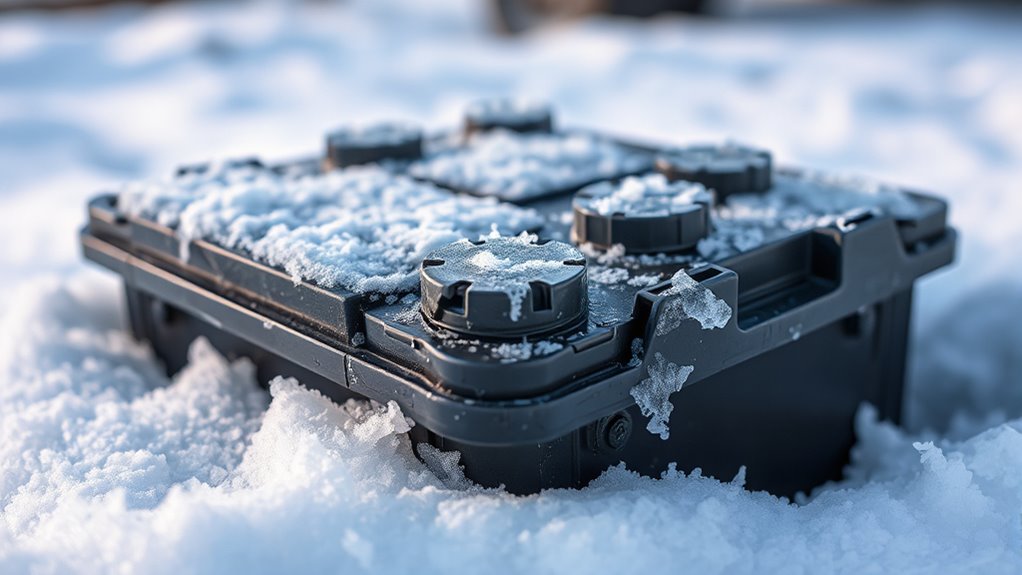
Cold weather can considerably impact your vehicle’s battery performance, making it harder to start your engine when temperatures drop. As the temperature falls, your battery’s ability to produce the necessary energy declines because of changes in its internal chemistry. Battery chemistry is sensitive to cold, and the chemical reactions that generate electrical power slow down in low temperatures. This means your battery’s capacity is reduced, often by as much as 50% when the thermometer dips below freezing. The reduced chemical activity means less current is available to turn the engine over, resulting in sluggish starts or complete failure to start.
Cold weather significantly decreases your battery’s capacity and performance, leading to harder starts and potential failure.
To combat this, insulation techniques can play a vital role. Insulating your battery helps retain heat, which keeps the chemical reactions more active and maintains better performance. Common insulation methods include wrapping the battery with specially designed insulating blankets or installing foam sleeves around it. These materials trap the heat generated during normal operation and prevent it from dissipating quickly into the cold air. By preserving more warmth, your battery maintains a higher level of efficiency and can deliver more power when you turn the key. Additionally, utilizing smart home technology such as battery monitors can help you track your battery’s health and temperature in real time, allowing for proactive maintenance.
In addition to insulation, understanding and applying proper battery chemistry principles is indispensable. Modern batteries are designed to perform better in cold conditions, but they still require proper maintenance. Ensuring your battery is fully charged before winter begins helps offset the effects of cold weather. A weak or partially charged battery is especially vulnerable to cold-related performance issues. Regularly checking your battery’s voltage and replacing aging units can prevent unexpected failures. Using terminal protectors and cleaning corrosion can also improve electrical connections, guaranteeing the maximum flow of current during those critical cold starts.
Another effective approach is to park your vehicle in a garage or sheltered area when possible. Keeping your car in a warmer environment reduces the temperature impact on your battery, lessening the strain on its chemistry. If you live in an area with extremely harsh winters, investing in a battery heater or a block heater can make a significant difference. These devices warm the battery before starting, helping maintain ideal chemical activity and ensuring your vehicle starts reliably.
Ultimately, understanding how cold weather affects your battery chemistry and implementing insulation techniques can extend your battery’s lifespan and improve its performance during winter months. Taking these steps ensures that your vehicle remains dependable, regardless of how low the temperatures drop outside. Proper maintenance and preventative measures are key to avoiding the frustrations of a dead battery when you need your car most.
Products Worth Considering

Shark AI Ultra Robot Vacuum with Self-Empty Base

Sonos Era 100 Wireless Smart Speaker, Black

TCL 85-Inch QM6K Series QLED Mini LED 4K HDR Smart Google TV
As an affiliate, we earn on qualifying purchases.
Frequently Asked Questions
How Can I Tell if My Battery Is Affected by Cold Weather?
You can tell if your battery is affected by cold weather by checking its voltage with a multimeter; a voltage below 12.6 volts indicates a weak battery. Cold weather indicators include sluggish starts, dim headlights, or frequent engine stalls. If you notice these signs, it’s a good idea to have your battery tested professionally. Cold temperatures can reduce battery efficiency, so timely checks help prevent unexpected breakdowns.
Are There Specific Battery Types Better Suited for Winter?
Imagine your car’s battery as a brave warrior facing winter’s icy grip. For this battle, cold resistant batteries are your best allies. They feature advanced battery chemistry designed to perform in freezing temps, maintaining power and reliability. When choosing, look for batteries labeled “cold resistant” or optimized for winter. These types are built to withstand the chill, ensuring you start your engine even when Jack Frost is at his coldest.
How Often Should I Check My Battery During Winter?
You should check your battery weekly during winter to verify it’s performing well. Regular battery maintenance includes cold weather monitoring for signs of weakness, like slow starts or dim lights. Keep an eye on the voltage with a multimeter and clean terminals to prevent corrosion. Frequent checks help catch issues early, especially since cold temperatures can reduce battery capacity. Staying proactive ensures your battery stays reliable through the colder months.
Can Cold Weather Damage My Car’s Electrical System?
Cold weather can damage your car’s electrical system by stressing the battery, reducing insulation, and challenging alternator performance. As temperatures drop, your battery’s ability to deliver power weakens, possibly causing starting issues. Insufficient insulation leaves components vulnerable to cold, while a struggling alternator can fail to keep up with electrical demands. To protect your system, make sure proper insulation is in place, have your battery tested, and maintain your alternator’s peak performance.
What Are the Best Practices for Storing Batteries in Winter?
To store your batteries in winter, you should keep them in a cool, dry place away from direct sunlight. Use battery insulation to prevent temperature fluctuations, which can cause damage. make certain they’re fully charged before storage, as ideal charging helps maintain their health. Check on them periodically, and if possible, recharge if their voltage drops. Proper storage extends battery life and ensures reliable performance when you need it most.
Conclusion
So, as the cold weather creeps in, remember that your batteries are like delicate plants—easily stunted by frost. To keep them thriving, keep them warm and well-maintained. Think of it as giving your batteries a cozy sweater—they’ll last longer and perform better. Don’t let winter’s chill catch you off guard; a little extra care now can prevent you from being left in the cold when you need your devices most. Stay warm, stay powered.