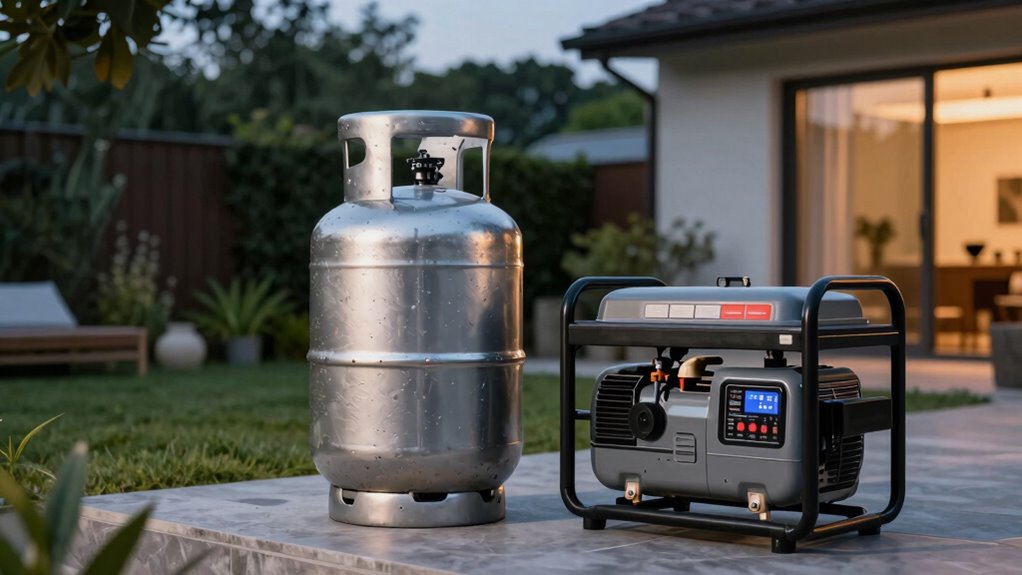
Choosing between gas and propane for your backup generator affects storage, safety, and performance. Gasoline needs proper containers, regular inspections, and is more volatile, while propane is stored in pressurized tanks, offering cleaner burns and more stable power delivery. Propane systems often cost more to install and maintain but are safer and environmentally friendly. Whether you prefer easier refills or lower long-term costs, exploring these differences can help you pick the right fuel for your home.
Key Takeaways
- Propane offers more stable, consistent power output, especially during fluctuating supply conditions, compared to natural gas.
- Propane tanks are portable and easier to refill, providing flexibility for remote or off-grid home backup systems.
- Natural gas typically has lower ongoing costs but depends on local pipeline infrastructure availability.
- Propane burns cleaner, producing fewer emissions, which benefits environmentally conscious homeowners.
- Installation costs for propane systems are higher initially due to safety measures, but they offer greater fuel independence.

LEVOIT Air Purifier for Home Large Room Up to 1073Ft² with Air Quality Monitor, AHAM VERIFIDE, Smart WiFi, Washable Pre-Filter, HEPA Sleep Mode for Pets, Allergies, Dust, Pollen, Vital 100S-P, White
𝐖𝐇𝐘 𝐂𝐇𝐎𝐎𝐒𝐄 𝐀𝐇𝐀𝐌 𝐕𝐄𝐑𝐈𝐅𝐈𝐃𝐄 𝐀𝐈𝐑 𝐏𝐔𝐑𝐈𝐅𝐈𝐄𝐑𝐒: AHAM (Association of Home Appliance Manufacturers) is an ANSI-accredited organization that sets...
As an affiliate, we earn on qualifying purchases.
Differences in Fuel Storage and Delivery Systems
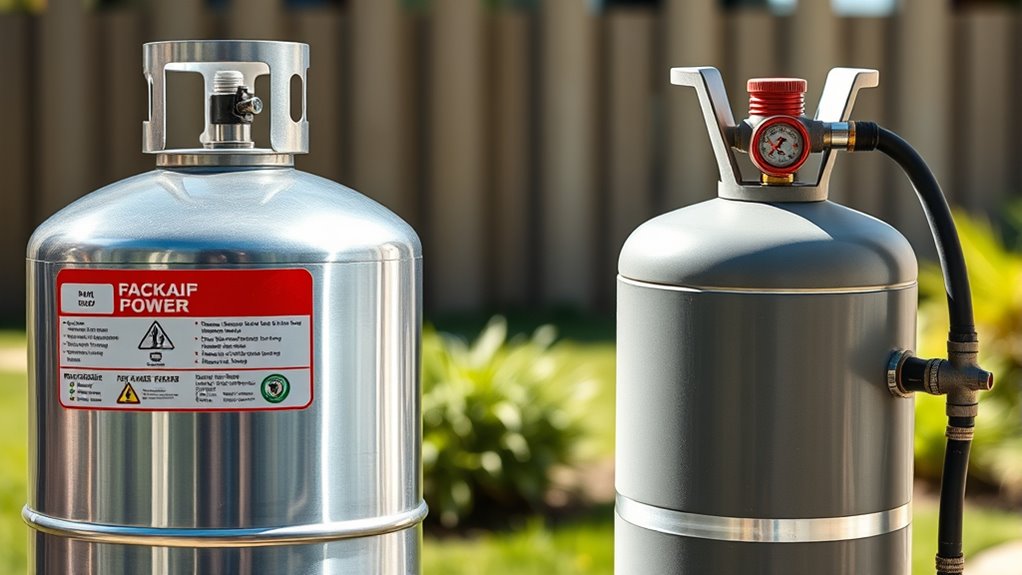
Understanding the differences in fuel storage and delivery systems is essential when choosing between gas and propane for backup power. Gasoline is typically stored in tanks at your property, often in portable containers or fixed underground tanks. It’s delivered via fuel lines directly to your generator, requiring a consistent connection. Propane, on the other hand, is stored in pressurized tanks, either above ground or underground, and delivered through pipes or hoses. Propane tanks are usually larger and can be refilled or replaced easily. Gasoline’s storage is limited by its volatility and shelf life, while propane’s stable storage allows for longer periods without use. Fuel storage methods significantly influence maintenance and setup considerations. Your choice depends on availability, storage space, and convenience, which directly impact how you set up your backup power system.

KNKA Air Purifier for Home Bedroom Large Room Up to 1,695 Ft² in 1 Hr, HEPA Air Cleaner with Washable Pre-Filter, AQI Display, ECO Mode, Sleep Mode, Pet Mode for Pets, Dust, Pollen, APH4000
𝐇𝐢𝐠𝐡 𝐂𝐀𝐃𝐑 𝐕𝐚𝐥𝐮𝐞: This air purifier provides reliable performance with a Smoke/Dust/PM2.5 CADR of 226 CFM (384 m³/h)...
As an affiliate, we earn on qualifying purchases.
Impact on Generator Performance and Efficiency
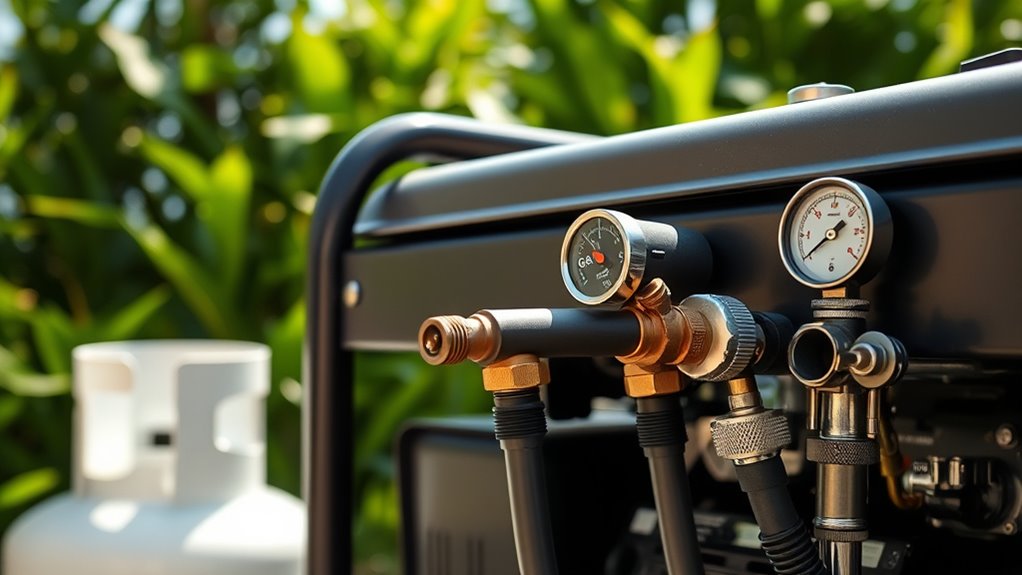
When choosing between gas and propane, you’ll notice differences in how efficiently your generator burns fuel. These combustion efficiency variations can affect how much power you get and how long your generator runs. Understanding these performance impacts helps you select the best fuel for your backup power needs. Additionally, the type of fuel can influence the overall fuel consumption rate, which impacts operational costs and runtime efficiency. Knowing the fuel combustion efficiency can help you make more informed decisions regarding your generator’s fuel choice. For example, propane typically burns cleaner and can provide more consistent performance in certain conditions, which is an important performance factor to consider. Moreover, differences in fuel burn rate can also influence the maintenance and longevity of your generator components. Recognizing these fuel type differences allows for better planning and maintenance strategies to ensure your generator remains reliable during outages.
Combustion Efficiency Differences
Gas and propane differ markedly in their combustion efficiencies, directly impacting generator performance and fuel consumption. Gas typically burns more completely, converting more fuel into useful energy, which results in higher efficiency. Propane, on the other hand, often has slightly lower combustion efficiency due to its chemical properties, meaning it may produce more unburned residues or require more precise tuning. This difference influences how effectively your generator converts fuel into electricity. If your setup isn’t optimized for one fuel type, you might experience reduced runtime or increased fuel use. Understanding these combustion efficiency differences helps you choose the right fuel for your generator, ensuring you maximize performance and minimize fuel costs during power outages.
Power Output Variations
Differences in combustion efficiency between gas and propane can markedly influence the power output your generator delivers. Propane typically burns cleaner and more consistently, which can lead to more stable power delivery under load. Gas, on the other hand, may fluctuate more due to pressure changes in your supply line, causing minor variations in output. You might notice that propane provides a slightly higher and steadier wattage, especially during extended outages. These variations can affect how well your appliances run and how efficiently your generator operates overall. If precise, consistent power is essential for your setup, propane’s stability gives it an advantage. Additionally, Free Floating outdoor conditions and storage considerations can impact fuel quality and performance. Proper fuel storage practices can help maintain fuel integrity and ensure reliable generator operation, regardless of the fuel type used. It’s also important to consider how fuel pressure variations can influence combustion efficiency and overall generator performance, especially in fluctuating environmental conditions. Furthermore, fluctuations in ambient temperature can also impact fuel vaporization and combustion stability, affecting performance in different climates. However, keep in mind that environmental factors and fuel quality also play roles in how your generator performs with either fuel type.

LEVOIT Air Purifiers for Home Large Room Up to 1875 Ft² with Washable Pre-Filter, AHAM VERIFIDE, Air Quality Monitor, HEPA Sleep Mode for Allergies, Pet Hair in Bedroom, Vital 200S-P, White
𝐖𝐇𝐘 𝐂𝐇𝐎𝐎𝐒𝐄 𝐀𝐇𝐀𝐌 𝐕𝐄𝐑𝐈𝐅𝐈𝐃𝐄 𝐏𝐑𝐎𝐃𝐔𝐂𝐓𝐒: AHAM (Association of Home Appliance Manufacturers) is an ANSI-accredited organization that sets strict...
As an affiliate, we earn on qualifying purchases.
Safety Considerations for Home Use
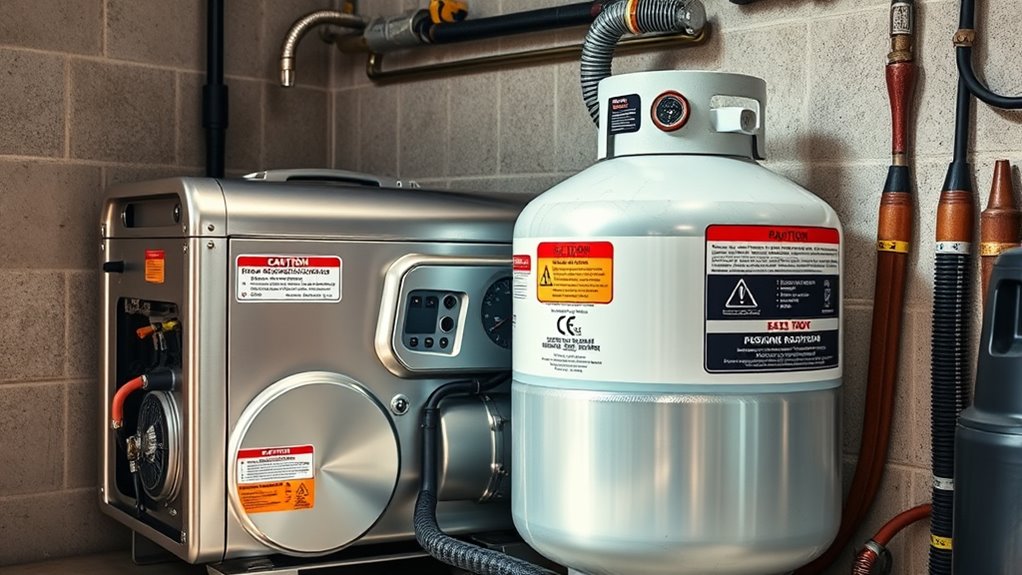
To keep your home safe when using gas or propane, you need to follow proper storage safety guidelines and guarantee good ventilation. Handling and maintaining your backup power system correctly reduces the risk of accidents or leaks. Paying attention to these safety practices helps protect you and your family during power outages. Incorporating proper ventilation techniques ensures that any potential leaks are safely dispersed, further safeguarding your household. Additionally, regular system inspections can identify issues early and prevent dangerous situations. Ensuring adequate airflow around your backup system is essential for minimizing the buildup of potentially hazardous gases, and understanding gas leak detection methods can provide added safety. Regularly checking your storage containers also helps prevent leaks and spills that could pose safety risks.
Storage Safety Guidelines
Ensuring safe storage of backup power fuels is essential to protect your home and loved ones. Incorrect storage can lead to leaks, fires, or explosions. To keep things safe, follow these guidelines:
- Store fuels in approved containers, away from heat sources and direct sunlight.
- Keep containers in well-ventilated areas, ideally outside or in a dedicated shed.
- Regularly inspect containers for leaks, corrosion, or damage, and replace if necessary.
- Be aware of regulatory storage requirements to ensure compliance and safety. Always adhere to proper storage practices to minimize hazards.
- Incorporate fuel container maintenance into your safety routine to prevent deterioration that could lead to accidents. Proper storage practices also include understanding the flammability limits of propane and gas fuels to prevent dangerous situations.
- Avoid storing large quantities indoors or near electrical equipment. Always label containers clearly and guarantee they are tightly sealed. Keep a fire extinguisher nearby and familiarize yourself with emergency procedures. Proper storage minimizes risks and helps ensure your backup fuels are ready when needed without jeopardizing safety.
- Regularly review storage guidelines to stay updated on safety standards and best practices.
Proper Ventilation Practices
Proper ventilation is essential when storing and using backup fuels like gas or propane at home. Good airflow prevents the buildup of dangerous fumes and reduces the risk of explosions or carbon monoxide poisoning. Always keep fuel storage areas well-ventilated, ideally with vents or exhaust fans to promote continuous air exchange. When operating backup generators indoors or in enclosed spaces, ensure proper exhaust venting outside, and never block ventilation outlets. Regularly inspect vents for blockages or leaks, and maintain a clear area around storage tanks and equipment. Proper ventilation not only safeguards your health but also helps maintain the integrity of your fuel systems. Using energy-efficient fans can help improve airflow and reduce energy consumption in your home. By prioritizing airflow, you reduce hazards and ensure safer, more reliable backup power during emergencies. Understanding pool terminology and the importance of proper safety practices can help you better manage your home backup systems. Additionally, being aware of ventilation standards can guide you in implementing effective safety measures. Ensuring adequate air exchange in storage and operational areas is vital for maintaining safe indoor air quality, especially considering the chemical properties of propane and gas fuels, which can pose risks if not properly ventilated.
Handling and Maintenance
Handling and maintaining your backup fuel system safely is vital to prevent accidents and guarantee reliable operation. Proper care ensures your system runs smoothly when you need it most. Here are key safety tips:
- Regularly inspect tanks and connections for leaks, corrosion, or damage. Immediately address issues.
- Keep fuel storage areas well-ventilated and away from ignition sources.
- Follow manufacturer guidelines for fueling, maintenance, and shutdown procedures.
Always wear protective gear during inspections or refueling. Turn off your system before performing any maintenance to avoid accidental activation. Store fuels in approved containers and keep them away from heat or open flames. Proper handling and routine maintenance are essential to prevent leaks, explosions, or health hazards, ensuring your backup power system remains safe and dependable during emergencies.

Jackery Portable Power Station Explorer 300, 292Wh Backup LiFePO4 Battery, Solar Generator for Outdoors Camping Travel Hunting Blackout (Solar Panel Optional)
SPEED UP YOUR RECHARGEABILITY: It takes only 2 hours to recharge 80% battery of the power station through...
As an affiliate, we earn on qualifying purchases.
Cost Implications and Maintenance Requirements
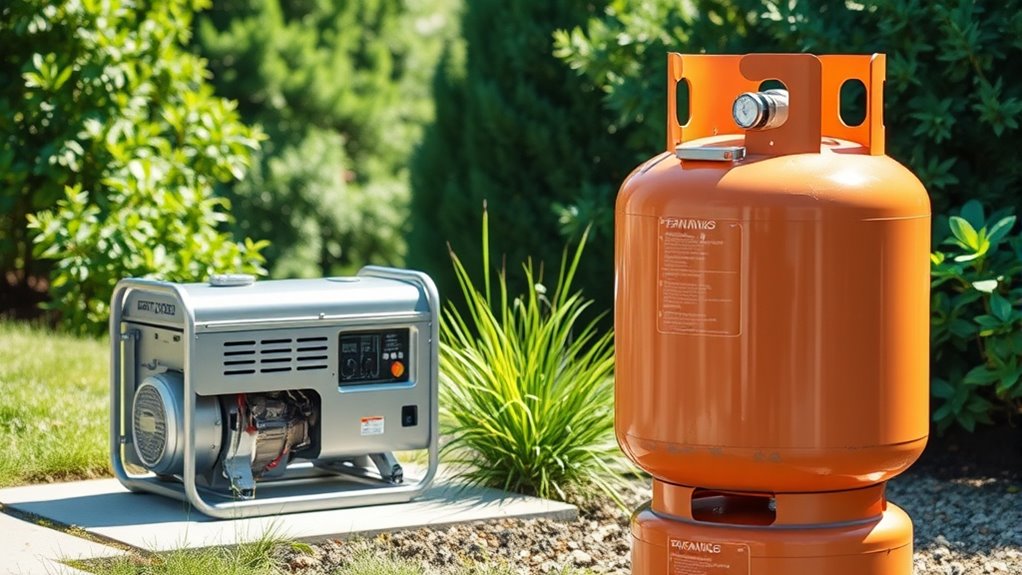
While both gas and propane backup systems involve initial installation costs, propane generally necessitates a higher upfront investment due to specialized equipment and safety measures. Propane tanks, regulators, and leak detection systems add to the expense, and installation often needs professional handling to ensure safety compliance. Maintenance for propane systems typically involves regular inspections of tanks and lines, which can be more frequent and costly than natural gas systems. Gas systems usually have lower ongoing costs since they connect directly to your utility supply, requiring less upkeep. However, propane tanks need periodic refilling, which adds to long-term expenses. Overall, propane’s maintenance tends to be slightly more involved and costly, but it offers the benefit of stored fuel independent of utility supply, providing reliable backup power.
Environmental Effects and Emissions
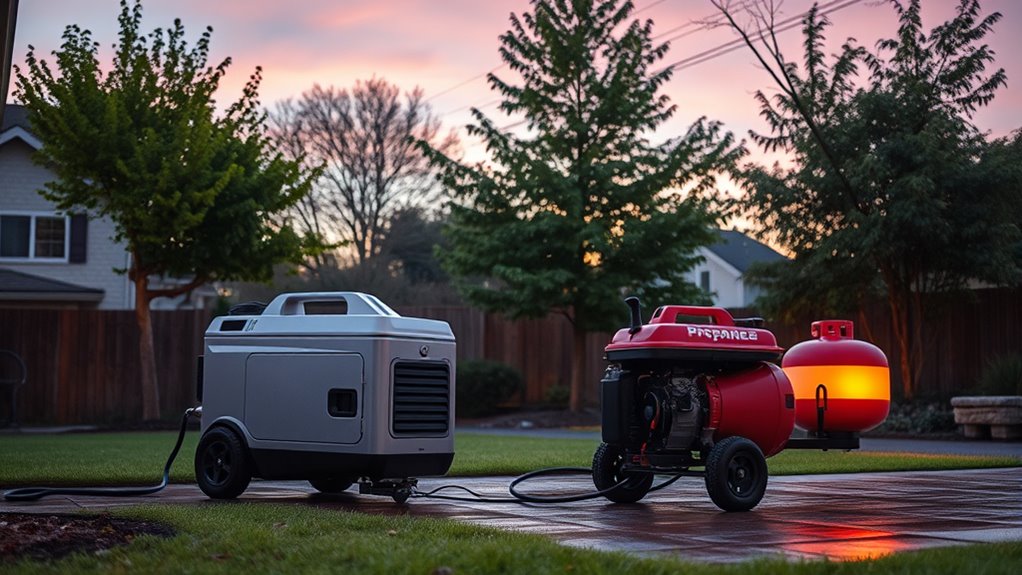
When comparing the environmental effects of gas and propane backup systems, it’s important to contemplate their emissions during operation. Both fuels emit greenhouse gases, but their levels differ. Propane burns cleaner, producing fewer carbon dioxide emissions, which helps reduce your carbon footprint. Natural gas, while still cleaner than coal, releases more CO₂ per unit than propane.
Consider these points:
- Propane generates lower greenhouse gases during combustion.
- Gas systems tend to produce more methane leaks in extraction and transportation.
- Both fuels release pollutants like nitrogen oxides, but propane’s emissions are generally less harmful.
Choosing propane can mean less environmental impact, especially if you’re concerned about air quality and climate change.
Availability and Infrastructure Considerations
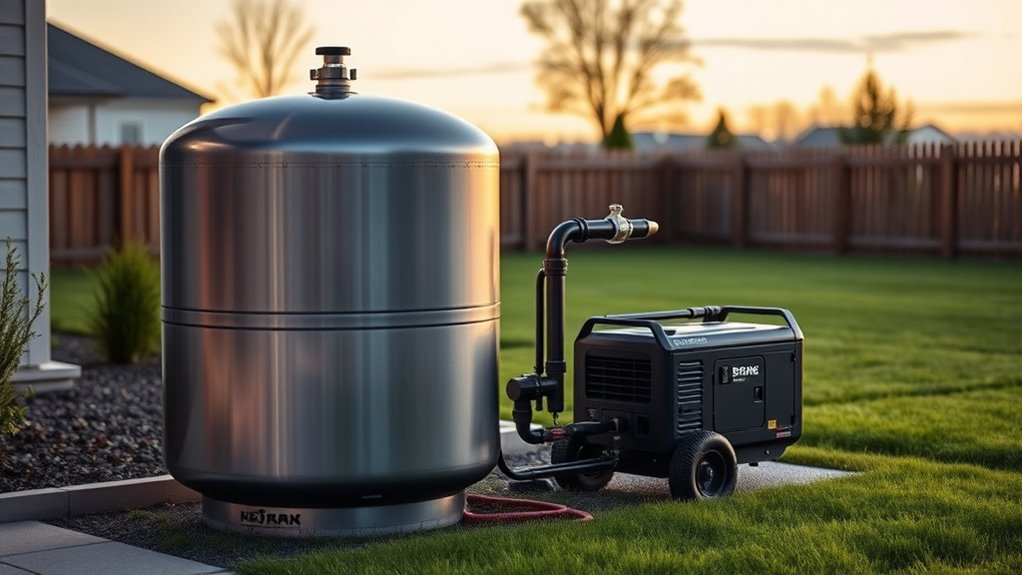
Propane often offers a more widely available and accessible fuel source for backup power systems because its infrastructure is well-established in many areas. You’ll find numerous distribution networks, storage tanks, and delivery services that make propane readily accessible, especially in rural or suburban regions. This widespread availability means you’re less likely to face shortages or delays when refueling during emergencies. Conversely, natural gas depends heavily on local pipelines, which may not reach all areas or require extensive upgrades for backup power use. If your home is connected to a reliable natural gas line, you might have a seamless supply. However, in locations where infrastructure is limited or nonexistent, propane tanks provide a flexible, on-site fuel option that’s easier to source and store.
Installation and Regulatory Factors
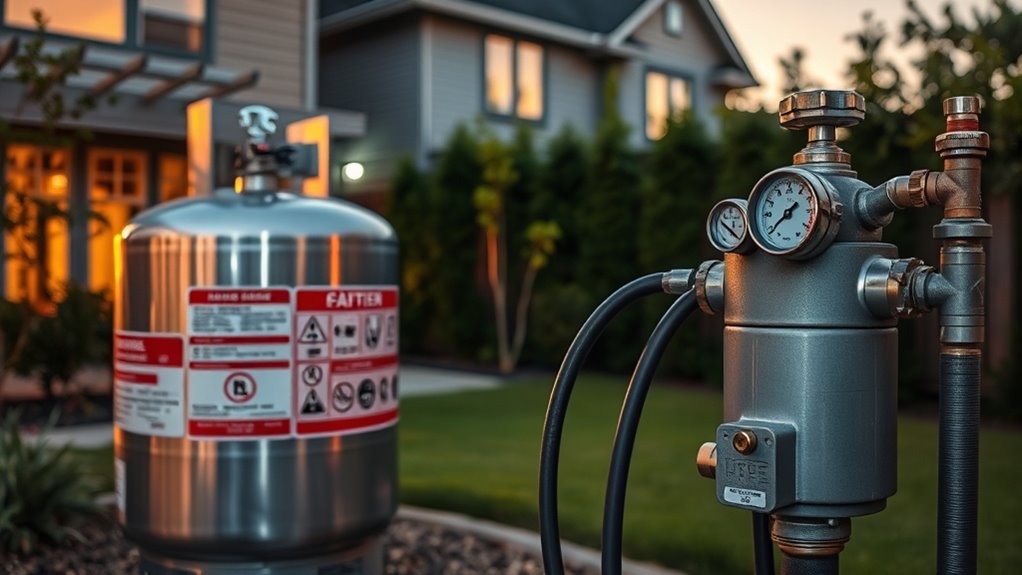
Installing backup power systems involves steering through various regulations and requirements that can influence your choice of fuel. You need to consider local codes, permits, and safety standards that may differ for gas and propane systems. These factors can impact installation complexity and cost.
To navigate this effectively, keep in mind:
- Permitting and Zoning Laws: Some areas require permits or have restrictions on fuel storage and generator placement.
- Installation Standards: Compliance with safety codes ensures safe operation and avoids legal issues.
- Inspection and Maintenance: Regular inspections might be mandated, especially for propane tanks and gas lines, to ensure ongoing safety.
Understanding these regulatory factors helps you choose a system that’s compliant, safe, and suited to your home’s needs.
Frequently Asked Questions
How Do Fuel Types Affect Generator Startup Times?
Fuel types can markedly influence your generator’s startup times. Gas typically ignites quickly, providing faster startup, especially in cold conditions. Propane, on the other hand, may take a few extra seconds due to its different vaporization process. If you need rapid power restoration, gas is usually more reliable for quicker starts. However, propane offers longer shelf life and cleaner burning, which might benefit your overall backup plan.
Can Gas or Propane Cause More Wear on Generator Components?
Gas typically causes more wear on generator components because it contains impurities and moisture that can lead to corrosion and buildup. Propane burns cleaner, reducing engine wear and extending component life. If you use gas, regular maintenance is vital to prevent damage from these contaminants. Choosing propane can help your generator run smoother and last longer, especially with consistent upkeep.
What Are the Long-Term Storage Safety Risks for Each Fuel?
Storing gas or propane long-term carries safety risks if not done properly. Gasoline can degrade, cause leaks, and pose fire hazards, especially if stored improperly or exposed to heat. Propane, being stored as a pressurized liquid, must be kept in approved tanks away from heat sources to prevent leaks or explosions. Always use proper containers, check for leaks regularly, and store fuels in well-ventilated, secure areas to minimize risks.
How Do Fuel Costs Fluctuate Seasonally or Regionally?
Imagine you’re purchasing fuel in a region where propane prices spike during winter for heating needs. You’ll likely see seasonal fluctuations, with prices rising in colder months and dipping in warmer periods. Regionally, supply chain issues or local demand can also cause price differences. For example, rural areas may face higher costs due to transportation, so you should plan your backup fuel purchases accordingly, especially for long-term storage.
Are There Differences in Environmental Regulations for Gas vs. Propane?
Yes, there are differences in environmental regulations for gas and propane. Gasoline often faces stricter emissions standards due to higher pollutant levels, while propane is considered cleaner-burning and usually has fewer restrictions. You’ll find that local regulations may favor propane for its lower emissions, especially in residential areas. It is crucial to check your local laws, as they can influence which fuel is more suitable for your backup power needs.
Conclusion
Choosing between gas and propane for your backup power is like picking the right tool for a job—each has its strengths. Gas offers quick access but can be less reliable in storage, while propane provides steady, long-term supply. Consider safety, costs, and infrastructure needs to make the best choice for your home. Ultimately, your decision shapes your home’s resilience, ensuring you’re never left in the dark when the storm hits.