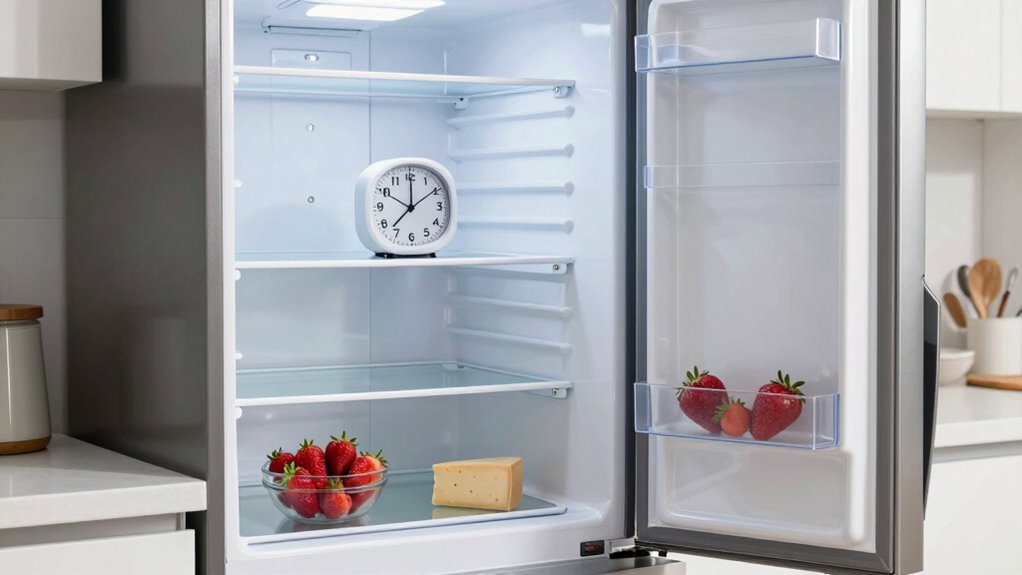

During a power outage, how long your food stays safe depends on your fridge’s initial temperature, how often you open the door, and outside conditions. Generally, a full, well-insulated fridge can keep food safe for about four hours, but warm environments speed up spoilage. Using a thermometer and minimizing door openings helps extend safety. Want tips on keeping your food fresh longer? Keep exploring for practical steps and expert advice.
Key Takeaways
- A refrigerator typically keeps food below 40°F for about 4 hours if unopened; freezer duration varies based on insulation and contents.
- Keeping the door closed slows temperature rise, extending the safe period for stored foods.
- Warmer ambient temperatures accelerate the internal temperature increase, reducing safe storage time.
- Using a thermometer helps monitor food temperatures, indicating when items may no longer be safe.
- Perishable foods should be discarded after approximately 4 hours without power if they exceed 40°F or show spoilage signs.

BLUETTI Elite 100 V2 Portable Power Station, 1024Wh LFP Battery Backup w/ 4 1800W AC Ports (3600W Surge), 35% Smaller, Fast Charge and UPS Solar Generator for Camping, Road Trip, Outages, Home Backup
[Power 11 Devices] - With a 1024Wh capacity, Elite 100 V2 portable power station delivers 1800W AC output...
As an affiliate, we earn on qualifying purchases.
Factors Influencing Food Safety During Power Outages
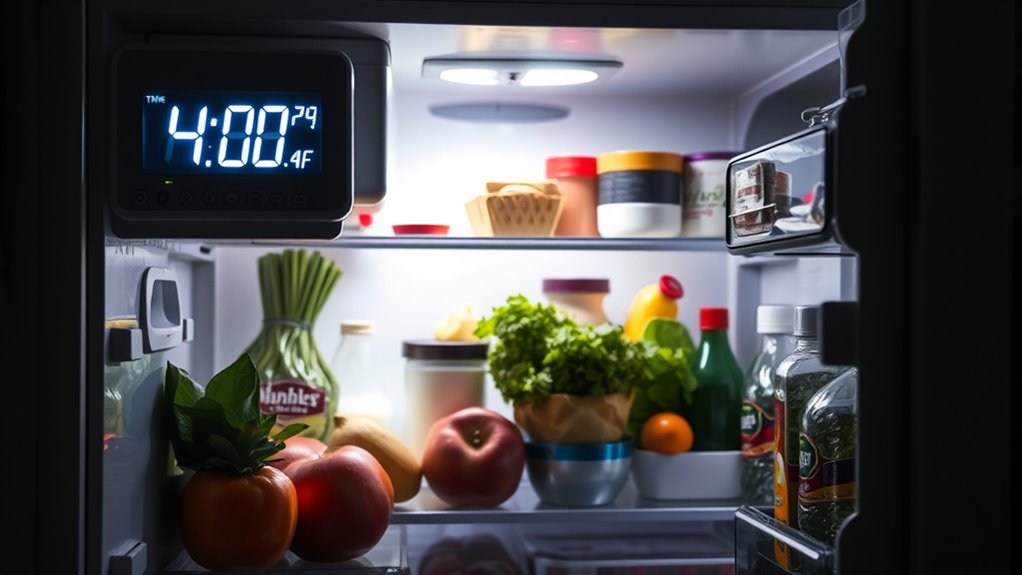
When a power outage occurs, several factors can impact the safety of your food. The type of food stored in your refrigerator, its initial temperature, and the duration of the outage play vital roles. Perishable items like dairy, meats, and cooked leftovers are more vulnerable to spoilage. The insulation and size of your refrigerator also matter; a well-insulated, full fridge stays cold longer. Additionally, whether you keep the door closed or open frequently affects temperature stability. External factors like ambient temperature and weather conditions influence how quickly food warms up. Understanding these variables helps you assess risks and make quick decisions about whether to consume, discard, or take steps to preserve your food during an outage. Proper food storage techniques can further help extend safety during such events, especially when food temperature monitoring is employed to track how long food remains in a safe range. Implementing emergency preparedness supplies such as coolers and ice packs can also help maintain safe temperatures for perishables during extended outages. Incorporating backup power solutions can also ensure your refrigerator maintains a safe temperature longer during outages. Being aware of food safety guidelines ensures you handle your food correctly and minimize waste.

Anker SOLIX C1000 Gen 2 Portable Power Station, 2,000W (Peak 3,000W) Solar Generator, Full Charge in 49 Min, 1,024Wh LiFePO4 Battery for Home Backup, Power Outages, and Camping (Optional Solar Panel)
49 Min UltraFast Recharging: With upgraded HyperFlash tech, fully recharge at 1,600W—for outage prepping, camping trips, or tailgating...
As an affiliate, we earn on qualifying purchases.
Estimating Temperature Rise in Your Refrigerator
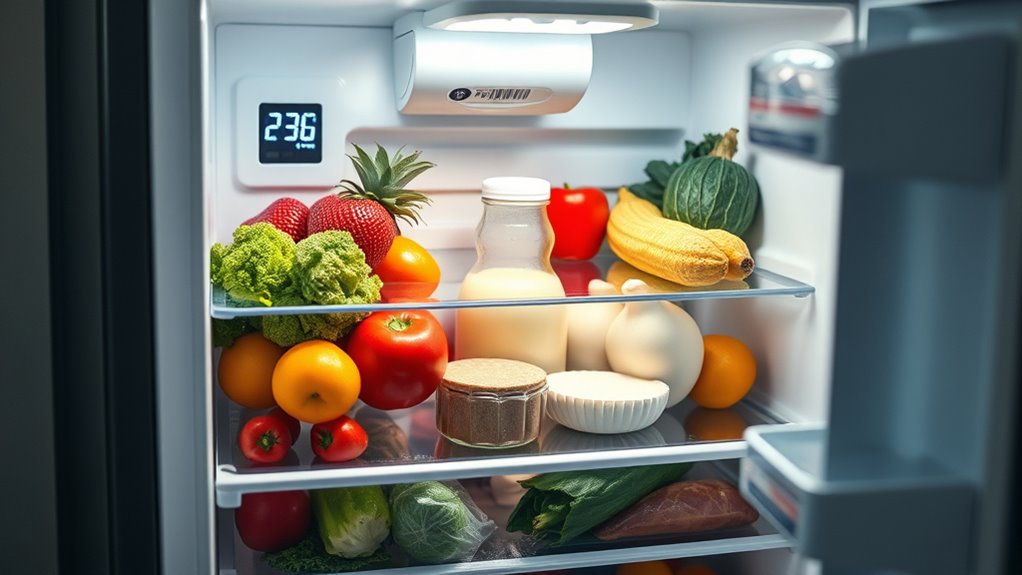
Understanding how quickly your refrigerator’s temperature rises during a power outage helps you make informed decisions about food safety. To estimate this, consider your fridge’s insulation quality, the ambient room temperature, and how often you open the door. A typical refrigerator might stay below 40°F for about 4 hours if unopened, but warmer environments accelerate temperature increases. You can monitor the temperature with a thermometer placed inside. If it rises above 40°F, bacteria can multiply quickly, risking food safety. Keep the door closed as much as possible to slow the temperature rise. Knowing your fridge’s insulation and environment helps you estimate how long your food stays safe, allowing you to act before food becomes unsafe or needs disposal. Additionally, understanding refrigeration system fundamentals can further improve your ability to maintain safe temperatures during outages, especially when considering thermal mass and how it affects temperature stability. Recognizing the impact of insulation quality can also help predict the duration your food remains safe, and being aware of ambient temperature effects enables better planning during extended outages. Moreover, considering cooling load factors can help you better anticipate how your refrigerator responds to power loss under different conditions.
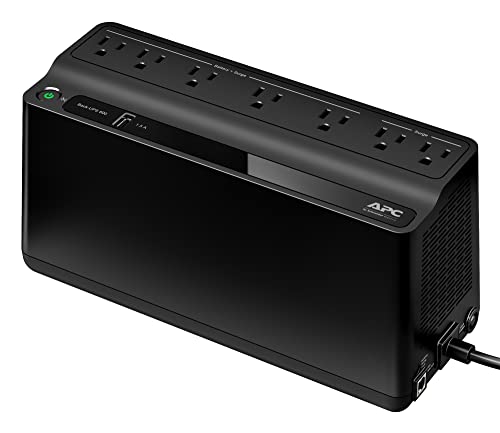
APC UPS 600VA / 330W UPS Battery Backup & Surge Protector, 7 Outlets (NEMA 5-15R), USB Charging Port, BE600M1 Uninterruptible Power Supply for Computers, Wi-Fi Routers, and Home Office Electronics
600VA / 330W RELIABLE BACKUP POWER: Supplies short‑term battery power during outages to maintain internet connectivity and allow...
As an affiliate, we earn on qualifying purchases.
Guidelines for Safe Food Handling During Outages
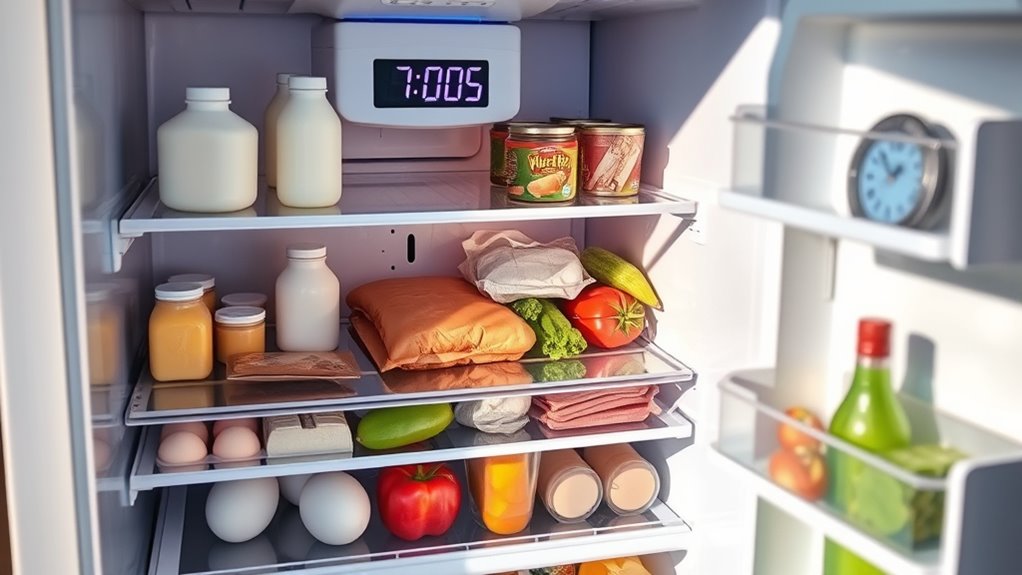
During a power outage, it’s essential to handle your food safely to prevent foodborne illnesses. First, avoid opening the fridge or freezer unless necessary, as this keeps cold air inside longer. Keep perishable items together to maintain their temperature. Use coolers with ice for foods that need immediate refrigeration. Check food temperatures with a thermometer; discard anything above 40°F. Label items that are questionable or have been exposed to unsafe temperatures. Keep raw meats separate from cooked foods to avoid cross-contamination. Remember, when in doubt, throw it out—it’s better to be safe than sorry. Employing smart home devices like temperature sensors can help you monitor food safety during outages. Additionally, understanding home safety & accessibility can help you prepare your living space to better handle emergencies. Installing smart sensors can provide real-time alerts about temperature fluctuations, helping you make timely decisions. By following these guidelines, you reduce the risk of foodborne illness and help preserve your food’s safety during outages. Understanding power outage safety helps you make better decisions about food preservation during emergencies.

CyberPower EC850LCD Ecologic UPS Battery Backup and Surge Protector, 850VA/510W, 12 Outlets, ECO Mode, Compact, UL Certified
850VA/510W Ecologic Battery Backup Uninterruptible Power Supply (UPS) System uses simulated sine wave output to safeguard workstations, networking...
As an affiliate, we earn on qualifying purchases.
Practical Steps to Extend Food Freshness Without Power
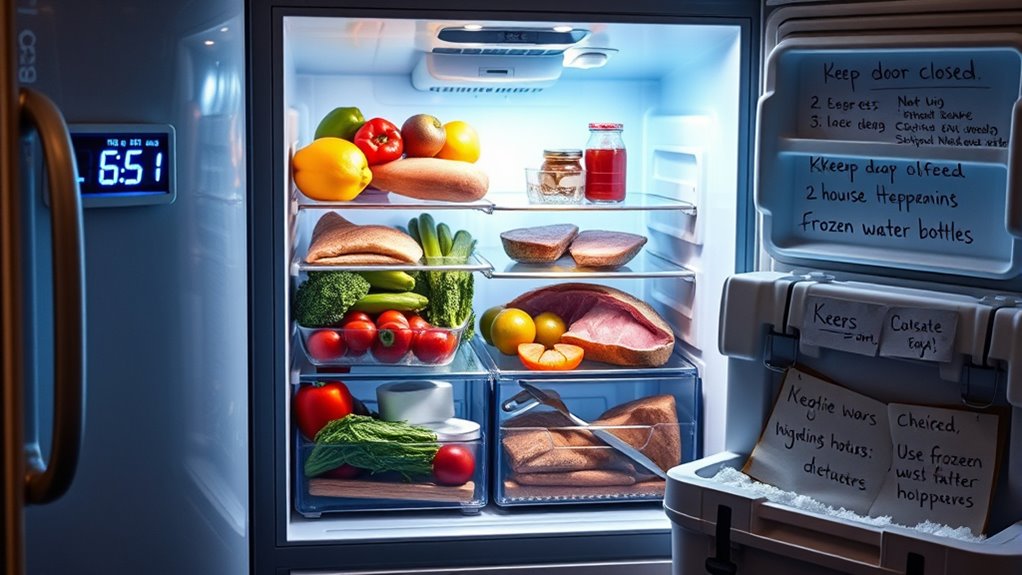
After keeping your food safe during a power outage, it’s time to focus on practical ways to extend its freshness without electricity. You can do this by using strategies that slow bacterial growth and maintain temperature. Keep your refrigerator and freezer doors closed as much as possible to retain cold air. Use coolers with ice packs for perishable items if the outage lasts long. Wrap foods tightly to prevent moisture loss and contamination. Group items together to help retain cold. Additionally, insulate your fridge with blankets or towels. Here’s a quick reference:
| Method | Supplies Needed | Effect |
|---|---|---|
| Keep doors closed | N/A | Maintains internal temp |
| Use coolers | Ice packs | Keeps perishables cold |
| Wrap foods tightly | Plastic wrap, foil | Prevents moisture loss |
| Group items together | N/A | Retains cold longer |
| Insulate fridge | Blankets, towels | Slows temperature rise |
Implementing temperature management techniques can significantly prolong the safety of your stored food during outages.
When to Toss or Keep Food After a Power Loss

Knowing exactly when to toss or keep food after a power loss can save you from foodborne illnesses and unnecessary waste. You should inspect your food carefully and rely on time and temperature guidelines. If the refrigerator has been without power for over 4 hours, perishable items like meat, dairy, and seafood are at risk and should be discarded. Non-perishable items generally stay safe longer but still require caution. Keep these tips in mind:
After 4 hours without power, discard perishable foods to prevent foodborne illness.
- Check the smell, appearance, and texture of perishable foods.
- Use a thermometer to verify if the fridge stayed below 40°F (4°C).
- Throw out any food that has been above 40°F for more than 2 hours.
- When in doubt, discard, especially with cooked leftovers.
- Remember, safety comes first; when uncertain, it’s better to toss.
- Proper storage practices can help extend the safety window for food during outages.
- Regularly monitoring your refrigerator’s temperature with a thermometer can provide early warning signs and help you make better decisions during outages.
- Understanding food safety guidelines is essential to prevent potential health risks during power outages.
- Employing temperature control strategies, such as keeping the refrigerator door closed as much as possible, can help maintain safe temperatures longer during outages.
- Being aware of energy efficiency measures can also help prevent power outages by reducing strain on electrical systems.
Frequently Asked Questions
How Can I Monitor My Refrigerator’s Temperature During an Outage?
You can monitor your refrigerator’s temperature during an outage by using a digital or analog thermometer placed inside the fridge. Keep the thermometer in the center for an accurate reading. Check the temperature periodically, ideally every few hours, to make certain it stays below 40°F (4°C). If it rises above that, consider transferring perishable food to a cooler with ice and avoid opening the fridge door unnecessarily to maintain cold temperatures.
What Specific Foods Are Most at Risk During Power Failures?
Fruits and vegetables are most at risk during power failures because they spoil quickly without refrigeration. Studies show that leafy greens can wilt and bacteria can multiply in just 1-2 days without cold storage. You should prioritize consuming or preserving perishables like dairy, meats, and seafood first, as they can become unsafe within a day or two. Keeping a thermometer handy helps you monitor safety, but quick action is key to avoid waste and illness.
Are There Any Household Items That Can Help Preserve Food Longer?
You can use household items like ice packs, frozen gel packs, or even frozen bottles of water to help preserve your food longer during a power outage. Placing these in your refrigerator and freezer can maintain a cooler temperature, slowing bacterial growth. Additionally, wrapping perishables with blankets or towels can provide extra insulation. Keep the refrigerator door closed as much as possible to retain cold air and extend food safety.
How Does Ambient Outdoor Temperature Affect Food Safety Duration?
If the outdoor temperature hits 90°F, your food’s safe window shrinks to just 1-2 hours, unlike cooler days where it might last 4 hours or more. When the heat rises, bacteria multiply quickly, risking your food’s safety. So, it’s smart to keep perishables colder with coolers or ice packs, especially during hot weather. Always check for signs of spoilage before eating, regardless of timing.
Can I Use Ice Packs or Dry Ice to Extend Food Safety?
Yes, you can use ice packs or dry ice to prolong food safety during a power outage. Place them around your perishable items in the fridge or cooler to keep the temperature low. Dry ice is especially effective because it cools rapidly and maintains a cold environment longer. Just handle dry ice carefully, wear gloves, and ensure good ventilation to prevent accidents or health issues.
Conclusion
Knowing how long your food stays safe without power is like keeping a delicate dance in step—timing is everything. By understanding the factors at play and acting quickly, you can prevent waste and keep your family safe. Remember, a well-managed outage is like a steady drumbeat—calm, controlled, and deliberate. Stay vigilant, check your food regularly, and when in doubt, throw it out. Your peace of mind depends on it.