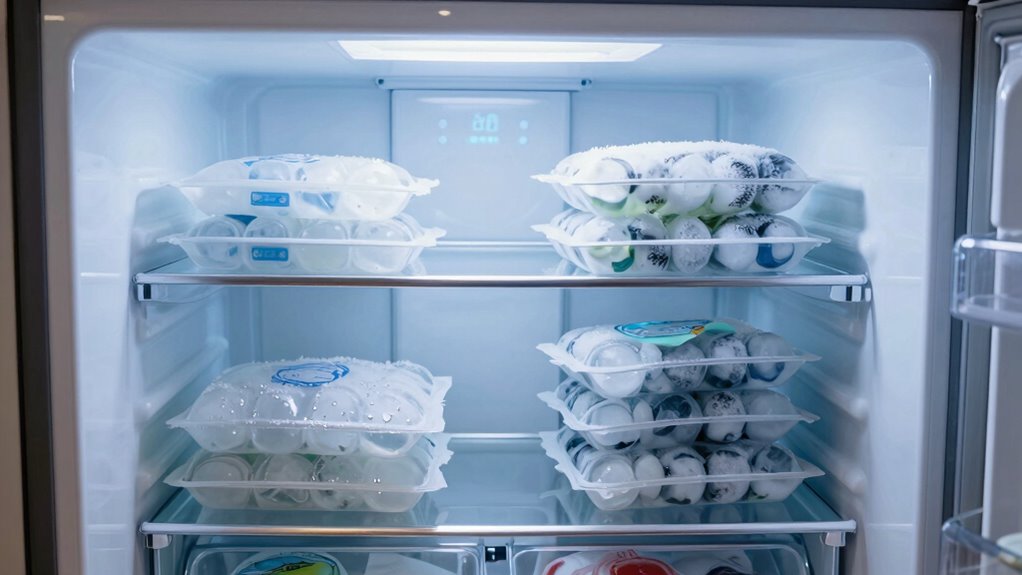

To keep freezer temperatures low longer, minimize door openings and make sure door seals are tight and clean to prevent warm air from entering. Organize foods so warm items stay in the back and avoid overloading. Regularly clean condenser coils and monitor internal temps with a thermometer, adjusting settings as needed. Maintaining a stable environment and proper airflow boosts efficiency and ice preservation. For more tips on extending freezer performance, keep exploring these strategies.
Key Takeaways
- Minimize door openings and keep seals clean to prevent warm air infiltration and maintain consistent low temperatures.
- Organize contents to avoid overloading, ensuring proper airflow and even cooling throughout the freezer.
- Set the thermostat to 0°F (-18°C) and use temperature monitors for real-time feedback and adjustments.
- Regularly clean condenser coils and perform maintenance to ensure the cooling system operates efficiently.
- Keep the freezer environment cool and stable, avoiding obstructed vents and using alerts to proactively manage temperature fluctuations.
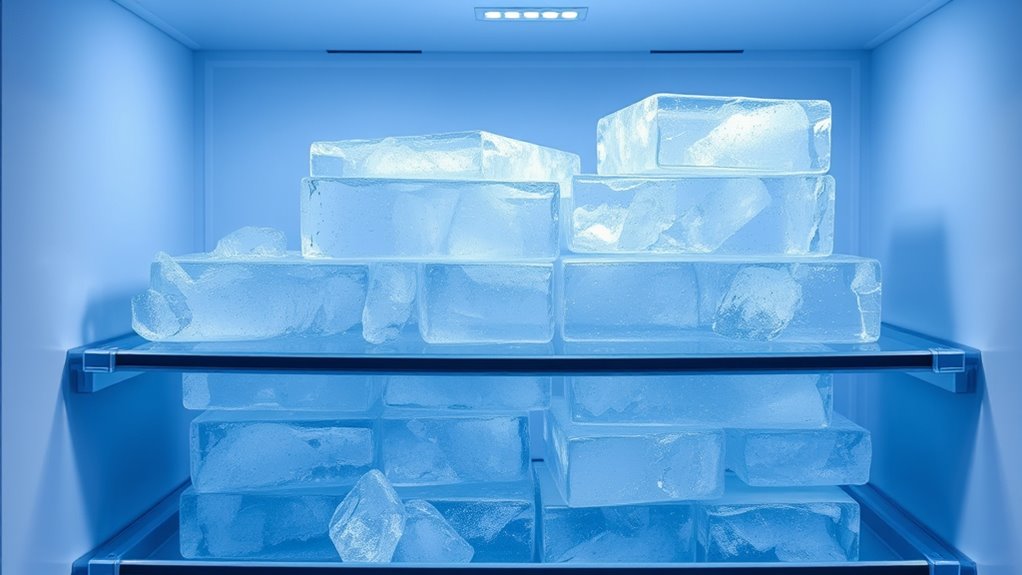
Have you ever wondered how to make your freezer work more efficiently during hot months? When temperatures rise outside, your freezer faces the challenge of maintaining a consistently low temperature, which is vital for ice preservation and keeping your frozen goods safe. To maximize your freezer’s performance, you need to focus on effective temperature management. This means not just setting the right thermostat but also ensuring that the environment inside remains stable and cool enough for your ice and food. Proper temperature management reduces strain on the compressor, helps prevent ice melt, and keeps everything frozen longer.
Maintaining a stable freezer temperature during hot months is key to better ice preservation and food safety.
One of the easiest ways to enhance ice preservation is to avoid frequently opening the freezer door. Each time you do, warm air rushes in, raising the internal temperature and making your freezer work harder to bring it back down. Instead, plan ahead and grab everything you need at once. When you do open the door, do it quickly to minimize temperature fluctuations. Also, keeping the door seals tight and clean prevents cold air from escaping, ensuring the temperature stays consistent. If you notice gaps or cracks in the seals, it’s time to replace them. These small steps can considerably improve your freezer’s ability to retain cold temperatures.
Another key aspect of temperature management is organizing your freezer. Keep the items that generate the most heat, like warm foods or freshly added groceries, toward the back and away from the door. This prevents temperature spikes caused by frequent door openings or residual warmth. Additionally, avoid overloading your freezer. Overstuffing blocks airflow, making it harder for cold air to circulate evenly. Proper airflow is essential for maintaining a uniform temperature throughout the compartment, which directly impacts ice preservation and the longevity of your frozen items. Maintaining filtration systems can also help your freezer operate efficiently by reducing dust and debris that impair cooling performance.
You might also consider using temperature monitoring devices. These small gadgets can give you real-time feedback on your freezer’s internal temperature, alerting you if it rises above safe levels. If you notice fluctuations, it might indicate that your freezer needs a tune-up or that you need to adjust the thermostat. Keep the ideal temperature around 0°F (-18°C) for maximum ice preservation and food safety. Regularly cleaning the condenser coils at the back or underneath your freezer can also help improve efficiency by ensuring the cooling system isn’t clogged with dust or debris, which can cause overheating.

Upgarded 60"x31" 5304507200 Refrigerator Freezer Door Gasket Replacement Compatible with Frigidaire Kenmore Electrolux Freezer Door Seal Gasket 5304408631 5304507214 216522309 216522310 216522359
[Upgraded Thicked Quality Freezer Door Seal】ARLBA 5304507200 Freezer Door Gasket Dimensions:60"x31".it is made of High quality EPDM rubber…
As an affiliate, we earn on qualifying purchases.
As an affiliate, we earn on qualifying purchases.
Frequently Asked Questions
How Does Ambient Room Temperature Affect Freezer Ice Longevity?
Higher room temperatures cause your freezer ice to melt faster, reducing its longevity. To combat this, you should improve insulation techniques around your freezer, like adding foam panels or sealing gaps. Keep your room cool if possible, and avoid frequent door openings. These steps help maintain low temperatures inside, ensuring your ice stays frozen longer despite warmer ambient room temperatures.
What Are the Best Types of Ice for Long-Term Freezing?
You should use distilled or purified water for long-term freezing because it minimizes impurities that cause irregular ice crystal formation. These types of ice freeze more uniformly, reducing damage over time. Keep in mind, freezing point depression from impurities can weaken ice’s structure, so pure water ensures a stronger, clearer block. Properly sealed containers also help prevent sublimation and maintain ideal temperature, extending ice longevity in your freezer.
Does Opening the Freezer Frequently Impact Ice Melting?
Yes, opening the door frequently causes temperature fluctuations, which can lead to ice melting faster. Each time you open the freezer, warm air enters and raises the internal temperature temporarily. This triggers the freezer to work harder to maintain a low temp, risking ice melting and refreezing. To keep your ice solid longer, try to minimize door openings and open it only when necessary.
How Can I Prevent Ice From Developing Freezer Burn?
Ice can develop freezer burn despite your efforts, but you can prevent it with airtight sealing and insulation techniques. Make certain all items are tightly wrapped or stored in airtight containers to limit exposure to air, which causes dehydration. Use insulating materials like freezer wrap or foam to keep cold air in and warm air out. Regularly check and maintain your freezer’s temperature, keeping it consistently cold to avoid moisture loss and freezer burn.
Are There Specific Storage Containers That Preserve Ice Longer?
You should use airtight containers or insulated bags to preserve your ice longer. Airtight containers prevent air from reaching the ice, reducing melting and freezer burn. Insulated bags help maintain a consistent cold temperature, especially during transport or short-term storage. Both options keep the ice colder for extended periods, ensuring it stays solid and ready when you need it. Choose containers that seal tightly and are durable for the best results.

AcuRite Digital Wireless Fridge and Freezer Thermometer with Alarm and Max/Min Temperature for Home ,LCD Display, Restaurants (00986M), 0.6, White
Digital Temperature Sensor Thermometers: Includes one refrigerator thermometer and one freezer thermometer that transmit readings to the wireless…
As an affiliate, we earn on qualifying purchases.
As an affiliate, we earn on qualifying purchases.
Conclusion
By mastering your freezer ice strategy, you’ll keep temps low longer, like a cool breeze in a blazing heatwave. Imagine your frozen goods as icy islands in an ocean of warmth, steadfast and unmelting. With sharp organization and proper storage, you control the chill, creating a fortress of frost that withstands the rising temperatures outside. Keep your freezer’s coolness steady, and enjoy the peace of mind that comes with icy resilience.

4 Packs Air Conditioner Condenser Cleaning Brush Refrigerator Coil Brush HVAC Coil Cleaner Brush Small Plastic Whisk Brush (Blue)
Package Includes: 4 packs air conditioner condenser cleaning brush in package, you can use them to clean different…
As an affiliate, we earn on qualifying purchases.
As an affiliate, we earn on qualifying purchases.

MSERCUOR Freezer Organizer Bins, 4 Pack Stackable Deep Chest Freezer Organizer Bins, Foldable Baskets with Handles, Black Storage Container Baskets for 5/ 7 Cu.FT Deep Freezer Sort Frozen Meats
【High Quality】MSERCUOR deep freezer organizer bins are made of antirust metal, which has good corrosion resistance and can…
As an affiliate, we earn on qualifying purchases.
As an affiliate, we earn on qualifying purchases.