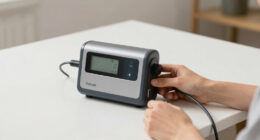
To avoid overbuying backup power, start by listing only essential devices like refrigerators, medical tools, and security systems. Prioritize these devices based on importance for safety and health. Next, determine each item’s power needs and add up just what’s necessary for your critical loads. Set a realistic capacity goal and choose a suitable backup solution. Test your list and update it regularly to keep your system efficient—if you stay focused, you’ll have what you need without overspending.
Key Takeaways
- List only essential devices needed for safety, health, and security to prevent overestimating backup power needs.
- Assess wattage and startup requirements of each device to accurately determine total power capacity.
- Categorize loads by priority (high, medium, low) to focus on critical devices and avoid overbuying.
- Regularly test backup systems and refine your list based on performance to ensure reliability during outages.
- Update your critical loads list periodically to reflect equipment changes and evolving needs, maintaining efficiency.

KNKA Air Purifier for Home Bedroom Large Room Up to 1,695 Ft² in 1 Hr, HEPA Air Cleaner with Washable Pre-Filter, AQI Display, ECO Mode, Sleep Mode, Pet Mode for Pets, Dust, Pollen, APH4000
𝐇𝐢𝐠𝐡 𝐂𝐀𝐃𝐑 𝐕𝐚𝐥𝐮𝐞: This air purifier provides reliable performance with a Smoke/Dust/PM2.5 CADR of 226 CFM (384 m³/h)...
As an affiliate, we earn on qualifying purchases.
Assess Your Essential Devices and Systems

Before a disaster strikes, it’s crucial to identify which devices and systems are essential for your safety and daily functioning. Make a list of items you rely on daily, such as your refrigerator, medical devices, communication tools, and heating or cooling systems. Think about what you need to stay safe and comfortable during an outage. Consider devices that keep you connected, provide medical support, or preserve perishable food. Be honest about your priorities, focusing on what’s truly necessary. Avoid including non-essential gadgets or luxury items. This assessment helps you determine what backup power capacity you’ll need, ensuring you don’t waste money on unnecessary equipment. Incorporating smart appliances can optimize energy use and enhance automation during outages. Understanding your power management strategies can help you make informed decisions about energy consumption and backup options during outages. Being aware of the best rated vacuum cleaners can also be useful for maintaining cleanliness and hygiene in your home during extended outages, especially if you rely on efficient cleaning tools. Knowing the net worth of individuals in related fields can also inspire you to invest wisely in your preparedness efforts.

LEVOIT Air Purifier for Home Large Room Up to 1073Ft² with Air Quality Monitor, AHAM VERIFIDE, Smart WiFi, Washable Pre-Filter, HEPA Sleep Mode for Pets, Allergies, Dust, Pollen, Vital 100S-P, White
𝐖𝐇𝐘 𝐂𝐇𝐎𝐎𝐒𝐄 𝐀𝐇𝐀𝐌 𝐕𝐄𝐑𝐈𝐅𝐈𝐃𝐄 𝐀𝐈𝐑 𝐏𝐔𝐑𝐈𝐅𝐈𝐄𝐑𝐒: AHAM (Association of Home Appliance Manufacturers) is an ANSI-accredited organization that sets...
As an affiliate, we earn on qualifying purchases.
Categorize Your Loads by Priority

You need to determine which loads are essential and which are non-essential to prioritize your power needs. Identifying critical devices helps you assign appropriate priority levels, ensuring crucial systems stay operational first. This categorization keeps your backup plan focused and effective during outages. Incorporating energy-efficient cloud infrastructure principles can further enhance your power management strategies.
Essential vs. Non-Essential
When managing critical loads, it’s indispensable to distinguish between those that are essential for immediate operation and those that can be deferred or shut down during a crisis. Essential loads include things like your refrigerator, medical devices, and lighting—these keep you safe and comfortable. Non-essential loads are items like entertainment systems or extra appliances that aren’t urgent. By categorizing your loads this way, you ensure your backup power supports only what’s necessary during an outage. This helps prevent overloading your system and ensures critical functions stay online longer. Focus on what truly matters first, then consider secondary needs if capacity allows. Making this distinction upfront keeps your backup plan efficient and prevents unnecessary power consumption or equipment strain, especially when considering simple systems that are easy to set up and maintain.
Critical Devices Identification
How can you guarantee your backup power supports what matters most? The key is identifying your critical devices. Make a list of essential electronics, appliances, and systems you can’t afford to lose during an outage. Focus on those that keep your family safe, maintain health, or ensure security. Consider medical devices, communication tools, refrigeration, heating or cooling systems, and security alarms. Be specific—know which devices are essential and which can wait. This step prevents overbuying backup power capacity, saving you money and effort. Conducting a thorough load assessment helps ensure your backup system is tailored to your specific needs. Once you’ve pinpointed your critical devices, you’ll be able to allocate appropriate power resources and ensure your backup system is effective. Clear identification keeps your priorities straight and helps you avoid unnecessary expenses.
Priority Level Assignment
Assigning priority levels to your critical devices makes certain you allocate backup power efficiently. Start by categorizing each device based on its importance during an outage. High-priority devices are essential for safety and health, like medical equipment or refrigeration. Medium-priority devices include lighting and communication tools that improve comfort and safety but aren’t life-critical. Low-priority devices, such as entertainment systems or non-essential appliances, can be deprioritized during power shortages. By assigning clear levels—like “essential,” “important,” or “non-essential”—you create a hierarchy that guides your backup power usage. This approach prevents you from overloading your system and ensures critical needs are met first. Staying organized with priority levels helps you maximize your backup power’s effectiveness without unnecessary waste or stress. Additionally, understanding the horsepower capabilities of electric bikes can help you evaluate portable power options for outdoor or off-grid use, especially when planning for renewable energy sources. Knowing the essential devices in your setup ensures you can better manage your power resources during emergencies, and incorporating power management strategies can further enhance your readiness. Properly assessing your power needs ensures that your backup system is neither underpowered nor excessively large, saving costs and increasing reliability.

LEVOIT Air Purifiers for Home Large Room Up to 1875 Ft² with Washable Pre-Filter, AHAM VERIFIDE, Air Quality Monitor, HEPA Sleep Mode for Allergies, Pet Hair in Bedroom, Vital 200S-P, White
𝐖𝐇𝐘 𝐂𝐇𝐎𝐎𝐒𝐄 𝐀𝐇𝐀𝐌 𝐕𝐄𝐑𝐈𝐅𝐈𝐃𝐄 𝐏𝐑𝐎𝐃𝐔𝐂𝐓𝐒: AHAM (Association of Home Appliance Manufacturers) is an ANSI-accredited organization that sets strict...
As an affiliate, we earn on qualifying purchases.
Determine Power Requirements for Each Item

To determine the power requirements for each item, you need to review their power ratings carefully. Focus on distinguishing between essential and non-essential loads to prioritize your power needs effectively. This step guarantees you allocate your resources wisely during a power outage or when managing your backup system. Understanding power consumption helps ensure your setup remains reliable without unnecessary overcapacity. Recognizing your energy needs can also help prevent overestimating your backup requirements and reduce costs. Additionally, identifying passive voice in your documentation can improve clarity and professionalism in your plans. Consulting trusted sources like vetted product reviews can further aid in assessing the durability and functionality of your backup equipment. Incorporating water-related safety principles can also be beneficial when planning for emergency scenarios involving utility outages.
Item Power Ratings
Determining the power requirements for each item is a crucial step in guaranteeing your electrical system can handle the load safely. To do this, gather the wattage ratings from labels or manuals. Once you have these numbers, you can prioritize and plan effectively. Here’s what you should focus on:
- Identify the wattage for each device—know exactly how much power it consumes.
- Note startup wattage—some appliances draw more power initially.
- Categorize items by essential and non-essential—so you can make smarter decisions.
- Add up the total wattage—ensure your backup power can support your critical loads without overload.
- Consider equipment specifications such as Paint Sprayer Zone—which can influence your power planning due to their specific motor and operational requirements.
This process guarantees your backup system is reliable, preventing surprises when you need it most.
Essential vs. Non-Essential
How do you decide which items are essential and which are non-essential when planning your power load? First, identify what you absolutely need during an outage, like refrigeration, medical devices, communication tools, and lighting. These are your essentials. Non-essential items include entertainment systems, decorative lights, or anything that can wait until power is restored. Consider the importance and urgency of each device—if losing it would cause a major problem or safety concern, it’s essential. If it’s mainly comfort or luxury, it’s non-essential. This distinction helps you prioritize which items to power first. Keeping your list focused on critical loads prevents overbuying backup power capacity, saving money and ensuring your critical needs are always met during outages. Additionally, understanding the power requirements of each device ensures you don’t overestimate your backup capacity and helps you avoid unnecessary expenses. Knowing the energy consumption of devices can also guide you in selecting the right size generator or battery system for your needs. Being aware of power draw and peak demands allows for better planning and avoids system overloads. Being aware of the juice extraction techniques used in various devices or appliances can also help you choose energy-efficient models, reducing overall load.

LEVOIT Air Purifier for Home Allergens Pet Hair in Bedroom, Covers Up to 1073 ft² by 56W High Torque Motor, AHAM VERIFIDE, 3-in-1 Filter with HEPA Sleep Mode, Remove Dust Smoke Odor, Core300-P, White
WHY CHOOSE AHAM VERIFIDE AIR PURIFIERS: AHAM (Association of Home Appliance Manufacturers) is an ANSI-accredited organization that sets...
As an affiliate, we earn on qualifying purchases.
Create a Realistic Power Capacity Goal
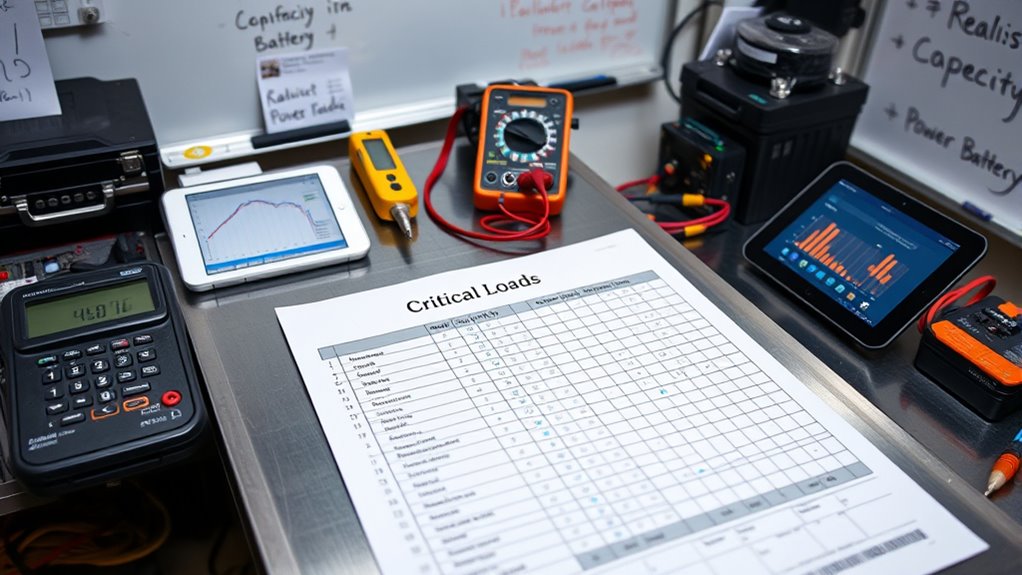
Setting a realistic power capacity goal is essential for ensuring your energy plans are achievable and sustainable. To do this, focus on what truly matters. Start by:
- Listing your critical loads to understand actual energy needs.
- Avoiding overestimating your power requirements—more isn’t always better.
- Considering future needs, but don’t let them inflate your current goal.
- Setting a clear, attainable target that balances safety and practicality.
- Incorporating ventilation considerations to ensure your system remains efficient and safe during operation.
Choose the Right Backup Power Solution
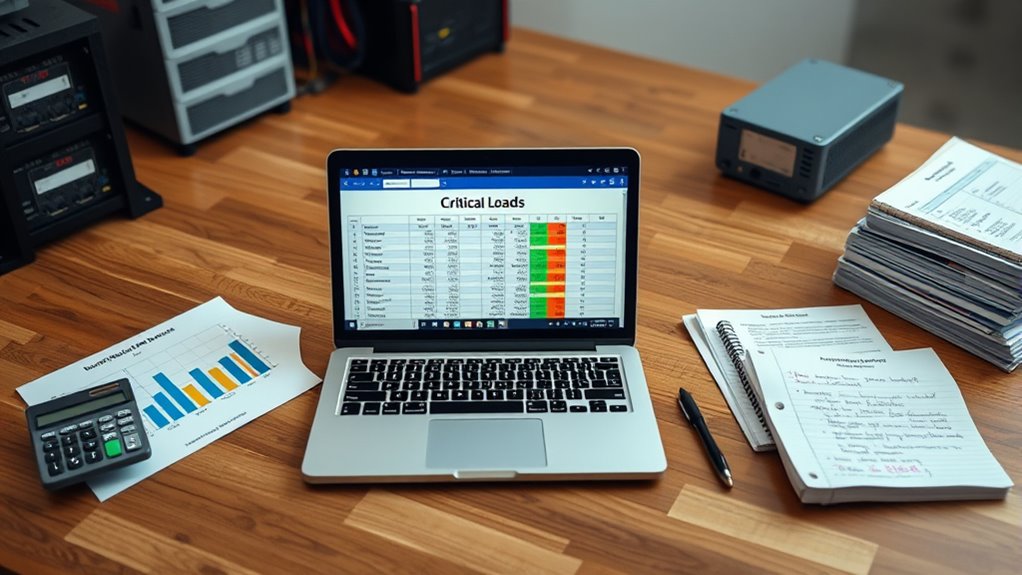
After identifying your critical loads, the next step is selecting the right backup power solution to guarantee those loads stay operational during outages. Your choice depends on your power needs, budget, and how long you want the backup to last. If you need immediate, short-term power, a portable generator might suffice. For longer outages, consider a standby generator that automatically kicks in. Battery systems like UPS units are ideal for sensitive electronics and short-term backup. Solar with battery storage offers a clean, renewable option, though it requires upfront investment. Evaluate your critical loads’ total wattage, runtime requirements, and available space. This assessment ensures you pick a solution that reliably supports your essential systems without overspending on unnecessary capacity.
Test and Refine Your Critical Loads List

Testing and refining your critical loads list is essential to guarantee your backup power system will reliably support what matters most. This step ensures you’re prepared for real emergencies, not just theoretical needs. As you test, focus on these key actions:
- Verify Power Needs – Confirm that essential devices turn on and function during a test run.
- Identify Overlooked Items – Spot gadgets or appliances you initially missed but can’t afford to lose.
- Prioritize Critical Devices – Decide which loads are non-negotiable, so you don’t waste capacity.
- Adjust Accordingly – Remove unnecessary items and add overlooked essentials to optimize your system.
Refining your list keeps your backup power lean, effective, and ready for anything, giving you peace of mind.
Keep Your List Updated for Future Changes
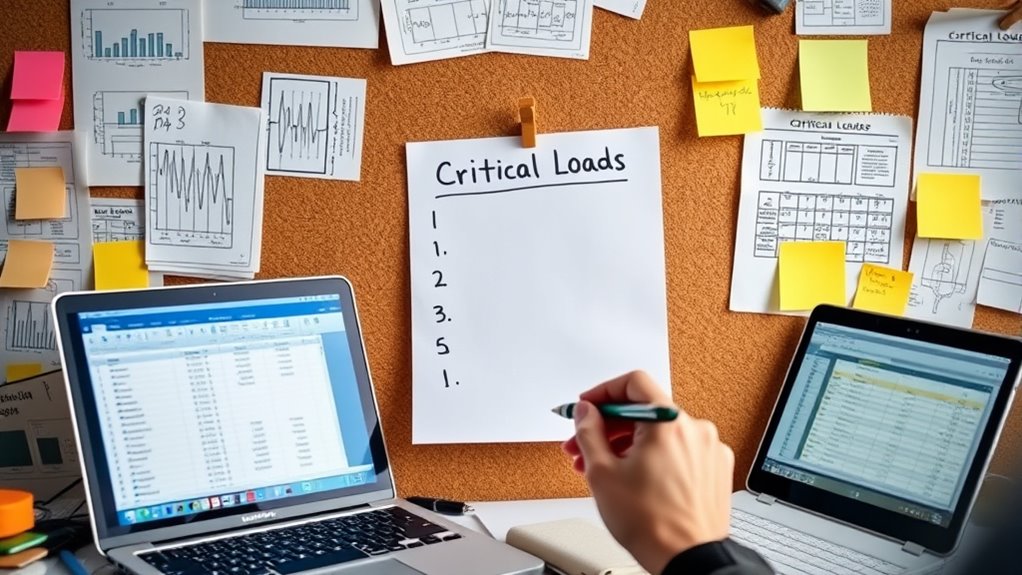
To guarantee your backup power remains dependable over time, it’s essential to regularly update your critical loads list to reflect any changes in your needs or equipment. As you add new devices or retire old ones, review and adjust your list accordingly. This ensures your backup system supports your current essentials without overloading. Schedule periodic reviews—every six months or after significant changes—to stay current. Keep track of equipment upgrades or shifts in your priorities. Use a simple table like this to organize updates:
| Change | Date Implemented |
|---|---|
| Added new refrigerator | March 2024 |
| Removed old lighting | July 2024 |
| Upgraded sump pump | September 2024 |
| Changed priorities | December 2024 |
Frequently Asked Questions
How Often Should I Review and Update My Critical Loads List?
You should review and update your critical loads list at least once a year, or whenever your circumstances change. Regular updates guarantee your backup power system remains aligned with your current needs, preventing overbuying or missing essential items. Keep an eye on any lifestyle shifts, new appliances, or changes in your home’s setup, and adjust your list accordingly to maintain an efficient, reliable backup power plan.
What Are Common Mistakes to Avoid When Listing Critical Devices?
Listing critical devices is like packing for a trip—you want only what’s essential. Avoid including non-essential gadgets, as this can lead to overbuying backup power and increased costs. Don’t forget to prioritize devices with the highest importance, like medical equipment or communication tools. Double-check for duplicates or outdated items, and stay focused on your core needs. This way, your backup power remains efficient and effective during outages.
How Do I Prioritize Loads in a Multi-Family or Commercial Setting?
You should prioritize loads based on their importance to safety, health, and essential operations. Start by identifying life-safety systems like fire alarms and emergency lighting, then move to critical appliances and business functions that keep operations running. Consider the impact of downtime on residents or clients, and make certain these top-tier loads are backed up first. This approach helps you allocate backup power efficiently without overbuying.
Can I Include Future Devices or Upgrades in My Current List?
Yes, you can include future devices or upgrades in your current list, but do so cautiously. Imagine sketching out your backup power plan, envisioning not just today’s needs but tomorrow’s possibilities. Add those planned devices with estimated power requirements, but leave some wiggle room for growth. This way, you’re prepared for expansion, avoiding costly overhauls later while ensuring your system can handle future demands seamlessly.
What Are Signs My Backup Power System Is Insufficient?
You’ll notice your backup power system is insufficient if it struggles to keep your critical devices running during outages, or if it repeatedly shuts down unexpectedly. If you experience frequent outages, or your system can’t handle peak loads, it’s a sign you need a bigger capacity. Regularly test your system to guarantee it supplies consistent power, and upgrade if you see it’s not meeting your current or future needs.
Conclusion
By building a balanced, bulletproof critical loads list, you prevent pointless overbuying and power pitfalls. Stay steadfast in your strategy, regularly review your requirements, and refine your list with precision and purpose. This proactive planning protects your peace, preserves your power, and prepares you for any unpredictable predicament. With a clear, customized compromise, you’ll confidently conquer outages, ensuring safety, security, and stability—all in one smart, simple, and strategic step forward.