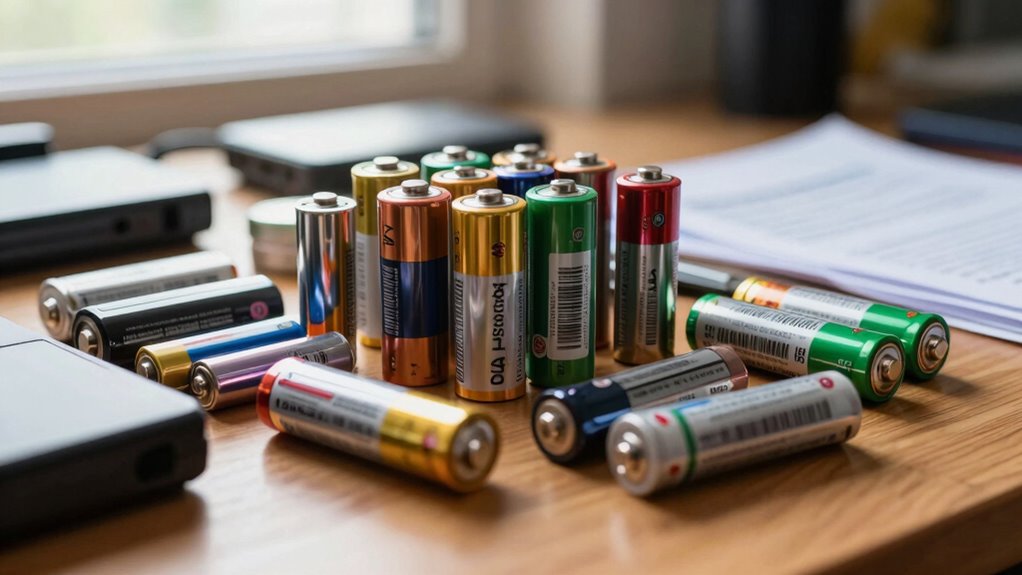

To keep batteries safe indoors, store them in a cool, dry place away from heat sources and freezing temperatures. Avoid cluttered areas like garages or closets that may cause damage or short circuits. Maintain a stable temperature between 50-77°F and guarantee proper ventilation to prevent gas buildup. Use labeled, non-conductive containers and handle batteries carefully. If you want to learn how to prevent common pitfalls, there’s more to discover about safe storage practices.
Key Takeaways
- Store batteries in a cool, dry, well-ventilated area away from direct sunlight and heat sources.
- Maintain a stable temperature between 50-77°F (10-25°C) to prevent thermal stress and damage.
- Keep batteries organized in labeled, non-conductive containers to avoid short circuits and leaks.
- Avoid storing batteries near metal objects, flammable materials, or in cluttered spaces that can cause physical damage.
- Regularly inspect batteries for damage, leaks, or swelling, and handle damaged units with proper safety precautions.
Understanding the Importance of Temperature Control for Batteries
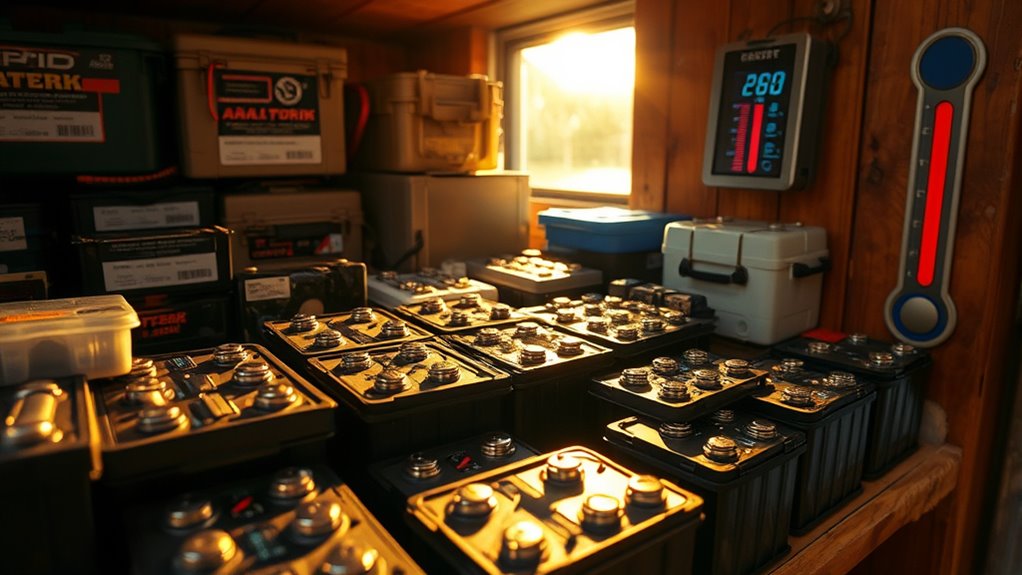
Temperature plays a essential role in battery safety, especially when used indoors. When batteries are exposed to extreme heat or cold, their performance and safety can be compromised. High temperatures accelerate chemical reactions inside the battery, increasing the risk of leaks, swelling, or even fires. Cold temperatures, on the other hand, reduce battery efficiency and can cause internal damage over time. To keep your batteries safe, you need to maintain a consistent, moderate temperature—ideally between 20°C and 25°C (68°F and 77°F). Proper temperature regulation can also prevent thermal stress that can damage internal components. Additionally, understanding the temperature thresholds for different battery types can help you avoid dangerous situations. Avoid placing batteries near heat sources like radiators or direct sunlight, and don’t store them in freezing environments. Ensuring proper battery storage conditions can greatly enhance safety and longevity. Proper temperature control helps prolong battery life and minimizes the chance of accidents or malfunctions. Maintaining an appropriate field‑of‑view for your storage space can also help ensure consistent temperature regulation around your batteries.
Common Indoor Storage Areas That Pose Risks
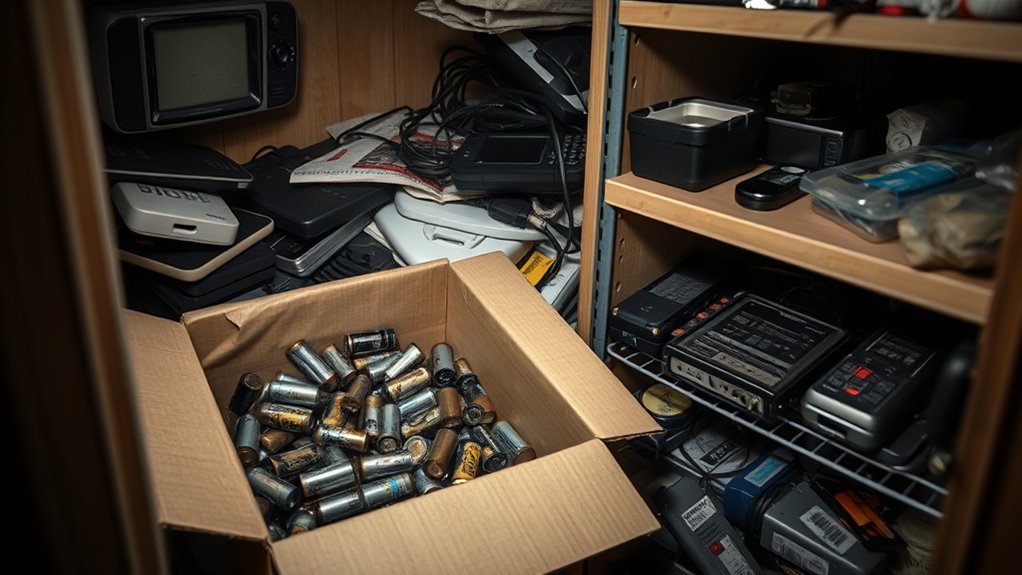
Closets filled with clutter can hide batteries and increase fire risks if they short circuit or overheat. Garages often store batteries near flammable materials, creating dangerous conditions if a leak or spark occurs. Being aware of these common indoor storage areas helps you prevent potential hazards before they happen. Additionally, storage conditions such as temperature fluctuations can further compromise battery safety and performance. Proper ventilation and controlled temperatures are essential to maintain battery safety and ensure optimal operation. Maintaining a stable environment can help prevent battery leaks and failures, especially when considering dog safety, as pet access to hazardous areas should be minimized. Understanding heat distribution within your storage spaces can further reduce risks associated with overheating or cold damage. Monitoring ventilation systems can also help prevent the buildup of potentially explosive gases in enclosed areas.
Closet Clutter Hazards
While closets are convenient storage spaces, clutter inside them can create serious fire and safety hazards. Storing batteries among clothing, papers, or clutter increases the risk of accidental damage or short circuits. Overfilled shelves or tangled cords can cause batteries to be crushed, punctured, or overheated. Additionally, clutter makes it harder to spot damaged or swollen batteries, which pose fire risks. If a battery leaks or short circuits, the confined, cluttered space can quickly become dangerous. To stay safe, keep batteries in a dedicated, organized container away from combustible items. Regularly inspect stored batteries for damage. Avoid storing batteries in cramped, cluttered closets where accidental damage or heat buildup could ignite a fire. Proper organization helps prevent potential hazards and keeps your home safer. Embracing Free Floating techniques in storage can further enhance safety by reducing clutter and promoting better air circulation. Implementing proper storage practices can significantly decrease the risk of indoor battery-related fires and accidents. Understanding storage safety tips and how to maintain proper ventilation in storage areas can help prevent overlooked hazards and improve overall home safety. Utilizing fire-resistant containers for battery storage offers an additional layer of protection against potential fires, especially in cluttered environments.
Garage Storage Risks
Garage storage areas can pose significant safety risks if not properly organized, especially when it comes to batteries and other flammable items. Storing batteries near paint, gasoline, or cleaning supplies increases the risk of fires or chemical reactions. Cluttered shelves or poorly ventilated spaces can cause batteries to overheat or leak, leading to dangerous spills. Avoid storing batteries directly on concrete floors, which can cause condensation and corrosion. Keep batteries in their original containers or sturdy, non-conductive storage bins, away from metal tools or other conductive materials. Proper organization and cautious storage in your garage can prevent accidents and keep your home safer. Using suitable storage containers can also help prevent accidental damage and leaks. Regular inspection and proper disposal of old or damaged batteries further reduce risks associated with battery leaks and failures. Ensuring good ventilation and temperature control in your storage area can significantly decrease the chances of battery-related accidents, especially considering that temperature fluctuations can affect battery integrity. Additionally, maintaining stable temperatures prevents thermal runaway, which can lead to fires or explosions.
How Temperature Fluctuations Affect Battery Safety
Temperature fluctuations can particularly impact battery safety, especially when batteries are stored indoors. When temperatures rise and fall unpredictably, the materials inside your batteries expand and contract, increasing the risk of internal damage. Repeated cycles of heating and cooling can weaken the battery’s structure, leading to potential leaks, swelling, or even fires. Cold temperatures slow down chemical reactions, which can cause batteries to become less reliable or fail unexpectedly. Conversely, heat accelerates chemical processes, raising the chances of overheating or thermal runaway. Sudden temperature changes can also stress the battery’s seals and connections, making them more prone to damage. To protect your batteries, keep them in a stable environment, avoiding extreme or fluctuating temperatures that could compromise safety. Additionally, storing batteries in temperature-controlled environments similar to those in all-inclusive resorts with water parks can help maintain their safety and longevity. Maintaining a consistent storage temperature is crucial to prevent damage caused by thermal stress and chemical instability. Moreover, understanding battery chemistry helps in choosing appropriate storage conditions that minimize risks associated with temperature variations, especially considering the material composition which influences how batteries respond to thermal stress. Being aware of the effects of temperature on chemical reactions inside batteries further emphasizes the importance of a stable storage environment.
Recognizing the Right Temperature Range for Different Battery Types
Understanding the ideal temperature range for different battery types is essential to guarantee their safety and longevity. For most lithium-ion batteries, keep the temperature between 20°C and 25°C (68°F to 77°F). Exceeding 35°C (95°F) can cause overheating, leading to capacity loss or even thermal runaway. Nickel-based batteries, like NiMH, tolerate slightly higher temperatures but still perform best under 40°C (104°F). Lead-acid batteries should stay below 25°C (77°F) to prevent sulfation and damage. Always check manufacturer guidelines, as some batteries are designed to operate safely at specific temperatures. Maintaining these temperature ranges helps prevent deterioration, reduces safety hazards, and extends your battery’s lifespan. Recognizing and adhering to these ranges is a simple but fundamental step for safe storage indoors.
Tips for Maintaining Safe Indoor Storage Conditions
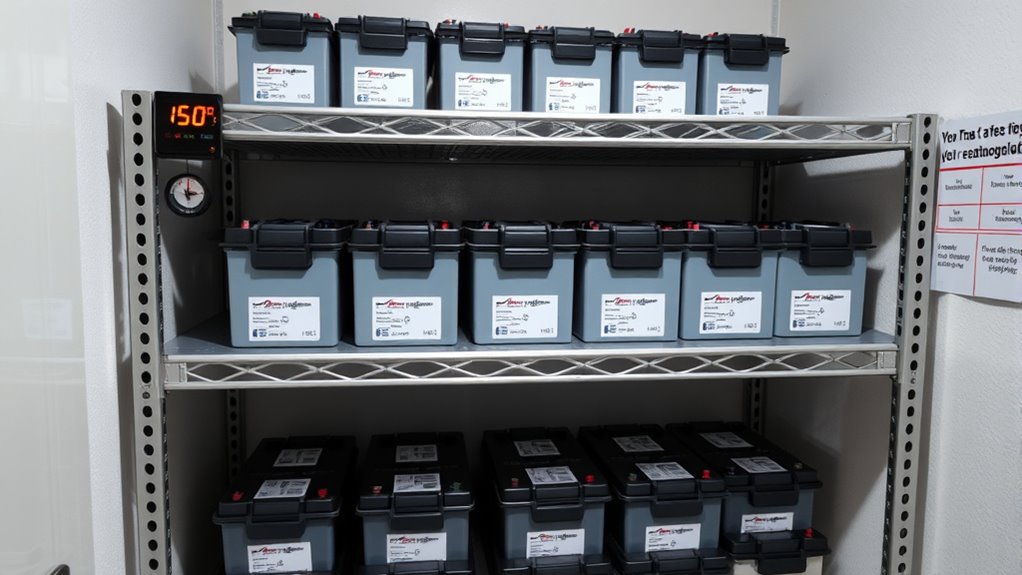
To keep your batteries safe indoors, you need to establish and maintain proper storage conditions. Store batteries in a cool, dry place away from direct sunlight and heat sources to prevent overheating. Keep them in a well-ventilated area to avoid the buildup of any gases. Use original containers or a designated storage box to prevent accidental short circuits. Additionally, avoid storing batteries near metal objects that could cause contact and sparks.
- Maintain a stable temperature, ideally between 50-77°F (10-25°C).
- Keep batteries away from moisture and humidity.
- Store different battery types separately to prevent chemical reactions.
- Regularly check stored batteries for signs of damage or leakage.
Following these tips helps ensure your batteries stay safe and functional indoors.
The Dangers of Overheating and Freezing Batteries
Proper storage conditions help keep your batteries safe, but temperature extremes can still pose serious risks. Overheating batteries can cause them to swell, leak, or even catch fire, especially if they’re exposed to direct sunlight or placed near heat sources. On the other hand, freezing temperatures can damage the internal components, reducing battery lifespan or leading to failure. Rapid temperature changes can create condensation inside the battery, increasing the risk of corrosion or short circuits. Both overheating and freezing can compromise the battery’s integrity and safety, potentially releasing hazardous chemicals or causing fires. To prevent these dangers, always store batteries in a cool, dry place, away from heat sources and freezing conditions. Proper temperature management is essential for safe, reliable battery use indoors.
Proper Packaging and Labeling for Battery Storage
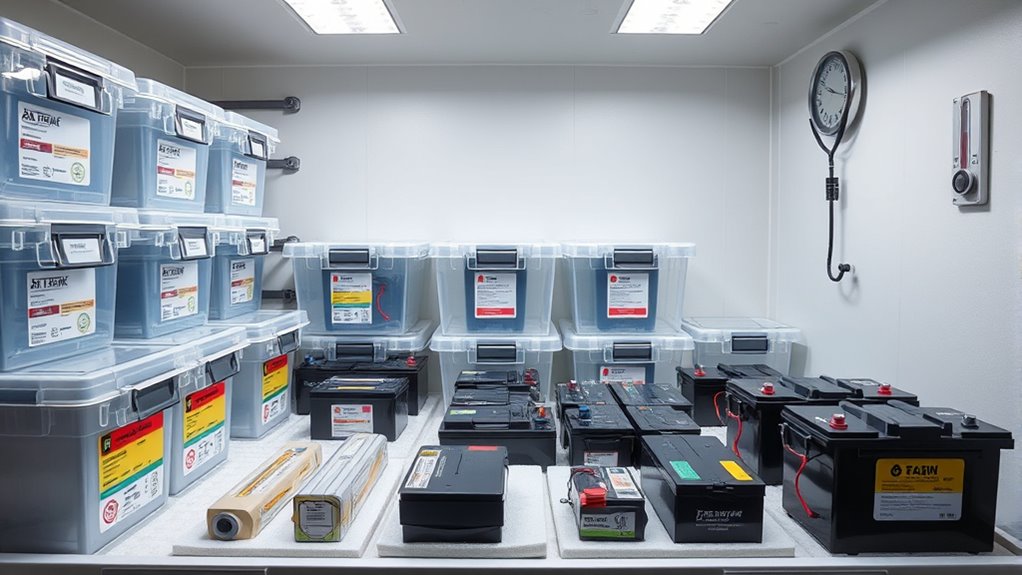
You need to guarantee batteries are labeled clearly so others can easily identify their type and hazards. Using secure packaging methods and proper storage containers keeps batteries safe and prevents leaks or damage. Proper packaging and labeling are essential steps to maintain safety and prevent accidents indoors.
Clear Labeling Practices
Clear labeling is essential for safe indoor battery storage, ensuring that anyone handling or nearby can easily identify the type and hazards associated with each battery. Proper labels help prevent accidental misuse, such as mixing incompatible batteries or storing them in unsafe conditions. Use clear, durable labels that include the battery type, voltage, and hazard symbols. Make sure labels are visible and resistant to wear, moisture, and temperature changes.
- Indicate whether batteries are rechargeable or single-use
- Highlight any specific handling instructions
- Mark batteries with known defects or damage
- Use standardized symbols to warn of risks like fire or chemical exposure
Accurate labeling reduces confusion, improves safety protocols, and helps you quickly identify batteries that require special care or disposal. Proper labeling is a simple but crucial step in preventing accidents indoors.
Secure Packaging Methods
Effective packaging of batteries is essential for preventing damage and ensuring safety during storage. You should use non-conductive materials like plastic or cardboard to encase each battery individually, preventing accidental short circuits. Make sure terminals are covered with protective caps or tape to avoid contact with other metals or batteries. Label each package clearly with the battery type, voltage, and date of storage, so you can easily identify and handle them safely later. Seal packages tightly to prevent dust, moisture, or debris from entering. Keep batteries away from flammable materials and sources of heat. Proper labeling not only helps in quick identification but also alerts you to handle batteries with care. Following these packaging methods minimizes risks and maintains safe storage conditions.
Proper Storage Containers
Choosing the right storage containers is essential for keeping batteries safe indoors. You want containers that prevent accidental shorts, leaks, and damage. Use non-conductive, flame-resistant, and sturdy containers designed for batteries. Clearly label each container with the battery type and date of storage to guarantee proper handling and disposal. Proper labeling helps you quickly identify batteries and reduces the risk of mishandling. Consider using compartments or dividers to prevent batteries from touching each other. Keep containers sealed tightly to avoid leaks and contamination. Store batteries away from heat sources and moisture, and never store in makeshift or damaged containers. Proper packaging and labeling create a safer environment, minimize risks, and extend battery lifespan. Your attention to these details keeps your indoor space safe and organized.
Safe Handling Practices When Moving or Replacing Batteries

When moving or replacing batteries indoors, it’s essential to handle them with care to prevent accidents and damage. Always wear protective gloves and eye protection if possible, especially with damaged or leaking batteries. Use both hands and support the entire battery to avoid dropping it. Avoid touching the terminals to prevent short circuits or static discharge. Keep batteries upright during transport to prevent leaks. Never force a battery into a device; check for correct orientation first. If a battery shows signs of damage or corrosion, handle it with extra caution and dispose of it properly. Keep batteries away from children and pets during handling. After replacement, wash your hands thoroughly and store used batteries in a safe container until proper disposal.
Monitoring and Maintaining a Safe Battery Environment at Home
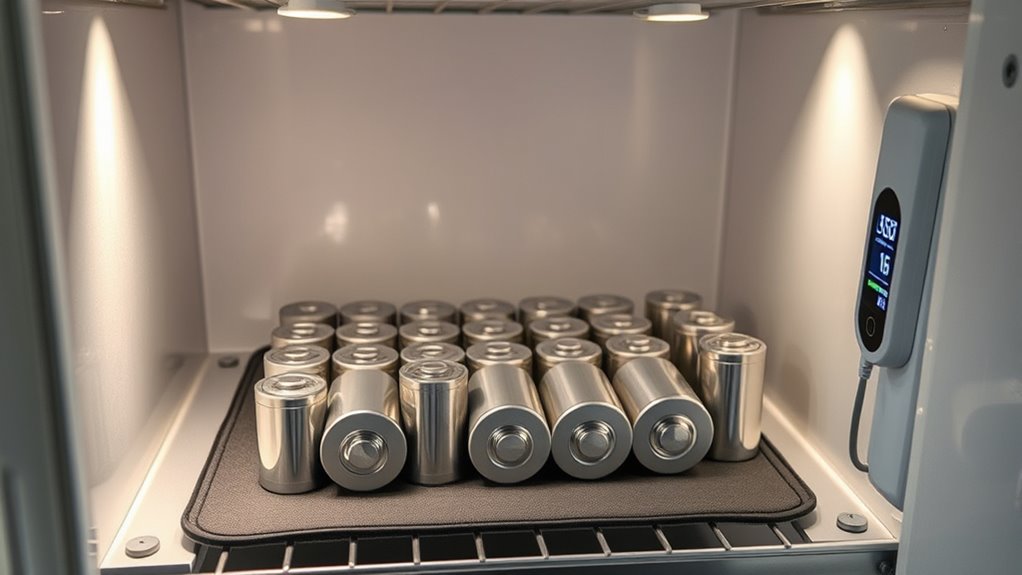
Properly monitoring and maintaining your home battery environment helps prevent accidents and extends the life of your batteries. Regularly check for signs of damage, corrosion, or leaks, and guarantee batteries are stored upright in a cool, dry place. Keep an eye on temperature levels—batteries perform best between 50°F and 77°F—and avoid overheating. Use a reliable battery management system if possible to track voltage and charge levels. Additionally, verify the area is well-ventilated to prevent gas buildup.
- Store batteries away from heat sources and direct sunlight
- Keep terminals clean and free of corrosion
- Avoid stacking batteries too high or in unstable stacks
- Regularly inspect for leaks, swelling, or other damage
Frequently Asked Questions
How Can I Tell if My Batteries Are Stored at the Correct Temperature?
You can tell if your batteries are stored at the right temperature by checking the storage area’s environment. Ideally, it should be between 68°F and 77°F (20°C to 25°C). Use a thermometer to monitor the temperature regularly. Avoid storing batteries in hot places like near heaters or direct sunlight, and don’t keep them in freezing cold spots. Proper storage guarantees safety and extends battery life.
What Are the Signs of a Battery Overheating or Freezing?
If your battery overheats, you’ll notice it feels hot to the touch, may swell, or even emit a burning smell. For freezing, the battery might become brittle, lose power quickly, or show visible frost or ice. Always unplug or remove a battery showing these signs, as continued use can cause leaks, fires, or permanent damage. Keep an eye on temperature changes and handle batteries carefully to guarantee safety.
Are There Specific Storage Containers Recommended for Different Battery Types?
Yes, using the right storage containers is essential for different battery types. You should store lithium-ion batteries in fireproof, insulated containers to prevent thermal runaway. Lead-acid batteries need vented containers to release gases safely, while nickel-cadmium batteries benefit from airtight, corrosion-resistant containers. Always choose containers that are specifically designed for your battery type, and keep them in a cool, dry place away from direct sunlight and heat sources for maximum safety.
How Often Should I Check the Temperature of My Stored Batteries?
You should check the temperature of your stored batteries at least once a month. Temperature fluctuations can cause batteries to degrade or become unsafe, especially if they’re stored in areas prone to heat or cold. Keep an eye on the environment and avoid storing batteries in places like garages or attics. Regular checks help make sure your batteries stay safe and functional, preventing potential hazards before they happen.
Can Improper Storage Cause Batteries to Leak or Explode?
Yes, improper storage can cause batteries to leak or explode. When you store batteries in extreme temperatures or in places with high humidity, you risk damaging their internal structure. This damage can lead to leaks of harmful chemicals or even dangerous explosions. To prevent this, always store batteries in a cool, dry place and avoid exposing them to direct sunlight or heat sources. Proper storage keeps you safe and preserves your batteries’ lifespan.
Conclusion
If you ignore these battery safety rules, you’re risking explosions, fires, and total home chaos! Don’t let a simple temperature slip-up turn your house into a disaster zone. By following proper storage and handling tips, you’re not just protecting your batteries—you’re shielding your loved ones and avoiding the nightmare of costly damage. Stay vigilant, stay safe, and keep your indoor battery game strong—because one mistake could turn your home into a fiery battleground!