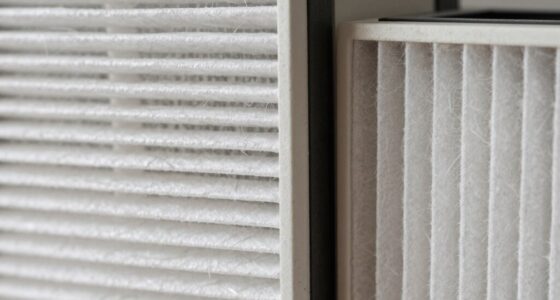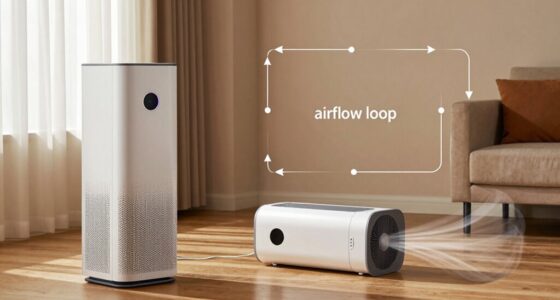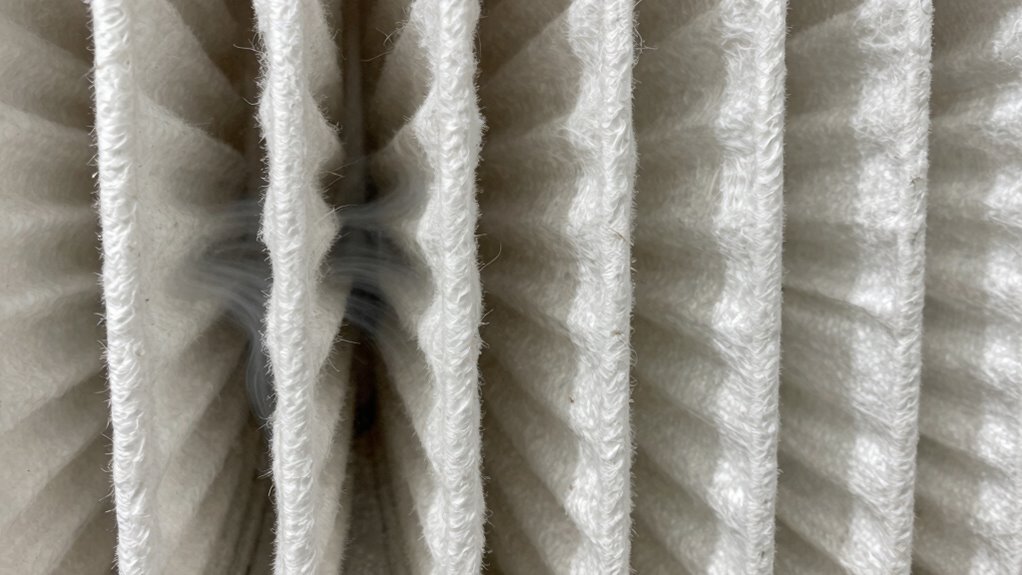

Static pressure is the force air exerts against your duct walls when it moves through the system. High-MERV filters trap tiny particles and improve air quality, but their dense material causes increased resistance. If static pressure gets too high, it can backfire on your system, causing reduced airflow, increased energy use, and potential damage. Keeping an eye on static pressure and choosing the right filters can prevent issues—there’s more to uncover if you continue exploring.

Turn your quiet moments into listening time
- Thousands of audiobooks, podcasts and originals
- Listen on your phone, tablet or Echo — also offline
- Cancel anytime
Key Takeaways
- High-MERV filters increase static pressure by trapping smaller particles, causing airflow resistance in HVAC systems.
- Excess static pressure can force filters to “backfire,” leading to system strain or reduced airflow.
- Backfire occurs when accumulated pressure damages filter seals or causes airflow to bypass the filter.
- Monitoring static pressure helps identify when high-MERV filters are causing backfire issues.
- Proper filter selection and system maintenance prevent static pressure buildup and protect against backfire.
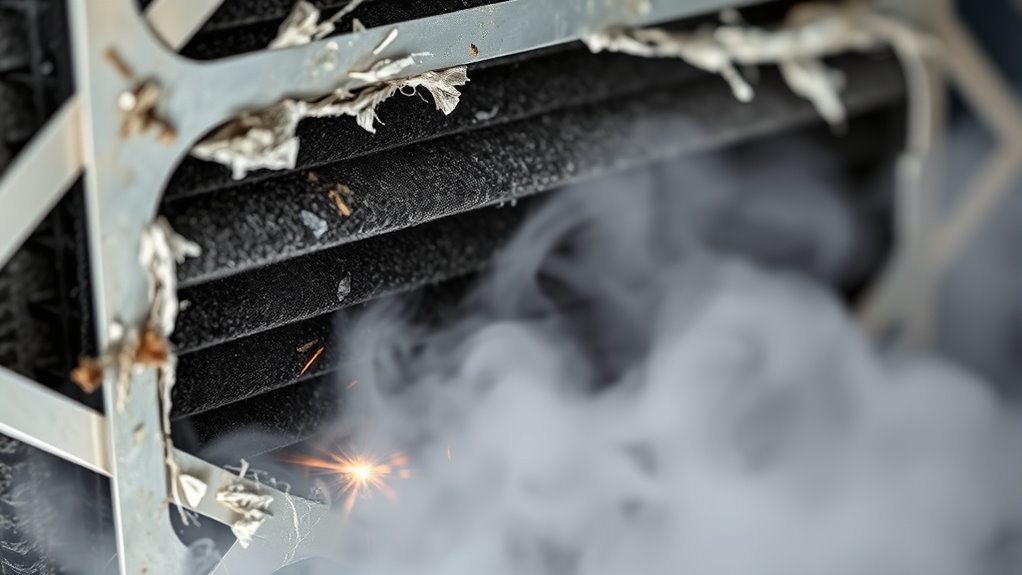
Ever wonder what static pressure really is and why it matters in airflow systems? Static pressure refers to the force exerted by air when it’s at rest within a duct or system, and understanding it is key to maintaining efficient airflow. When airflow moves through your ventilation system, it encounters resistance from components like filters and ductwork. This resistance, known as airflow resistance, causes pressure to build up within the system. If static pressure becomes too high, it can hinder airflow, reduce system efficiency, and even cause damage over time.
Think of static pressure as the push against the walls of your ductwork as air tries to flow through it. When you install a high-MERV filter, designed to trap smaller particles and improve air quality, you’re adding a barrier that increases airflow resistance. This extra resistance results in a pressure buildup behind the filter. If the pressure gets too high, it can make the system work harder to push air through, leading to increased energy consumption and strain on your blower motor. In some cases, the pressure buildup can cause the filter to become a bottleneck, considerably reducing airflow and compromising indoor air quality.
Installing high-MERV filters increases airflow resistance, causing pressure buildup that can strain your system and reduce indoor air quality.
The problem arises when high-MERV filters are used without considering their impact on static pressure. While they’re excellent at filtering out fine particles, their dense material can drastically increase airflow resistance. If your HVAC system isn’t designed to handle this increased resistance, it can lead to a chain reaction: pressure builds up within the ductwork, airflow decreases, and your system struggles to maintain a comfortable indoor environment. In extreme cases, this pressure buildup can cause leaks or damage to duct connections, further impairing airflow.
To prevent these issues, it’s important to monitor static pressure levels regularly. Many HVAC systems have pressure gauges or sensors that alert you when static pressure exceeds recommended limits. If you notice a spike, it might be time to switch to a less restrictive filter or upgrade your system to handle higher static pressures. Properly balancing filtration efficiency with airflow resistance ensures your system runs smoothly without overburdening its components. Additionally, consulting reliable airflow guidelines can help you select the appropriate filters and system components. Remember, high static pressure isn’t just about discomfort; it’s about maintaining ideal airflow, protecting your equipment, and ensuring good indoor air quality. By keeping an eye on pressure buildup and choosing the right filters, you can avoid the backfire of high-MERV filters and keep your airflow system running efficiently.
Frequently Asked Questions
How Do I Measure Static Pressure in My HVAC System?
To measure static pressure in your HVAC system, you need to use pressure gauges designed for airflow measurement. First, turn off the system and locate the test ports on the supply and return sides. Attach the gauges to these ports, then turn the system back on. Read the pressure differences to assess airflow and static pressure levels, helping you determine if filters or ducts are causing backfire issues.
Can High Static Pressure Improve Air Quality?
High static pressure doesn’t improve air quality; in fact, it can hinder it. When static pressure is too high, airflow restrictions occur, making your system work harder and potentially causing filter compatibility issues. This can reduce the efficiency of your high-MERV filters, trapping fewer pollutants and compromising air quality. Instead, maintain balanced static pressure to guarantee your filters perform at their best and your indoor air remains clean and healthy.
What Are Signs of Excessive Static Pressure?
You’ll notice excessive static pressure when your HVAC system struggles to push air, like in a case where a high-MERV filter caused significant filter resistance. Signs include decreased airflow, louder system operation, and uneven heating or cooling. Airflow restriction becomes evident, and your system works harder, potentially leading to increased energy bills and wear. If you see these signs, it’s time to check your filters and reduce static pressure for better performance.
How Does Static Pressure Affect HVAC Energy Efficiency?
Static pressure impacts your HVAC system’s energy efficiency by causing airflow restriction and increasing filter resistance. When static pressure is high, your system works harder to push air through clogged or high-MERV filters, which consumes more energy. This added strain reduces overall efficiency, raises energy bills, and can lead to quicker system wear. To maintain peak efficiency, ensure filters are regularly checked and replaced to keep static pressure at an ideal level.
Are There Specific Filters Suited for Low Static Pressure?
If you want filters suited for low static pressure, look for options with high compatibility and low static pressure ratings. These filters are designed to allow airflow easily, reducing strain on your HVAC system. Choose filters that match your system’s specifications, ensuring they don’t increase resistance. By selecting filters optimized for low static pressure, you improve airflow, energy efficiency, and overall system performance without risking backfire or damage.
Conclusion
So, next time your high-MERV filter seems to cause more trouble than it solves, remember that static pressure isn’t always your enemy. Sometimes, it’s just a sign that your system is working harder than it should. Instead of jumping to replace the filter, check if it’s the right fit or if airflow restrictions are causing the issue. Understanding static pressure helps you make smarter choices, ensuring your system runs efficiently without backfiring.
Fall Picks
fall essentials
As an affiliate, we earn on qualifying purchases.