
Radon is a radioactive, odorless gas that seeps into your home from the soil beneath your foundation. It often accumulates in basements because of their enclosed space and cracks in the foundation. Long-term exposure can increase your risk of lung cancer, making testing essential. Improving ventilation and sealing entry points can reduce radon levels and protect your health. To learn more about how radon affects your home and ways to keep your family safe, keep exploring this important topic.
Key Takeaways
- Radon is a colorless, odorless radioactive gas that seeps into homes from the soil beneath foundations.
- Basements are particularly vulnerable to radon buildup due to their structure and proximity to the ground.
- Long-term radon exposure increases lung cancer risk, making basement radon levels a health concern.
- Testing basements helps identify radon levels and guides mitigation strategies to reduce exposure.
- Improving basement ventilation can significantly lower radon concentrations and enhance indoor air quality.
Radon is a colorless, odorless radioactive gas that can seep into your home from the soil beneath it. You might not notice it, but this invisible threat can accumulate in enclosed spaces, especially basements. Because radon is naturally occurring and can enter through cracks, gaps, and pores in the foundation, it often becomes a concern for homeowners who want to keep their living environment safe. Understanding the radon health risks is essential, as long-term exposure has been linked to lung cancer—second only to smoking as a cause of the disease. The danger isn’t just in high concentrations; even low levels over time increase your risk. That’s why testing your home for radon is necessary, particularly in basements, which tend to trap and hold radon gas more than upper floors.
One of the most effective ways to manage radon levels in your home is through proper basement ventilation. When you improve airflow in your basement, you reduce radon buildup by dispersing the gas before it can accumulate to dangerous levels. Ventilation systems, such as exhaust fans or sub-slab depressurization, help create a pathway for radon to escape outside. If you notice that your basement tends to feel stale or stuffy, it’s not just discomfort—it could be a sign that radon is lingering there. Increasing ventilation isn’t just about comfort; it’s a critical step in radon mitigation. Opening windows, using fans, and ensuring vents are unobstructed can greatly lower radon concentrations. For more consistent and effective results, many homeowners opt for professional radon mitigation systems that install vent pipes and fans directly into the foundation, actively drawing radon out of the ground and venting it safely above your roofline.
You have the power to reduce radon risks in your home, especially in your basement where the gas tends to gather. Regular testing is your first step—knowing your radon levels guides you in choosing the right mitigation methods. Improving basement ventilation plays a key role in lowering these levels, especially if your initial tests show high concentrations. Remember, radon isn’t just a nuisance; it’s a serious health hazard that requires proactive measures. By maintaining good airflow and sealing entry points in your foundation, you create an environment that’s safer for everyone living in your home. Don’t wait until you or your family are affected—take action now to understand and control radon in your living space.
Frequently Asked Questions
How Often Should I Test My Home for Radon?
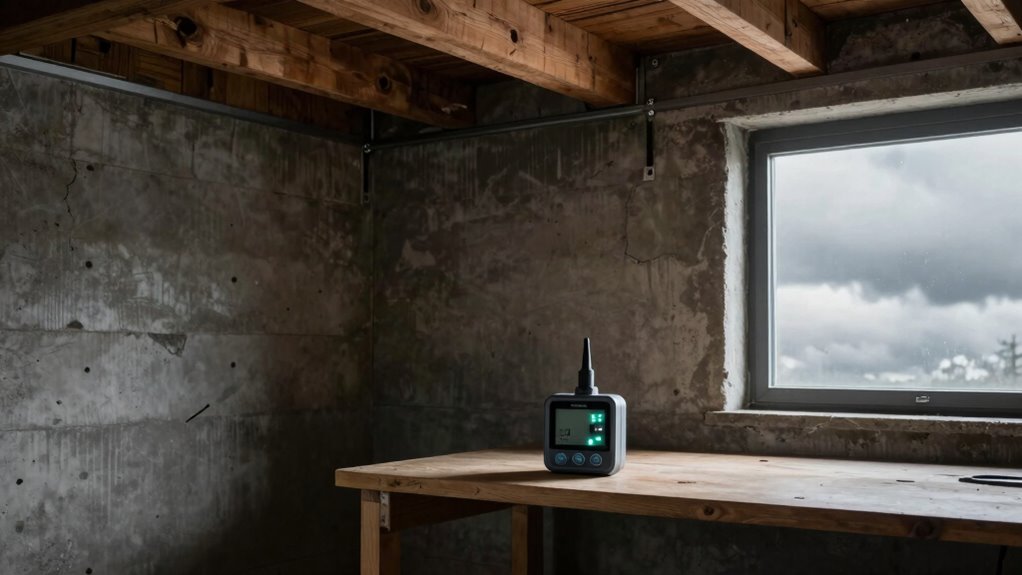
You should test your home for radon at least once every two years, especially if you haven’t tested before or if there have been recent changes. Use reliable testing devices, like short-term or long-term monitors, to obtain accurate results. If your radon levels are high, consider radon mitigation to reduce risks. Regular testing helps guarantee your home stays safe and healthy for you and your family.
Are Certain Basement Types More Prone to Radon Infiltration?
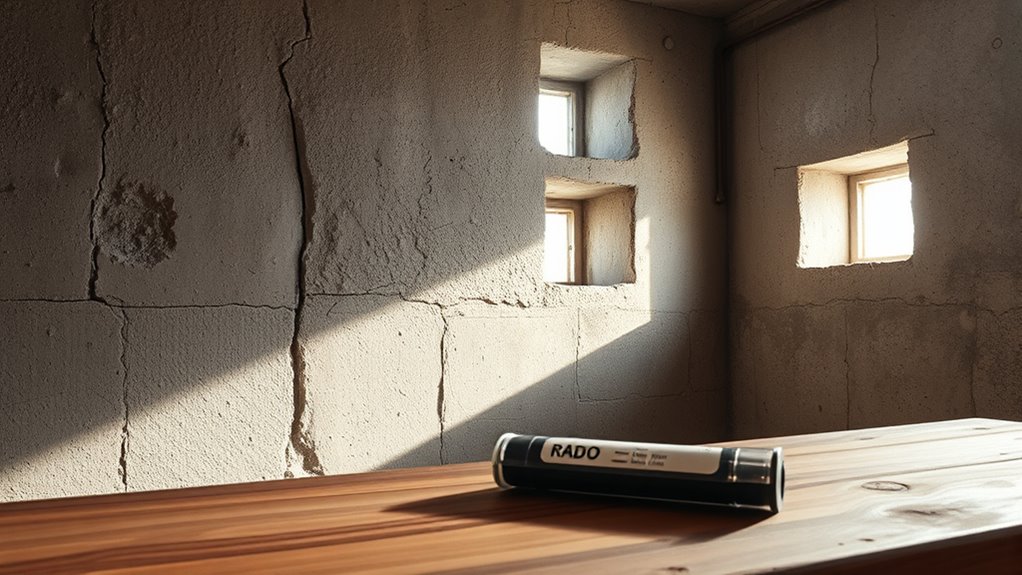
If your basement has a dirt floor, you’re more likely to see radon infiltration. For example, a homeowner with a dirt-floor basement noticed high radon levels, which decreased after sealing cracks and improving ventilation methods. Different basement constructions, like poured concrete versus stone, affect radon entry. Well-ventilated basements with proper ventilation methods help reduce radon buildup, no matter your basement type, by allowing radon to escape before reaching harmful levels.
Can Radon Levels Fluctuate Seasonally?
Yes, radon levels can fluctuate seasonally due to outdoor effects and seasonal variation. During winter, you might notice higher radon levels because heating systems trap radon inside, and soil gases tend to move more into your basement. In warmer months, levels often decrease as ventilation improves and outdoor conditions lessen radon infiltration. Monitoring your home’s radon regularly helps you stay aware of these seasonal changes and protect your health.
What Are the Health Risks of Long-Term Radon Exposure?
Long-term radon exposure can pose serious health risks, especially increasing your chances of lung cancer. Radon health concerns are significant because prolonged inhalation of radon gas damages lung tissue over time. If you spend lots of time in your basement or home, you could be at risk. It’s essential to test regularly and reduce radon levels to protect yourself from the dangers associated with long-term exposure.
Is Radon Testing Required During Home Renovations?
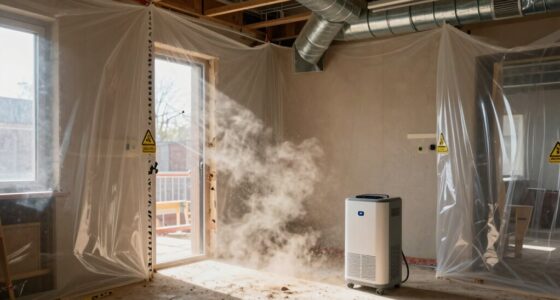
You might think radon testing during renovations is optional, but it’s not. When tearing into walls or sealing basements, you can release radon lurking in hidden corners. Testing is essential to spot high levels, and if needed, radon mitigation and ventilation improvements become your best friends. Don’t gamble with your health—test during renovations to guarantee your home remains a safe haven, not a radon trap.
Conclusion
Understanding radon is like revealing a hidden danger lurking in your home’s shadows. By testing your basement and taking action if needed, you’re shining a light on unseen risks and safeguarding your loved ones. Don’t let radon be a silent intruder that erodes your peace of mind. Stay proactive, stay informed, and turn your home into a fortress of safety—because knowledge is your best defense against this invisible threat.