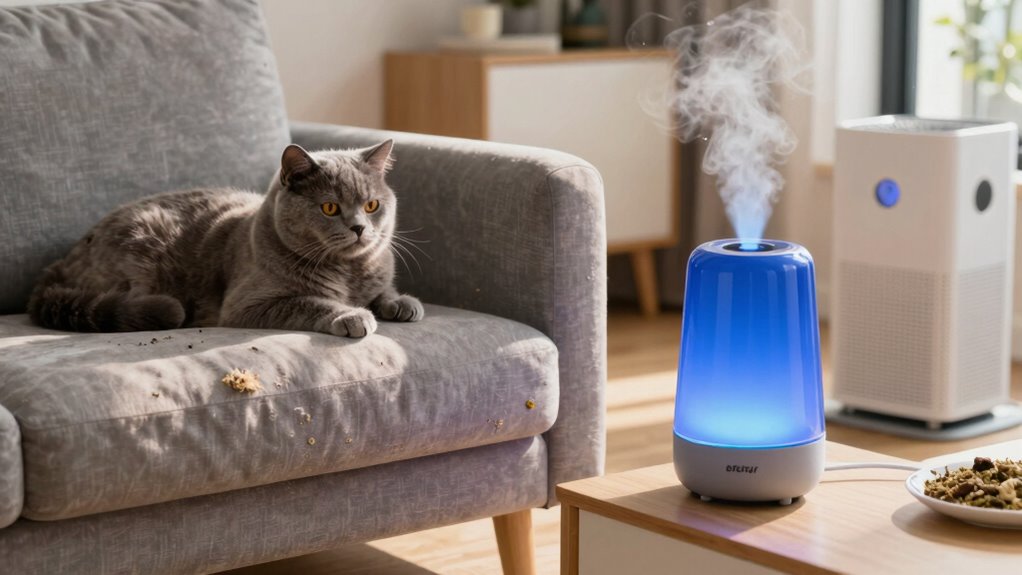

Pet odors and pet allergens are two separate issues that need different solutions. Odors come from natural sources like oils, sweat, and accidents, and are trapped in fabrics and surfaces. Allergens are proteins in dander, saliva, and urine that cling to furniture and settle into soft furnishings. Managing odors often involves enzymatic cleaners and grooming, while allergens require frequent vacuuming and washing. To effectively tackle each, understanding their differences is essential—they’re not the same problem.
Key Takeaways
- Pet odors originate from natural sources like oils and accidents, while allergens are proteins in dander, saliva, and urine.
- Odor control focuses on enzymatic cleaners and grooming, whereas allergen reduction emphasizes HEPA filtration and frequent washing.
- Odors tend to cling to fabrics and surfaces, requiring targeted cleaning; allergens settle into furnishings, needing vacuuming and laundering.
- Eliminating pet odors does not automatically reduce allergens, and vice versa, necessitating different approaches for each issue.
- Regular cleaning and grooming are essential for both odor and allergen management, but specific methods differ for effective results.

Pets bring joy into our homes, but they can also introduce two common issues: odors and allergens. These problems can feel overwhelming, but understanding their differences is the first step toward effective management. Pet odors often stem from natural sources like oils, sweat, and accidents, while pet allergens are typically caused by proteins found in dander, saliva, and urine. Addressing each requires specific strategies, and knowing how to tackle one doesn’t always solve the other.
When it comes to pet odors, the smell can cling to furniture, carpets, and even clothing. You might notice lingering scents after your pet has been resting or playing, especially if they’ve had an accident or rolled in something smelly. One common cause of persistent odors is furniture stains, which can trap odors deep within fabric fibers. To combat this, regular cleaning of your furniture is essential. Use enzymatic cleaners designed specifically for pet stains—they break down the proteins causing the smell and remove stains at the same time. Additionally, consistent pet grooming plays an *essential* role in reducing odors. Regular baths, brushing, and ear cleaning help minimize the oils and dirt that contribute to bad smells. Brushing your pet outside or in well-ventilated areas prevents dirt from settling into your furniture and carpets.
On the other hand, pet allergens can cause sneezing, itchy eyes, and asthma symptoms, especially if you or someone in your household has allergies. Unlike odors, allergens are microscopic and often settle into soft furnishings and carpets, making them harder to eliminate completely. To reduce allergens, frequent vacuuming with a HEPA filter is *imperative*. This captures airborne dander and prevents it from circulating. Wash your pet’s bedding and soft toys regularly to remove dander buildup. Pet grooming also helps control allergens by reducing the amount of dander your pet sheds. Regular brushing, ideally outdoors, can *substantially* cut down on loose hair and dander that would otherwise end up on your furniture and in the air.
Frequently Asked Questions
Can Pet Odors Cause Long-Term Health Issues?
Pet odors can impact your long-term health by reducing air quality in your home. Constant exposure to lingering smells may cause respiratory issues or allergies, especially if odor absorption isn’t managed. To protect yourself, regularly clean and ventilate your space, use air purifiers, and address odor sources promptly. Maintaining good air quality helps prevent potential health problems linked to prolonged exposure to pet odors.
Are Some Breeds More Allergenic Than Others?
Think of breed sensitivities as shields, some breeds more prone to trigger allergies than others. You’ll find that certain breeds, like Poodles or Bichon Frises, are often labeled hypoallergenic pets because they shed less, reducing allergens in your space. However, no breed is completely allergen-free. Choosing a hypoallergenic pet can lessen symptoms, but it’s essential to spend time with different breeds to find the best fit for your sensitivities.
How Quickly Do Pet Allergens Settle Into Home Environments?
Pet allergens can settle into your home within just a few hours, especially if there’s poor air circulation. They cling to surfaces and absorb scents, making them linger longer. To reduce allergen buildup, increase ventilation, use air purifiers, and clean frequently. Regularly washing your pet’s bedding and vacuuming with HEPA filters also helps prevent allergens from accumulating and spreading throughout your living space.
Can Air Purifiers Eliminate Pet Odors and Allergens?
Air purifiers can help reduce pet allergens considerably, but their effectiveness varies depending on the model and filter quality. They excel at capturing airborne allergens with HEPA filters, but often struggle with eliminating pet odors. For odor absorption, look for purifiers with activated carbon filters, which are specifically designed for odor removal. Combining an air purifier with regular cleaning and proper ventilation offers the best chance to improve your home’s air quality.
Do Cleaning Products Affect Pet Odor and Allergen Levels?
Cleaning products, especially those with strong chemicals, can markedly impact pet odor and allergen levels. Surface treatments with enzyme-based cleaners target odors directly, breaking down odor-causing molecules, while some cleaning chemicals can reduce allergens by removing pet dander. However, harsh chemicals might irritate your pet’s skin or respiratory system, so choose gentle, pet-safe cleaning products. Regular cleaning and proper ventilation also help keep odors and allergens at bay.
Conclusion
Think of pet odor and allergens as two different storms in your home’s weather. One is a foul cloud you can clear with fresh air and cleaning, while the other’s a silent gust that sneaks in through tiny openings, causing sneezes and itchiness. Knowing the difference helps you prepare your home’s weather forecast—tackle pet odor with cleaning, but guard against allergens with air purifiers and regular grooming. Master both, and your home becomes a cozy, allergy-free haven.