
To control pet dander in the air, clean regularly with a HEPA-filter vacuum, dust with damp cloths, and wash bedding often. Use an air purifier with a HEPA filter to trap airborne particles, and keep pets out of bedrooms for better air quality. Be cautious of quick-fix products like sprays, as they provide limited relief. For effective allergy management tips, explore more to find what truly works for you.
Key Takeaways
- HEPA air purifiers effectively reduce airborne pet dander when properly maintained and correctly placed in rooms.
- Regular cleaning, including vacuuming with HEPA filters and damp dusting, significantly lowers dander levels on surfaces.
- Washing pet bedding, curtains, and plush toys removes accumulated dander and decreases indoor allergen load.
- Pet grooming outdoors and limiting pet access to bedrooms helps prevent indoor dander buildup.
- Products claiming instant dander elimination, like sprays or wipes, often provide only limited, short-term relief.
Understanding Pet Dander and How It Affects You

Pet dander consists of tiny skin flakes shed by animals with fur or feathers, and it’s a common trigger for allergy symptoms. When you’re exposed, these microscopic particles become airborne and can settle on surfaces or be inhaled. People with sensitivities may experience sneezing, itchy eyes, congestion, or asthma attacks. Unlike pet hair, dander isn’t easily visible, so it often goes unnoticed. It lingers in your environment for long periods, especially in areas where pets spend a lot of time. Even if you’re not allergic, prolonged exposure can cause discomfort or aggravate respiratory issues. Understanding that pet dander is a pervasive allergen helps you recognize its impact on your health and motivates you to manage exposure effectively. Recognizing allergenic particles is essential for developing effective strategies to reduce your exposure and improve indoor air quality. Being aware of airborne allergens enables you to take targeted steps towards creating a healthier indoor environment, especially considering how they can become embedded in indoor surfaces. Additionally, understanding how natural filtration systems work can guide you in choosing appropriate air purification methods.
Effective Cleaning Strategies to Reduce Dander in Your Home

To effectively reduce dander in your home, regular cleaning is essential. Start by vacuuming carpets, rugs, and upholstery with a vacuum cleaner equipped with a HEPA filter. This traps tiny dander particles and prevents them from circulating back into the air. Dust surfaces frequently with a damp cloth to prevent dander from settling. Wash pet bedding, blankets, and curtains regularly in hot water to remove accumulated dander. Keep floors clear of clutter to simplify cleaning and reduce hiding spots for dander. Consider using a microfiber cloth for dusting, as it captures more particles than traditional dusters. Avoid dry sweeping, which stirs up dander into the air. Consistent, targeted cleaning helps lower dander levels, making your environment healthier for both you and your pets. Additionally, understanding indoor air quality can help you choose the most effective strategies for creating a healthier living space. Incorporating air purifiers with HEPA filters can further improve indoor air quality by actively capturing airborne dander particles.
The Role of Air Purifiers and Filtration Systems
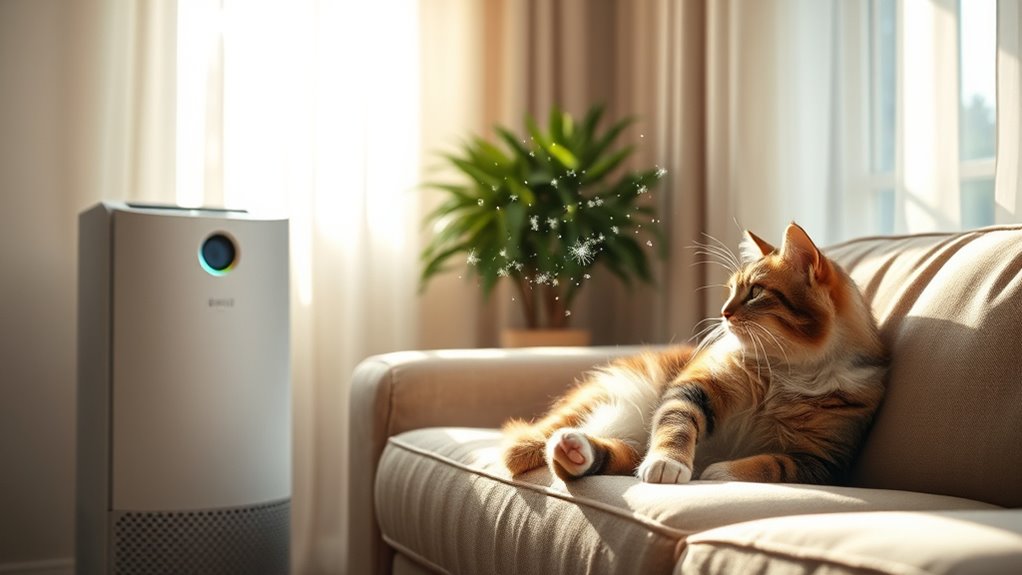
Air purifiers and filtration systems play a crucial role in maintaining healthier indoor air by removing airborne dander particles. They trap allergens before you breathe them in, reducing allergy symptoms and improving air quality. HEPA filters are especially effective, capturing particles as small as 0.3 microns. When choosing a system, consider factors like room size, filter lifespan, and maintenance needs. Proper placement and regular filter replacement maximize performance. Additionally, integrating local automation can help monitor and adjust air quality in real-time for optimal results. This aligns with European cloud innovation efforts to promote smarter, more efficient environmental controls. Here’s a quick comparison:
| Feature | Effectiveness | Maintenance |
|---|---|---|
| HEPA Filters | High removal efficiency | Replace every 6-12 months |
| Activated Carbon | Eliminates odors | Check monthly |
| UV-C Light | Kills bacteria & mold | Replace bulbs annually |
Employing air quality monitoring systems can further enhance the overall effectiveness of your filtration setup. Understanding the importance of filter maintenance ensures your system continues to operate at peak performance. Using the right system helps guarantee cleaner air and healthier living spaces, especially when paired with proper system maintenance.
Myths and Misconceptions About Dander Control Products

Many people believe that using dander control products instantly eliminates allergy symptoms, but this isn’t always the case. Products like sprays, wipes, or special bedding often provide some relief, but they don’t completely remove pet dander from your environment. Some products are marketed as miracle fixes, yet their effectiveness can be limited or short-lived. For example, air filters and cleaning sprays may reduce visible dander but won’t eliminate all microscopic particles. Relying solely on these products can lead to false hope and frustration. To truly manage allergies, you need a combination of methods, including cleaning routines, pet hygiene, and medical treatments. Be cautious about claims that promise instant, total relief—most solutions work gradually and require consistent effort. Proper air purifier maintenance and regular filter replacement are essential for maximizing the effectiveness of air cleaning devices, especially since air filtration efficiency depends on proper usage and upkeep. Understanding how dander particles behave and settle can help you develop a more effective allergy management plan. Additionally, maintaining good pet hygiene can significantly reduce the amount of dander in your environment, making your efforts more effective.
Lifestyle Changes and Habits That Help Minimize Allergic Reactions

Implementing simple lifestyle changes can substantially reduce your exposure to pet dander and minimize allergy symptoms. Regularly grooming your pets outside or in well-ventilated areas helps remove loose hair and dander before it spreads indoors. Vacuuming frequently with a HEPA filter vacuum cleaner captures pet allergens effectively. Using air purifiers with HEPA filters in common areas can also improve air quality. Keep pets out of bedrooms and off furniture to limit allergen buildup in these spaces. Washing bedding, curtains, and plush toys weekly reduces accumulated dander. Additionally, maintaining low humidity levels prevents mold growth and dust mites, which can worsen allergy symptoms. These habits, combined with consistent cleaning routines, create a healthier environment and help you breathe easier. Expert guidance on cleaning routines and air quality improvements can further optimize your allergy management.
Frequently Asked Questions
Can Pet Dander Cause Long-Term Lung Damage?
Yes, pet dander can cause long-term lung damage, especially if you have allergies or asthma. When you’re exposed regularly, your lungs may become inflamed and damaged over time. This can lead to chronic respiratory issues, decreased lung function, and increased vulnerability to infections. To protect yourself, reduce exposure by cleaning frequently, using HEPA filters, and consulting a healthcare professional for managing allergies and asthma symptoms effectively.
Are All Air Purifiers Equally Effective Against Pet Dander?
Not all air purifiers are created equal in the battle against pet dander. Think of them as knights—some wield the mighty HEPA filters, capturing tiny particles with precision, while others are mere squires, less effective. To truly clear the air, choose purifiers with HEPA filters and appropriate room size ratings. Don’t rely on wishful thinking; invest in quality to make a real difference in your indoor environment.
Do Certain Dog or Cat Breeds Produce Less Dander?
Yes, some dog and cat breeds produce less dander. Breeds like the Poodle, Bichon Frise, and Portuguese Water Dog are known for shedding less, making them better options if you’re sensitive. For cats, Siamese and Sphynx produce less dander because they shed minimally or not at all. Choosing these breeds can help reduce airborne pet allergens, but regular grooming and cleaning still play a vital role in managing dander.
How Often Should I Replace Air Filters for Optimal Dander Control?
You should replace your air filters every 1 to 3 months for peak dander control. If you have pets that shed heavily or if someone in your home has allergies, consider changing filters more frequently, around every 30 days. Regular replacement helps trap pet dander effectively, improving air quality. Remember, using high-efficiency filters with a MERV rating of 11-13 can make a significant difference in reducing airborne allergens.
Are Herbal or Natural Remedies Effective for Allergy Relief?
An ounce of prevention is worth a pound of cure, so herbal remedies can help, but they aren’t magic. You might find relief with natural options like butterbur or quercetin, which can reduce allergy symptoms. However, their effectiveness varies from person to person. Keep expectations realistic, and combine them with other allergy management strategies for better results. Always consult your healthcare provider before trying new remedies.
Conclusion
So, now that you know what truly makes a difference in controlling pet dander, are you ready to try these proven strategies? Or will you fall for the next big myth that promises quick relief? The choice is yours, but remember—small changes can lead to big improvements. Don’t wait too long to take action, because the secret to breathing easier might be closer than you think. The real solution could be just around the corner.