To tell if a filter is true HEPA or just marketing like “Hepa-Type,” look for clear certification labels from trusted organizations, such as those specifying 99.97% removal of particles 0.3 microns. Genuine HEPA filters meet strict standards, while “Hepa-Type” claims are often vague marketing words without certification. Focus on verified labels and ask sellers for proof. If you want to understand more about spotting real HEPA filters, keep exploring these tips.
Key Takeaways
- Look for official “HEPA” certification labels from recognized organizations, not just marketing claims.
- Genuine HEPA filters specify capturing at least 99.97% of 0.3-micron particles, unlike vague “Hepa-Type” labels.
- Check for test reports or certification marks like ENERGY STAR or AHAM Verified that confirm real performance.
- Be wary of vague terms like “Hepa‑Type” or “Hepa‑like,” which often lack standardized testing or certification.
- Focus on high MERV or CADR ratings and verified labels rather than marketing buzzwords.
Understanding the Basics of Air Filtration
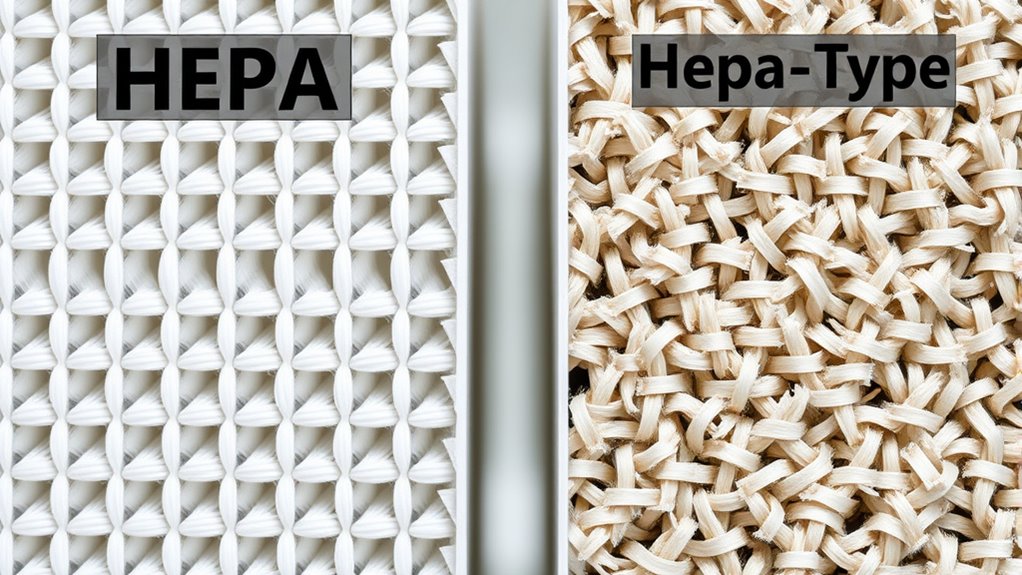
Air filtration is an essential process that removes particles and contaminants from the air you breathe. It works by passing air through a filter that captures dust, pollen, bacteria, and other pollutants. Different filters use various materials and structures to trap particles, with some designed for high efficiency and others for basic cleaning. HEPA filters, for example, are made from dense fibers that catch tiny particles as small as 0.3 microns. The goal of air filtration is to improve indoor air quality, reduce allergens, and protect your health. Knowing the fundamentals helps you understand how filters work and what to look for when choosing one. It’s about ensuring the air you breathe is cleaner, fresher, and safer for you and your family. Understanding filter efficiency is key to making informed choices about air purification. Additionally, recognizing filter technology differences can help you select the most suitable option for your needs. Being aware of filter maintenance requirements can also extend the lifespan and effectiveness of your air filtration system. Moreover, understanding the aerosol transmission of particles can underscore the importance of proper filtration in reducing airborne health risks. Recognizing the different filter types can help you make better decisions when selecting an air purifier or replacement filter.
Recognizing Common Terminology and Labels
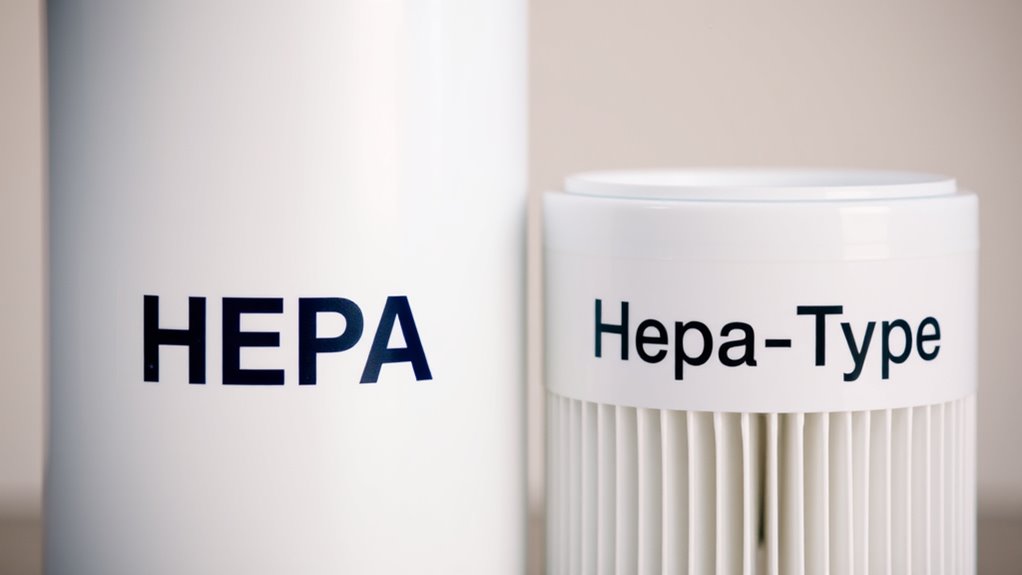
To effectively choose the right air filter, it’s important to understand common terminology and labels found on packaging. These labels can reveal whether you’re getting a true HEPA filter or a marketing gimmick. Look for terms like “HEPA” clearly marked, and check if the filter meets industry standards. Be cautious of vague claims like “HEPA-type” or “HEPA-like,” which may not provide the same filtration. Also, pay attention to certifications or test reports, which indicate actual performance. Finally, watch for MERV ratings, which show how well the filter captures particles, and compare them with the manufacturer’s claims. Recognizing these labels helps you avoid misleading marketing and ensures you select an effective air purification solution. Additionally, understanding the role of third-party testing and certifications can help verify that the filter meets genuine performance standards. Being aware of regulatory considerations is also essential, as some labels might not be backed by independent validation. Always consider **industry standards** when evaluating filter claims to ensure you’re getting a product that performs as advertised. Furthermore, familiarizing yourself with performance testing methods can provide deeper insight into the filter’s actual capabilities. Analyzing filter efficiency metrics can help you compare different products more objectively.
What Does “HEPA” Really Mean?
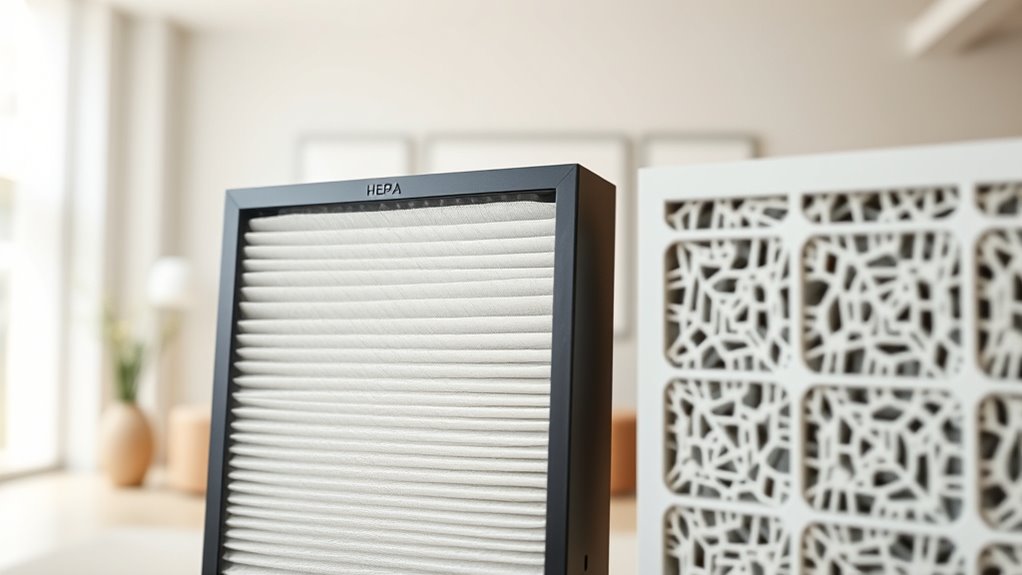
Have you ever wondered what sets a true HEPA filter apart from others? HEPA stands for High-Efficiency Particulate Air, meaning it’s designed to capture at least 99.97% of particles that are 0.3 microns in size. This standard isn’t just a marketing term; it’s a strict certification that guarantees the filter can trap tiny pollutants like pollen, dust mites, pet dander, and some bacteria. True HEPA filters are made with densely packed fibers that create a maze, forcing particles to collide and stick. Anything labeled simply as “HEPA-like” or “HEPA-type” might not meet these rigorous standards. So, if you want reliable filtration, look for the official certification and understand that “HEPA” isn’t just a catchy word—it’s a precise, technical standard.
The Meaning Behind “Hepa‑Type” and Similar Terms

While terms like “Hepa‑Type” and “Hepa‑like” may sound similar to true HEPA filters, they often refer to products that don’t meet the same strict standards. These labels are mostly marketing terms designed to give the impression of high filtration without the actual certification. When you see these terms, be aware that:
Hepa‑Type and Hepa‑like are marketing terms that often lack true filtration standards.
- They might not filter out tiny particles like true HEPA filters do.
- They often use similar-looking materials but lack rigorous testing.
- The labels can be vague, leaving you unsure of what’s actually being filtered.
- Manufacturers might rely on the name to boost sales without meeting official standards.
- Understanding filtration standards can help you better understand and identify these marketing tactics.
Knowing this helps you avoid being fooled by marketing and focus on products that deliver real filtration performance.
How to Identify Genuine HEPA Filters

Knowing how to spot a genuine HEPA filter is essential because many products claim this standard without meeting strict criteria. First, check the packaging or product description for certification labels from recognized organizations like the U.S. Department of Energy or European standards. Genuine HEPA filters must specify they capture at least 99.97% of particles as small as 0.3 microns. Look for detailed specifications rather than vague claims. You can also ask the seller for test results or certification proof. Be wary of filters labeled “HEPA-like” or “HEPA-type” without official validation. Finally, research reputable brands known for strict quality control. By paying attention to certifications, specifications, and brand reputation, you make certain you’re getting an authentic HEPA filter that meets performance standards. Additionally, understanding the performance criteria helps ensure you select a filter that effectively improves indoor air quality.
Questions to Ask Manufacturers and Sellers
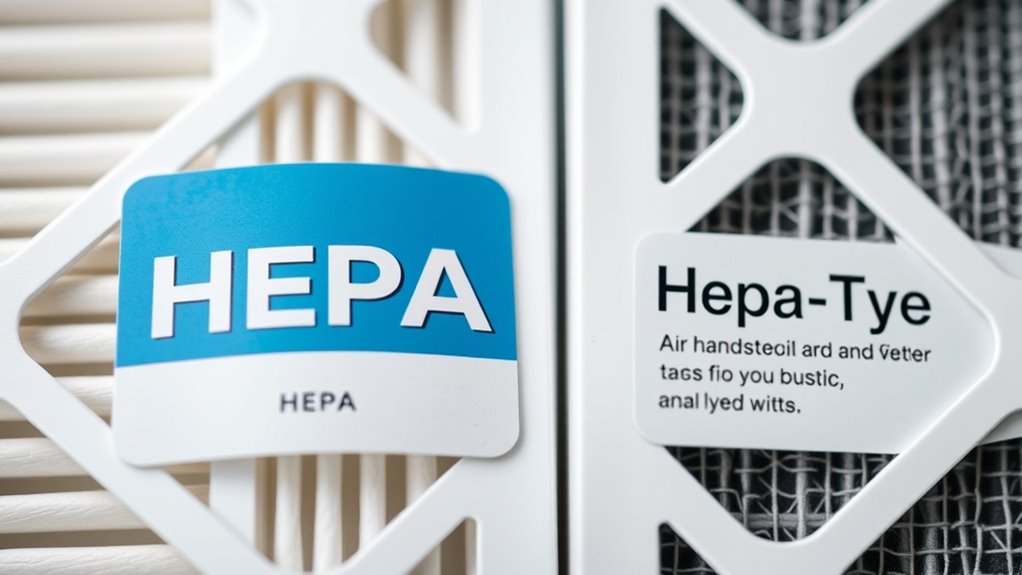
Asking the right questions when purchasing a HEPA or ‘HEPA-type’ filter is crucial to guarantee you’re getting a genuine product that meets performance standards. Don’t hesitate to inquire about key details to avoid misleading marketing. For example, ask:
Always ask about certifications and performance to ensure a genuine HEPA filter purchase.
- Is this filter certified by recognized organizations like HEPA or CARB?
- What is the filter’s true particle removal efficiency?
- Can you provide test results or certifications backing the claims?
- How long will the filter last before needing replacement?
These questions help you determine if the product is authentic and effective. Be cautious of vague claims or sellers hesitant to share certification details. Being informed ensures you make a smart purchase and avoid falling for marketing tricks.
Tips for Choosing an Effective Air Purifier
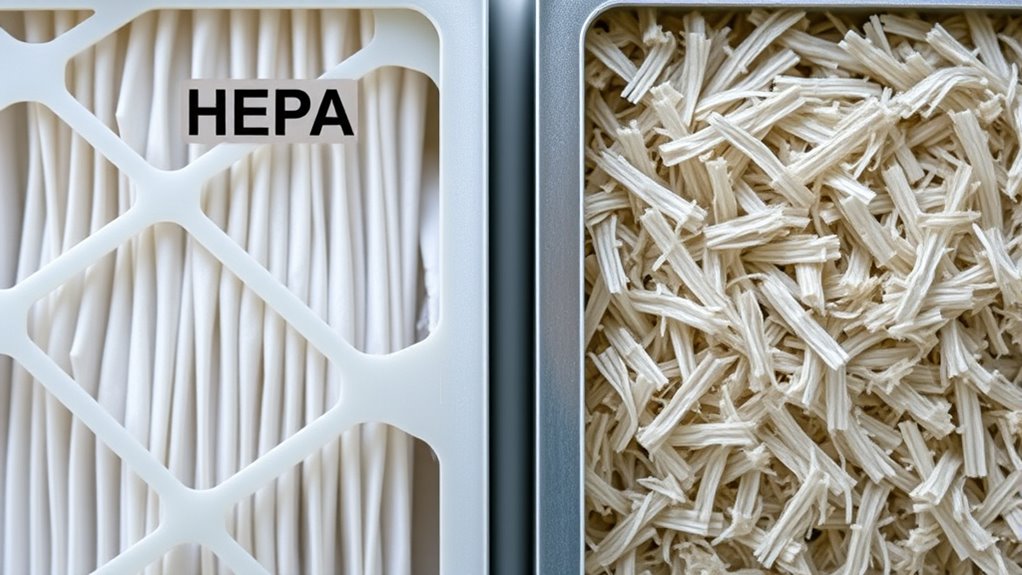
When choosing an air purifier, you should start by checking its filtration ratings to verify it effectively captures pollutants. It’s also important to understand the certification labels, which verify the device’s performance and safety. Additionally, considering the air quality needs can help you select a model that best addresses your specific concerns. Knowing the maintenance requirements of a model, such as filter change intervals, can also influence your decision, ensuring the device remains effective over time. Regularly inspecting the air filtration system can help maintain optimal performance and ensure ongoing health benefits. Finally, compare filter lifespans so you know how often you’ll need replacements and can choose a model that fits your maintenance preferences.
Check Filtration Ratings
To choose an effective air purifier, you need to pay close attention to its filtration ratings. These ratings indicate how well the device can remove particles from the air. Look for units with high Minimum Efficiency Reporting Value (MERV) ratings or CADR (Clean Air Delivery Rate) scores, which show their filtering power. Don’t be fooled by vague claims or low numbers. Instead, focus on these key points:
- Check the MERV or CADR ratings to compare efficiency
- Verify the filter’s ability to trap common allergens and pollutants
- Look for specific particle sizes the filter can catch
- Avoid models with confusing or exaggerated marketing claims
Being vigilant about these ratings helps ensure you’re choosing an air purifier that truly improves your indoor air quality.
Understand Certification Labels
Understanding certification labels on air purifiers is essential because they provide verified evidence of a device’s performance and safety. Look for labels from reputable organizations like the EPA’s ENERGY STAR, which indicates energy efficiency, or the AHAM Verified mark, confirming the purifier’s clean air delivery rate (CADR). These labels show that the product has undergone testing and meets specific standards. Be cautious of false claims or uncertified labels that don’t have official backing. Certification labels help you compare different models objectively and ensure the purifier performs as advertised. Always verify the authenticity of these labels and check for details such as filtration efficiency and safety standards. Recognizing legitimate certifications protects you from misleading marketing and ensures you choose a reliable, effective air purifier. Additionally, understanding testing standards can help you assess how well an air purifier performs in real-world conditions. Knowing how performance testing is conducted can give you further confidence in the product’s capabilities and durability. Moreover, being aware of vetted certifications ensures you rely on trusted marks that genuinely reflect a product’s quality and compliance. A thorough knowledge of filter types can also help you select the right device based on your specific air quality needs.
Compare Filter Lifespans
Filter lifespan is a crucial factor to contemplate because it directly impacts how often you’ll need to replace your air purifier’s filters. Longer-lasting filters save you money and reduce maintenance frequency. HEPA filters typically last 6 to 12 months, but some high-quality models can stretch to 18 months. ‘Hepa-type’ filters often require more frequent changes, sometimes every 3 to 6 months. When comparing lifespans, consider:
- The filter’s recommended replacement time
- The cost per filter replacement
- How often you use your purifier
- The types of pollutants you’re targeting
- The filtration system used in your air purifier, which can influence filter longevity and effectiveness.
Choosing a filter with a longer lifespan can be more economical and convenient, but guarantee it still meets your air quality needs. Regular replacements keep your purifier running efficiently and maintain clean indoor air. Additionally, understanding filtration systems can help you select the most effective air purifier for your environment.
Frequently Asked Questions
How Can I Verify a Filter’s Actual Filtration Efficiency?
You can verify a filter’s actual filtration efficiency by checking its official certification or test reports from recognized agencies like AHAM or ANSI. Look for specific efficiency ratings, such as 99.97% for HEPA filters, and guarantee the product has been independently tested. Avoid relying solely on marketing claims. If possible, ask the seller for third-party verification or certification documents to confirm the filter’s true performance.
Are There Legal Standards for Labeling HEPA Versus ‘Hepa-Type’?
Yes, there are legal standards for labeling HEPA versus ‘HEPA-type’. Regulations require manufacturers to clearly specify if a filter meets the strict HEPA standards, which demand at least 99.97% efficiency for particles as small as 0.3 microns. If a product is labeled ‘HEPA-type’ or ‘HEPA-like’, it’s a signal to look closer—these labels aren’t backed by the same standards, so you might be getting less than you think.
Can Non-Hepa Filters Still Provide Effective Air Purification?
Yes, non-HEPA filters can still provide effective air purification, especially for reducing larger particles like dust and pet dander. While they may not capture the tiniest allergens, many high-quality filters like activated carbon or electrostatic models work well in specific environments. You should consider your needs—if you require removal of very small particles or allergens, a true HEPA filter is better. Otherwise, non-HEPA options can still improve your air quality.
What Are Common Misleading Marketing Claims About Air Purifiers?
You often see marketing claims that air purifiers can eliminate 100% of airborne pollutants, but that’s just not true. Many ads exaggerate their product’s capabilities or use vague terms like “air cleaner” instead of specifics. Watch out for claims of “HEPA-like” or “medical-grade” filters that might not meet true HEPA standards. Always check for certified filtration levels, so you’re not fooled by marketing hype.
How Do I Determine the Lifespan of a HEPA Filter?
You can ascertain the lifespan of a HEPA filter by checking the manufacturer’s guidelines, which typically suggest replacing it every 6 to 12 months. Keep an eye on the filter’s condition; if it looks dirty or clogged, it’s time to change it. Some purifiers have indicator lights that signal when replacement is needed. Regular maintenance ensures your air stays clean and your filter works efficiently.
Conclusion
Remember, not all that glitters is gold—especially when it comes to air filters. By understanding the differences between HEPA and ‘HEPA-type,’ asking the right questions, and scrutinizing labels, you can avoid marketing tricks. Don’t let false promises cloud your judgment; stay informed and choose wisely. After all, an informed buyer is a confident buyer—protect your air, and breathe easy knowing you made the right choice.