To maintain a healthy indoor environment, aim to keep CO2 levels below 800 ppm; if it rises above 1000 ppm, it’s time to ventilate. Elevated levels can cause discomfort, tiredness, and headaches, especially after cooking or gatherings. Regularly opening windows or using ventilation helps keep air fresh and safe. If you continue exploring, you’ll discover effective strategies to control indoor air quality and guarantee your space stays comfortable.
Key Takeaways
- Indoor CO2 levels should generally stay below 800 ppm for optimal air quality.
- Readings above 1000 ppm indicate the need to ventilate by opening windows or doors.
- CO2 levels tend to rise during cooking, exercise, or gatherings, signaling a need for increased airflow.
- Modern, airtight homes may require mechanical ventilation or air purifiers to maintain healthy CO2 levels.
- Regular monitoring helps identify when to ventilate and prevent stale, stuffy indoor air.
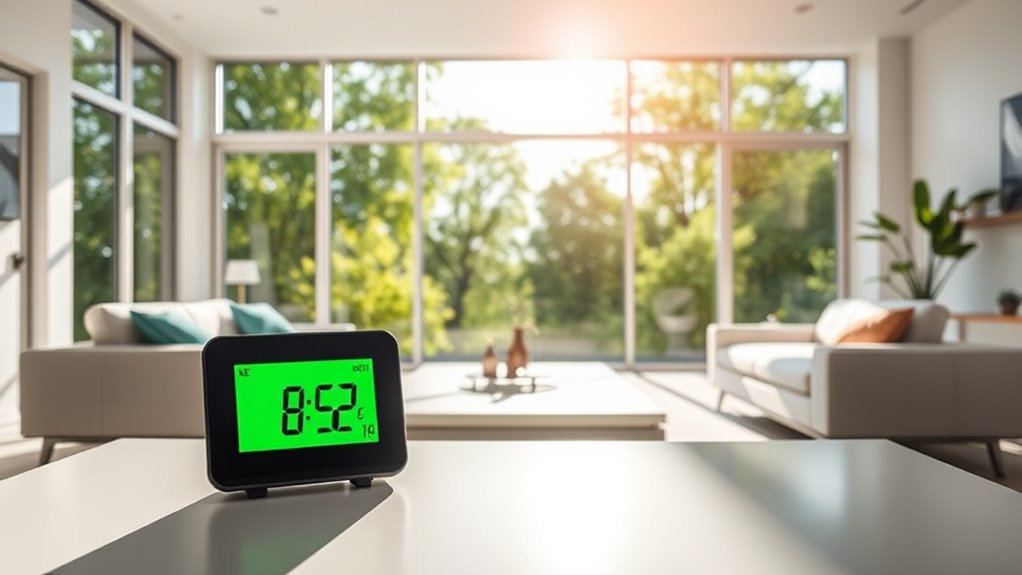
Have you ever wondered how the air quality in your home affects your health? Indoor air quality plays a crucial role in your overall well-being, and understanding CO2 levels is a key part of maintaining a healthy environment. When CO2 concentrations rise, it signals that fresh air isn’t circulating well enough, which can lead to discomfort, tiredness, or even headaches. That’s why monitoring CO2 readings at home is so important — it helps you identify when your space needs better ventilation.
Monitoring CO2 levels helps maintain healthy, comfortable indoor air quality for your well-being.
Ventilation importance can’t be overstated. Proper airflow ensures that pollutants, allergens, and excess humidity are expelled, keeping indoor air fresh and safe. If your home feels stuffy or you notice persistent odors, it’s a sign that ventilation might be lacking. Inadequate ventilation not only impacts comfort but can also contribute to health issues over time, especially if you or your family members have respiratory problems or allergies. That’s why maintaining good indoor air quality isn’t just about comfort; it’s about protecting your health.
In practical terms, keeping an eye on CO2 levels helps you determine when it’s time to open windows or activate your ventilation system. A typical indoor CO2 level should stay below 800 parts per million (ppm). When you notice readings rising above 1000 ppm, it’s a clear sign that fresh air is needed. If you’re cooking, exercising, or hosting guests, CO2 levels tend to spike more quickly, so it’s essential to be proactive. Using a CO2 monitor can give you real-time data, allowing you to make quick decisions about when to ventilate your space. This simple step can dramatically improve indoor air quality and your comfort.
It’s also worth noting that some homes are more prone to poor ventilation due to design or location. For example, tightly sealed modern homes may trap indoor pollutants, making regular ventilation even more vital. In these cases, mechanical ventilation systems or air purifiers can help maintain healthy CO2 levels. Regularly opening windows and doors, especially during busy times or after cooking, ensures a constant exchange of indoor and outdoor air, reducing the risk of stale air and harmful buildup. Additionally, proper ventilation systems can be a valuable investment for maintaining consistent air quality.
Ultimately, understanding CO2 readings at home empowers you to take control of your indoor environment. By recognizing the importance of ventilation and how it impacts indoor air quality, you can create a healthier, more comfortable space for everyone. Keeping your CO2 levels in check isn’t just about numbers — it’s about ensuring you breathe clean, fresh air every day.
Frequently Asked Questions
How Often Should I Check Indoor CO2 Levels?
You should check your indoor air quality with monitoring devices at least once a week, especially during periods of heavy activity or when hosting guests. Regularly monitoring CO2 levels helps you identify when ventilation is needed to keep air fresh. If levels rise above recommended thresholds, ventilate immediately. Consistent checks guarantee you maintain a healthy indoor environment and prevent poor air quality from affecting your comfort and health.
What Are the Health Risks of High CO2 Indoors?
High indoor CO2 levels can lead to headaches, fatigue, and decreased concentration. According to studies, indoor air quality worsens when CO2 exceeds 1000 ppm, risking cognitive function and overall health. Breathing elevated CO2 levels regularly may also increase the risk of respiratory issues. To stay safe, keep indoor air fresh by ventilating when CO2 thresholds approach, ensuring a healthier environment and better well-being.
Can Plants Help Reduce Indoor CO2 Levels?
Yes, plants can help reduce indoor CO2 levels through plant absorption, converting CO2 into oxygen via photosynthesis. However, their impact is limited and best complemented by natural ventilation, which effectively exchanges stale indoor air for fresh outdoor air. To maintain healthy indoor air quality, you should rely on a combination of plants and regular natural ventilation, especially in tightly sealed spaces or during high occupancy.
Do Pet Activities Affect Indoor CO2 Readings?
Pet activities can affect indoor CO2 readings because increased activity levels, like playing or moving around, boost your pet’s breathing, releasing more CO2 into the air. Additionally, pet dander can contribute to indoor air quality issues, though it doesn’t directly raise CO2 levels. You might notice higher CO2 during active play, so ventilate more during those times to maintain healthy air quality and keep readings within normal ranges.
Are There Specific Ventilation Systems for CO2 Control?
Yes, there are specific ventilation system options designed for CO2 control. You can choose from ERVs and HRVs that incorporate advanced CO2 control technology to maintain ideal indoor air quality. These systems actively monitor CO2 levels and automatically adjust airflow, ensuring fresh air circulation and reducing indoor pollution. Installing such specialized ventilation options helps you manage CO2 effectively, creating a healthier and more comfortable living environment.
Conclusion
Keeping your home’s CO2 levels in check is essential for comfort and health. Did you know that indoor CO2 can rise to over 1,000 ppm even when you’re just sitting quietly? That’s like breathing in the equivalent of a crowded elevator! So, don’t wait for stuffy air or headaches—ventilate regularly. By staying aware, you create a healthier, fresher space for everyone inside. Your lungs will thank you for it!