
Understanding air changes per hour (ACH) helps you gauge how often fresh air replaces indoor air—key for keeping your space healthy. Higher ACH means more frequent refreshment, reducing pollutants and germs. To improve air quality, consider your room size, ventilation systems, and using air purifiers. Knowing the ideal ACH for your environment guarantees a safe, comfortable space. Keep exploring to discover practical tips for optimizing your indoor air quality effortlessly.
Key Takeaways
- ACH measures how many times the total air volume in a space is replaced per hour, indicating ventilation effectiveness.
- Higher ACH values mean more frequent air refreshment, reducing indoor pollutants and germs for better air quality.
- Standards by organizations like ASHRAE specify ideal ACH levels for different environments, such as 4-6 for offices and 10-15 for healthcare.
- Proper ventilation systems and air purifiers enhance ACH, improving indoor air freshness and reducing contaminants.
- Regularly monitoring and adjusting ACH ensures a healthier indoor environment and optimal air quality.

Air Purifiers for Home with H13 Quiet HEPA Filter Up to 1076 Ft² for Pet Hair, Odors, Pollen, Smoke, Compact Air Cleaner with 3 Speeds, Timer, Aroma Quiet 360°Intake Filter, White
Effortless Operation: Simplified control panel with intuitive design makes it easy to operate. No complicated setup—just one tap,…
As an affiliate, we earn on qualifying purchases.
As an affiliate, we earn on qualifying purchases.
What Does ACH Really Mean?
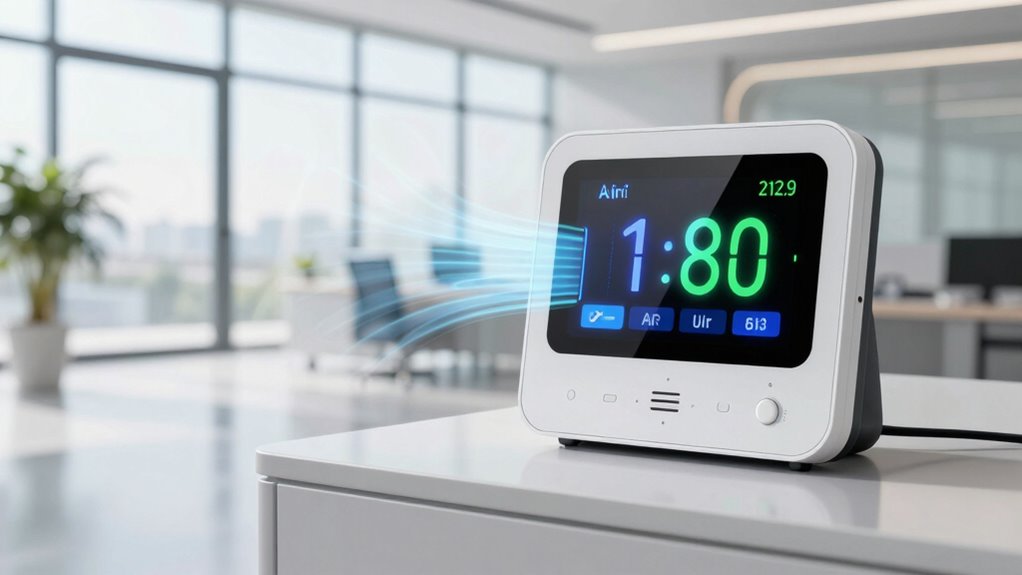
Air Changes Per Hour (ACH) measures how many times the total volume of air in a space is replaced within one hour. It tells you how frequently fresh air is circulated and how effectively your environment is ventilated. A higher ACH means the air in your space is refreshed more often, reducing pollutants, odors, and airborne germs. For example, an ACH of 6 indicates the air is completely replaced six times every hour. This measurement is essential for maintaining good indoor air quality, especially in homes, offices, or healthcare facilities. Knowing what ACH really means helps you evaluate if your space is adequately ventilated. Understanding ventilation rates is a key step in ensuring a healthier indoor environment. It’s a simple way to understand how well your environment promotes clean, healthy air, especially when considering air quality standards and how they impact your comfort and safety. Recognizing the ventilation effectiveness can help you make informed decisions about improving your indoor air quality. Additionally, selecting the right ACH can influence overall comfort and health, making it an important factor in indoor air quality management. Proper ventilation strategies, supported by accurate ACH measurements, can also leverage Smart Home Technology to optimize air quality automatically and efficiently.

Aprilaire V22BEC Energy Recovery Ventilator (ERV), 120 CFM Air Exchanger for Homes up to 6,000 Sq. Ft. – Whole-House Fresh Air Ventilation System (HRV/ERV) with Wall, Ceiling, or Floor Mount Bracket
HEALTHY INDOOR AIR – Replaces stale indoor air with fresh outdoor air to improve Indoor Air Quality throughout…
As an affiliate, we earn on qualifying purchases.
As an affiliate, we earn on qualifying purchases.
How to Calculate Your Space’s ACH
To determine your space’s ACH, start by measuring the total volume of the room in cubic feet or meters. Next, find out how much air your ventilation system exchanges per minute or hour, usually specified in the system’s specs. Divide the airflow rate by the room’s volume. For example, if your system exchanges 600 cubic feet of air per hour and your room is 1,200 cubic feet, divide 600 by 1,200. This gives you 0.5. Multiply that number by 60 to convert it to ACH: 0.5 times 60 equals 30. This means your room experiences 30 air changes per hour. Remember, accurate measurements and understanding your ventilation capacity are key to calculating your ACH precisely. Understanding airflow rates can help you optimize your air quality management. Additionally, considering modern ventilation systems and their air exchange efficiency can improve overall air exchange efficiency and indoor air quality for a healthier environment. Incorporating proper ventilation design ensures consistent air circulation and reduces the buildup of indoor pollutants.

Air Quality Monitor Indoor, 10 in 1 Portable Smartair Quality Tester for CO2 | CO | TVOC | HCHO | Temp | AQI | PM0.3-1 Detection Hum for Home Cars Plants, Pets, Car, Hotel
【10-in-1 Smart Air Quality Monitor: Your All-Round Environmental Guardian】 This portable intelligent air quality tester delivers ultra-precise multi-gas…
As an affiliate, we earn on qualifying purchases.
As an affiliate, we earn on qualifying purchases.
The Importance of ACH for Indoor Air Quality
Understanding the right ACH level helps you meet air quality standards and keeps your indoor environment safe. When ventilation is effective, it reduces pollutants and improves overall air freshness. Proper ventilation techniques ensure that indoor air remains clean and healthy, preventing issues like mold and odors. By prioritizing proper ACH, you guarantee healthier, more comfortable indoor spaces for everyone. Incorporating energy-efficient cloud servers into your building management systems can further optimize ventilation and sustainability efforts. Regularly monitoring indoor air quality levels allows for adjustments that maintain optimal ACH and promotes a healthier environment. Additionally, selecting appropriate filtration media can enhance air purification and support better air quality standards. Understanding air change rates helps ensure your ventilation system operates efficiently and maintains the desired indoor air quality.
Air Quality Standards
Maintaining proper air quality standards is essential for ensuring healthy indoor environments, and achieving this largely depends on the number of air changes per hour (ACH). Standards set by organizations like ASHRAE and EPA specify recommended ACH levels to reduce pollutants and prevent health issues. These standards help you determine the minimum ventilation needed for different spaces, such as offices, homes, or hospitals. Meeting these standards guarantees your indoor air remains safe and breathable. Additionally, understanding dark psychology tactics can help individuals recognize and defend against manipulation that may compromise their health and safety in enclosed environments. Proper ventilation, measured by ACH, not only improves air quality but also supports overall well-being by reducing contaminant levels inside buildings. Ensuring adequate airflow is vital for maintaining a healthy, safe indoor environment and can significantly impact comfort and health for all occupants. Regularly monitoring air exchange rates can further ensure that your indoor environment consistently meets the recommended standards, promoting healthier living and working spaces. Incorporating ventilation system maintenance is also crucial to sustain optimal ACH levels and prevent the accumulation of indoor pollutants.
Ventilation Effectiveness
Achieving effective ventilation hinges on the right number of air changes per hour (ACH), which directly impacts indoor air quality. But it’s not just about hitting a specific ACH number; ventilation effectiveness depends on how well the exchanged air dilutes and removes pollutants. Proper placement of vents, airflow patterns, and avoiding dead zones ensure fresh air reaches all spaces. If your ventilation system isn’t well-designed, even a high ACH might not improve air quality. Conversely, a well-optimized system with the right ACH can appreciably reduce contaminants, odors, and moisture. Understanding ventilation effectiveness helps you assess whether your indoor environment is truly healthy. It’s about more than just numbers—it’s about how efficiently your system delivers clean, fresh air throughout your space. Navigation and mapping of your ventilation system can identify areas where airflow may be compromised, further enhancing overall air quality.

PermaSafe HVAC Solutions, System & Air Duct Hygiene Maintenance Kit, Preserves IAQ, Keeps Systems Free from Microbial Growth, other Contamination, Odors and More
STEP-1 Quickly cuts through soils, grime, rust, allergens, mold, and other microbial growth, contamination, and debris.
As an affiliate, we earn on qualifying purchases.
As an affiliate, we earn on qualifying purchases.
Ideal ACH Levels for Different Settings
Different settings require specific air change rates to guarantee proper ventilation and air quality. Knowing the ideal ACH ensures you maintain a safe and comfortable environment. For residential spaces, 0.35 to 0.5 ACH often suffices for general comfort. Offices typically need around 4-6 ACH to promote productivity and reduce airborne contaminants. Healthcare facilities demand higher rates, usually 10-15 ACH, to control infection risks. Restaurants and cafes should aim for 8-12 ACH to manage smoke and odors. Schools require approximately 3-6 ACH to keep indoor air fresh for students and staff. Adjusting ACH based on occupancy, activity level, and space size helps you create essential indoor air quality**. Proper ventilation balances energy efficiency with health, making ACH a vital factor in indoor environment management. Ensuring proper air circulation is especially important in spaces with high occupant density or increased ventilation needs. Understanding the importance of proper ventilation helps ensure that air flow** is sufficient to maintain safe and healthy indoor conditions.
How Ventilation Systems Affect ACH

Ventilation systems directly influence the air changes per hour by controlling how quickly and effectively fresh air replaces indoor air. The design, capacity, and operation of your ventilation system determine ACH levels. For example, HVAC systems with high airflow rates can achieve higher ACH, ensuring quicker removal of indoor contaminants. Properly maintained systems also prevent stale air buildup and reduce airborne pollutants. Features like adjustable vents and dampers give you control over airflow, allowing you to optimize ACH based on occupancy and activity levels. Conversely, poorly designed or malfunctioning systems can limit air exchange, decreasing ACH and compromising air quality. To maximize effectiveness, ensure your ventilation system is appropriately sized, regularly serviced, and correctly operated to keep indoor air fresh and healthy.
Using Air Purifiers to Improve ACH
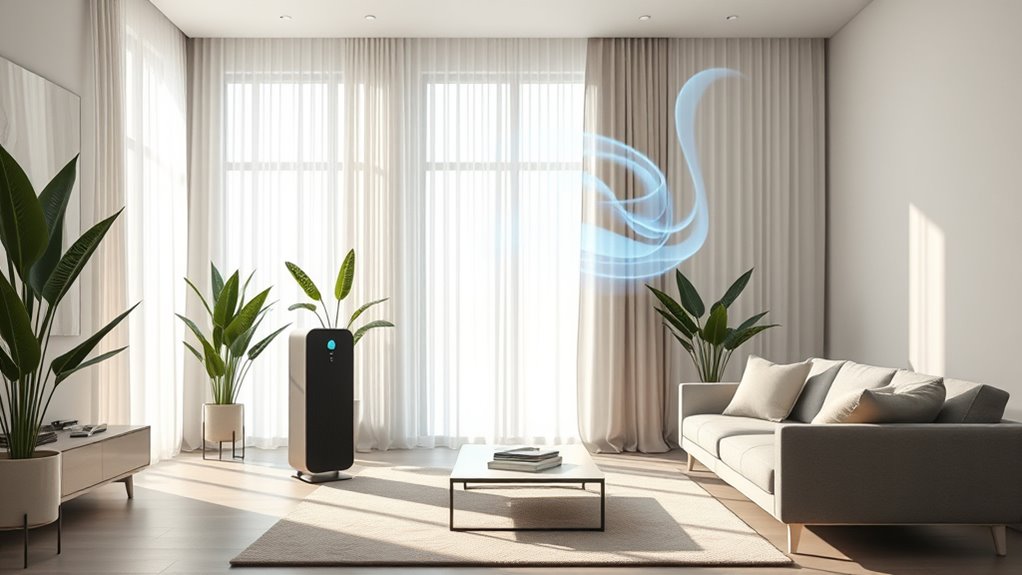
Air purifiers can markedly enhance indoor air quality by supplementing your existing ventilation system. They effectively remove airborne pollutants like dust, pollen, and bacteria, which can improve overall ACH. To maximize their benefits, choose a purifier with a high Clean Air Delivery Rate (CADR) suited for your space. Place the unit in high-traffic areas or rooms where you spend the most time for ideal results. Regularly change filters to maintain efficiency. Combining air purifiers with proper ventilation can lead to cleaner, healthier indoor air environments.
- Select an air purifier with a suitable CADR
- Position it in frequently used rooms
- Keep doors and windows open when possible
- Replace filters as recommended
- Use multiple units for larger spaces
Common Mistakes When Considering ACH

One common mistake people make when considering ACH is overestimating how much ventilation alone can improve indoor air quality. They assume that increasing ACH will instantly eliminate all indoor pollutants, but that’s not always true. Higher ACH can help dilute contaminants, but it doesn’t remove every particle or pathogen completely. You might also overlook that proper filtration and source control are equally important. Relying solely on ACH can lead to complacency, thinking the air is clean enough without addressing ongoing pollution sources or using effective air purifiers. Additionally, setting ACH targets without considering room size, occupancy, or airflow patterns can result in under- or over-ventilation. Remember, ACH is a helpful guideline, but it shouldn’t be your only strategy for ensuring clean indoor air.
Practical Tips to Achieve Better Air Changes
To improve your air changes, focus on increasing ventilation effectively by opening windows and using exhaust fans. Make sure your air purifiers are the right size for your space and run them consistently to filter out airborne particles. Implementing these simple steps can markedly enhance indoor air quality and circulation.
Increase Ventilation Effectively
Enhancing ventilation effectively requires a strategic approach that maximizes air exchange without causing unnecessary energy loss. To do this, focus on optimizing your current systems and making simple improvements. Open windows during peak ventilation times, especially when outdoor air quality is good. Use exhaust fans in kitchens and bathrooms to remove stale air efficiently. Consider installing vents or adjustable louvers to control airflow precisely. Seal leaks around doors and windows to prevent unwanted air infiltration. Finally, schedule ventilation during off-peak energy hours to reduce costs and improve air quality.
- Open windows strategically for cross-ventilation
- Use exhaust fans in key areas
- Install adjustable vents or louvers
- Seal leaks around doors and windows
- Ventilate during off-peak hours
Use Air Purifiers Properly
Using air purifiers correctly can substantially improve your indoor air quality and help achieve better air changes. First, choose a unit sized appropriately for your space; an undersized purifier won’t clean the air effectively. Place it in a central location, away from walls and obstructions, to maximize airflow. Keep filters clean and replace them as recommended by the manufacturer to maintain efficiency. Run the purifier continuously, especially during high-traffic times or when pollutants are present. Use the highest fan setting if noise isn’t an issue, but balance comfort with effectiveness. Pair your air purifier with good ventilation habits for maximum results. Regularly monitor air quality with a sensor, adjusting usage as needed to ensure you’re consistently reducing airborne contaminants.
Frequently Asked Questions
How Often Should ACH Be Tested in Commercial Buildings?
You should test ACH in commercial buildings at least once every 6 to 12 months. Regular testing helps guarantee your ventilation system maintains proper air quality and meets safety standards. If there are renovations, occupancy changes, or air quality concerns, increase testing frequency. Staying proactive prevents potential health issues and keeps your environment safe, comfortable, and compliant with regulations.
Can ACH Levels Impact Energy Consumption Significantly?
Ach levels can be a double-edged sword, slicing through energy costs or heightening them. When you increase ACH, you force your HVAC system to work harder, much like a runner sprinting uphill—leading to higher energy consumption. Conversely, optimizing ACH guarantees fresh air without overburdening your system. Striking this balance helps you save energy and reduce costs, making your building both efficient and healthier.
Is There a Universal ACH Standard for All Indoor Spaces?
There isn’t a universal ACH standard for all indoor spaces because requirements vary based on space type and usage. For example, hospitals need higher ACH rates for sterilization, while offices require less. You should check local regulations and industry guidelines to determine the appropriate ACH for your specific environment. Adjusting ACH levels helps balance air quality and energy efficiency, ensuring a safe, comfortable space tailored to your needs.
How Does Outdoor Air Quality Influence Indoor ACH Requirements?
Outdoor air quality directly impacts your indoor ACH needs because poor outdoor air introduces pollutants that can compromise indoor air quality. When outdoor air quality is low, you should increase your ACH to dilute contaminants and maintain a healthy environment. Conversely, with cleaner outdoor air, lower ACH may suffice. Monitoring outdoor conditions helps you adjust your ventilation system effectively, ensuring your indoor air remains safe and comfortable.
Are There Health Risks Associated With Too High ACH Rates?
You might think higher ACH rates are always better, but beware—excessively high rates can pose health risks. Too much fresh air can cause dryness, nasal irritation, and even discomfort, especially in winter when humidity drops. Rapid air exchange can also stir up dust and allergens, worsening allergies or respiratory issues. Striking a balance is key; aim for ideal ACH levels that ensure clean air without introducing new health concerns.
Conclusion
Understanding ACH is your secret weapon for unbeatable indoor air quality. By knowing how to calculate and improve your air changes, you’re not just breathing easier—you’re creating a fortress of fresh, clean air that could rival the clearest mountain breeze. Don’t let poor ventilation turn your space into a clogged air trap. Master ACH today, and transform your environment into the ultimate haven of pure, uncontaminated air—because your health deserves nothing less than perfection.