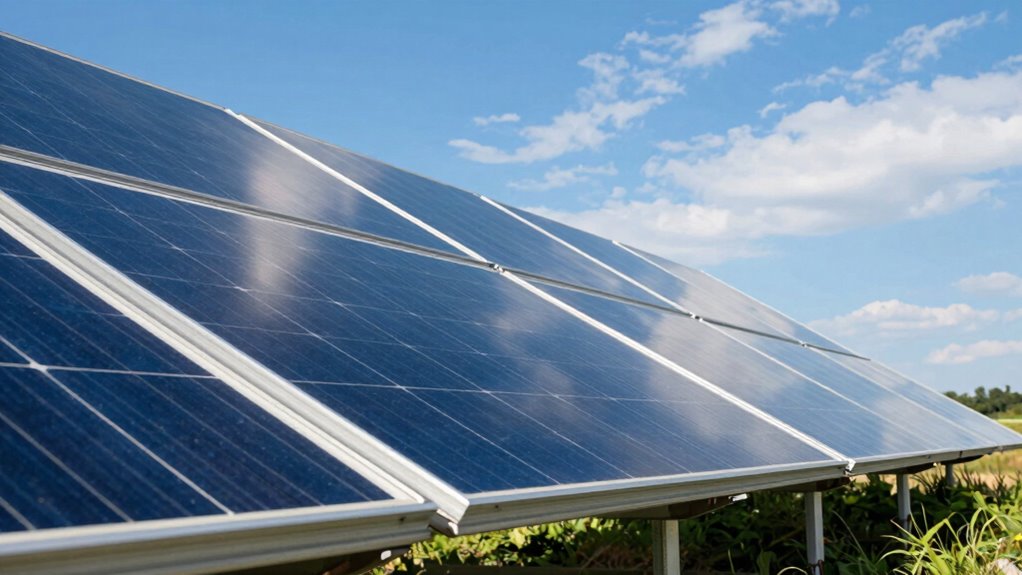

Getting your solar panel tilt and angle right is more important than you might think because it directly impacts how much sunlight your system captures. Adjusting the tilt based on your location, seasonal changes, and weather conditions can maximize energy production and protect your panels. Using the right mounting hardware guarantees stability and flexibility for tweaks over time. If you want to discover key tips for optimizing your system, keep exploring what factors truly matter.

Turn your quiet moments into listening time
- Thousands of audiobooks, podcasts and originals
- Listen on your phone, tablet or Echo — also offline
- Cancel anytime
Key Takeaways
- Geographic location determines the optimal fixed tilt angle for maximum sunlight capture.
- Seasonal adjustments in tilt can significantly boost energy production throughout the year.
- Proper mounting hardware ensures stability and allows for effective tilt modifications during different weather conditions.
- Steeper angles help snow and debris slide off, maintaining efficiency in snow-prone areas.
- Small tilt adjustments can lead to noticeable improvements in overall solar energy output.
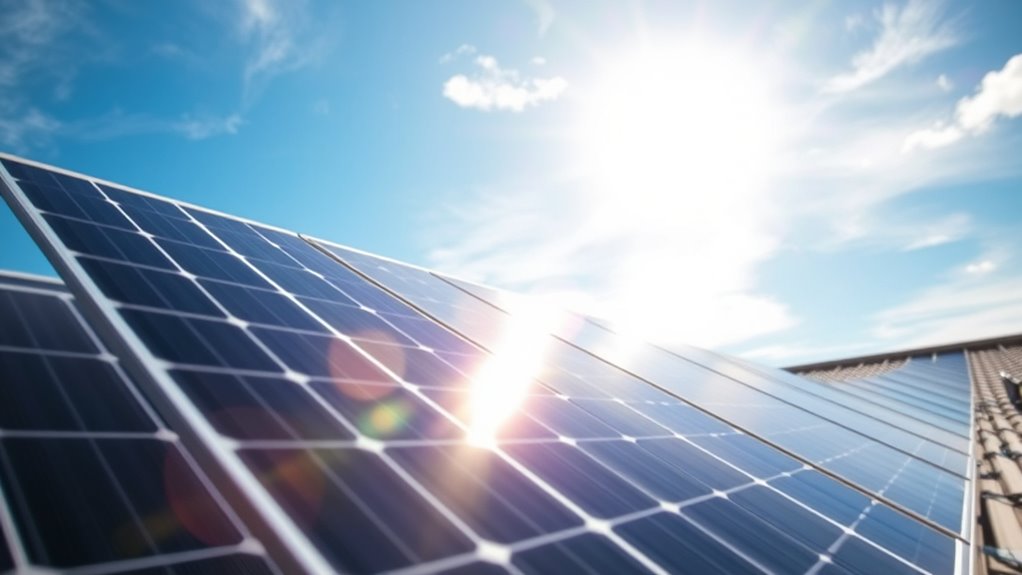
Choosing the right tilt and angle for your solar panels is essential to maximize energy production. When it comes to setting up your system, paying attention to these angles ensures you capture the most sunlight throughout the year. The correct tilt depends on your geographic location, but it’s not just about the ideal angle; how you mount your panels plays a critical role too. Your mounting hardware needs to be sturdy and adjustable to accommodate seasonal changes in the sun’s position. Proper mounting hardware also helps you fine-tune the tilt and angle over time, ensuring your panels remain optimized for maximum efficiency. Additionally, understanding solar panel mounting options can help you select the best hardware for your specific needs. Weather considerations are equally important when determining the best tilt and angle. For instance, in areas prone to snow, a steeper angle can help snow slide off more easily, preventing buildup that blocks sunlight. Conversely, in regions with frequent rain, a different tilt might help water run off quickly, reducing the risk of dirt and debris accumulating on the panels. Wind is another factor to keep in mind; a more secure mounting hardware setup with appropriate tilt angles can prevent panels from swaying or getting damaged during storms. You should also think about the potential for hail or extreme weather conditions, which might require specialized hardware to withstand the elements while maintaining the preferred tilt. Adjusting the tilt and angle isn’t always a one-and-done task. Some systems are designed with fixed mounts, set once based on your location and weather patterns, while others feature adjustable mounts that let you change the angle seasonally for even better performance. If you choose adjustable hardware, it’s worthwhile to plan for regular adjustments, especially if weather conditions change or if you notice a decline in energy output. Remember, the goal is to get the most sunlight possible, and small tweaks to your panels’ tilt can make a noticeable difference in energy production.
adjustable solar panel mounting hardware
As an affiliate, we earn on qualifying purchases.
As an affiliate, we earn on qualifying purchases.
Frequently Asked Questions
How Does Seasonal Weather Affect Optimal Tilt Angle?
Seasonal variations and weather patterns considerably impact your ideal tilt angle. During winter, you should increase the tilt to maximize sunlight exposure when the sun is lower in the sky. Conversely, in summer, a flatter angle works better since the sun is higher. Cloud cover and storms also influence efficiency, so adjusting your panel tilt seasonally helps you capture the most sunlight and improve energy production year-round.
Can Adjustable Mounts Improve Energy Output Throughout the Year?
Adjustable mounts can skyrocket your energy output, turning your solar system into a powerhouse year-round. By fine-tuning your panels’ tilt, you guarantee maximum sunlight absorption, especially during seasonal changes. This simple upgrade makes a huge difference in energy optimization, preventing wasted sunlight and boosting efficiency. With adjustable mounts, you gain the flexibility to adapt, ultimately transforming your solar setup into a reliable, high-performing energy generator no matter the time of year.
What Is the Impact of Shading on Tilt Angle Efficiency?
Shading impact can considerably reduce your solar panel’s efficiency, regardless of tilt adjustment. When shadows fall on your panels, they block sunlight and decrease energy output. Adjusting the tilt angle helps optimize sunlight exposure, but shading remains a critical factor. To maximize efficiency, you should minimize shading during peak sunlight hours and consider tilt adjustments that avoid shaded areas, ensuring your panels perform at their best throughout the year.
How Do Different Roof Types Influence Tilt Installation Options?
Different roof types substantially influence your tilt installation options. For example, metal roofs allow easier panel mounting and adjustable angles, while tile or slate roofs pose installation challenges due to fragile materials. Asphalt shingles are more flexible but may require special mounting brackets to prevent damage. You need to take into account roof materials carefully to guarantee proper tilt, maximize efficiency, and avoid costly modifications during installation.
Are There Regional Best Practices for Solar Panel Tilt Angles?
When it comes to regional best practices for solar panel tilt angles, you gotta play it by ear. Your regional climate influences the ideal tilt—more vertical in snowy areas to shed snow, and flatter in sunnier, warmer regions. Balancing installation costs and efficiency is key; adjusting tilt can boost output or save money. So, tailor your setup to your locale for the best bang for your buck.
solar panel tilt and angle mount
As an affiliate, we earn on qualifying purchases.
As an affiliate, we earn on qualifying purchases.
Conclusion
Getting your solar panel tilt just right isn’t just a small detail — it’s the secret weapon that can turn your sunny days into a never-ending power surge. Imagine your panels soaking up sunlight like sunflowers chasing the sun, transforming every ray into pure energy. When you optimize your tilt and angle, you’re not just boosting efficiency — you’re releasing a solar storm that powers your home with the force of a lightning bolt. Don’t settle for less; harness the sun’s full fury!
solar panel mounting brackets for seasonal adjustment
As an affiliate, we earn on qualifying purchases.
As an affiliate, we earn on qualifying purchases.
As an affiliate, we earn on qualifying purchases.
Fall Picks
fall essentials
As an affiliate, we earn on qualifying purchases.