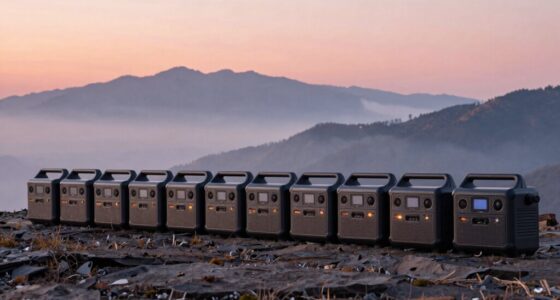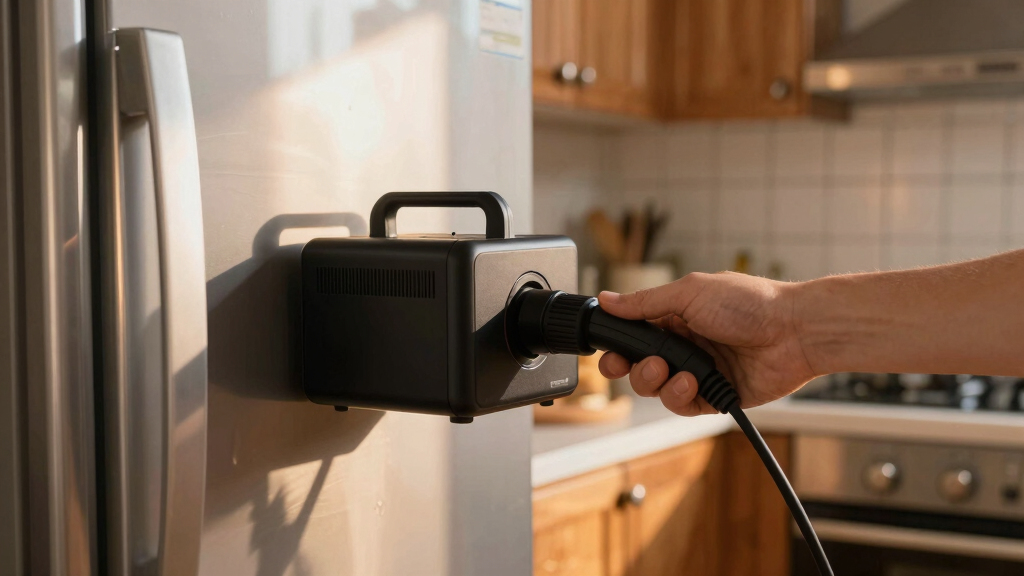
Finding the best quiet power station for refrigerator backup means balancing power output, noise levels, and portability. The EF ECOFLOW DELTA 2 stands out as the overall choice due to its robust capacity and quiet operation. The BLUETTI Elite 100 V2 offers excellent silence and reliability, making it ideal for home backup. Meanwhile, the Jackery Explorer 1000 v2 is perfect for those needing a portable, less expensive option. However, these units come with tradeoffs—larger capacity can mean more noise, and budget models might lack some features. Keep reading for a detailed breakdown to help you find the right fit for your refrigerator and backup needs.
Key Takeaways
- High-capacity models like ECOFLOW DELTA 2 and Jackery Explorer 2000 are best for long outages but tend to be noisier.
- LFP battery-powered stations generally operate more quietly and last longer than traditional lithium-ion options.
- Portability varies widely; larger units provide more power but are less convenient to move during emergencies.
- Pure sine wave inverters are essential for sensitive appliances like refrigerators to prevent damage.
- Price often correlates with capacity and noise reduction features—consider your budget against backup duration needs.



More Details on Our Top Picks
EF ECOFLOW Portable Power Station DELTA 2, 1024Wh LiFePO4 Battery, 1800W AC/100W USB-C, Solar Generator for Home Backup, Camping & RVs
The EF ECOFLOW DELTA 2 stands out for its impressive 1024Wh LiFePO4 battery and 1800W AC output, making it capable of powering a refrigerator during outages without breaking the bank on noise levels. Compared to the Jackery HomePower 3000, it offers a smaller footprint with fast charging and expandable capacity, though it doesn’t quite match the larger model’s overall capacity for extended outages. Its fast charging—0 to 80% in just 50 minutes—means less downtime, a key advantage for reliable backup. However, its solar input capacity, maxing at 500W, might slow off-grid charging during extended power outages. This model is perfect for those needing flexible, portable backup power without excessive noise, but it requires additional batteries for maximum capacity expansion, which adds to the cost.
Pros:- Fast charging from 0 to 80% in just 50 minutes
- Expandable capacity up to 3kWh with additional batteries
- Long-lasting LiFePO4 battery with over 3000 cycles
- Multiple outlets to power most appliances
Cons:- Higher price point compared to basic portable chargers
- Requires additional batteries for full capacity expansion
- Limited solar input capacity may slow off-grid charging
Best for: Homeowners seeking a reliable, portable, and moderately expandable backup power source for refrigerators and essential appliances
Not ideal for: Users wanting the highest possible capacity for prolonged outages or those on a strict budget, due to its higher price point
- Battery Capacity:1024Wh
- Battery Chemistry:LiFePO4 (LFP)
- AC Output:1800W
- USB-C Output:100W
- Solar Input:Up to 500W
- Expandable Capacity:1-3kWh
- Cycle Life:3000+ cycles
- Charging Time:0-80% in 50 mins
Bottom line: This pick suits users who want a flexible, fast-charging backup with moderate capacity for refrigerator protection.
BLUETTI Elite 100 V2 Portable Power Station, 1024Wh LFP Battery Backup with 4 AC Ports
The BLUETTI Elite 100 V2 offers a solid 1024Wh capacity with four AC ports, making it a convenient choice for powering a refrigerator quietly during outages. Its weight of just 25 lbs and compact dimensions make it easier to handle than larger models like the Jackery HomePower 3000, which, while more powerful, is bulkier. Its 70-minute recharge time is swift, but the limited weight capacity may make it less suitable for heavier or multiple appliances over extended periods. While not as expandable as the ECOFLOW, it provides reliable backup power and operates silently, ideal for small spaces or those prioritizing portability. The tradeoff is that it may lack the raw capacity for very long outages, especially if multiple devices are plugged in simultaneously.
Pros:- Lightweight and compact for easy mobility
- Fast recharge in 70 minutes
- Reliable backup with 1024Wh capacity
- Operates quietly, ideal for small spaces
Cons:- Limited to 25 lbs, may still be heavy for some users
- Higher price may be a barrier for budget-conscious buyers
- Limited expansion options for larger power needs
Best for: Campers, small households, or apartment dwellers seeking a quiet, portable backup for refrigerator and essential devices
Not ideal for: Homes needing extended backup power or users with high-capacity appliances, due to limited overall capacity and portability constraints
- Capacity:1024Wh
- AC Output:1800W (2700W Surge)
- Weight:25 lbs
- Charging Time:70 minutes
- Ports:4 AC, 11 total
- Battery Type:LiFePO4
Bottom line: This model is well-suited for those needing a portable, quiet backup for a refrigerator in small living spaces.
EnginStar 300W Portable Solar Generator 296Wh Power Bank with Dual AC Outlets
The EnginStar 300W offers 296Wh of capacity, making it suitable for small, short-term backup needs like a refrigerator during brief outages. Its lightweight of just 6.5 lbs and the inclusion of dual AC outlets provide portability and basic functionality, but it falls short for sustained backup power—especially compared with larger models like the Jackery HomePower 3000. The 7-hour charging time and support for devices under 300W mean it’s better suited for light, infrequent use or as a supplementary power source. It’s a good entry-level option for those on a tight budget or needing a small, quiet device for short-term outages, but not for prolonged refrigerator backup.
Pros:- Lightweight and easily portable
- Affordable price point
- Dual AC outlets for simultaneous device power
- Supports multiple charging options including solar
Cons:- Limited to 296Wh capacity, not suitable for long-term backup
- Supports devices under 300W, restricting power for larger appliances
- Charging time of around 7 hours can be lengthy for emergency prep
Best for: Casual users, weekend campers, or those needing a small, quiet emergency backup for brief outages
Not ideal for: Users requiring continuous power for refrigerators or multiple devices over long outages, due to limited capacity and support for only small loads
- Power Capacity:296Wh
- AC Outlets:2 (110V)
- Weight:6.5 lbs
- Charging Time:Approximately 7 hours
- Battery Type:Lithium-ion
Bottom line: This generator is best for light, short-term backup needs where portability and quiet operation matter most.
Jackery HomePower 3000 Portable Power Station, 3600W (Surge 7200W), 3072Wh, LFP Battery, Solar Generator, Home Backup, RV, Emergency Power
The Jackery HomePower 3000 offers an impressive 3072Wh capacity and 3600W continuous power, making it the ideal choice for long-term refrigerator backup and other critical appliances. Its fast recharging—just 1.7 hours—via AC or DC, combined with seamless UPS switching, ensures continuous operation during outages. While it’s larger and more expensive than smaller units like the BLUETTI Elite 100 V2, its higher capacity and durable LiFePO4 battery make it better suited for extended outages. The main tradeoff is its size and cost, which may be overkill for simple, short-term needs. If your priority is prolonged, quiet backup power, this model makes a compelling case.
Pros:- Massive 3072Wh capacity for extended outages
- Fast charging with AC, DC, and solar options
- Reliable UPS with seamless switching
- Durable LiFePO4 battery with 4000+ cycles
Cons:- Higher price point may be prohibitive for some
- Bulkier size may limit portability in tight spaces
- Requires solar panels for full off-grid capability
Best for: Households needing reliable, long-duration backup power for refrigerators and essentials, especially during extended outages
Not ideal for: Users seeking a lightweight, budget-friendly solution or those with limited space, due to its size and cost
- Capacity:3072Wh
- Power Output:3600W (7200W surge)
- Charging Time (AC/DC):1.7 hours
- Cycle Life:4,000 cycles
- Ports:AC, USB-C, USB-A, DC, RV port
- Dimensions:Compact for its capacity
Bottom line: This model suits users who need long-lasting, quiet backup power for critical appliances like refrigerators during extended outages.
Anker SOLIX C1000 Gen 2 Portable Power Station, 2000W (Peak 3000W), 1024Wh LiFePO4 Battery, Solar Generator
The Anker SOLIX C1000 Gen 2 provides a solid 1024Wh capacity with a high 2000W continuous output, making it suitable for powering a refrigerator during outages, especially with its ultra-fast recharge time of just 49 minutes. Compared to the EF ECOFLOW DELTA 2, it offers slightly less capacity but excels in rapid recharging, which minimizes downtime. Its portability and support for solar recharging make it a strong contender for those who value quick turnaround and space-saving design. The main tradeoff is the higher cost and limited AC outlets, which could restrict its use if multiple appliances need power simultaneously for long durations.
Pros:- Fast recharging in 49 minutes
- High 2000W continuous power output
- Compact and lightweight design
- Supports solar recharging for off-grid use
Cons:- Higher price compared to similar models
- Limited number of AC outlets for multiple appliances
- Supports devices primarily under 2000W
Best for: Homeowners or campers who want a powerful, fast-charging backup for refrigerators and essential devices with limited space
Not ideal for: Those needing the highest capacity or multiple simultaneous high-wattage appliances, due to its moderate total capacity and port count
- Battery Capacity:1024Wh
- Output Power:2000W (3000W peak)
- Recharge Time:49 minutes
- Number of Ports:10
- Battery Type:LiFePO4
Bottom line: This pick is ideal for users prioritizing quick recharging and portability for refrigerator backup during outages.
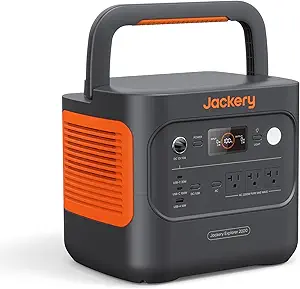
Jackery Explorer 1000 v2 Portable Power Station, 1070Wh LiFePO4 Battery, 1500W AC/100W USB-C, Fast 1-Hour Charge, Solar Generator for Camping, Emergency, RV, Off-Grid
The Jackery Explorer 1000 v2 stands out for its impressive 1500W AC output, making it capable of handling most refrigerator models during outages. Its fast one-hour recharge minimizes downtime, and the long-lasting LiFePO4 battery ensures reliability over many years. Compared to smaller options like the EnginStar 300W, it provides more power with less concern about overloading. However, its weight of nearly 24 pounds can hinder portability, especially for those needing a lightweight backup. The device’s multiple ports, including USB-C, enhance its versatility for various devices. Its dependency on Jackery’s proprietary solar panels for sustainable recharging could be a limit for some users. Overall, this model is best suited for those needing a robust, reliable power source that can handle a refrigerator and multiple devices during extended outages.
Pros:- High 1500W continuous AC output for powering refrigerators and appliances
- Fast recharge time of just one hour
- Long lifespan with over 4,000 charge cycles
- Multiple output ports including USB-C and AC outlets
Cons:- Relatively heavy at nearly 24 pounds, limiting portability
- Requires Jackery solar panels for solar recharging, which can be an added expense
Best for: Families seeking a high-capacity, reliable backup for refrigerators and household appliances during extended power outages.
Not ideal for: Hikers or campers who prioritize ultra-lightweight gear, as the unit’s weight makes it less portable.
- Battery Capacity:1070Wh
- Battery Type:LiFePO4
- AC Output:1500W
- Surge Peak:3000W
- USB-C Ports:2
- Weight:23.8 lbs
- Fast Charging:1 hour from 0% to 100%
Bottom line: This pick is best for users needing dependable, high-capacity power for refrigerators and household essentials during outages.
EnginStar Portable Power Station 300W 296Wh Battery Bank with 110V Pure Sine Wave AC Outlet for Outdoors Camping, Hunting, and Emergency
The EnginStar 300W offers a highly portable solution with a 296Wh capacity and 300W continuous AC power, making it suitable for small refrigerators or mini-fridges during short outages. Its compact size and weight of just 6.5 pounds make it ideal for those who need mobility, such as outdoor enthusiasts or emergency kits. Compared to larger units like the Jackery 1000, it cannot support high-power appliances for extended periods, but it excels in portability and ease of use. The pure sine wave AC outlets safeguard sensitive electronics, a key advantage over less refined inverter types. The main tradeoff lies in its limited capacity—it’s not suitable for prolonged outages or larger refrigerators. This device fits best for users who prioritize portability and quick, short-term backup for small appliances.
Pros:- Lightweight and portable at only 6.5 pounds
- Pure sine wave output protects sensitive electronics
- Multiple charging options including solar, wall, and car
- Adequate for small appliances and short-term backup
Cons:- Limited capacity of 296Wh restricts duration of backup
- Cannot support high-power appliances continuously for long
Best for: Campers, hunters, or emergency prepper who need a lightweight, quick backup for small refrigerators or essential electronics.
Not ideal for: Homeowners wanting to back up full-sized refrigerators for long durations, due to its limited capacity.
- Capacity:296Wh
- Power Output:300W
- AC Outlets:2 (110V pure sine wave)
- Dimensions:9 x 5.5 x 7.5 inches
- Weight:6.5 pounds
- Charge Cycles:Over 1000
Bottom line: This is an excellent choice for those needing a portable, short-term backup for small refrigerators and essentials.
DARAN Portable Power Station 600W (1200W Peak), 288Wh Solar Generator with LiFePO4 Battery
The DARAN Portable Power Station stands out for its lightweight design and reliable 600W continuous output, making it a practical choice for small-scale refrigerator backup during outages or travel. Compared with larger units like the Jackery Explorer 2000 v2, it offers less capacity but excels in portability, fitting easily into tight spaces. The fast charging capability and multiple output ports support a variety of devices simultaneously, while the built-in LED light adds emergency versatility. Its main tradeoff is the limited 288Wh capacity, which means it can run a standard refrigerator for only a few hours, and it lacks solar panels or charging cables included in the box. This pick makes the most sense for users with small refrigerators or those needing a portable backup for short outages.
Pros:- Lightweight at under 9 lbs for easy portability
- Fast charging with multiple output options
- Built-in emergency LED light for critical situations
Cons:- Limited to devices within 600W power range, not suitable for larger refrigerators
- No solar panels or charging cables included, adding extra cost
Best for: Individuals with small refrigerators or those needing a portable, lightweight backup for short-term power needs
Not ideal for: Homeowners with large, energy-intensive refrigerators or extended power outages, due to its limited capacity
- Power Output:600W (1200W surge)
- Battery Capacity:288Wh
- Battery Type:LiFePO4
- Weight:8.86 lbs
- Dimensions:10.0 x 6.6 x 8.2 inches
- Charging Time:2 hours to 80%
Bottom line: This option is best suited for those needing a portable, quick-charging backup for small refrigerators or travel use.
Jackery Explorer 2000 v2 Portable Power Station, 2042Wh LiFePO4, 2200W Solar Generator, USB-C PD 100W Fast Charging
The Jackery Explorer 2000 v2 offers an impressive 2042Wh capacity, making it ideal for keeping a refrigerator running during long outages. Its 2200W continuous output surpasses most smaller units, providing ample power for larger or multiple appliances. The device’s fast charging time of just over an hour, combined with solar compatibility, makes it suitable for off-grid use and extended emergencies. Compared to the S1200, it provides more capacity but weighs significantly more, which could be a concern for portability. It operates quietly at less than 30dB, making it suitable for indoor environments. The main tradeoff is its higher price and bulk, which may deter those with limited space or budget constraints.
Pros:- Large 2042Wh capacity for extended backup needs
- Fast charging and solar ready for off-grid independence
- Quiet operation at under 30dB
Cons:- Heavy at nearly 40 lbs, less portable for frequent movement
- Higher price point, potentially limiting for budget-conscious buyers
Best for: Homeowners needing a reliable, long-lasting backup for large refrigerators and other critical appliances
Not ideal for: Travelers or users with limited storage space seeking a lightweight, portable unit
- Capacity:2042Wh
- Power Output:2200W
- AC Ports:3
- USB-C PD Port:100W
- Weight:39.5 lbs
- Full Charge Time:102 minutes
Bottom line: This is an excellent choice for those prioritizing capacity and quiet operation over portability and cost.
S1200 Portable Power Station, 1190Wh LiFePO4 Battery, 1200W (1800W Surge) AC Output, Solar Generator for Camping, Emergency, RVs
The S1200 Portable Power Station strikes a solid balance between capacity and portability with its 1190Wh battery and 1200W continuous power. It features multiple AC outlets and USB-C PD ports, making it versatile enough for both home refrigerator backup and camping needs. Its fast recharge time of 1.5 hours and solar compatibility support off-grid scenarios. Compared with the Jackery 2000 v2, it is slightly lighter and offers more ports, but with a somewhat lower capacity. Its quiet operation at less than 25dB makes it suitable for indoor use. The main tradeoffs involve its weight and higher price compared to smaller, less capable units.
Pros:- High capacity with long lifespan of LiFePO4 cells
- Multiple AC and USB-C ports for versatile device charging
- Quiet operation and fast recharge time
Cons:- Relatively heavy and bulky for frequent portability
- Higher cost compared to smaller or less capable units
Best for: Families or campers seeking a reliable, quiet backup for refrigerators and other household devices
Not ideal for: Those needing the utmost capacity for prolonged outages or with strict portability needs
- Battery Capacity:1190Wh
- Continuous Power:1200W
- Surge Power:1800W
- AC Outlets:5
- USB-C PD Ports:2
- Noise Level:<25dB
Bottom line: This unit provides a well-rounded option for reliable, quiet backup power in both home and outdoor settings.

How We Picked
These products were selected based on their power output capacity, noise levels, battery chemistry, and overall build quality. We prioritized units that can reliably power a refrigerator for extended periods, with an emphasis on quiet operation. Portability, ease of use, and versatility also played key roles, as many buyers need units that can serve in both home backup and outdoor scenarios. The ranking reflects a combination of capacity, noise performance, durability, and value, with higher-ranked products offering a balanced mix of these factors. Tradeoffs such as size, weight, and price were considered to match different user priorities and budgets.Factors to Consider When Choosing Best Quiet Power Station For Refrigerator Backup
Choosing the best quiet power station for refrigerator backup involves understanding several key factors. First, consider the capacity needed to run your refrigerator during an outage—larger units provide longer run times but tend to generate more noise. Second, look at the inverter type; pure sine wave inverters are crucial for sensitive electronics like fridges, as they deliver stable power without harming the appliance. Third, evaluate the battery chemistry—LiFePO4 batteries usually operate more quietly and last longer than traditional lithium-ion options. Fourth, portability might matter if you plan to move the unit frequently, but larger capacities often mean increased weight. Finally, factor in noise levels, as some units operate more quietly, making them suitable for indoor use or quiet environments.Battery Capacity and Run Time
For refrigerator backup, capacity determines how long your fridge can run during an outage. A unit with at least 1000Wh is often recommended for a typical household fridge, providing enough power for several hours or more. Keep in mind that larger batteries usually mean bigger, heavier units, which might compromise portability. Balancing capacity with size and weight is key, especially if you need to move the station in emergency situations. Also, check if the unit supports daisy-chaining or has expandable battery options for longer backup times.
Noise Levels and Operating Quietly
Many power stations emit noise through cooling fans or inverter operation, which can be disruptive indoors. For refrigerator backup, a quiet operation is often a priority, especially if the unit is kept in a living space. Look for models explicitly designed for silent or near-silent operation, typically those with larger heat sinks or advanced cooling systems. Units with pure sine wave inverters tend to run more quietly and smoothly, reducing noise while protecting sensitive appliances. Think about where you’ll use the device most often—quiet models are better suited for indoor or shared spaces.
Battery Chemistry and Longevity
Battery chemistry impacts not only the lifespan but also the noise profile of the station. LiFePO4 batteries are known for quieter operation due to their stable chemistry and fewer thermal management issues. They also last longer—often providing more charge cycles—making them a smart choice for frequent backup needs. Conversely, traditional lithium-ion batteries may be less expensive initially but tend to degrade faster and can generate more heat and noise over time. Investing in a station with advanced chemistry can provide peace of mind during prolonged outages.
Portability and Size
While larger capacity units deliver longer backup times, they can also become cumbersome to move, especially in emergency situations. If portability is a priority, consider lightweight models with manageable weights and ergonomic handles. However, smaller, portable units might not supply enough power for extended refrigerator operation. Striking a balance between capacity and portability is essential—think about your typical use case, whether stationary backup at home or portable power for outdoor activities. Many high-capacity models still offer convenient carry options, but expect some tradeoffs in size.
Additional Features and Compatibility
Features such as multiple AC outlets, USB-C ports, and solar compatibility can enhance usability. For refrigerator backup, a pure sine wave inverter is non-negotiable, but additional conveniences like fast charging or daisy-chaining batteries can extend backup duration. Check if the unit includes features like LED displays for monitoring power levels or quiet fans that activate only when necessary. Compatibility with solar panels can be a plus for off-grid or eco-conscious users, providing sustainable backup power without noise from gasoline generators.
Frequently Asked Questions
How long can a power station run my refrigerator during an outage?
The duration depends on the power station’s capacity and your refrigerator’s wattage. On average, a 1000Wh unit can run a standard refrigerator for 8-12 hours, assuming an average draw of 100W. Larger units with 2000Wh or more can extend this time significantly, sometimes up to 24 hours or more. Keep in mind that starting compressors may draw higher initial power, so it’s wise to choose a station with a surge capacity that exceeds your refrigerator’s startup wattage. Always verify the refrigerator’s wattage and compare it to the power station’s continuous and surge ratings for accurate estimates.
Are quiet power stations suitable for long-term backup use?
Yes, especially models with high-capacity batteries like LiFePO4-based stations, which are designed for longevity and stable operation. These units can provide reliable power over extended periods without excessive noise or heat generation. However, for very long outages, it’s important to consider whether the station can be recharged via solar or grid power. Regular maintenance and monitoring of battery health are also vital for ensuring consistent performance over time. For continuous backup, selecting a station with expandable batteries or solar compatibility can be a smart move.
What size power station do I need for my refrigerator?
The size depends on your refrigerator’s power consumption and the desired backup duration. Most standard refrigerators draw between 100-200W during operation, with higher peaks at startup. To determine the right size, check your fridge’s wattage and multiply it by the hours you want to cover. A 1000Wh station can typically power a fridge for about 8-12 hours, while larger units like 2000Wh or more can last 24 hours or longer. Evaluate your backup needs carefully to choose a capacity that balances run time with portability and budget.
Can I run other appliances along with my refrigerator from a power station?
Yes, but you need to ensure the total wattage of all connected devices does not exceed the station’s continuous power output. Many stations list multiple outlets and surge ratings; for example, a 1500W continuous rating can handle a small TV, router, and refrigerator simultaneously, provided their combined startup wattage remains within limits. Always check the surge capacity and inverter type; pure sine wave inverters are safer for sensitive electronics. Planning your load carefully helps avoid overloads and maximizes backup duration during outages.
Conclusion
For most users seeking a reliable, quiet backup for their refrigerator, the EF ECOFLOW DELTA 2 offers an excellent balance of capacity, noise level, and versatility—making it the top overall pick. If you’re on a budget but still want decent capacity and quiet operation, the Jackery Explorer 1000 v2 provides a solid option for smaller households or short outages. Those prioritizing premium features and maximum longevity should consider the Jackery Explorer 2000 v2 or similar high-capacity models. For beginners or casual users, portable and easy-to-use units with straightforward controls are best. Ultimately, your choice should align with your backup duration needs, noise tolerance, and budget constraints.