To understand surge protector ratings, focus on joules, clamping voltage, and the fine print. Joules measure the energy the protector can absorb, so higher ratings offer better protection—aim for at least 1000 joules for sensitive electronics. Clamping voltage shows the maximum voltage allowed during a surge; lower is better. The fine print explains features like safety shutters and lifespan. By grasping these details, you’ll select the right protector. Keep going to explore how these ratings directly impact your devices’ safety.
Key Takeaways
- Joule ratings measure the surge protector’s energy absorption capacity; higher values offer better protection for sensitive electronics.
- Clamping voltage indicates the maximum voltage allowed during a surge; lower values (around 400V or less) provide better safety.
- The fine print reveals detailed specs like maximum surge current, response time, and safety features, crucial for informed selection.
- Surge protectors degrade after multiple surges, so check for indicators or warranty details to ensure ongoing protection.
- Understanding these ratings helps choose the right surge protector to effectively safeguard devices from power spikes.
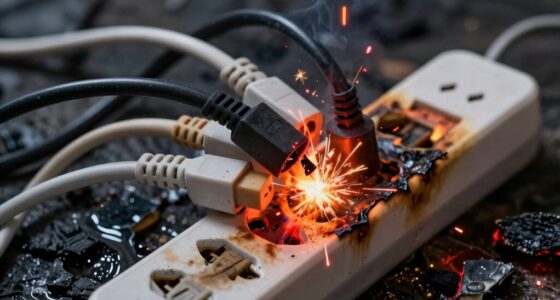
Have you ever wondered how to choose the right surge protector for your devices? It all comes down to understanding surge protector ratings, especially aspects like joules, clamping voltage, and other specifications that impact electrical safety. When a power surge hits, it can send a sudden spike of electricity through your devices, risking damage or data loss. That’s why selecting a surge protector with appropriate ratings is essential to keep your electronics safe.
One of the most important ratings to consider is the joule rating. Think of joules as the protector’s energy absorption capacity; a higher joule rating means the device can handle larger or multiple surges over its lifetime. For instance, if you’re protecting sensitive electronics like computers or home entertainment systems, look for a surge protector rated at least 1000 joules. This ensures it can absorb enough energy during a power surge, reducing the risk of damage. Remember, a surge can happen unexpectedly, whether from lightning strikes, utility grid fluctuations, or other power anomalies, so a higher joule rating offers better electrical safety for your valuable devices.
Choose surge protectors with at least 1000 joules for better energy absorption and device safety.
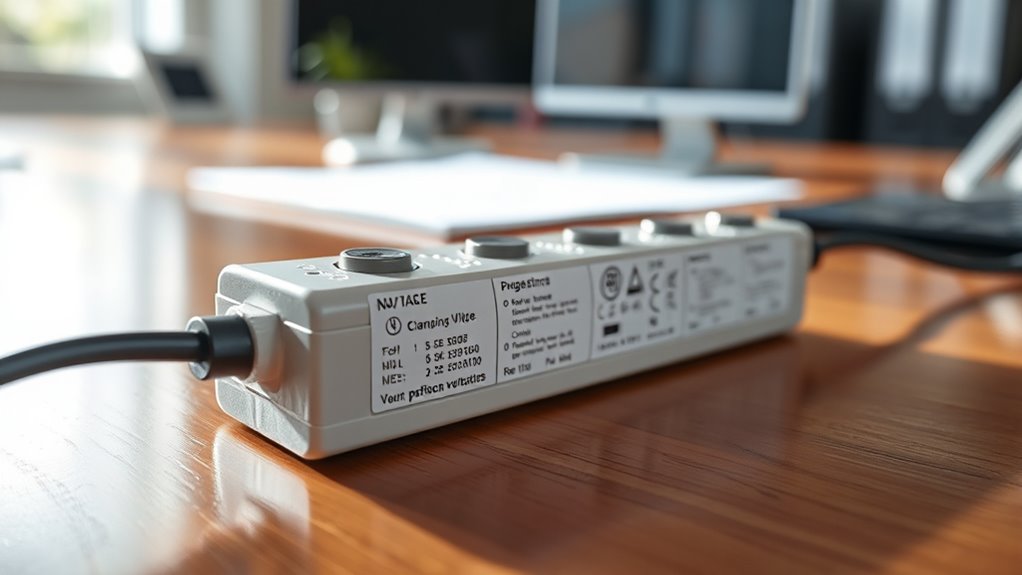
Clamping voltage is another critical specification. It indicates the maximum voltage the surge protector allows to pass through to your devices during a surge. A lower clamping voltage generally means better protection, as it keeps the voltage spike below levels that could harm your electronics. Ideally, you want a clamp voltage around 400 volts or less. Anything higher might let through damaging voltage levels, increasing the risk of device failure. Paying attention to this detail helps you choose a surge protector that reacts swiftly and limits exposure to dangerous voltage levels.
Beyond joules and clamping voltage, it’s wise to read the fine print. Some surge protectors include features like indicator lights that show whether the protection is still active or if the unit has worn out. Others may have additional safety features, such as thermal fuses or safety shutters, to prevent electrical hazards. Keep in mind that surge protectors are not meant to last forever; after absorbing multiple power surges, their protective components can degrade. Regularly inspecting your surge protector and replacing it when necessary ensures ongoing electrical safety. Additionally, understanding home electrical systems can help you select the most appropriate surge protection for your entire household.
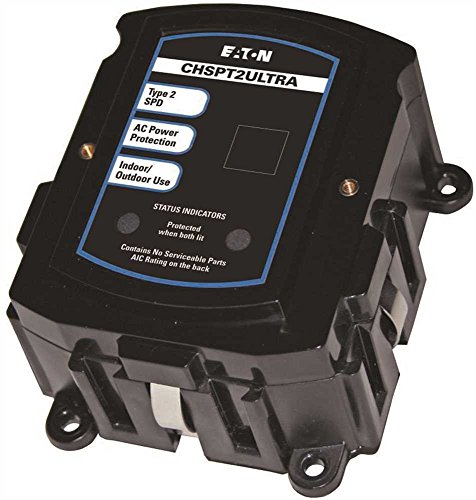
Eaton CHSPT2ULTRA Ultimate Surge Protection 3rd Edition, 2.38" Length, 5.25" Width 7.5" Height
Universally connects to any manufacturer’s load center (breaker box)
As an affiliate, we earn on qualifying purchases.
Frequently Asked Questions
How Do I Interpret Surge Protector Specifications for My Home Setup?
To interpret surge protector specifications for your home setup, focus on surge protector ratings like joules and clamping voltage. Higher joules mean better protection against power surges, while a lower clamping voltage offers quicker response. Always verify the ratings to guarantee electrical safety for your devices. This way, you choose the right surge protector, reducing risks and safeguarding your electronics effectively.
Are Higher Joule Ratings Always Better for Protection?
Think higher joule ratings are your magic shield? Not quite. While a higher joule rating can absorb more power surges, it doesn’t guarantee better electrical safety. A power surge might still overwhelm your protector if it’s not paired with proper clamping voltage or quality components. So, don’t just chase numbers—choose a surge protector wisely, because protecting your devices from power surges is essential for your electrical safety.
What Is the Significance of Clamping Voltage in Surge Protectors?
Clamping voltage determines the voltage threshold at which your surge protector kicks in to protect your devices. A lower clamping voltage means better protection, as it limits harmful voltage spikes more effectively. Think of it as the protection level; the lower the clamping voltage, the quicker and safer your gear is shielded from surges. Always verify this rating to ensure your devices stay safe during voltage spikes.
Can Surge Protectors Lose Effectiveness Over Time?
Yes, surge protectors can lose effectiveness over time. As they absorb power surges, their surge protector lifespan diminishes, leading to degradation over time. This means that they may not provide the same level of protection as when new, making it essential to replace them periodically. Regularly check your surge protector’s condition and consider replacing it after several years or following a significant power surge.
How Do I Choose the Right Surge Protector for Sensitive Electronics?
To safeguard sensitive electronics from power surges, choose a surge protector with a high joule rating and low clamping voltage. Look for models that meet electrical safety standards and have features like indicator lights for grounding. Confirm it offers enough outlets for your devices and consider options with additional protections, like USB ports. This way, you minimize the risk of damage during a power surge and keep your electronics safe.

Square D HEPD80 Universal Whole House Surge Protection Device, 1-Phase, 3-Wire for 120/240V, 80kA
The HEPD80 is easily connected to any brand of residential load center and provides the customer a green...
As an affiliate, we earn on qualifying purchases.
Conclusion
Understanding surge protector ratings is like steering a maze of lightning bolts and shielding castles. When you grasp joules, clamping voltage, and the fine print, you’re equipping yourself with a sturdy shield against electrical storms. Think of it as choosing the strongest armor to keep your devices safe—so next time lightning strikes, your electronics stand firm, unscathed, like a knight in shining armor standing tall amidst a thunderous battlefield.

Siemens QSPD2A035B 35 KAmp BoltShield Indoor Surge Protective Device
Fits into existing Siemens load centers
As an affiliate, we earn on qualifying purchases.

Furniqro FHSPD108S Whole House Surge Protector for 108,000 Amps, Ultimate Surge Protection, Whole Home Surge Protector for Indoor/Outdoor Use, 120/240V
Whole House Surge Protector: FHSPD108S is a compact whole-home surge protector that safeguards electrical devices connected to your...
As an affiliate, we earn on qualifying purchases.