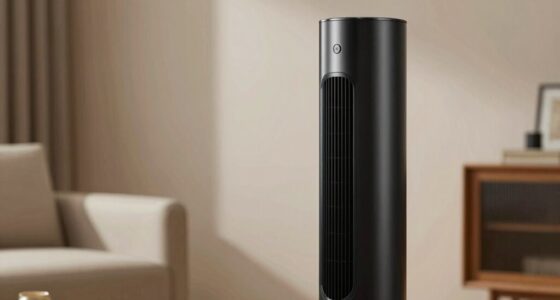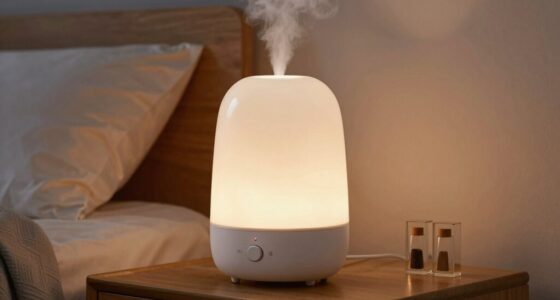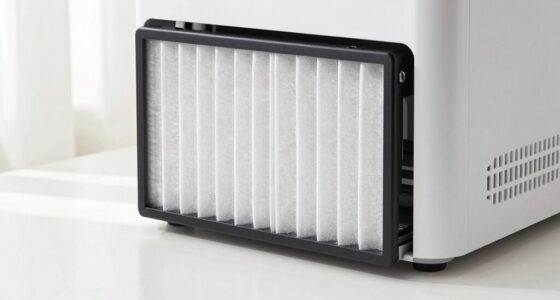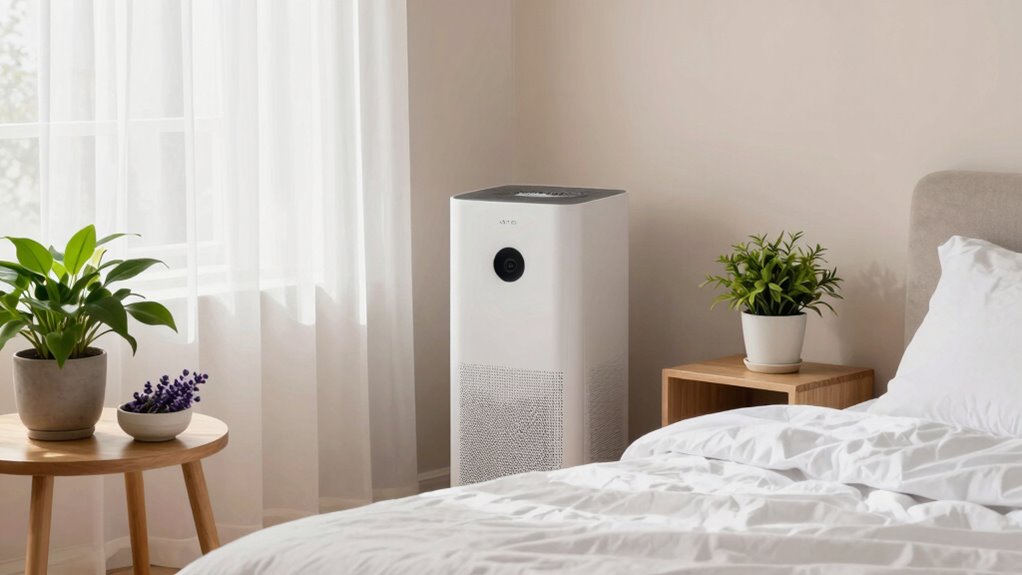

To guarantee quiet, fresh air in your bedroom, regularly maintain your air purifier by replacing filters and choosing quieter models if needed. Keep ventilation unobstructed by opening windows slightly during the day and using soundproofing or acoustic panels. Seal gaps around windows and doors to minimize outside noise and improve airflow. Keep your space organized and free of clutter, and consider adding plants for better air quality. If you follow these tips, you’ll create a peaceful sleep sanctuary—more helpful details come next.

Turn your quiet moments into listening time
- Thousands of audiobooks, podcasts and originals
- Listen on your phone, tablet or Echo — also offline
- Cancel anytime
Key Takeaways
- Regularly replace or upgrade air filters and purifiers to maintain quiet, efficient operation and optimal air quality.
- Ensure proper bedroom ventilation with unobstructed airflow and soundproofing to minimize external noise.
- Seal gaps around windows and doors to reduce noise infiltration and improve air circulation.
- Use low-noise fans and quiet electronic devices to promote peaceful airflow and minimize disruption.
- Monitor air quality continuously and make adjustments to maintain a serene, allergen-free sleeping environment.
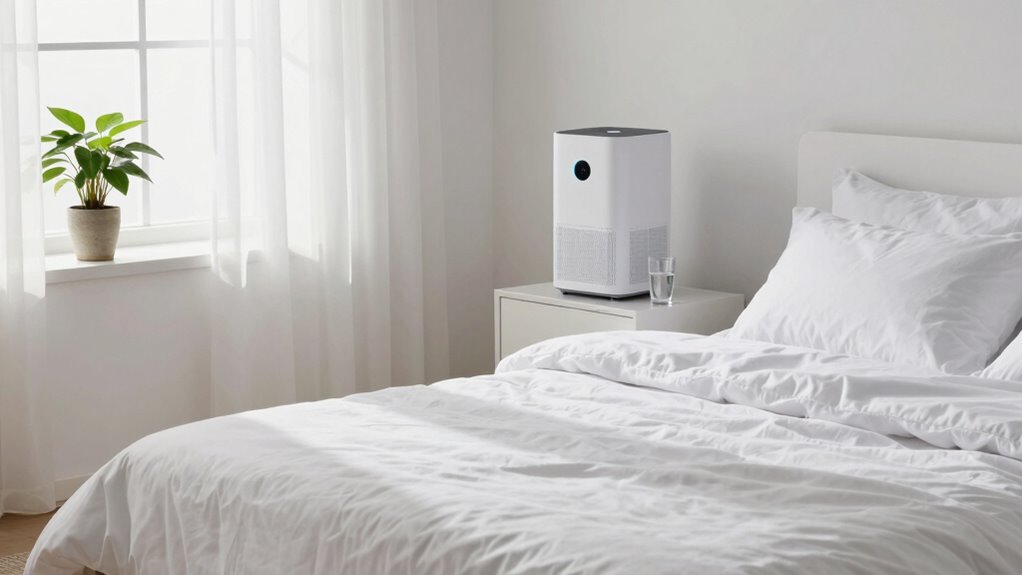
A quiet bedroom air environment is essential for restful sleep and overall well-being. When your air is clean and free of noise disturbances, you wake up feeling refreshed and ready for the day. Achieving this ideal atmosphere involves more than just closing the door—it’s about maintaining the right balance of ventilation and air quality. Regular air purifier maintenance is key; you should check and replace filters as recommended by the manufacturer to keep the purifier running quietly and efficiently. A well-maintained air purifier not only reduces allergens and pollutants but also minimizes noise caused by clogged filters or malfunctioning parts. When you keep your purifier in good shape, it works smoothly, creating a peaceful, noise-free environment that promotes deep sleep. Incorporating biodiversity-friendly practices, such as adding houseplants that improve indoor air quality, can further enhance your bedroom’s serenity. Additionally, selecting air quality monitors can help you track and maintain optimal air conditions, ensuring a healthier environment.
Maintaining your air purifier ensures a quiet, clean environment for restful sleep and overall well-being.
In addition, bedroom ventilation tips play a vital role in maintaining quiet, fresh air. Start by ensuring proper airflow without creating drafts or noise. You might consider slightly opening a window during the day to allow fresh air in, but be mindful of outside noise levels. If outdoor sounds are disruptive, opt for a window fan or an air vent that promotes airflow without adding noise. Using a ceiling or oscillating fan at low speeds can also help circulate air quietly, preventing stuffiness without disturbing your sleep. Keep furniture and curtains away from vents to allow unimpeded airflow, and avoid overcrowding your room, which can trap stale air and increase noise levels from air circulation devices. Additionally, choosing soundproofing options for windows or doors can further reduce outside noise infiltration. Regularly inspecting and sealing gaps around windows and doors can also contribute significantly to minimizing external noise. To further ensure a quiet environment, consider installing noise-reducing window treatments or acoustic panels. Remember that proper ventilation is essential not only for air quality but also for maintaining a peaceful environment, so plan your airflow strategies accordingly.
It’s also wise to keep your bedroom well-organized and free of clutter, which can improve air quality and reduce dust accumulation. Regularly dust and vacuum to prevent allergens from building up, and consider adding houseplants known for improving indoor air quality. Remember, the placement of these plants can influence their effectiveness, so research the best options for your space. The goal is to foster a calm, healthy environment, which means minimizing noise from outside sources or household appliances. If you’re using any electronic devices that generate noise, such as humidifiers or dehumidifiers, choose quiet models and position them thoughtfully. Ensuring proper placement of these devices can help reduce noise and improve overall comfort.
Finally, stay attentive to how your environment feels and sounds. If you notice persistent noise or stale air, revisit your bedroom ventilation tips and check your air purifier maintenance schedule. Small adjustments—like sealing gaps around windows or upgrading to a quieter purifier model—can make a significant difference. With consistent effort, you’ll create a serene sleep sanctuary where the air is not only clean and fresh but also whisper-quiet, ensuring you wake up revitalized every morning.
Products Worth Considering

Levoit Vital 100S-P Air Purifier with Washable Pre-Filter

Coway Mighty AP-1512HH(W) Air Purifier, White

Shark Rotator Lift-Away Vacuum with DuoClean PowerFins (LA555) – Dark Grey
As an affiliate, we earn on qualifying purchases.
Frequently Asked Questions
How Often Should I Change My Bedroom Air Filters?
You should change your bedroom air filters every 1 to 3 months, depending on the air filter lifespan and your filter replacement schedule. If you have pets or allergies, consider replacing filters more frequently. Regularly checking the filters guarantees they’re not clogged, which can reduce air quality and HVAC efficiency. Sticking to a consistent schedule helps maintain clean, quiet air in your bedroom and promotes better health.
Can Plants Improve Bedroom Air Quality Effectively?
Research shows plants can improve bedroom air quality, but their impact is limited. Certain plant types, like snake plants and pothos, are effective for air purification by absorbing toxins and releasing oxygen. However, don’t rely solely on plants for clean air; they work best alongside good ventilation and proper filtering. Incorporating these plants adds natural beauty and minor air quality benefits, but they shouldn’t replace other cleaning or filtration methods.
Are Air Purifiers Safe for Sensitive Individuals?
Air purifiers are generally safe for sensitive individuals if you choose a device with proper filters and certifications. However, some may experience allergenic reactions due to ozone emissions or dust from the device itself. To guarantee device safety, opt for models that specify low ozone output and hypoallergenic filters. Regular maintenance and choosing a reputable brand help minimize potential health risks, making air purifiers a beneficial addition to your bedroom.
What Are Common Indoor Pollutants to Watch Out For?
Did you know indoor air can be 2 to 5 times more polluted than outdoor air? Common pollutants include VOC emissions from paints, cleaning products, and furniture, along with mold spores that thrive in damp environments. These pollutants can cause health issues, especially for sensitive individuals. Regularly ventilate your space, use air purifiers, and control humidity to reduce VOCs and mold spores, ensuring a healthier, quieter bedroom.
How Does Humidity Affect Bedroom Air Quality?
Humidity levels directly impact your bedroom air quality. If the humidity is too high, it creates a perfect environment for mold growth, which can worsen allergies and respiratory issues. On the other hand, low humidity can cause dry skin and irritation. Maintaining ideal humidity levels, around 40-50%, helps prevent mold and keeps your air fresh and comfortable. Use a hygrometer to monitor and adjust humidity for a healthier sleeping environment.
Conclusion
By following this quiet bedroom air checklist, you’re setting yourself up for restful nights and refreshed mornings. Don’t overlook the small steps—sometimes, it’s the little things that make a big difference. Keep your space clean, control humidity, and avoid harsh chemicals. When you do, you’ll find that peace of mind and better sleep are within reach. Remember, a well-maintained room is the foundation for a good night’s sleep—so don’t let it slip through your fingers.