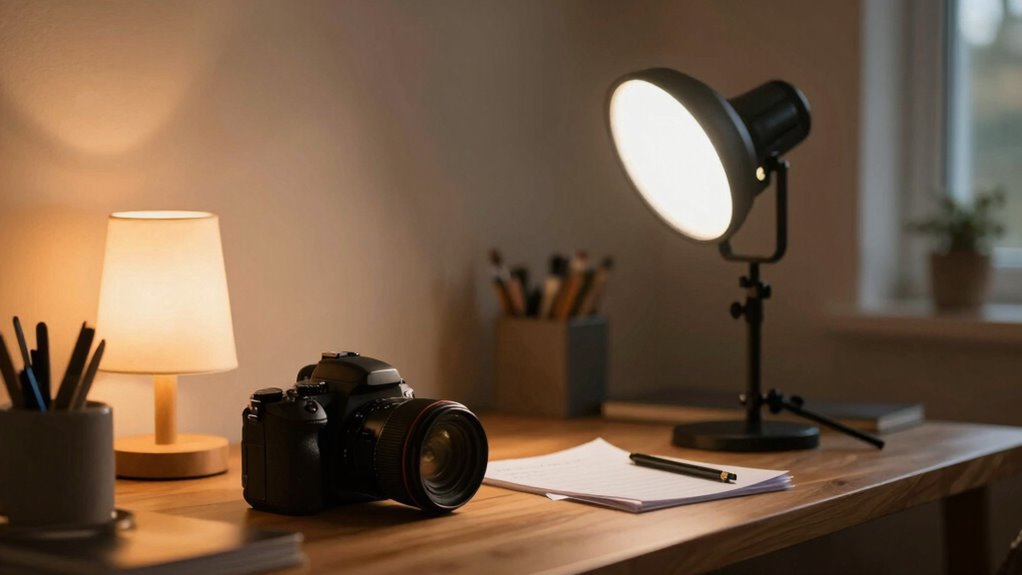

To start, understand that proper lighting instantly boosts your mood and focus. Use warm light (2700K–3000K) for relaxing spaces and cool light (4000K–6500K) for work or study areas. Position lights above and slightly in front of your workspace to reduce shadows and glare. Layer your lighting to create versatile environments, adjusting brightness and temperature based on activity and time of day. Keep exploring to discover how small changes can truly transform your space.

Turn your quiet moments into listening time
- Thousands of audiobooks, podcasts and originals
- Listen on your phone, tablet or Echo — also offline
- Cancel anytime
Key Takeaways
- Understand the impact of light color temperature: warm for relaxation, cool for alertness.
- Position lights properly above and in front of your workspace to minimize shadows and eye strain.
- Use layered lighting to create adaptable environments for different moods and activities.
- Adjust brightness and temperature throughout the day to support focus during work and relaxation in the evening.
- Experiment with small lighting changes to enhance mood, visibility, and productivity in your space.

Have you ever noticed how the right lighting can instantly change your mood or boost your focus? It’s more powerful than you might think. When you’re setting up your space, understanding how to use lighting effectively can make a big difference in how you feel and perform. One of the most important aspects to take into account is color temperature. This refers to the warmth or coolness of the light, measured in kelvins. Warm light, with lower kelvin ratings (around 2700K to 3000K), creates a cozy, relaxing environment, perfect for unwinding or socializing. On the other hand, cool light, with higher kelvin ratings (around 4000K to 6500K), mimics daylight and helps increase alertness, making it ideal for work or study sessions.
Lighting placement also plays a vital role in shaping your environment’s mood and focus. You want your lights to be positioned in a way that enhances visibility without causing glare or shadows that could distract or strain your eyes. For example, if you’re working at a desk, place your light source above and slightly in front of you to evenly illuminate your workspace. This prevents harsh shadows and reduces eye fatigue. If you’re creating a relaxed atmosphere in a living room, softer lighting placed around the edges, such as table lamps or wall sconces, can make the space feel inviting and calm. Avoid harsh overhead lighting that can feel clinical or draining. Additionally, understanding lighting layers can help you create a more adaptable environment that supports different activities and moods throughout the day. Incorporating layered lighting techniques can further enhance this effect and give you more control over your environment’s ambiance.
Proper lighting placement reduces glare, prevents shadows, and creates a welcoming, comfortable environment for work or relaxation.
Adjusting your lighting based on the activity and time of day can greatly impact your mood and productivity. During the day, brighter, cooler lights can energize you, while in the evening, warmer, dimmer lighting helps you wind down. By paying attention to how you position your lights and choosing the right color temperature, you can craft an environment that enhances your focus when needed and relaxes you when it’s time to unwind. Small changes in lighting placement and temperature can make a big difference in how you experience your space, helping you feel more at ease and more productive every day. Understanding lighting principles can help you develop a more intentional approach to designing your ideal environment.
adjustable warm and cool LED desk lamp
As an affiliate, we earn on qualifying purchases.
As an affiliate, we earn on qualifying purchases.
Frequently Asked Questions
How Does Natural Light Compare to Artificial Lighting for Mood?
Natural light generally creates a more uplifting and dynamic ambient glow compared to artificial lighting, which can sometimes feel harsh or sterile. You can achieve better mood control through light layering, blending natural light with artificial sources to enhance warmth and softness. During the day, let natural light flood your space, but in the evening, use layers of artificial light to maintain a cozy, inviting atmosphere.
What Color Temperatures Are Best for Focus Versus Relaxation?
Think of color temperatures as a mood dial—you’ll want cooler tones around 5000-6500K for focus, like a crisp morning, boosting alertness with blue-enriched light. For relaxation, warmer tones of 2700-3000K mimic sunset’s cozy glow. Using lighting layering, you can combine these temperatures to create zones that enhance color psychology, helping you switch seamlessly from productivity to unwinding. Adjust your lighting to match your mood and activity for ideal focus or calm.
Can Lighting Affect Mental Health Over Time?
Lighting can profoundly affect your mental health over time by influencing circadian rhythms and hormonal impact. Poor lighting habits, like excessive exposure to artificial light at night or inconsistent light schedules, can disrupt sleep patterns, leading to mood swings, anxiety, or depression. By maintaining proper lighting that aligns with natural cycles, you support your hormonal balance and mental well-being, fostering better mood, focus, and overall health.
What Are the Energy-Efficient Lighting Options for Mood?
You’ll find that smart controls and LED options are your ultimate allies for energy-efficient mood lighting. Smart controls let you fine-tune brightness and color, creating perfect atmospheres without wasting energy. LED options are astonishingly efficient, consuming a fraction of traditional bulbs while providing vibrant, customizable lighting. Together, they transform your space into a mood-enhancing sanctuary, all while saving power and reducing your carbon footprint—truly a game-changer for your mental well-being.
How Do I Balance Multiple Lighting Sources in a Space?
You balance multiple lighting sources by creating layered illumination within distinct lighting zones. Start with ambient light to set the overall mood, then add task lighting where you need focus, and incorporate accent lights for visual interest. Adjust each source’s brightness to prevent glare and shadows, ensuring seamless shifts between zones. This approach helps you achieve a comfortable, functional, and visually appealing space, tailored to your mood and needs.
layered lighting for living room
As an affiliate, we earn on qualifying purchases.
As an affiliate, we earn on qualifying purchases.
Conclusion
Remember, lighting isn’t just about visibility — it’s your secret weapon for setting mood and sharpening focus. As you journey through your lighting journey, think of it as your personal alchemist, turning dull days into vibrant moments. Don’t be afraid to experiment and find what works best for you — like a modern-day Florence Nightingale. With thoughtful lighting, you’ll craft an environment where inspiration and clarity flourish, making every day feel like a triumph.
dimmable task lighting for workspace
As an affiliate, we earn on qualifying purchases.
As an affiliate, we earn on qualifying purchases.
smart lighting for mood and focus
As an affiliate, we earn on qualifying purchases.
As an affiliate, we earn on qualifying purchases.
Halloween Picks
halloween
As an affiliate, we earn on qualifying purchases.