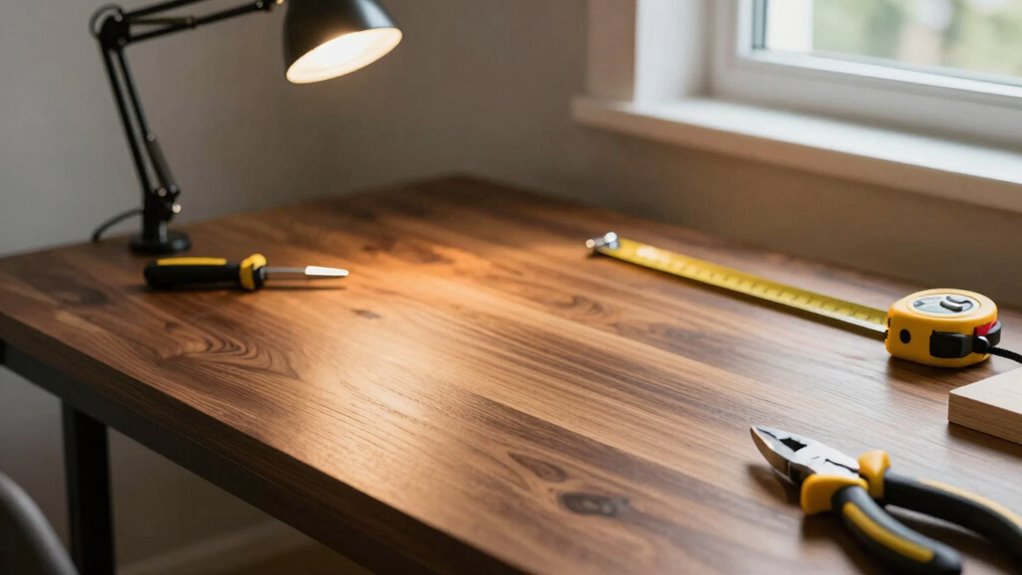
To optimize your workbench, set it at a height where your elbows form about a 90-degree angle and your forearms stay parallel to the ground, promoting comfort and reducing strain. For lighting, use adjustable, high-quality LED fixtures placed overhead or behind to prevent shadows and glare. Make certain of even illumination across the workspace for better visibility and accuracy. Fine-tuning these elements can boost your productivity and comfort; keep going to discover more helpful tips.
Listen free for 30 days with Audible
Thousands of audiobooks and originals — cancel anytime.
As an affiliate, we earn on qualifying purchases.
Key Takeaways
- Set the workbench height so your elbows form about a 90-degree angle for ergonomic comfort.
- Use adjustable, high-quality LED lighting to ensure even illumination and reduce eye strain.
- Position lights overhead or behind to minimize shadows and glare on the workspace.
- Incorporate diffuse lighting options for a softer, more comfortable environment during detailed tasks.
- Regularly evaluate and adjust lighting and workbench height to maintain an ergonomic and well-lit workspace.
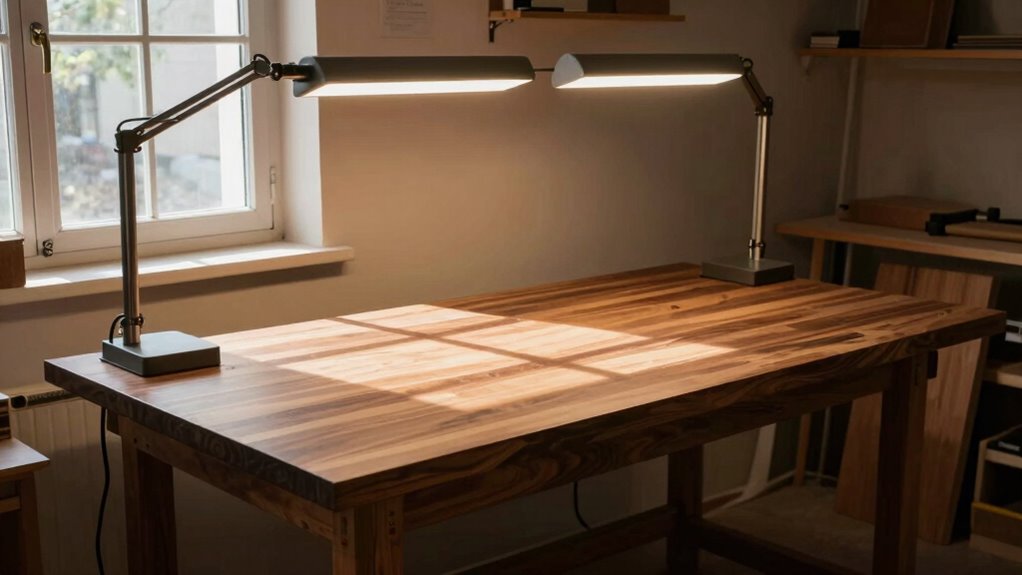
Choosing the right workbench height and proper lighting can make all the difference in your workspace. When your workbench is at an optimal height, you’re more likely to maintain an ergonomic posture, which helps reduce fatigue and prevent strain injuries. If the surface is too high, you might find yourself hunching over, putting unnecessary stress on your back and shoulders. Conversely, if it’s too low, you’ll be forced into awkward positions that can lead to discomfort over time. The goal is to have your elbows at roughly a 90-degree angle when you’re working, with your forearms parallel to the ground. Adjusting your workbench to match your height ensures that you stay comfortable and productive for longer periods.
Ambient illumination plays a crucial role in creating an efficient and safe workspace. Proper lighting doesn’t just help you see your work clearly; it also reduces eye strain and minimizes mistakes. You should aim for consistent ambient illumination that evenly lights the entire work area without creating harsh shadows or glare. Natural light is ideal, but if that’s limited, use high-quality LED fixtures or diffuse lighting to brighten your space. Position lights overhead or behind you to avoid casting shadows on your work surfaces, and consider adjustable fixtures so you can direct light exactly where you need it. Good ambient illumination enhances focus and precision, especially when working on intricate or detailed tasks. Additionally, understanding the importance of ergonomic design can help you further optimize your workspace for comfort and efficiency. Regularly checking your lighting setup can prevent issues like glare and uneven illumination that might cause fatigue or errors. Incorporating adjustable lighting options allows you to adapt your workspace to different tasks and lighting conditions, further improving your overall comfort. Being mindful of lighting quality can also significantly impact your ability to work comfortably and accurately over extended periods. It’s also beneficial to consider lighting placement to ensure that all parts of your workspace are evenly illuminated without creating distracting shadows.
As an affiliate, we earn on qualifying purchases.
Frequently Asked Questions
How Does Workbench Height Affect Ergonomic Comfort?
Your workbench height directly impacts your ergonomic comfort by influencing posture alignment and muscle strain. If it’s too high or low, you’ll strain your muscles and develop poor posture, leading to fatigue or injury. Ideally, the work surface should be at elbow level when you’re standing comfortably. Proper height helps you maintain a neutral posture, reducing muscle strain and improving efficiency during your tasks.
What Are the Best Lighting Types for Detailed Work?
For detailed work, you should use LED lighting because it provides bright, focused illumination without flickering or heat. Task illumination is ideal, as it directs light exactly where you need it, reducing eye strain and shadows. Position your LED lights above or beside your work area to guarantee consistent, clear visibility. This setup helps you see fine details clearly, making your work more precise and comfortable.
How Can Adjustable Workbenches Improve Workflow?
Ironically, adjustable workbenches seem to have a knack for making your life more complicated—until you realize how they streamline your workflow. By customizing height and position, you enhance workbench organization and tool accessibility, reducing clutter and unnecessary steps. This flexibility means you can switch tasks effortlessly, stay comfortable, and find your tools faster. Ultimately, they turn what feels like chaos into a well-organized, efficient workspace, boosting productivity and satisfaction.
What Safety Considerations Are Linked to Lighting Placement?
You should make sure that ambient illumination is well-placed to minimize shadows and glare, which can cause safety hazards. Proper lighting placement reduces eye strain and helps you see clearly, preventing accidents. Avoid harsh or uneven lighting that could create dangerous reflections or obscure hazards. By positioning lights thoughtfully, you enhance visibility and safety, making your workspace safer and more efficient. Remember, good lighting is key to avoiding safety hazards while working.
Are There Recommended Workbench Heights for Different Tasks?
Think of your workbench as the stage for your craft—its height sets the tone. For detailed work or precision tasks, keep the work surface around elbow height to promote good ergonomics and reduce strain. If you’re doing heavy-duty projects, a slightly lower height can help with leverage. Always consider tool accessibility; a comfortable height guarantees you can reach everything without unnecessary stretching or bending, making your work safer and more efficient.
As an affiliate, we earn on qualifying purchases.
Conclusion
Getting your workbench height just right and choosing the right lighting can make your projects smoother and more enjoyable. When you find that sweet spot, you’ll feel like you’re working in a well-lit, comfortable oasis instead of a cramped, shadowy cave. Remember, a little setup now can save you a lot of headaches later. So, take the time to tweak your space—you’ll thank yourself every time you pick up your tools.
As an affiliate, we earn on qualifying purchases.
As an affiliate, we earn on qualifying purchases.
Fall Picks
fall essentials
As an affiliate, we earn on qualifying purchases.