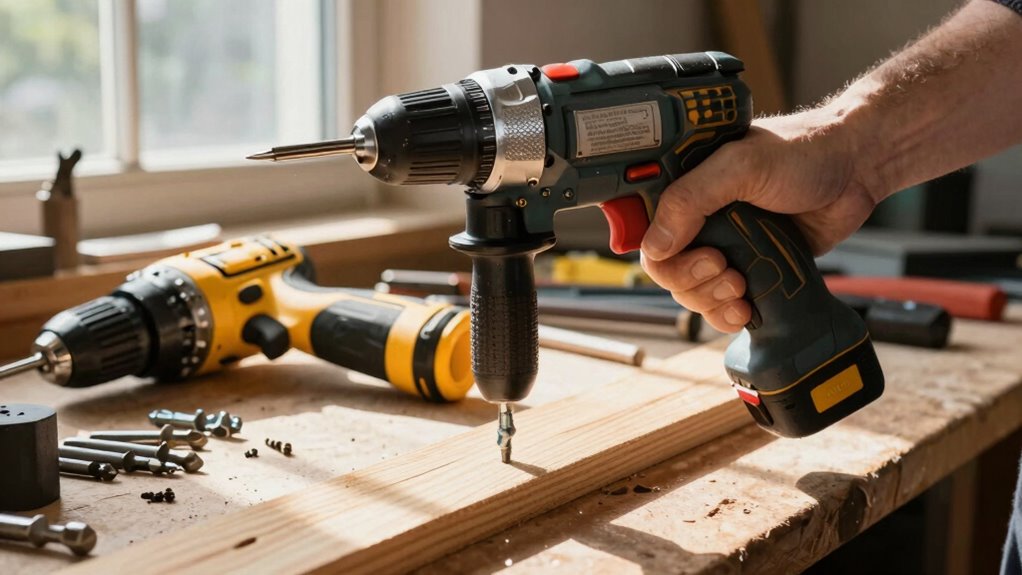
If you’re tackling dense materials like hardwood or working on repetitive fastening tasks, an impact driver is your best choice because of its high torque and quick screw-driving ability. For versatile projects that involve drilling holes in drywall, metal, or plastic, a drill offers adjustable speed and a clutch for precision. Understanding these differences helps you pick the right tool for each job—stick around to discover more essential tips for making your projects easier.
Listen free for 30 days with Audible
Thousands of audiobooks and originals — cancel anytime.
As an affiliate, we earn on qualifying purchases.
Key Takeaways
- Impact drivers are best for driving long screws into dense materials quickly and efficiently.
- Drills excel at drilling holes in various materials like drywall, metal, and plastic.
- Use impact drivers for repetitive fastening tasks to reduce fatigue and increase speed.
- Choose drills for projects requiring both drilling and driving with adjustable speed and clutch.
- Longer battery life and ergonomic design enhance workflow for extended or detailed projects.

When choosing between an impact driver and a drill, understanding their differences can help you make the right tool for your projects. One key factor to weigh is battery life. Impact drivers tend to have shorter battery life compared to drills because they deliver high torque in quick bursts, which drains the battery faster. If you’re working on a large project or need to use your tool for extended periods, a drill might be more practical since it generally consumes less power during continuous use. However, if you’re tackling a series of tasks that involve driving numerous screws or bolts, having a spare battery for your impact driver can keep you moving without frequent interruptions.
Impact drivers have shorter battery life due to high torque bursts, making spares essential for prolonged projects.
Tool ergonomics also play a significant role in your decision. Impact drivers are usually smaller, lighter, and designed for one-handed use, making them easier to maneuver into tight spaces. Their compact size reduces fatigue, especially when working overhead or in confined areas. Drills, on the other hand, are often bulkier and have a more substantial grip, which can offer better control for precision tasks like drilling holes or mixing materials. If your projects require delicate or detailed work, the ergonomic design of a drill might give you better comfort and stability. Conversely, the lightweight, ergonomic shape of an impact driver can help you work longer without strain, especially for repetitive screw-driving tasks.
In real-world use cases, impact drivers excel when you need to insert long screws into dense materials like hardwood or framing lumber. Their high torque allows you to drive fasteners quickly without stripping the screw heads. On the other hand, drills are more versatile; you can switch out bits to drill holes in various materials such as drywall, metal, or plastic. For tasks that involve both drilling and fastening, a drill’s adjustable clutch and variable speed control provide greater precision and control, reducing the risk of overdriving or damaging your workpiece. Additionally, understanding battery capacity and how it impacts your workflow can help you choose the right tool for sustained work sessions. It’s also important to consider power source options, as cordless tools offer mobility but depend on battery life, while corded models provide continuous power for longer sessions. Moreover, familiarizing yourself with safety precautions when handling these power tools can prevent accidents and ensure a safer working environment.
To optimize your workflow, being aware of tool maintenance practices can extend the lifespan of your tools and ensure consistent performance. Ultimately, your choice depends on your specific needs. If you frequently work with fasteners and need a lightweight, ergonomic tool for repetitive tasks, an impact driver is your best bet. But if your projects involve a mix of drilling and driving, especially in different materials, a drill’s versatility and longer battery life might serve you better. Understanding these real use cases helps you select the right tool, so you can work efficiently and comfortably on any project.
impact driver for dense materials
As an affiliate, we earn on qualifying purchases.
As an affiliate, we earn on qualifying purchases.
Frequently Asked Questions
Can I Convert a Drill Into an Impact Driver?
You can’t directly convert a drill into an impact driver because of their design differences and power variations. While cordless versatility allows you to switch between tools easily, impact drivers are built for high torque and quick, repetitive driving, unlike drills. If you need impact driver capabilities, it’s best to buy one, as attempting modifications might damage your drill and won’t replicate the power differences effectively.
Which Tool Is Better for Woodworking Projects?
For woodworking projects, an impact driver or a drill? It depends on what you need. Impact drivers excel with their power efficiency and compact design, making them perfect for driving long screws or bolts without fatigue. Drills, with better tool ergonomics, offer versatility for drilling holes of various sizes. If your project demands heavy-duty fastening, go with an impact driver. For drilling tasks, a drill is your best bet.
Are Impact Drivers Suitable for Metalworking?
Impact drivers aren’t ideal for metalworking due to their high impact torque, which can cause metal deformation or safety issues. They’re better suited for driving screws and bolts. For metalworking, you should use tools designed for precision and safety, like a drill with metal-specific bits. Always prioritize metalworking safety by choosing the right tool, and avoid impact drivers to prevent damage and guarantee safe, effective work.
How Do Battery Life Compare Between Impact Drivers and Drills?
You’ll find that impact drivers often boast impressive battery efficiency and power longevity, making them reliable for longer tasks. Drills, while versatile, sometimes need more frequent recharging, especially during heavy-duty work. This difference means you can count on impact drivers to keep up with your demanding projects without constant stops. So, if battery life matters most, impact drivers might just be your best companion for extended use.
Can Impact Drivers Handle Large Screws or Bolts?
Yes, impact drivers can handle large screws or bolts, especially if they match the tool’s torque capacity. They excel with bigger screw sizes because of their high torque output, making drive tasks easier. However, for very large bolts, you might need a wrench or a dedicated tool. Always check the torque capacity to confirm the impact driver can comfortably handle the size and strength of the screws or bolts you’re working with.
cordless drill with adjustable speed
As an affiliate, we earn on qualifying purchases.
As an affiliate, we earn on qualifying purchases.
Conclusion
Choosing between an impact driver and a drill depends on your project needs. Imagine wielding a tool so powerful, it could move mountains—your decision should match that level of strength. If you need raw torque for stubborn screws, go impact. For versatility and precision, a drill is your trusty sidekick. Mastering both guarantees you’re fully prepared to conquer any task, transforming your workspace into a battlefield you control with the ease of a superhero wielding unstoppable power.
long screw driving impact driver
As an affiliate, we earn on qualifying purchases.
As an affiliate, we earn on qualifying purchases.
As an affiliate, we earn on qualifying purchases.
College move-in / dorm season Picks
dorm essentials
As an affiliate, we earn on qualifying purchases.