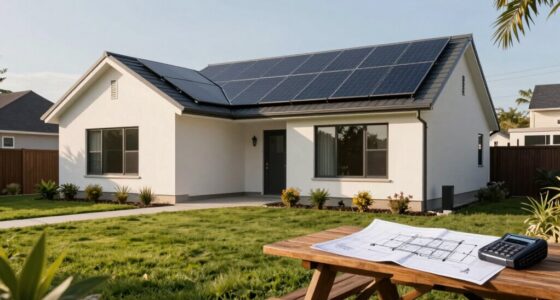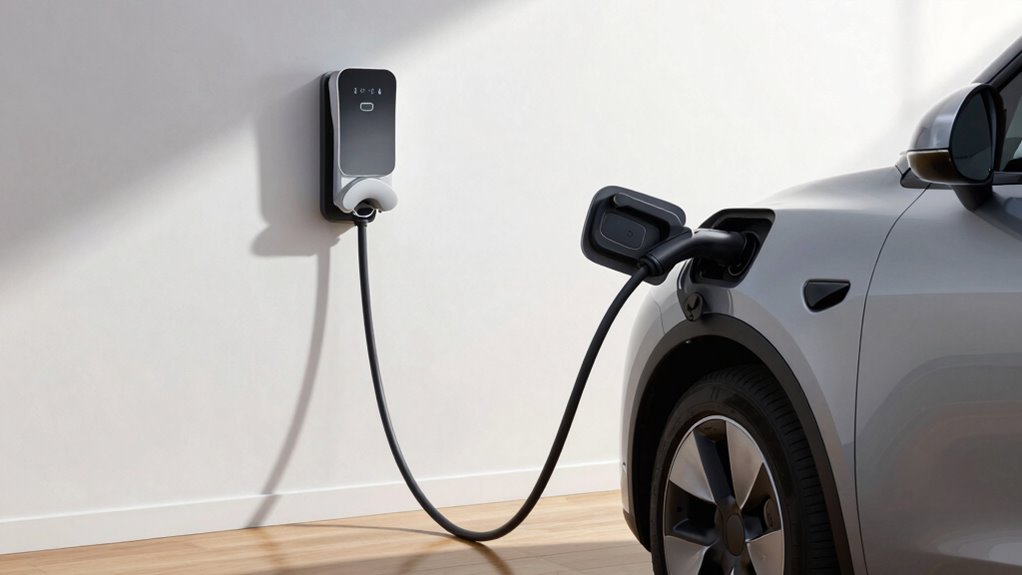

Integrating your home’s electrical system with EV charging allows you to conveniently charge your vehicle safely and efficiently. You can choose from Level 1 or Level 2 chargers, depending on your driving habits and home setup, and upgrade your electrical panel as needed. Smart charging tech helps automate and optimize energy use, especially if combined with home energy systems or solar. Understanding cost incentives and safety practices guarantees a seamless shift. Keep exploring to learn how to make this integration work best for you.

Turn your quiet moments into listening time
- Thousands of audiobooks, podcasts and originals
- Listen on your phone, tablet or Echo — also offline
- Cancel anytime
Key Takeaways
- Conduct a thorough electrical assessment to determine home capacity and identify necessary upgrades for safe EV charger installation.
- Choose compatible Level 2 chargers with appropriate power levels, ensuring they match your vehicle’s requirements and home electrical system.
- Install dedicated 240V outlets by licensed electricians, preferably near parking areas, for reliable and efficient charging.
- Integrate smart charging technologies to schedule, monitor, and optimize energy usage, including automation with home energy systems.
- Leverage available incentives and rebates to offset installation costs while following safety practices like proper grounding and equipment inspection.
As an affiliate, we earn on qualifying purchases.
Understanding Home EV Charging Options
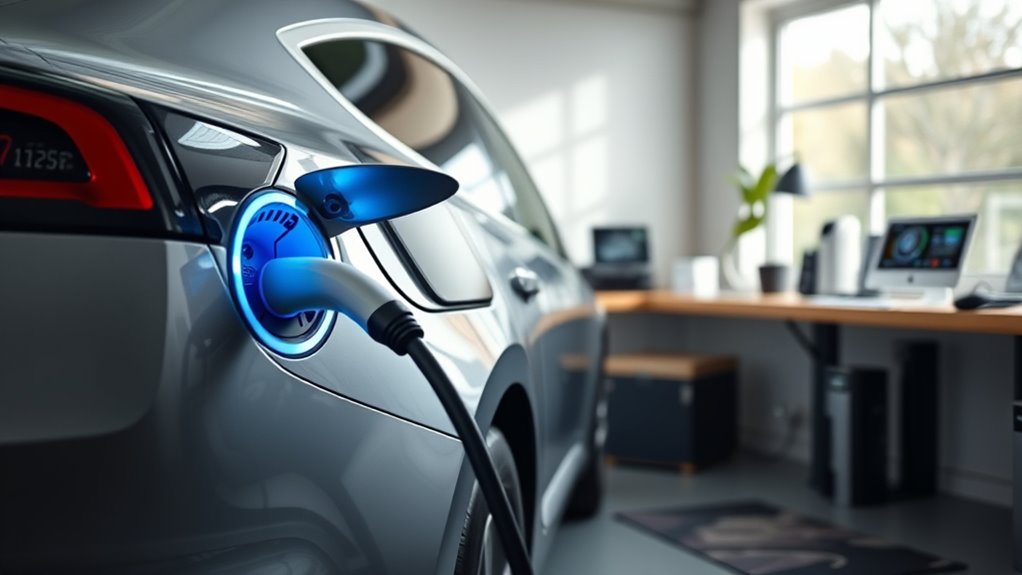
When it comes to charging your electric vehicle at home, understanding your options is essential. You can choose between Level 1, Level 2, and fast charging stations. Level 1 chargers use a standard household outlet, making them easy but slow, adding about 4-5 miles of range per hour. Level 2 chargers require a dedicated 240V outlet, providing faster charging—around 25 miles of range per hour. Fast chargers, while more common at public stations, are usually not installed at home due to their high power requirements and cost. Your choice depends on your daily driving habits, budget, and available electrical infrastructure. Additionally, understanding home electrical capacity can help you optimize your home’s electrical setup for EV charging. Being aware of power delivery rates ensures you select a charger that matches your home’s capabilities and maximizes charging efficiency. Considering your charging needs can help determine the most suitable charging station for your lifestyle. Knowing your existing electrical system can also guide you in making safe and effective upgrades if necessary.
As an affiliate, we earn on qualifying purchases.
Assessing Your Electrical System and Power Needs
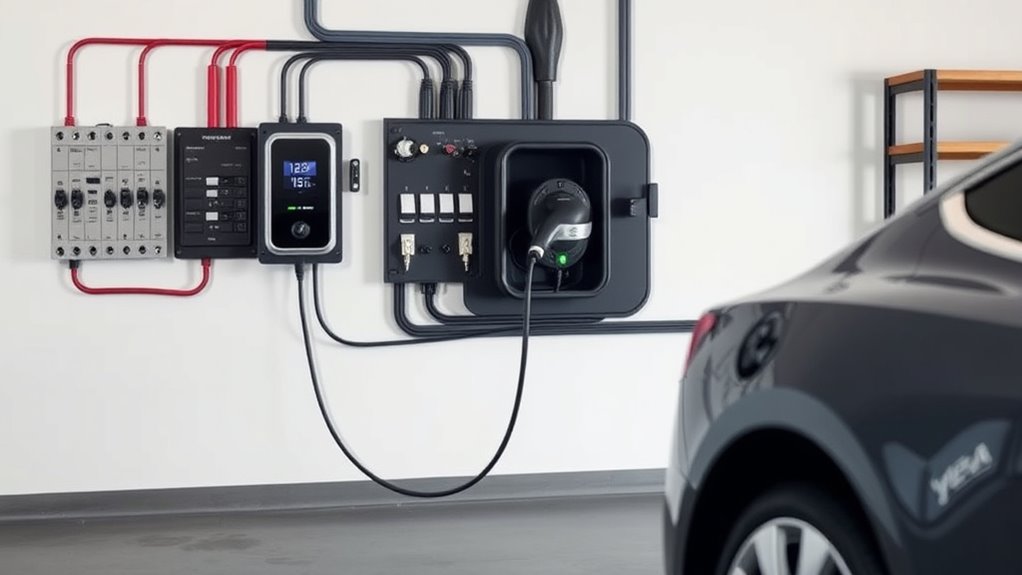
Before selecting a home charging station, it’s important to evaluate your electrical system’s capacity. First, check your main breaker’s amperage to see how much load it can handle. Second, review your current electrical panel’s design to identify available slots for additional circuits. Third, consider your home’s existing electrical loads, like appliances and HVAC systems, to understand your baseline power use. Fourth, determine if your wiring can support higher amperage circuits without upgrades. Fifth, understanding the capacity of your electrical system is essential for safe and efficient EV charging, especially since sound design skills are increasingly integrated into multimedia projects. This assessment helps you avoid overloading your system and guarantees safe, efficient charging. If your system is limited, you may need to upgrade your panel or wiring before installing a charger. Proper evaluation guarantees your home’s electrical infrastructure can support your EV charging needs reliably. Additionally, knowing your system’s capacity helps prevent overcurrent conditions that could lead to safety hazards or equipment damage. Being aware of your electrical system’s limitations ensures you can plan for future upgrades or additional electrical demands. Conducting a thorough assessment can also reveal opportunities for solar energy integration to offset some charging costs and promote sustainable energy use.
As an affiliate, we earn on qualifying purchases.
Choosing the Right Charging Equipment
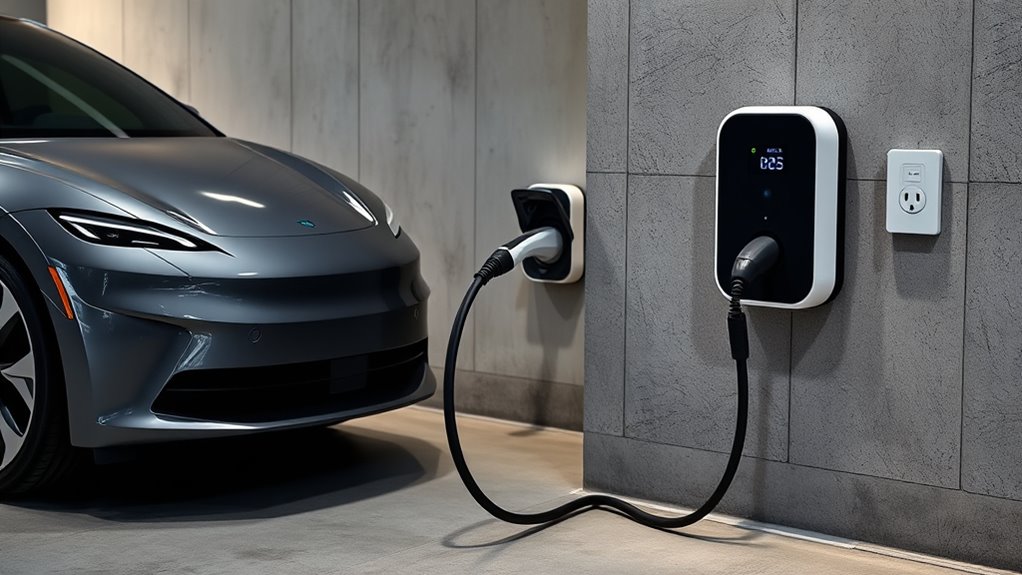
Choosing the right charging equipment depends on your vehicle’s compatibility, your power needs, and your home’s electrical setup. You’ll want to take into account different charger types and their power levels to find the best fit. Also, check what installation requirements are involved to ensure a safe and efficient setup. Understanding power management and proper setup can help prevent electrical issues and net worth optimization, ultimately making your charging process more reliable and cost-effective. Properly selecting the right equipment can also contribute to holistic health benefits by ensuring your EV charging is integrated seamlessly into your home environment. Additionally, considering backup power options can ensure your EV remains charged during outages or emergencies. Integrating smart home automation can further enhance your charging system by enabling remote monitoring and scheduling.
Compatible Charger Types
Selecting the right charger type is essential for efficient and safe home EV charging. Your choice depends on your vehicle’s compatibility and your daily driving needs. Here are four common charger types:
- Level 1 Chargers: Use a standard household outlet, ideal for overnight charging with slow but steady power.
- Level 2 Chargers: Require a dedicated 240V outlet, offering faster charging for regular use. Ensuring proper electrical wiring is crucial for safety and performance.
- Portable Chargers: Flexible options that can connect to various outlets, great for travel or emergency use.
- Wall-Mounted Chargers: Fixed installations providing consistent, faster charging, suitable for long-term home setup.
Consider your vehicle’s specifications and your household electrical capacity to select the best fit. Proper matching guarantees safe, efficient, and convenient home charging. Additionally, understanding European cloud solutions can help optimize your home energy management systems for EV charging.
Power Level Options
How do you determine the right power level for your home EV charger? First, consider your daily driving habits and how quickly you want your vehicle charged. Level 1 chargers operate at 120 volts and are slower but suitable if you drive infrequently or have overnight charging time. Level 2 chargers run at 240 volts and can fully charge your vehicle faster, ideal for daily use. Think about your home’s electrical capacity and whether your circuit can handle higher power levels without upgrades. If you need quick charging, a higher amperage Level 2 unit is best. For moderate or occasional use, a lower power Level 2 charger may suffice. Matching the power level to your driving needs and home setup ensures efficient, safe charging. Connected equipment can enhance your charging experience by providing real-time monitoring and automation features. Additionally, understanding auditory processing can help optimize your setup by ensuring your home environment minimizes noise disruptions that could affect your concentration during installation or use. Properly assessing your electrical capacity ensures safe and reliable charging without overloading your system, especially when integrating smart home technology for seamless operation.
Installation Requirements
To guarantee safe and efficient charging, you need to understand the installation requirements for your home EV charger. First, confirm your electrical system can handle the charger’s power demand. Second, check if you need to upgrade your circuit breaker or wiring. Third, verify that your location has proper grounding and weather protection if installing outdoors. Fourth, consider professional installation to meet local codes and safety standards. Proper placement is essential—avoid areas prone to moisture or extreme temperatures. Additionally, ensure your home’s electrical panel has enough capacity for the new circuit. Regularly review your electrical system capacity to prevent overloads and ensure long-term safety. It’s also important to understand the power requirements of different EV chargers to select the right equipment for your home. Understanding the best rated vacuum cleaners can also help you maintain your home environment while setting up your charging station. Conducting a comprehensive electrical assessment can help identify any potential issues before installation. By addressing these factors, you’ll create a safe, reliable charging setup tailored to your home’s infrastructure.
home electrical panel upgrade for EV
As an affiliate, we earn on qualifying purchases.
As an affiliate, we earn on qualifying purchases.
Installing a Dedicated Home Charging Station
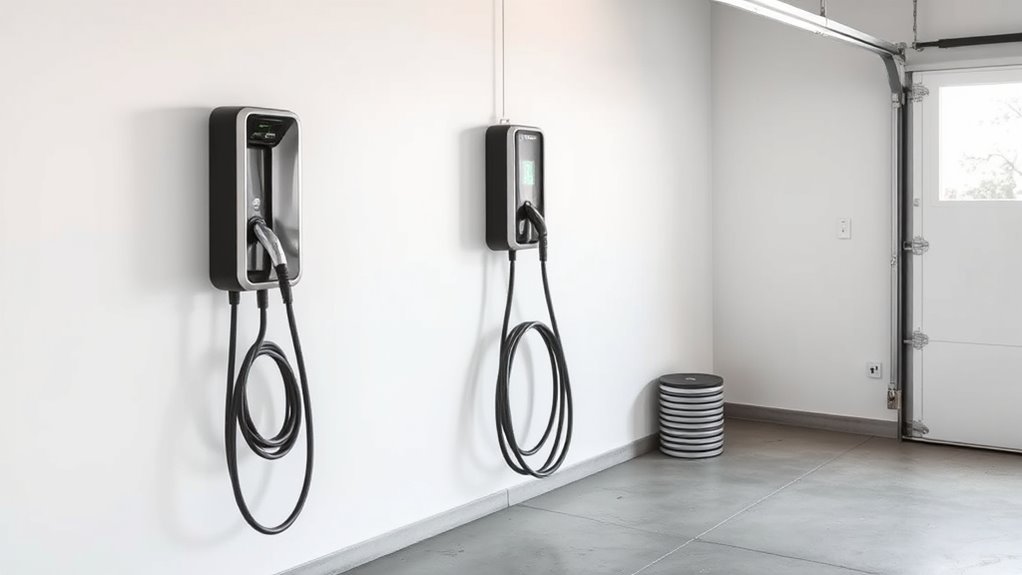
Installing a dedicated home charging station can make charging your electric vehicle more convenient and efficient. It guarantees a reliable power source tailored to your vehicle’s needs, reducing the time spent waiting at public chargers. To start, choose a location close to your parking spot that’s free from obstructions and allows easy access. You’ll need a proper electrical circuit, typically a dedicated 240-volt outlet, installed by a licensed electrician to meet safety standards. Consider the charging station’s power capacity to match your vehicle’s charging rate. Confirm your home’s electrical system can support the additional load. Once installed, you can plug in your EV effortlessly, saving time and gaining peace of mind knowing your vehicle is always ready for your next trip.
Smart Charging Technologies and Features

Smart charging technologies enhance the convenience and efficiency of your home charging experience by allowing you to control and optimize energy use. These features enable you to schedule charging times, reducing costs and managing grid demand. You can also monitor real-time energy consumption to identify patterns and optimize usage. Additionally, smart chargers often integrate with home energy systems, providing automation and remote control via smartphone apps. Here are some key features:
- Scheduled charging – Set charging times during off-peak hours for cost savings.
- Real-time monitoring – Track energy use and charging status remotely.
- Load management – Adjust charging based on household energy demand.
- Integration with smart home systems – Automate charging with other connected devices for seamless operation.
These technologies make home EV charging more intelligent and adaptable to your lifestyle.
Benefits of Integrating EV Charging With Home Energy Systems
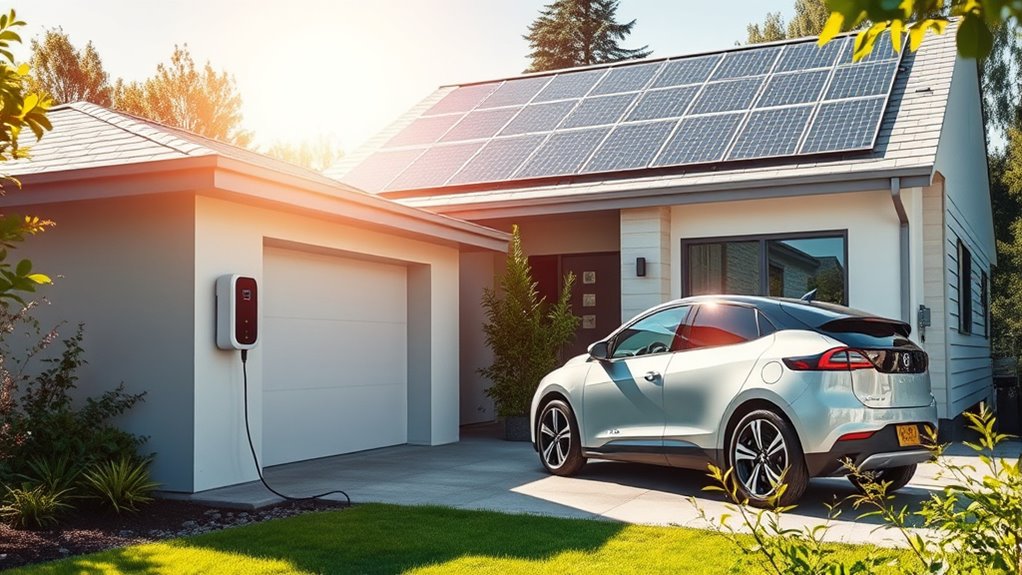
Integrating your EV charger with your home energy system offers significant benefits by creating a more coordinated and efficient energy management setup. You can optimize when your EV charges, taking advantage of times when your solar panels produce the most power or electricity rates are lowest. This reduces your overall energy costs and minimizes reliance on the grid. Additionally, integration enhances your home’s energy reliability, allowing smart systems to balance energy loads and prevent overloads. It also enables better use of renewable energy, lowering your carbon footprint. With coordinated control, your home can store excess energy in batteries or shift usage to off-peak hours automatically. Overall, this integration simplifies energy management, saves money, and promotes sustainable living.
Cost Considerations and Incentive Programs
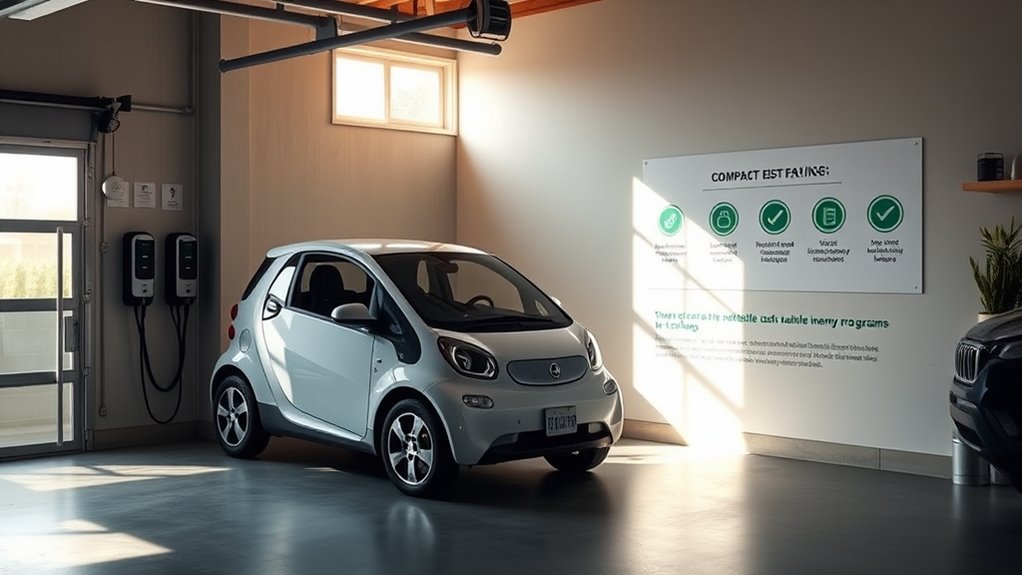
Considering the costs involved in adding an EV charger to your home, it’s important to weigh both upfront expenses and long-term savings. The initial investment includes purchase price, installation fees, permits, and potential upgrades to your electrical system. To offset these costs, various incentive programs are available:
Weigh upfront costs and long-term savings with available incentives for home EV chargers.
- Federal tax credits that can cover a percentage of installation costs.
- State or local rebates offering cash incentives.
- Utility company rebates for installing energy-efficient chargers.
- Reduced electricity rates for off-peak charging during certain hours.
Researching these programs can considerably lower your overall expense. Keep in mind that some incentives may have eligibility requirements or application deadlines, so act promptly to maximize your savings.
Tips for Safe and Efficient Charging Practices
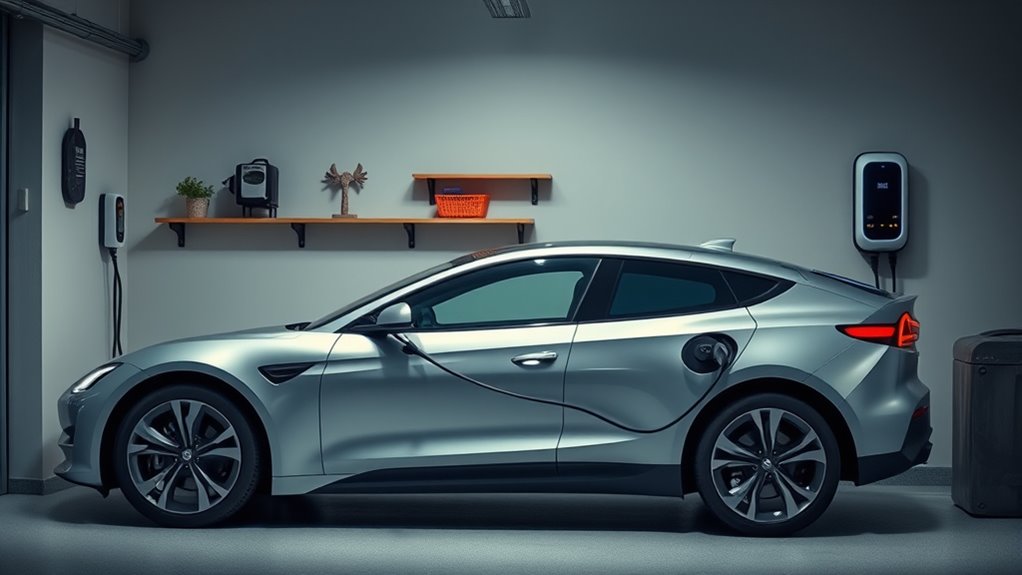
To make certain your EV charging is both safe and efficient, start by choosing a dedicated, properly grounded outlet or charger that meets the manufacturer’s specifications. Always inspect your charging equipment regularly for damage or wear, and avoid using extension cords, which can pose fire risks. Set your charger to the recommended charging level to prevent overloading your electrical system. Keep the charging area clear of clutter and moisture to reduce hazards. Monitor your vehicle during charging sessions, especially initially, to catch any issues early. If you notice any unusual sounds, smells, or interruptions, disconnect the charger and consult a professional. Properly maintaining your charging setup guarantees safety, prolongs equipment life, and maximizes charging efficiency.
Future Trends in Residential EV Charging
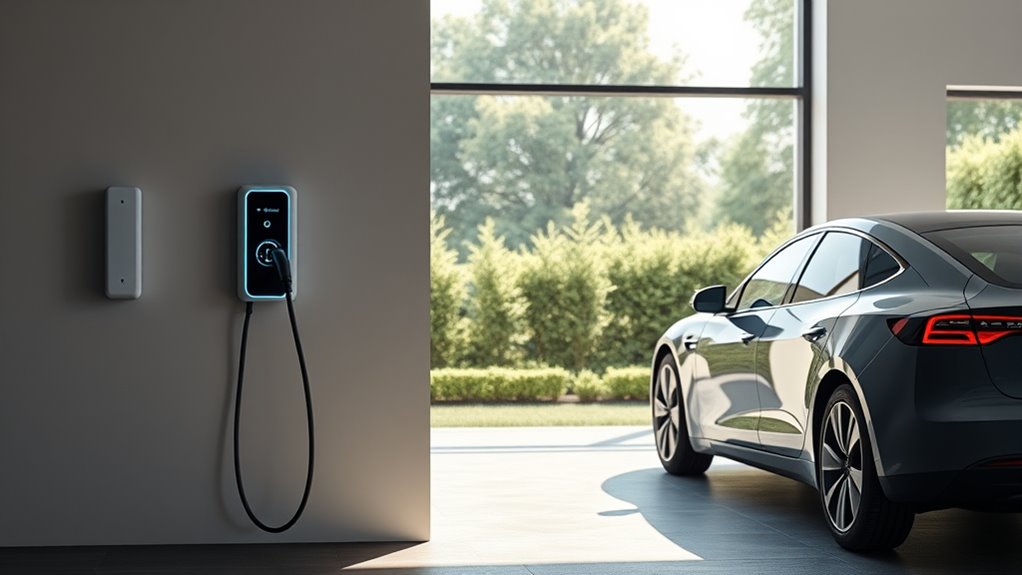
As technology advances, residential EV charging is poised to become smarter and more integrated into everyday life. You’ll see systems that communicate seamlessly with your home’s energy grid, optimizing charging times and reducing costs. Future trends include:
- Smart chargers that adapt to your schedule and energy rates
- Integration with home automation systems for effortless control
- Vehicle-to-grid (V2G) technology, allowing your car to supply power back to your home or grid
- Enhanced safety features with real-time monitoring and automated shutoff
These innovations will make charging more efficient, reliable, and eco-friendly, giving you greater control and convenience in managing your EV’s energy needs. Expect a future where charging becomes an intuitive part of your smart home ecosystem.
Frequently Asked Questions
How Does Home EV Charging Affect Overall Household Energy Consumption?
Home EV charging increases your household energy consumption, especially if you charge frequently or during peak hours. It can raise your electricity bills but also offers opportunities to optimize usage through smart chargers or time-of-use plans. By managing when and how you charge, you can diminish impact on your overall energy use, potentially saving money and reducing your carbon footprint. Proper planning ensures your EV charging fits seamlessly into your household energy needs.
Can Existing Home Wiring Support Faster EV Charging?
Your current wiring acts like a sturdy bridge, but faster EV charging demands a wider span. If your home’s wiring is outdated or undersized, it might struggle under the increased load. You’ll need to consult an electrician to assess whether upgrading your electrical panel or wiring is necessary. Think of it as reinforcing your bridge to support a faster, more efficient journey—ensuring safe, speedy charging without overloading your house.
What Are the Environmental Benefits of Integrating EV Charging With Home Energy Systems?
By integrating EV charging with your home energy system, you reduce reliance on fossil fuels, cutting greenhouse gas emissions. It allows you to use renewable energy sources like solar power, making your charging cleaner and more sustainable. You also optimize energy use, decreasing waste and lowering your carbon footprint. This integration promotes a greener environment and helps combat climate change, all while saving you money on energy costs.
How Do Different Smart Charging Features Impact Electricity Bills?
Smart charging features markedly slash your electricity bills by smartly scheduling charges during off-peak hours, saving you money. Features like load balancing prevent overloads, boosting efficiency. Real-time monitoring keeps you aware of usage, helping you adjust habits. Automated settings adapt to your routine, ensuring you’re never overcharged. By leveraging these smart systems, you maximize savings, minimize energy waste, and make managing your EV charging both economical and effortless.
Are There Any Safety Risks Associated With Home EV Charging Integration?
Yes, there are safety risks if you don’t properly install or maintain your home EV charging system. Overloading circuits can cause electrical fires or damage, so it’s essential to use a dedicated circuit and guarantee professional installation. Regular inspections and adhering to safety standards help prevent risks. Always follow manufacturer instructions and consult a licensed electrician to minimize hazards and ensure your charging setup remains safe and reliable.
Conclusion
Now that you know the essentials of integrating EV charging at home, aren’t you excited to make your driveway more efficient? With the right equipment, smart tech, and safety practices, you can enjoy convenient, cost-effective charging every day. Embracing these options not only benefits your wallet but also helps reduce your carbon footprint. So, why wait? Isn’t it time you took control of your home charging experience and powered your future sustainably?
Fall Picks
fall essentials
As an affiliate, we earn on qualifying purchases.