
A dedicated home theater offers you an immersive experience with optimized sound, picture quality, and a design focused solely on entertainment, often requiring higher investment. In contrast, a living room setup prioritizes versatility, blending daily living with casual viewing and adapting to your changing needs. If you’re curious how space, budget, and personal style influence each option, you’ll find helpful details that can guide your choice and help create the perfect entertainment space for you.
Key Takeaways
- Dedicated theaters prioritize optimal acoustics, lighting, and equipment placement for immersive movie and gaming experiences.
- Living room setups are versatile, balancing everyday comfort, aesthetics, and entertainment with flexible furniture arrangements.
- Dedicated rooms often feature soundproofing and custom seating, while living rooms focus on multi-purpose furniture and open layouts.
- Equipment placement in dedicated theaters allows precise positioning, whereas living rooms face space and structural limitations.
- Personalization and design are more customizable in dedicated rooms, while living rooms emphasize seamless integration with home decor.

LEVOIT Air Purifier for Home Large Room Up to 1073Ft² with Air Quality Monitor, AHAM VERIFIDE, Smart WiFi, Washable Pre-Filter, HEPA Sleep Mode for Pets, Allergies, Dust, Pollen, Vital 100S-P, White
𝐖𝐇𝐘 𝐂𝐇𝐎𝐎𝐒𝐄 𝐀𝐇𝐀𝐌 𝐕𝐄𝐑𝐈𝐅𝐈𝐃𝐄 𝐀𝐈𝐑 𝐏𝐔𝐑𝐈𝐅𝐈𝐄𝐑𝐒: AHAM (Association of Home Appliance Manufacturers) is an ANSI-accredited organization that sets...
As an affiliate, we earn on qualifying purchases.
Defining the Core Differences Between Dedicated and Living Room Setups
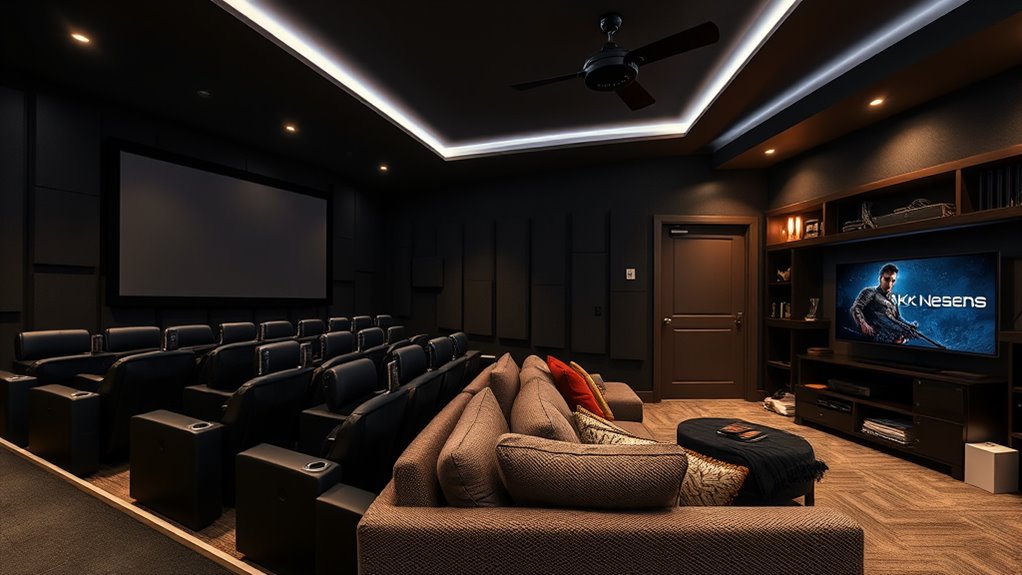
Understanding the core differences between dedicated and living room home theater setups helps you choose the right option for your space and viewing habits. A dedicated theater room is specifically designed for ideal audio and visual experiences, often with soundproofing, custom seating, and specialized lighting. It’s a space solely for movies and gaming, where everything is tailored for quality. In contrast, a living room setup is more versatile and multifunctional. It combines your entertainment system with your daily living space, so it needs to balance aesthetics and comfort with tech. You won’t have the same level of sound isolation or customization, but you gain flexibility and convenience. Knowing these fundamental differences helps you decide which setup aligns best with your priorities and lifestyle. Additionally, understanding cybersecurity challenges related to home theater systems can ensure your devices remain protected from potential hacking threats. Incorporating secure network practices can further safeguard your entertainment environment from digital vulnerabilities. Furthermore, considering projector technology like contrast ratio and color accuracy can significantly influence your viewing experience in either setup. For example, selecting the right audio equipment can dramatically enhance sound quality, whether in a dedicated room or a multipurpose living space. Moreover, implementing proper network security measures is essential to protect connected devices and personal data across your entertainment system.

KNKA Air Purifier for Home Bedroom Large Room Up to 1,695 Ft² in 1 Hr, HEPA Air Cleaner with Washable Pre-Filter, AQI Display, ECO Mode, Sleep Mode, Pet Mode for Pets, Dust, Pollen, APH4000
𝐇𝐢𝐠𝐡 𝐂𝐀𝐃𝐑 𝐕𝐚𝐥𝐮𝐞: This air purifier provides reliable performance with a Smoke/Dust/PM2.5 CADR of 226 CFM (384 m³/h)...
As an affiliate, we earn on qualifying purchases.
Space and Layout Considerations for Each Option
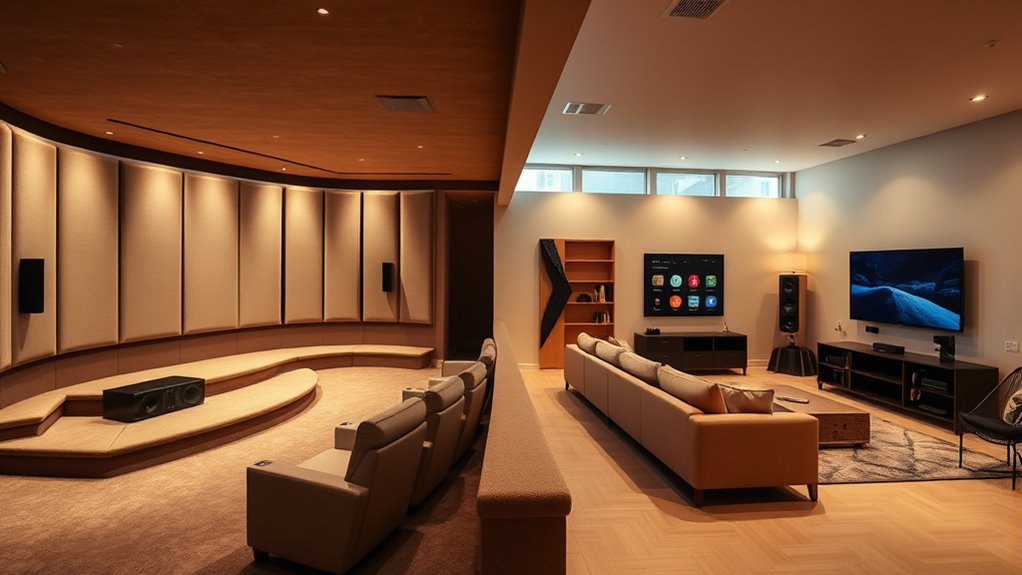
Your dedicated theater room allows you to optimize layout for sound, seating, and screen placement, creating an immersive experience. In contrast, your living room needs a flexible arrangement that balances daily use with entertainment needs. Considering these space and layout differences helps you choose the best setup for your lifestyle. Additionally, space optimization plays a crucial role in ensuring your setup meets your entertainment and practicality needs. Proper room design can enhance both comfort and functionality, making your space more enjoyable and adaptable. Incorporating Free Floating elements, such as modular furniture or movable acoustic panels, can further improve flexibility and acoustics in either type of space. Utilizing modern technology like automated lighting and smart speakers can also elevate your home theater experience regardless of the room type. Paying attention to room acoustics ensures sound quality is optimized for an immersive experience in either setting.
Dedicated Theater Room Layout
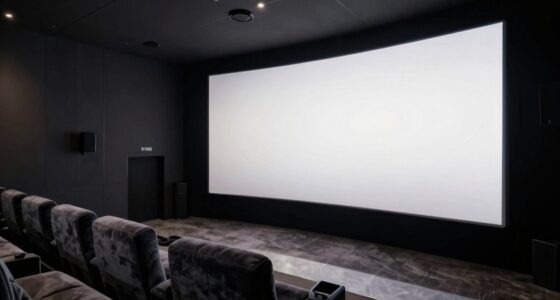
A dedicated theater room requires careful planning to maximize space and guarantee ideal viewing experiences. You should start by considering the room’s dimensions—aim for a rectangular layout to reduce distortion and ensure even sound distribution. Position the screen at eye level and at an optimal distance from seating to prevent strain. Arrange seating in a slight arc to promote good sightlines and immersive sound. Leave space behind seats for easy access and airflow. Incorporate acoustic treatments on walls and ceilings to improve sound quality. Plan for equipment placement, such as speakers and projectors, to minimize clutter and optimize sound clarity. Additionally, soundproofing techniques can further enhance the room’s acoustics and prevent noise disturbance to other areas. Proper room dimensions are crucial for achieving optimal sound and viewing experiences; understanding how to measure and utilize space effectively can make a significant difference. Using appropriate ventilation can help maintain comfortable temperatures during extended viewing sessions. Finally, ensure there’s adequate lighting control, with dimmable lights or blackout options, to enhance viewing comfort and picture quality. Utilizing advanced architectural solutions can further improve the room’s acoustics and aesthetics, creating a more immersive experience.
Living Room Versatility Arrangement
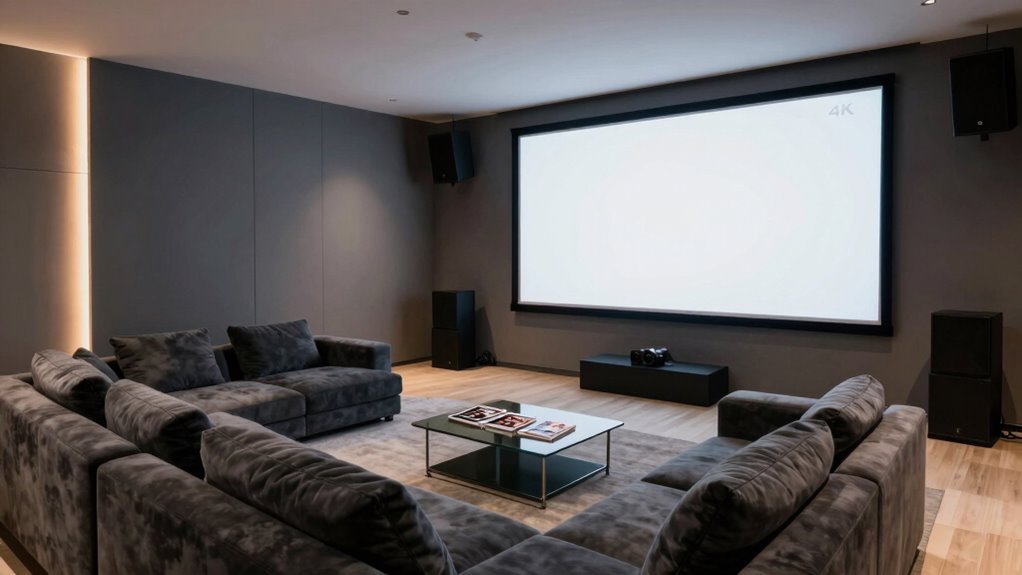
Living rooms offer flexible options for setting up a home theater, but choosing the right layout depends on your space and viewing preferences. You’ll need to consider the room’s size, shape, and existing furniture. For a versatile setup, opt for a layout that allows you to reposition furniture easily, such as modular seating or a flexible arrangement with multiple seating zones. Keep sightlines clear and avoid clutter that can obstruct views. If your space is limited, consider wall-mounted screens and compact furniture to maximize space. You may also want to incorporate multipurpose furniture, like ottomans with storage or fold-away tables. This way, your living room can serve as a functional space for daily activities and an ideal home theater experience when you want to watch movies. Incorporating space optimization techniques can further enhance the room’s functionality and comfort, especially when integrating at‑home tech devices for an enhanced viewing experience. Additionally, employing simple organization strategies can help maintain a clutter-free environment, making your living room more adaptable for various uses. Utilizing air quality solutions, such as air purifiers, can also improve the overall environment, especially when creating a cozy, healthy space for entertainment.

LEVOIT Air Purifiers for Home Large Room Up to 1875 Ft² with Washable Pre-Filter, AHAM VERIFIDE, Air Quality Monitor, HEPA Sleep Mode for Allergies, Pet Hair in Bedroom, Vital 200S-P, White
𝐖𝐇𝐘 𝐂𝐇𝐎𝐎𝐒𝐄 𝐀𝐇𝐀𝐌 𝐕𝐄𝐑𝐈𝐅𝐈𝐃𝐄 𝐏𝐑𝐎𝐃𝐔𝐂𝐓𝐒: AHAM (Association of Home Appliance Manufacturers) is an ANSI-accredited organization that sets strict...
As an affiliate, we earn on qualifying purchases.
Budget Implications and Cost Factors

While setting up a dedicated home theater often involves higher initial costs, it can still be a worthwhile investment depending on your budget and priorities. Building a separate room means expenses for construction, soundproofing, and specialized equipment. These costs add up quickly, but they can deliver a tailored experience and long-term value. In contrast, using your living room typically involves lower upfront costs since you leverage existing space and equipment. However, you’ll need to compromise on size and setup flexibility. Keep in mind that dedicated theaters might save money over time by reducing your need for frequent upgrades or repairs. Additionally, soundproofing is a key factor that can impact both costs and the quality of your viewing experience. Proper ventilation considerations are also essential to maintain comfort during extended viewing sessions. Moreover, investing in acoustic treatment can enhance sound quality and overall immersion, making your setup more effective and enjoyable. Another important aspect to consider is UST projector compatibility, which can influence your overall setup costs and experience. When planning your setup, considering acoustic optimization can further ensure the best possible sound environment. Ultimately, your choice depends on how much you’re willing to invest initially versus the convenience and flexibility you desire.

LEVOIT Air Purifier for Home Allergens Pet Hair in Bedroom, Covers Up to 1073 ft² by 56W High Torque Motor, AHAM VERIFIDE, 3-in-1 Filter with HEPA Sleep Mode, Remove Dust Smoke Odor, Core300-P, White
WHY CHOOSE AHAM VERIFIDE AIR PURIFIERS: AHAM (Association of Home Appliance Manufacturers) is an ANSI-accredited organization that sets...
As an affiliate, we earn on qualifying purchases.
Sound and Visual Quality in Dedicated vs. Multi-Use Spaces
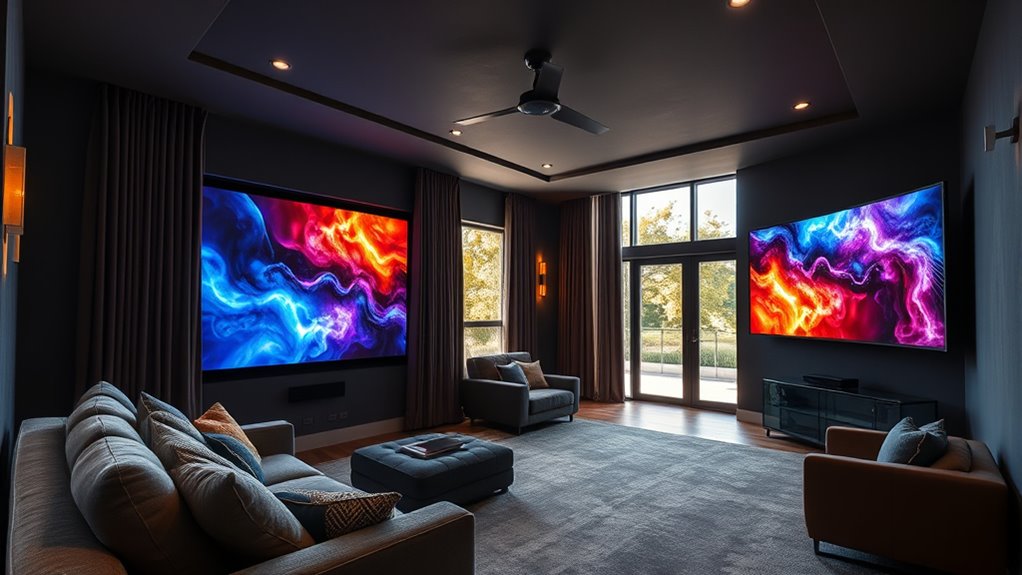
Your choice of space markedly impacts sound and visual quality, as dedicated rooms often allow for better acoustic treatments that reduce echoes and improve clarity. In multi-use areas, you might face challenges with brightness and glare, affecting picture quality during the day. Additionally, equipment placement can be more flexible in a dedicated room, ensuring ideal audio and visual performance. Proper maintenance and setup can also help optimize your home theater’s overall quality and longevity.
Acoustic Treatments Effectiveness
Acoustic treatments play a crucial role in enhancing sound and visual quality, but their effectiveness varies considerably between dedicated home theaters and multi-use spaces. In dedicated rooms, you can tailor treatments like bass traps, diffusers, and absorbers to manage echo and improve clarity without restrictions. These environments allow for ideal placement, reducing unwanted sound reflections and enhancing audio precision. Conversely, in multi-use spaces, treatments are less effective because they must serve multiple functions, limiting placement options and often leading to compromises. You might find that noise echoes or sound reflections persist, affecting your listening experience. While some treatments help in multi-use rooms, they rarely achieve the same level of acoustic excellence as in dedicated theaters. Properly designed dedicated rooms deliver superior sound clarity and immersion.
Visual Clarity and Brightness
In dedicated home theaters, you can optimize lighting and screen placement to maximize visual clarity and brightness, creating a crisp, vibrant viewing experience. Proper control of ambient light reduces glare and enhances contrast, making images pop. Brightness levels are easier to manage with dedicated lighting, ensuring scenes are vivid without washing out. Here’s how different setups compare:
| Aspect | Dedicated Theater | Multi-Use Space | Impact |
|---|---|---|---|
| Lighting Control | Fully adjustable, dimmable lights | Limited, often uncontrolled | Higher clarity in dedicated rooms |
| Screen Placement | Precise positioning for optimal view | Compromised for multi-purpose use | Better brightness and clarity |
| Ambient Light Level | Minimized for optimal contrast | Often high, reduces clarity | Reduced in dedicated spaces |
| Brightness Adjustment | Easily calibrated for perfect image | Difficult to optimize | Superior visual quality |
| Reflection Control | Managed with dedicated treatments | Often neglected | Enhances overall brightness |
A dedicated room offers control, resulting in sharper, brighter visuals.
Equipment Placement Flexibility
Dedicated home theaters provide unparalleled flexibility in equipment placement, allowing you to position speakers, projectors, and screens exactly where they deliver the best sound and visual quality. In a dedicated space, you can experiment with ideal speaker angles, screen height, and projector distance without restrictions. This freedom ensures a more immersive experience with precise audio imaging and sharper visuals. In contrast, multi-use rooms often limit your options due to furniture, existing walls, and other functional elements. To maximize your setup, consider:
- Adjusting speaker placement for optimal sound dispersion
- Positioning screens and projectors to minimize glare and distortion
- Arranging furniture to enhance sightlines and acoustic clarity
This flexibility ultimately enhances your overall home theater experience.
Flexibility and Multi-Purpose Functionality
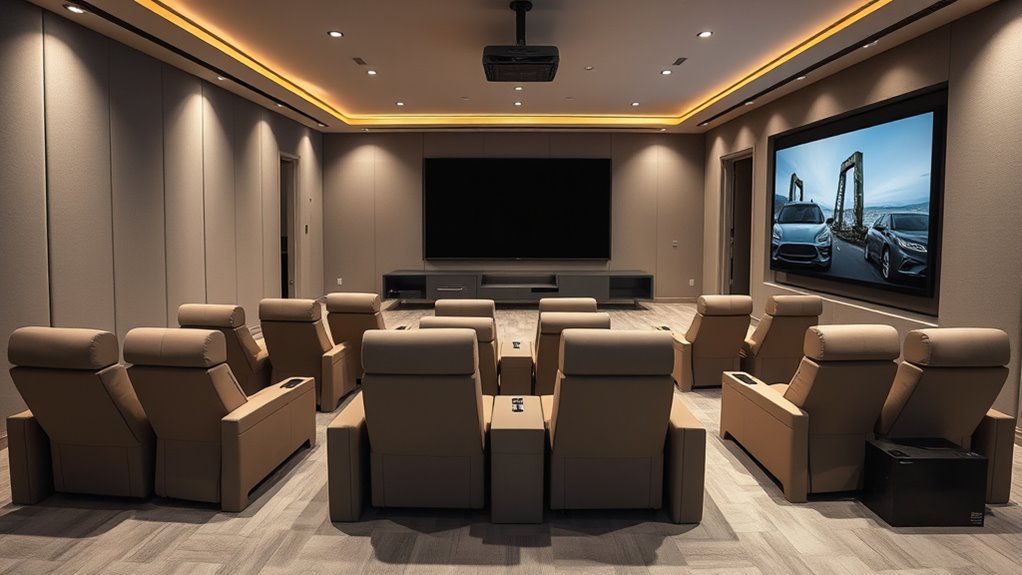
A home theater that doubles as a flexible, multi-purpose space can adapt to your changing needs and maximize its functionality. With versatile furniture and smart design, you can switch from movie nights to workspace or social gatherings easily. Multi-purpose areas save space and reduce the need for additional rooms. For example, a fold-away screen or movable seating allows quick transformation. Here’s a quick look at different uses:
| Function | Features | Benefits |
|---|---|---|
| Movie Watching | Comfortable seating, soundproofing | Immersive experience |
| Workspace | Foldable desks, good lighting | Increased productivity |
| Social Gatherings | Flexible seating, open layout | Better interaction |
| Exercise | Clear open space | Maintain fitness |
| Kids’ Play Area | Durable flooring, storage | Safety and organization |
Design and Aesthetic Appeal
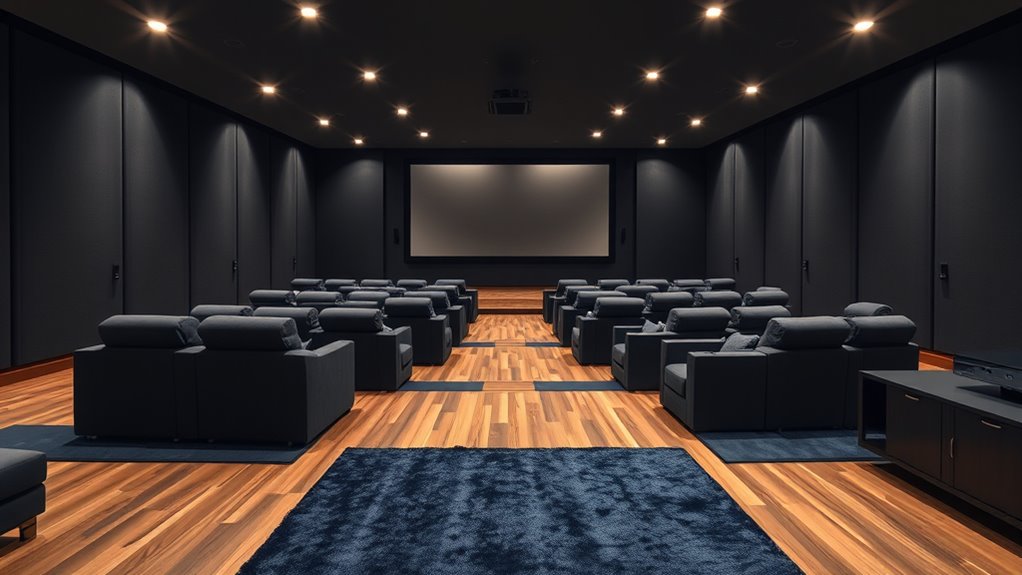
Your home theater’s design should create visual harmony and match your personal style. Consider how the room’s decor and layout integrate seamlessly with your existing space. Achieving a cohesive look enhances both the aesthetic appeal and overall enjoyment of your theater.
Visual Harmony and Style
When designing a home theater, achieving visual harmony and style is essential to creating an inviting and cohesive space. Your goal is to balance elements that reflect your personality while maintaining an uncluttered look. Focus on consistent color schemes, sleek furniture, and carefully chosen decor to tie the room together. Consider how lighting complements your design and enhances the overall atmosphere. Incorporate these key aspects:
- Match wall colors and furniture styles for a unified look
- Use minimalist decor to avoid visual clutter
- Select lighting that enhances mood without overpowering the screen
Room Integration and Decor
Creating a seamless connection between your visual style and overall room design enhances both functionality and aesthetic appeal. When integrating your home theater, choose décor elements that complement your existing decor, such as color schemes, lighting, and furniture. Balance tech features with style to avoid a cluttered look. Consider using acoustic panels that blend with your walls or stylish cabinetry for equipment storage. Incorporate cozy seating and decorative accents to personalize the space. Here’s a quick guide:
| Aspect | Tips |
|---|---|
| Color Scheme | Match with room walls or contrast subtly |
| Lighting | Use dimmable lights for ambiance |
| Furniture | Comfortable, stylish, and functional |
| Wall Decor | Art or soundproof panels that complement |
| Accessories | Throw pillows, rugs, and decorative items |
This approach makes sure your theater feels natural and inviting.
Installation and Setup Processes
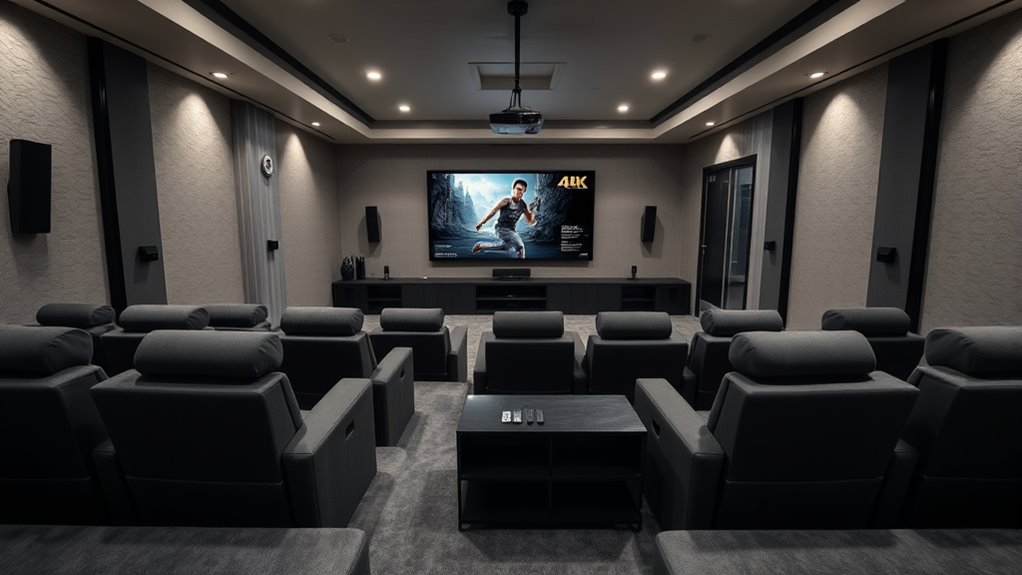
Setting up a dedicated home theater typically involves more complex installation steps compared to a living room setup. You’ll need to plan carefully for wiring, soundproofing, and equipment placement. First, decide on the ideal location for screens, speakers, and seating. Then, run wires through walls or ceilings, making sure they’re hidden and safe. You’ll also need to install mounting brackets, audio equipment, and control systems. To streamline the process, consider these key steps:
- Map out wiring and placement before installing components
- Use quality mounts and enclosures for safety and aesthetics
- Test all equipment thoroughly before finalizing setup
Taking your time during installation ensures a seamless, high-quality viewing experience. Proper setup is essential for excellent sound, picture, and ease of use in your dedicated theater.
Maintenance and Upkeep Requirements
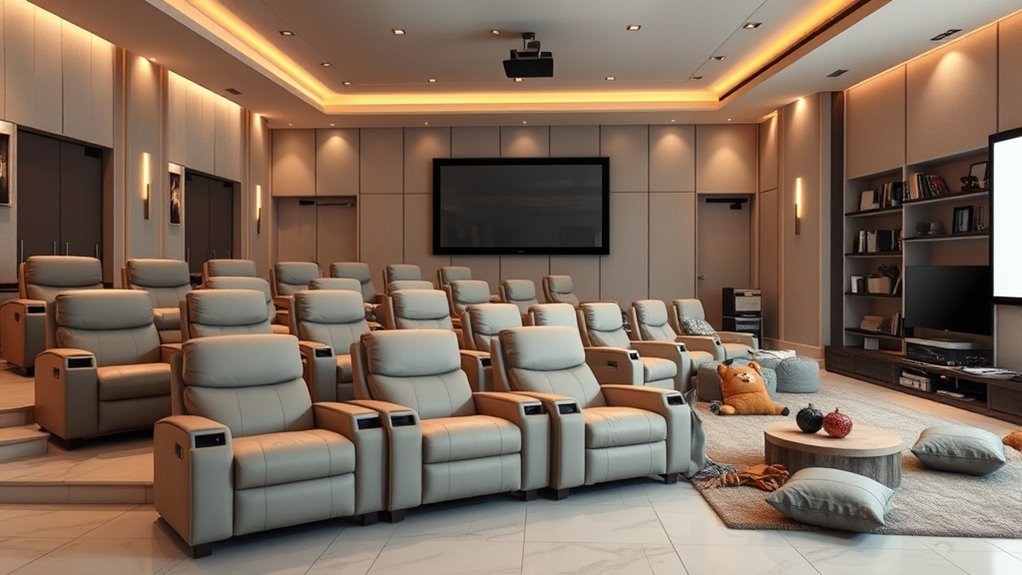
After completing the installation and setup of your home theater, maintaining it becomes key to keeping everything running smoothly. Regular cleaning is essential; dust your equipment, screens, and vents to prevent overheating and dust buildup. Check cables and connections periodically to ensure they’re secure and functioning properly. Keep your projector filters clean and replace bulbs as recommended by the manufacturer to maintain picture quality. For audio systems, inspect and clean speakers to avoid sound distortion. Humidity and temperature control are also vital; maintain a stable environment to protect sensitive electronics. Update firmware and software regularly to guarantee peak performance and security. By staying proactive with these upkeep tasks, you’ll prolong the lifespan of your equipment and enjoy a seamless, high-quality home theater experience.
Personalization and Customization Opportunities
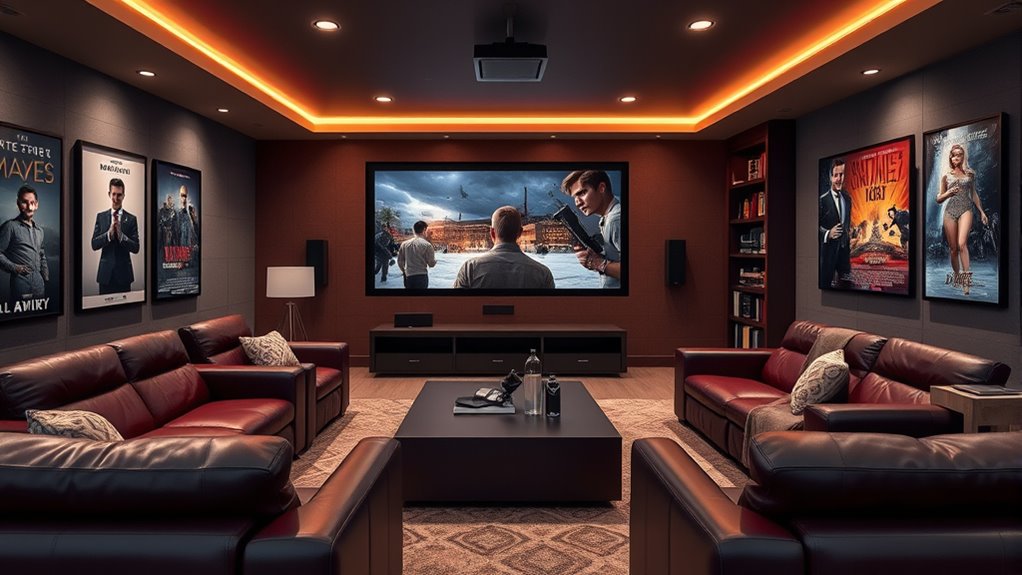
Personalization and customization are key to transforming your home theater into a unique entertainment space that reflects your preferences. You can tailor the design to match your style, whether that’s sleek modern, cozy vintage, or bold industrial. Custom features allow you to choose specific seating arrangements, lighting options, and sound systems that enhance your viewing experience. For example, you might add:
- Adjustable lighting controls for different moods
- Built-in shelving for your collection or tech gadgets
- Reclining seats or personalized upholstery to boost comfort
These choices make your home theater more functional and enjoyable, creating an inviting environment that feels uniquely yours. Customization guarantees your space aligns perfectly with your entertainment needs and aesthetic preferences.
Suitability for Different Lifestyle Needs
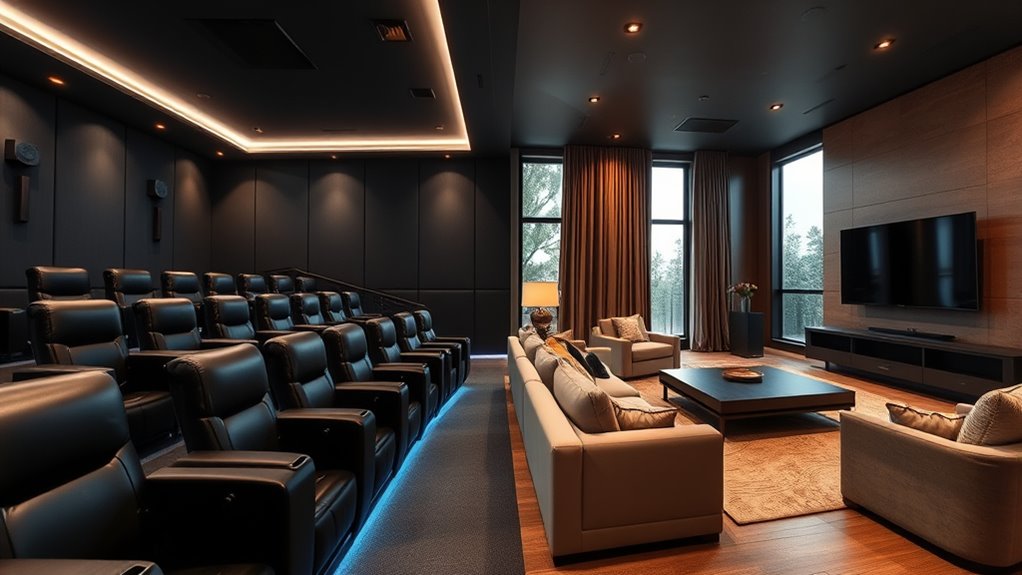
Choosing between a dedicated or living room home theater depends heavily on your lifestyle needs. If you prioritize an immersive experience and have the space, a dedicated theater offers ideal sound and picture quality without interruptions. It’s best if you’re a serious movie buff or host frequent gatherings. On the other hand, if your schedule is busy, or you prefer versatility, a living room setup suits your lifestyle better. It allows you to quickly shift from daily activities to entertainment without rearranging furniture or sacrificing space for other uses. Consider how often you watch movies, entertain guests, or need the room for other functions. Ultimately, your daily routines and social habits will guide you toward the option that fits your lifestyle best.
Frequently Asked Questions
How Does Acoustic Treatment Differ Between Dedicated and Living Room Theaters?
In dedicated theaters, acoustic treatment is more extensive because you can optimize the space without worrying about aesthetics. You can add bass traps, diffusers, and sound absorbers to control reflections and improve sound clarity. In a living room, you need to balance acoustic treatment with furniture and decor. You might opt for smaller panels or rugs to reduce echo without compromising the room’s look.
What Are the Long-Term Resale Impacts of Installing a Home Theater?
Installing a home theater can boost your property’s appeal, attracting buyers who value entertainment spaces. However, it may also limit your home’s flexibility or alienate potential buyers who prefer traditional layouts. Over time, a well-designed theater can increase resale value if it complements your home’s style, but overly customized setups might deter some buyers. Consider your market and future plans before investing heavily in a dedicated space.
Can a Multi-Purpose Room Easily Transition Between Theater and Other Uses?
Yes, a multi-purpose room can easily shift between theater and other uses. You can use removable or adjustable elements like curtains, screens, or furniture to switch functions quickly. Installing versatile tech, such as wireless speakers or projectors, helps you adapt the space effortlessly. With thoughtful design, you’ll enjoy a room that suits both entertaining guests and relaxing with family, making it a practical and flexible part of your home.
How Do Lighting Options Vary Between Dedicated and Shared Spaces?
In dedicated home theaters, lighting can be controlled precisely with dimmable fixtures, blackout curtains, and dedicated controls, creating an ideal viewing environment. In shared living rooms, you’ll want versatile options like adjustable lamps, layered lighting, and smart controls to switch from ambient to theater mode quickly. You might also consider remote-controlled blackout shades or dimming switches to adapt easily without sacrificing overall room functionality.
What Are the Best Ways to Soundproof a Shared Living Room for Theater Use?
You can soundproof your shared living room by adding heavy curtains or acoustic panels to absorb sound. Use door seals and weatherstripping to block gaps, and consider installing a thick rug or carpet to reduce floor noise. Furniture like bookshelves filled with books can help dampen sound. Additionally, placing soundproofing mats under speakers and isolating them from walls minimizes vibrations and echoes, creating a better theater experience.
Conclusion
Choosing between a dedicated or living room home theater is like picking the right instrument for your symphony—you want a setup that harmonizes with your lifestyle. A dedicated room offers pure focus, while a living room keeps your entertainment versatile. Consider your space, budget, and needs carefully. Whichever you choose, remember that your home theater should be a reflection of your personal rhythm, turning your space into a masterpiece of relaxation and enjoyment.