

To create an effective outage lighting plan, start by evaluating your most critical areas like exits, stairwells, and main pathways. Focus your lights where it matters most by mapping zones based on traffic flow and hazards, then select reliable LED fixtures with sufficient backup power. Clearly mark emergency routes with high-contrast signage and maintain everything regularly. To guarantee safety without guesswork, following these steps will help you design a precise, dependable lighting plan you can trust.
Key Takeaways
- Conduct a thorough assessment to identify critical zones such as exits, stairwells, and high-traffic areas for targeted lighting.
- Map out and clearly label emergency lighting zones based on importance and risk levels to prioritize placement.
- Select energy-efficient LED fixtures with appropriate brightness and backup capacity for essential areas.
- Install lighting fixtures in visible, accessible locations to ensure quick activation during outages.
- Regularly test, maintain, and update emergency lighting to ensure reliable illumination exactly where it’s needed most.

TANLUX Red Exit Sign With Emergency Lights, LED Light With Battery Backup, UL Listed, AC 120/277V, Commercial Combo for Business – 2 Pack
【US STANDARD】This commercial exit sign made of Injection-molded thermoplastic material, UL-94V-0 flame retardant. Super bright with red letter…
As an affiliate, we earn on qualifying purchases.
As an affiliate, we earn on qualifying purchases.
Assessing Key Areas for Emergency Lighting
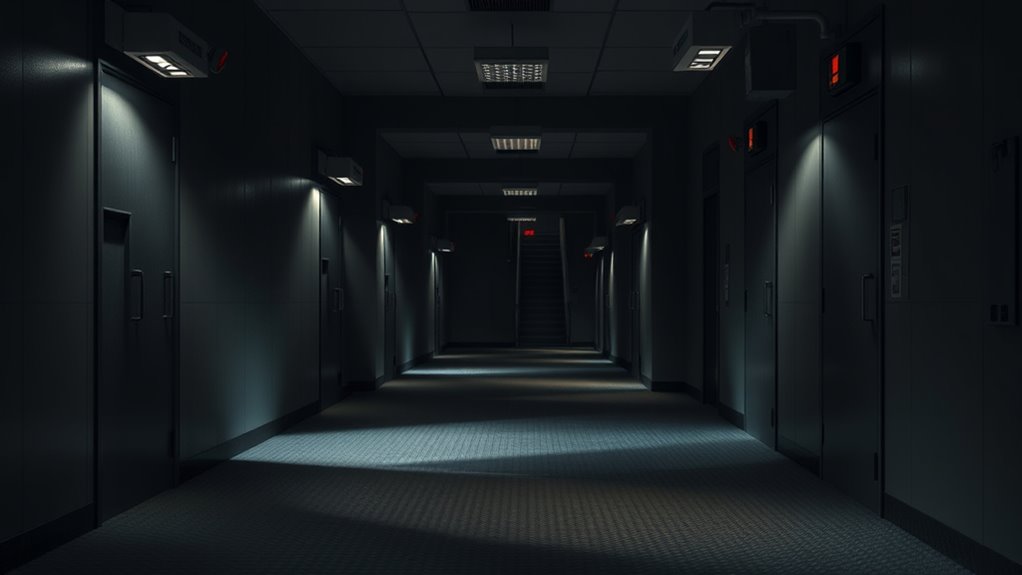
To guarantee safety during an outage, you need to identify which areas require emergency lighting. Begin by evaluating all critical zones, such as exits, stairwells, hallways, and main workspaces. Focus on places where people gather or move frequently, ensuring they’re well-lit to prevent accidents. Don’t forget storage rooms, electrical panels, and mechanical areas that could pose hazards in darkness. Consider the layout of your building and traffic flow—areas with high foot traffic need brighter, more reliable lighting. Prioritizing spaces that could become dangerous if unlit, especially those with potential trip hazards or sensitive equipment, is essential. Conducting a comprehensive assessment helps ensure no critical area is overlooked. Additionally, understanding the contrast ratio of emergency lighting fixtures can improve visibility in dark conditions. Incorporating proper maintenance procedures ensures that emergency lighting remains functional when needed most. Regular testing and certification standards are crucial to maintain compliance and safety. Staying informed about regulatory requirements related to emergency lighting can further enhance safety protocols. By thoroughly assessing these key areas, you create a solid foundation for an effective emergency lighting plan that keeps everyone safe during outages.

Lithonia Lighting Basics LED Emergency Light, Emergency Lighting with Dual Adjustable LED Lamp Heads, Wall Mount, Damp Location Rated, 90-Minute Backup, 120/277V, White (EU2C M6)
ESSENTIAL EMERGENCY LIGHTING: The Lithonia Lighting Basics emergency light is ideal for stairways, hallways, and egress paths; It…
As an affiliate, we earn on qualifying purchases.
As an affiliate, we earn on qualifying purchases.
Selecting the Right Lighting Equipment

Choosing the right emergency lighting equipment guarantees that your safety plan is effective and reliable during outages. You need to select fixtures that meet your specific environment and lighting needs. Consider LED options for energy efficiency and longer lifespan, guaranteeing consistent illumination during power failures. Look for units with appropriate lumen output to clearly light focal points without blinding occupants. Battery backup capacity is vital; ensure the system can operate for the required duration. Also, verify that the equipment complies with local safety standards and codes. Ease of installation and maintenance should influence your choice, too. Additionally, selecting equipment with reliable power sources enhances overall safety and minimizes the risk of failure during outages. Proper lighting design ensures that critical areas are illuminated effectively during emergencies, reducing hazards and facilitating safe evacuations. Incorporating advanced technology such as smart controls can further optimize performance and monitoring of your emergency lighting system. A well-planned lighting setup also considers emergency zones, ensuring all vital areas are adequately covered during outages. Moreover, understanding the importance of natural light integration can help reduce dependence on electrical lighting and improve overall safety during outages.

LFI Lights® High Output Emergency Light, UL 924 Listed, 650 Lumens, White, 120/277VAC Hardwired with Battery Backup, Two Adjustable LED Heads, Wall or Ceiling Mount, EL-M2WHO 2 Pack
UL 924 Listed. Meets NEC, OSHA & NFPA 101 Life Safety Code requirements. Damp location rated. High-impact thermoplastic…
As an affiliate, we earn on qualifying purchases.
As an affiliate, we earn on qualifying purchases.
Mapping Out Your Lighting Zones

Have you considered how dividing your space into specific lighting zones can enhance safety during outages? Mapping out your lighting zones helps you identify critical areas that need illumination, such as exits, pathways, and key rooms. Start by walking through your space and marking these zones based on their importance. Think about areas where you or your family spend the most time or where hazards could occur in darkness. Use clear labels or color codes to distinguish zones, making it easier to plan lighting placement. This strategic approach prevents unnecessary clutter and ensures that your emergency lighting is focused where it’s needed most. Proper zoning makes your outage plan more effective and reduces the risk of accidents when power’s out unexpectedly. Incorporating evidence-based strategies from recovery devices can further optimize your lighting plan for safety, especially when considering auditory processing techniques to coordinate signals or alerts during emergencies. Additionally, understanding Rhythm Failure techniques can inspire effective lighting cues that enhance your emergency response. Integrating smart automation can help ensure your lights activate automatically during power disruptions, increasing reliability and safety. Remember, incorporating filtration and maintenance principles can also improve the longevity and performance of your emergency lighting systems, giving you peace of mind during outages.

LANGGAN LED Emergency Lights with Battery Backup, cETL Listed, Dual Adjustable Heads, Hard Wired Commercial Emergency Lighting for Business Power Outage Safety 2 Pack
【90-Minute Reliable Emergency Backup】Engineered for safety, our high-capacity rechargeable battery provides over 90 minutes of continuous, bright LED…
As an affiliate, we earn on qualifying purchases.
As an affiliate, we earn on qualifying purchases.
Installing Backup Power Solutions
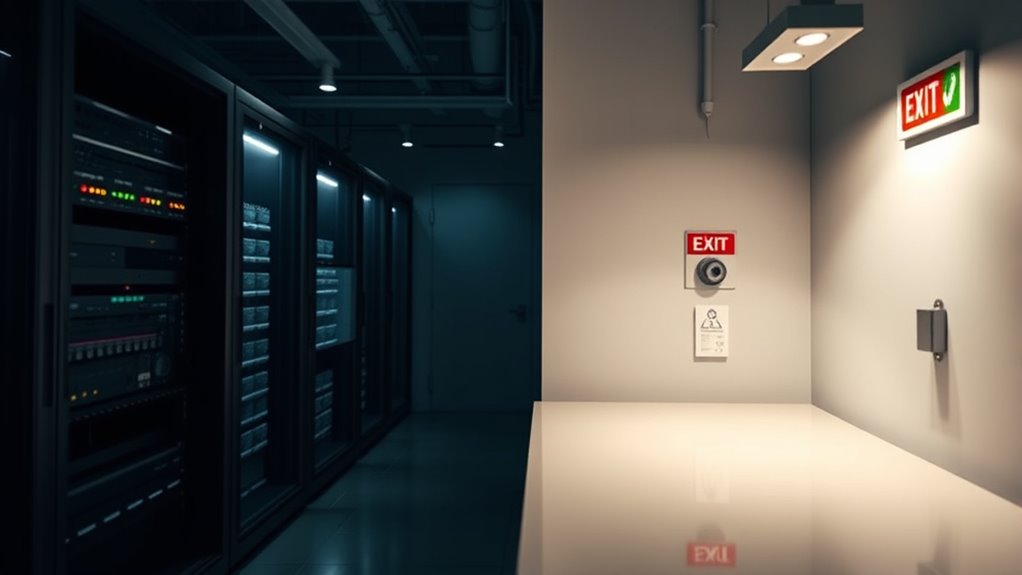
Installing backup power solutions guarantees that your designated lighting zones remain illuminated during outages. To make certain of reliability, choose between generators, uninterruptible power supplies (UPS), or battery systems based on your needs. Generators provide long-term power but require fuel and maintenance. UPS units deliver immediate backup, ideal for critical areas, and switch on seamlessly when power fails. Battery systems are compact, silent, and low-maintenance, suitable for smaller zones or supplemental backup. Properly installing these solutions involves connecting them to your lighting circuits with automatic transfer switches, so lights turn on instantly during an outage. Regular testing and maintenance are essential to make sure your backup power works flawlessly when needed. Proper installation involves careful wiring and the use of automatic transfer switches to ensure seamless operation. Incorporating backup power system considerations early in your planning can help prevent delays and ensure continuous illumination when outages occur. Additionally, understanding how emergency lighting integrates with your backup solutions can enhance overall safety and compliance. For optimal reliability, selecting a backup power source that aligns with your specific lighting needs and load requirements is crucial.
Creating Clearly Marked Emergency Routes
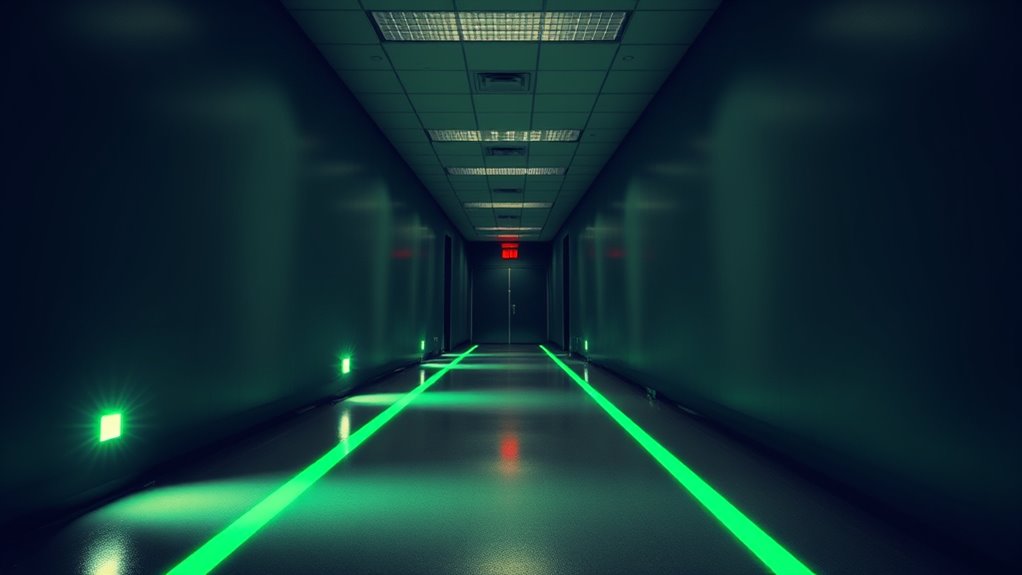
You need to guarantee your emergency routes are easy to follow, so clear path markings are essential. Proper signage must meet visibility standards to guide everyone safely during outages. By focusing on these points, you create reliable, recognizable escape routes for any situation. Ensuring compassionate caregiving principles are incorporated can also help support vulnerable individuals during emergencies. Incorporating visual communication techniques can further enhance clarity and reduce confusion in critical moments. Additionally, considering the security benefits of well-marked routes can deter potential threats and ensure safety during crises. Regular maintenance and testing of signage can also prevent confusion and ensure that markings remain effective when most needed. Leveraging detection technology can improve the accuracy of alert systems and enhance overall safety.
Clear Path Markings
How can clear path markings enhance emergency safety? They guide you quickly and confidently to exits, reducing confusion during stressful situations. Proper markings make it obvious which routes are safest and fastest, especially in low light or smoky conditions. Well-defined paths prevent accidents and ensure everyone evacuates efficiently. Think of it as creating a visual roadmap that everyone can follow without hesitation. To achieve this, consider these key points:
- Use high-contrast colors that stand out in darkness
- Apply durable, non-slip tape along evacuation routes
- Keep markings unobstructed and regularly maintained
- Combine markings with lighting for maximum visibility
Clear path markings act as your visual cues, making emergency evacuation smoother and safer for everyone involved.
Signage Visibility Standards
Clear path markings must be complemented by signage that meets specific visibility standards to guarantee emergency routes are easily identifiable. Your signs should be large enough to be seen from a distance and use high-contrast colors, like white on green or red on white, for quick recognition. Make certain that lettering is clear, simple, and at least 6 inches tall, so it’s readable even in low light. Illuminated or photoluminescent signs enhance visibility during outages, guiding people safely. Placement matters—position signs at decision points, intersections, and along corridors, avoiding obstructions. Regularly inspect signage for damage or fading, replacing as needed. Following these standards guarantees that everyone can quickly locate exits and escape routes, reducing confusion and increasing safety during emergencies.
Testing and Maintaining Your Lighting System

Regular testing and maintenance are essential to guarantee your outage lighting system functions reliably during an emergency. You need to regularly check that all lights turn on as intended and replace any bulbs or batteries that are nearing the end of their lifespan. Schedule routine inspections to identify issues early and prevent failures when it matters most. Keep detailed records of tests and maintenance activities for compliance and troubleshooting. Also, verify that backup power sources, like generators or batteries, are functioning correctly. Remember, a well-maintained system minimizes downtime and ensures safety for everyone.
- Test emergency lights monthly to confirm they activate properly.
- Replace batteries or bulbs proactively to avoid last-minute failures.
- Inspect wiring and fixtures for damage or corrosion.
- Keep maintenance logs to track your system’s reliability over time.
Training Staff and Family Members on Emergency Procedures
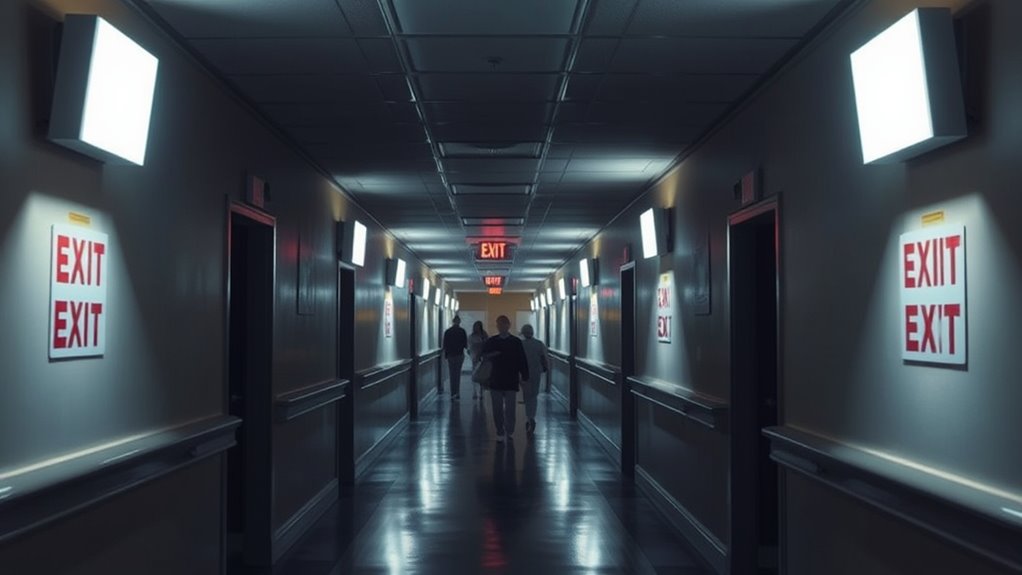
Training staff and family members on emergency procedures is essential to guarantee everyone knows how to respond quickly and effectively during a power outage or other crises. You need to make certain they understand the location of emergency lighting, how to activate backup systems, and the safest evacuation routes. Conduct regular drills so everyone can practice their roles confidently, reducing panic when real emergencies occur. Clear instructions should be accessible and simple to follow, covering essential steps like using flashlights, guiding others to safe exits, and notifying emergency services. Keep everyone informed about updates to procedures and encourage questions to clarify uncertainties. Proper training creates a prepared environment, minimizing confusion and ensuring that when an outage strikes, everyone reacts calmly and efficiently.
Reviewing and Updating Your Plan Regularly
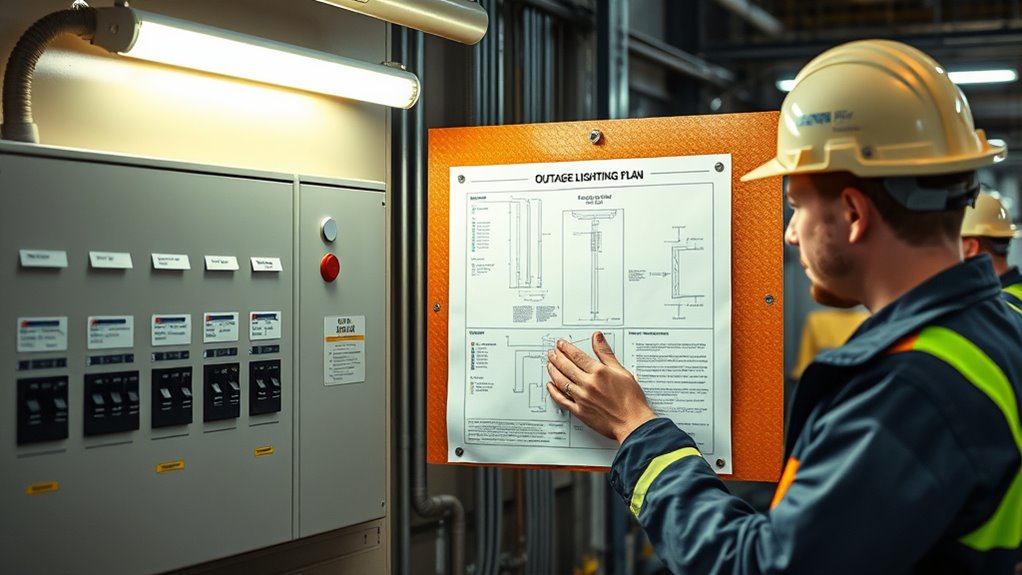
To guarantee your outage lighting plan remains effective, you need to review and update it regularly. Changes in your home layout, new equipment, or staff can impact your lighting needs. Regular reviews ensure your plan stays relevant and reliable during an outage. Schedule inspections at least twice a year, especially after renovations or new installations. Test your lighting system to identify weak spots or failures. Keep your contact list updated for quick coordination. Also, document any adjustments made to the plan and communicate these changes to everyone involved. This proactive approach helps you avoid surprises when you need light the most and keeps your emergency preparedness sharp and effective.
- Track changes in your home or equipment
- Test your lighting system periodically
- Update contact and emergency info
- Document and communicate adjustments
Frequently Asked Questions
How Often Should Emergency Lighting Be Inspected for Compliance?
You should inspect your emergency lighting monthly to guarantee it’s working properly and compliant with safety standards. Conduct a full test, including battery checks and function verification, at least once every six months, and have a professional inspection annually. Regular inspections help identify issues early, preventing failures during emergencies. Keep detailed records of all inspections and maintenance activities to stay compliant and ensure your emergency lighting system is always ready when needed.
What Are the Best Practices for Retrofitting Existing Buildings?
When retrofitting existing buildings, you should start by evaluating current lighting needs and identifying areas lacking proper illumination. Upgrade outdated fixtures with energy-efficient LEDs and ensure emergency lighting complies with codes. You’ll want to plan for minimal disruption by scheduling work during off-hours and coordinate with professionals. Test all new installations thoroughly, and train staff on maintenance procedures to keep your retrofit effective and compliant long-term.
How Does Outdoor Lighting Impact Emergency Preparedness?
Outdoor lighting markedly boosts emergency preparedness by reducing accidents and aiding quick evacuations. Studies show well-lit areas decrease trip hazards by 50%, helping you avoid injuries during crises. You’ll find that strategic outdoor lighting guides people safely in low visibility conditions, ensuring emergency routes are clear and accessible. By improving outdoor visibility, you create a safer environment, making sure everyone can respond swiftly and securely when emergencies happen.
Are There Specific Standards for Residential Versus Commercial Emergency Lighting?
Yes, there are specific standards for residential and commercial emergency lighting. For residential spaces, you should follow local building codes that specify minimum lighting levels and battery backup requirements. Commercial buildings must comply with standards like the NFPA 101 Life Safety Code and OSHA regulations, which demand higher illumination levels, regular testing, and maintenance. Adhering to these standards guarantees safety and effective evacuation during outages or emergencies.
How Can Technology Improve Emergency Lighting Management and Response?
Think of emergency lighting management like a lighthouse guiding ships safely ashore. Technology enhances this by enabling smart sensors and automation that detect outages instantly, activating lights precisely where needed. You can monitor and control lighting remotely, ensuring quick response times. Advanced systems also analyze data to predict failures before they happen. With these tools, your emergency lighting becomes more reliable, efficient, and ready to illuminate the path when it matters most.
Conclusion
Remember, in the end, the best outage lighting plan isn’t about guesswork or hope—it’s about precision and preparation. Ironically, by investing time and effort now, you guarantee that when darkness falls unexpectedly, you’ll have clarity where it matters most. So, while it might seem like a lot of work, neglecting it could leave you stumbling in the dark when it counts. Better to be prepared than left in the shadows, after all.