Adding too much dishwasher detergent causes excess soap to trap minerals and leave a cloudy film on your dishes. This film dulls their shine and makes them look less appealing. Overloading also creates soap residue that’s hard to rinse away, leaving spots and streaks. Additionally, excess foam can interfere with water circulation and damage the dishwasher over time. Keep your dishes sparkling by using the right amount of detergent—continue to learn more tips that make a difference.
Open a free Amazon Business account
Business pricing, bulk buying and tax-exempt orders.
As an affiliate, we earn on qualifying purchases.
Key Takeaways
- Excess detergent creates soap residue that leaves a cloudy film on dishes and glasses.
- Overuse traps minerals from hard water, forming spots and dull film.
- Too much foam hampers water circulation, preventing proper rinsing and causing streaks.
- Excess soap clogs filters and spray arms, reducing dishwasher efficiency and leaving residue.
- Using more detergent than recommended increases buildup, requiring additional cleaning and maintenance.
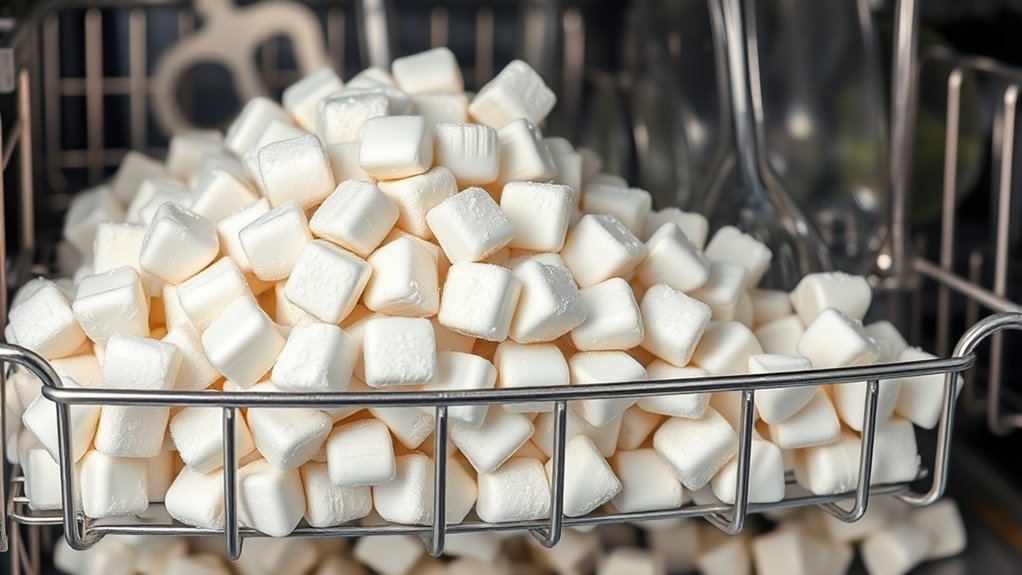
Overloading your dishwasher with too much detergent may seem like a good way to get dishes extra clean, but it can actually lead to problems. When you use excessive soap, the dishwasher struggles to rinse away all the residue, and that leftover soap can settle on your dishes as soap residue. This residue not only affects the appearance of your plates and glasses but can also impact their taste and safety. Instead of sparkling, spotless dishes, you end up with cloudy, film-coveredware that requires additional cleaning.
Using too much detergent leaves dishes cloudy, film-covered, and requiring extra cleaning.
Another common issue caused by overusing detergent is water spots. These spots appear as dull, whitish marks on glassware and shiny surfaces. Water spots are primarily caused by mineral deposits left behind when hard water evaporates during the drying cycle. When excess soap is present, it can trap minerals and prevent proper rinsing, making water spots more prominent. The combination of soap residue and mineral deposits results in dishes that look dull and less appealing. Over time, this buildup can become stubborn, requiring more effort to clean or even replacing your glasses and utensils sooner than expected.
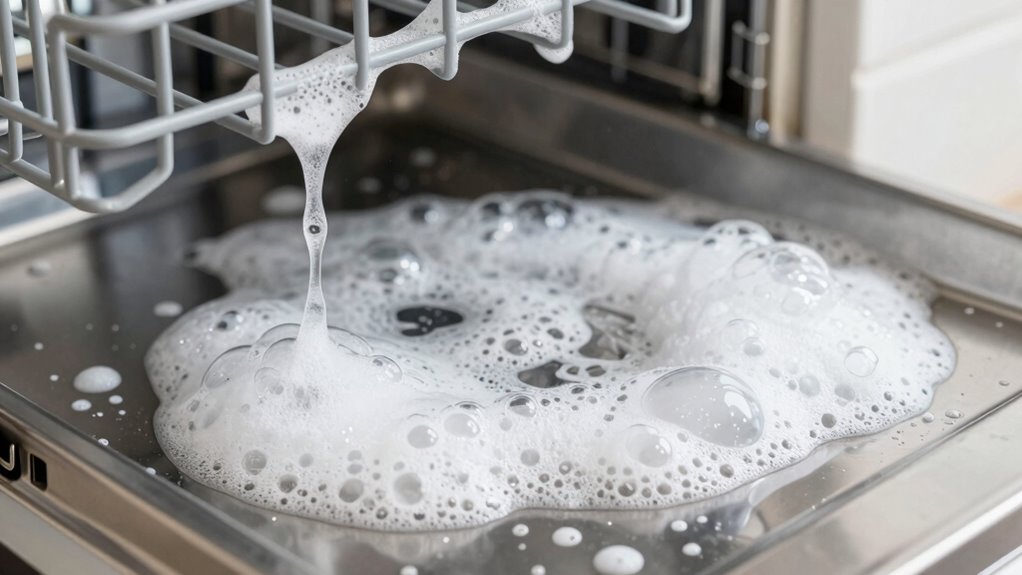
Using too much detergent also affects the dishwasher’s efficiency. When there’s an overload of soap, it can create excessive suds that interfere with the wash cycle. These suds can leak out of the dishwasher, causing leaks or damage to the machine itself. Furthermore, the excess foam can prevent water from circulating properly, leaving dishes inadequately rinsed. This incomplete rinsing means you might need to run additional cycles, wasting water, energy, and time. The dishwasher’s filter and spray arms also get clogged faster, reducing their effectiveness and increasing wear and tear on the appliance. Additionally, detergent formulation can influence how well your dishwasher rinses and how much residue is left behind.
You might think that more soap guarantees cleaner dishes, but it’s quite the opposite. Proper detergent amounts are designed to work efficiently with your dishwasher and water hardness. Using less or the recommended amount ensures that soap residue is minimized and rinsing is thorough. When you stick to the right quantity, you’ll notice fewer water spots, a cleaner shine, and dishes free of film. Remember, a balanced approach helps your dishwasher work effectively, saving you money and hassle in the long run. Overloading with detergent might seem harmless, but it often backfires, leaving you with more cleaning and maintenance issues than you bargained for.
Top picks for "dishwasher detergent overload"
As an affiliate, we earn on qualifying purchases.
Frequently Asked Questions
How Can I Tell if I’Ve Used Too Much Detergent?
You can tell if you’ve used too much detergent by measuring detergent carefully and watching for spotting excess soap. If dishes come out with cloudy film, residue, or soap scum, you’re likely overdoing it. Check your dishwasher’s interior for soap buildup, and notice if the rinse cycle isn’t effectively removing soap. Lowering the amount based on your dishwasher’s size and the detergent’s instructions helps prevent excess soap and film.
Does Water Hardness Affect Soap Residue?
Yes, water hardness affects soap residue because hard water contains minerals like calcium and magnesium, leading to mineral deposits that can trap soap and leave film. Water softening helps reduce these minerals, ensuring your detergent works effectively and prevents residue buildup. If you notice more film, it’s likely your water’s hardness is causing it. Using a water softener or adjusting your detergent amount can help minimize the residue and improve dish cleanliness.
Are Eco-Friendly Detergents Less Likely to Cause Film?
You notice your dishes come out spotless when using eco-friendly detergents. These biodegradable formulas with plant-based ingredients are less likely to leave a film because they break down more easily, reducing residue buildup. Unlike traditional soaps, their natural components don’t leave behind stubborn deposits, making your dishwasher’s job easier. So, switching to eco-friendly options helps keep your dishes shining without the unwanted film, thanks to their gentle yet effective cleaning power.
Can I Mix Different Brands of Dishwasher Detergents?
You can mix different brands of dishwasher detergents, but it’s not always recommended. Mixing detergents may cause compatibility issues, especially if the brands have different formulations or active ingredients. To avoid problems like excess foam or residue, check if the brands are compatible or stick to one brand for best cleaning. Always follow your dishwasher’s guidelines and consider using the same brand to guarantee effective detergent mixing and prevent film buildup.
How Often Should I Run a Deep Cleaning Cycle?
Think of your dishwasher like a car needing regular tune-ups. You should run a deep cleaning cycle once a month to keep it running smoothly. Use the right detergent quantity—too much causes buildup, too little won’t clean effectively. Regular cleaning frequency prevents grime and film buildup, ensuring your dishes come out spotless. Schedule this routine consistently, just like oil changes, to maintain prime performance and prevent future issues.
Conclusion
So, next time your dishes come out cloudy or streaked, ask yourself: are you using too much detergent? Overloading your dishwasher with soap might seem like the quick fix, but it often does more harm than good. Remember, a little goes a long way. Keep your machine happy and your dishes spotless by sticking to the recommended amount. After all, isn’t it better to have sparkling dishes than a cloudy film?
Grilling season Picks
grills
As an affiliate, we earn on qualifying purchases.