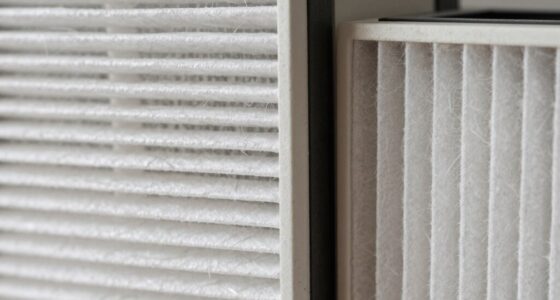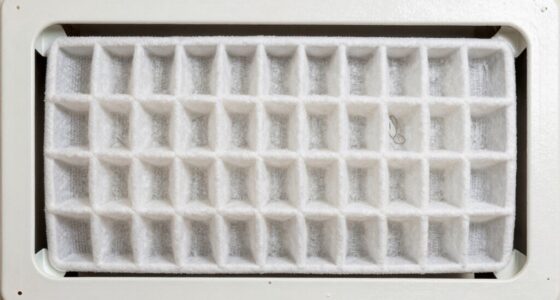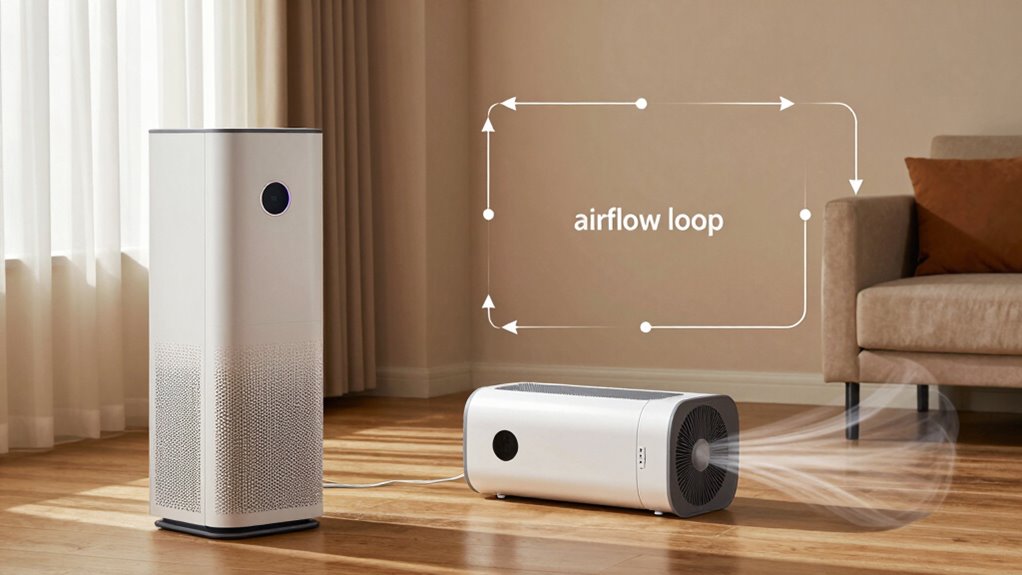

For ideal air purifier placement, avoid corners, which can trap air and create dead zones. Instead, position your device in the center of the room or near pollution sources to promote even airflow and effective filtration. Elevating the purifier on a table or shelf can improve airflow and coverage. Creating a steady airflow loop allows pollutants to cycle efficiently. Continue exploring for more tips on maximizing your air purifier’s performance and room coverage.

Get books, candles and calm essentials delivered free — and shop member deals
- Fast, free delivery on millions of items
- Access to Prime Big Deal Days deals on October 6–7
- Prime Video, Amazon Music and more included
Key Takeaways
- Place the purifier in open, central areas to promote effective airflow circulation throughout the room.
- Avoid corners, as they tend to trap air and create dead zones, reducing purification efficiency.
- Elevate the device on a table or shelf at eye level to improve air intake and distribution.
- Position near pollution sources like computers or kitchens to target concentrated contaminants.
- Create a continuous airflow loop by ensuring vents are unobstructed and the purifier’s placement encourages air movement.
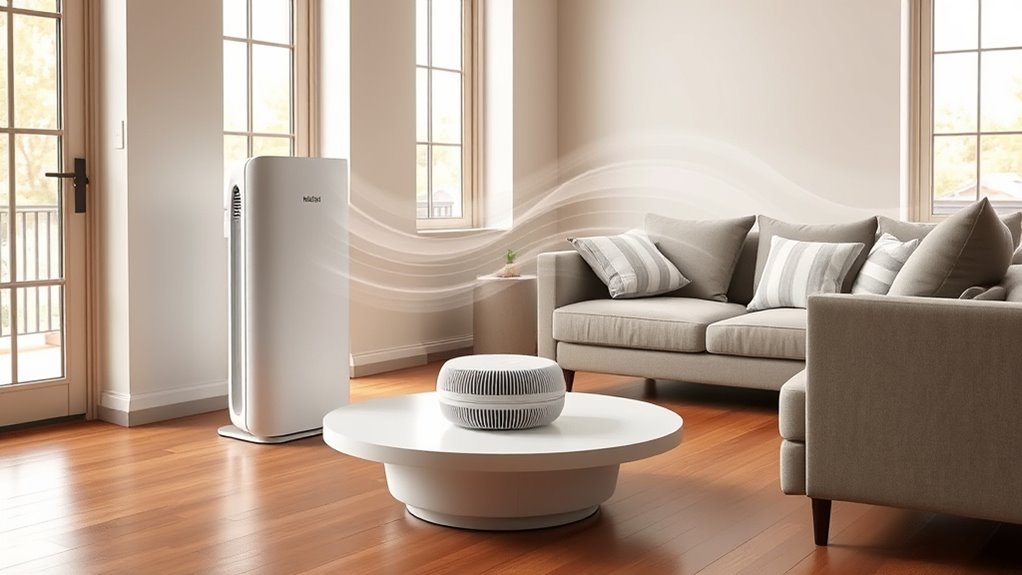
Choosing the right spot for your air purifier is essential to maximize its effectiveness. Proper placement ensures you get the most out of your device, especially when it comes to airflow optimization. When considering where to position your air purifier, think about how air circulates within the room. The goal is to create a steady airflow loop so that clean air is distributed evenly and pollutants are drawn in efficiently. This means avoiding stagnant spots where air isn’t moving well, such as corners or behind furniture, which can hinder performance.
Proper placement of your air purifier ensures optimal airflow and maximum purification efficiency.
Room size considerations play a crucial role in placement. If your space is large, you’ll want to position your purifier in a central location to cover the maximum area. This helps prevent air from bypassing the device and ensures a more uniform purification process. Conversely, in smaller rooms, placing the air purifier near the center or close to the source of pollutants—like a smoking area or pet bed—can boost its effectiveness. Remember, if you place the purifier too close to walls or furniture, airflow might be obstructed, reducing its ability to circulate air properly.
Corners are generally not ideal spots for your air purifier. Air tends to get trapped in corners, and placing your device there can create dead zones where airflow isn’t ideal. Instead, aim for an open area that allows air to flow freely around the unit. This promotes a better airflow loop, helping the purifier draw in contaminated air from all directions. If your room has multiple zones or is particularly large, consider using multiple units or relocating the purifier periodically to different spots to maintain consistent airflow and filtration.
Another key point is to keep the air purifier elevated, if possible. Placing it on a table or shelf at about eye level improves airflow and makes it easier for the device to draw in air from the room. Avoid blocking the intake or exhaust vents with curtains, furniture, or other objects, as this can substantially reduce airflow efficiency. Positioning your purifier near sources of pollution, like a computer or kitchen, can also help target specific areas where pollutants are concentrated. Additionally, optimizing airflow patterns within your space can significantly enhance the purifier’s performance by ensuring efficient air circulation throughout the room.
In the end, achieving airflow optimization through thoughtful placement ensures your air purifier works effectively across the entire room. By considering room size considerations and avoiding stagnant spots, you create a steady, efficient airflow loop that maximizes air cleanliness and improves indoor air quality.
best central air purifier for large rooms
As an affiliate, we earn on qualifying purchases.
As an affiliate, we earn on qualifying purchases.
Frequently Asked Questions
How Often Should I Replace the Filters in My Air Purifier?
You should replace your air purifier filters every 6 to 12 months, depending on your filter maintenance habits and usage. Regular replacement guarantees peak performance and cleaner air. Check your device’s specific replacement schedule in the user manual or indicator lights, and don’t wait too long—clogged filters reduce efficiency and may cause strain on your purifier. Keep an eye on air quality and follow the recommended replacement intervals for the best results.
Can I Use an Air Purifier in a Large Open-Plan Space?
Yes, you can use an air purifier in a large open-plan space, but you’ll need a powerful model with high airflow capacity. Proper placement is key; position it where air circulation is best, like near the center or along a main airflow loop. For ideal results, consider using multiple units if the space is very large, ensuring clean air reaches every corner and maintaining good air circulation throughout the area.
Do Air Purifiers Work Effectively During Power Outages?
During a power outage, your air purifier stops working unless you have a battery backup. Did you know that a battery backup can keep your purifier running for hours? Without power, it won’t filter air effectively, so investing in a backup is prudent. It ensures cleaner air during outages, especially if you or loved ones have allergies or respiratory issues. Keep a battery backup handy for uninterrupted air purification when power’s out.
Are There Specific Brands Recommended for Optimal Placement?
You should consider brands like Dyson, Blueair, and Coway for ideal placement, as they offer models with customizable airflow and effective filter longevity. These brands are known for their reliable performance and high-quality filters, which last longer with proper placement. When choosing, prioritize models that match your space, ensuring the air purifier’s airflow reaches all areas efficiently. Proper placement enhances filter longevity and overall air quality.
How Do Pets Affect the Placement and Efficiency of Air Purifiers?
A clean home is a happy home, especially with pets around. You should place your air purifier where pet hair and odors are most concentrated, often near pet beds or common lounging areas. Pets can clog filters faster and spread pet hair, so positioning your purifier to maximize airflow helps with odor control and keeps the air fresh. Regular filter changes guarantee your unit stays efficient in tackling pet-related air quality issues.
air purifier for pet hair and allergies
As an affiliate, we earn on qualifying purchases.
As an affiliate, we earn on qualifying purchases.
Conclusion
Think of your air purifier as the captain of your home’s freshness, guiding clean air through an invisible dance. Place it wisely—corners, centers, or along the airflow loop—and watch as it weaves a protective shield around you. With the right positioning, your space transforms into a sigh of fresh mountain air, where every inhale feels crisp and pure. Trust your placement choices, and let your home breathe easy like a peaceful forest in full bloom.
As an affiliate, we earn on qualifying purchases.
air purifier near pollution sources
As an affiliate, we earn on qualifying purchases.
As an affiliate, we earn on qualifying purchases.
Halloween Picks
halloween
As an affiliate, we earn on qualifying purchases.