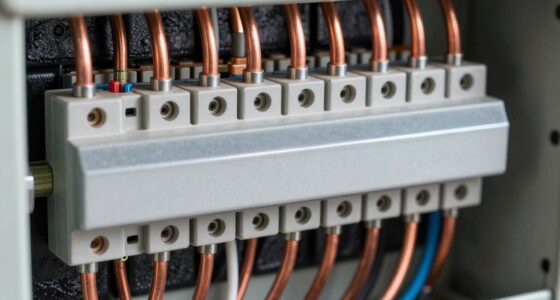
When you use a long extension cord, voltage drop can occur, meaning less power reaches your tools or appliances. This happens because longer cords have higher resistance, which causes energy loss as heat. As a result, your equipment might run slower, overheat, or perform poorly. To keep things running smoothly, it’s important to understand what causes voltage drop and how to prevent it. Keep going for more tips on minimizing this issue effectively.
Key Takeaways
- Longer extension cords increase resistance, leading to higher voltage drop and reduced power delivered to devices.
- Thinner or lower gauge wires in extension cords cause greater voltage loss over distance.
- Excessive voltage drop can result in equipment malfunction, overheating, or reduced efficiency.
- Calculating voltage drop involves considering wire length, material, current, and gauge to prevent issues.
- Choosing shorter, thicker, and higher-quality cords minimizes voltage drop and maintains device performance.

POWGRN 50 ft 12/3 Outdoor Extension Cord Waterproof Heavy Duty with Lighted Indicator End 12 Gauge 3 Prong, Flexible Cold-Resistant Long Power Cord Outside, 15Amp 1875W SJTW Yellow ETL Listed
Up to 1875W Applications: Outdoor extension cord waterproof 12 gauge, 15 amp, 125 volts, 1875 watts, NEMA 5-15P…
As an affiliate, we earn on qualifying purchases.
As an affiliate, we earn on qualifying purchases.
What Is Voltage Drop and How Does It Occur?

Voltage drop happens whenever electrical current flows through a wire or component, causing a reduction in voltage from the source to the load. As current travels along the wire, resistance causes some energy to be lost as heat. This energy loss results in a lower voltage reaching your device or appliance. The longer the wire or extension cord, the more resistance it presents, increasing the voltage drop. Thinner wires or those made from materials with higher resistance will also contribute to a greater voltage decrease. When voltage drops too much, your equipment may not operate correctly or could be damaged over time. Understanding how current moves and encounters resistance helps you recognize why voltage drop occurs and how it impacts your electrical setup. Additionally, using wires with appropriate gauge, material, and length can help minimize voltage loss and ensure safer operation. Proper wire sizing helps prevent excessive voltage drop and maintains device performance, especially in energy-efficient systems. Being aware of circuit load and ensuring it remains within safe limits further reduces the risk of voltage issues.
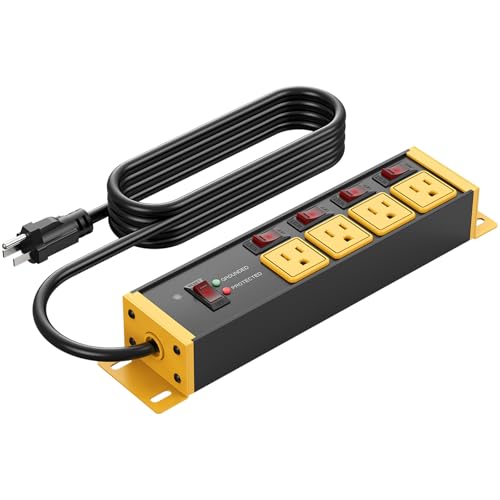
CCCEI Heavy Duty Surge Protector Power Strip 20 Amp Individual Switches. 6FT 12 Gauge Extension Cord with Multiple Outlets. Kitchen, Garage, Shop, Industrial Wall Mount Electric Extender, Yellow.
Heavy duty power strip 20 amp with 4 outlets and individual switches, 5-20R, 6-20R and come with standard…
As an affiliate, we earn on qualifying purchases.
As an affiliate, we earn on qualifying purchases.
Factors That Influence Voltage Drop in Extension Cords
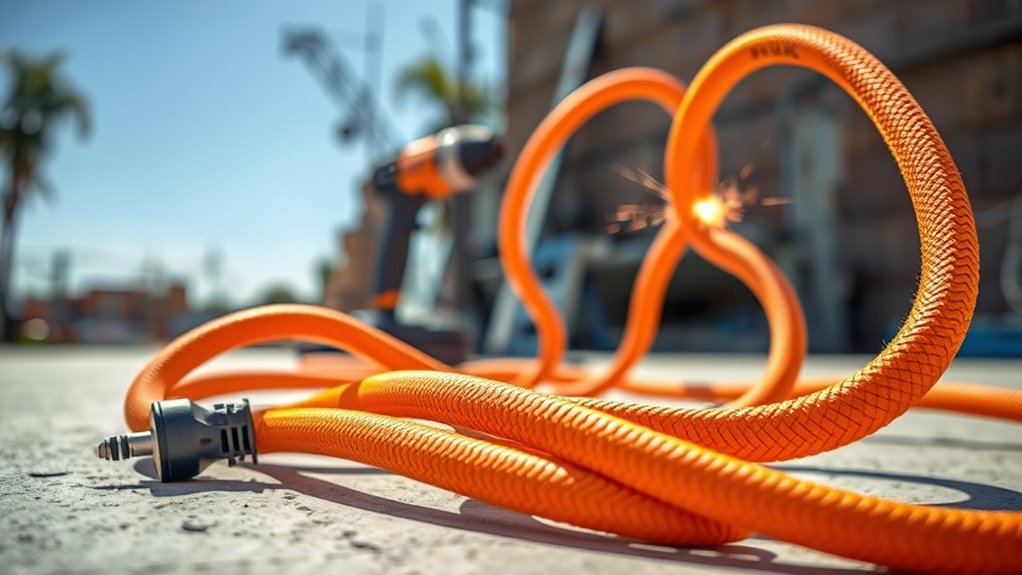
Several factors affect how much voltage drops when using extension cords, and understanding these can help you choose the right one for your needs. The wire gauge is vital—thicker wires resist less and reduce voltage loss. The length of the cord also matters; longer cords cause more voltage drop. Additionally, the load you plug in influences voltage stability; higher power demands increase voltage loss. Finally, the quality of the cord’s materials impacts efficiency and safety. Proper wiring ensures minimal voltage drop and safer operation. Using high-quality electrical components can also help maintain voltage levels and prevent potential hazards. Moreover, selecting cords with appropriate wire gauge standards can significantly reduce voltage drop and improve overall performance. To ensure safety and efficiency, choosing extension cords with the correct insulation quality is essential. Poor-quality extension cords can cause:
- Unexpected equipment malfunctions
- Reduced performance of your tools
- Increased risk of overheating
- Frustration from inconsistent power supply
A good understanding of voltage regulation can further assist in selecting the most suitable extension cord for your specific needs.
CCCEI Heavy Duty Surge Protector Power Strip 20 Amp Individual Switches. 6FT 12 Gauge Extension Cord with Multiple Outlets. Kitchen, Garage, Shop, Industrial Wall Mount Electric Extender, Yellow.
Heavy duty power strip 20 amp with 4 outlets and individual switches, 5-20R, 6-20R and come with standard…
As an affiliate, we earn on qualifying purchases.
As an affiliate, we earn on qualifying purchases.
Recognizing the Signs of Excessive Voltage Drop

You might notice your lights flickering or dimming unexpectedly, which can be a sign of excessive voltage drop. Additionally, if your equipment starts behaving oddly or doesn’t operate as it should, it could point to voltage issues. Recognizing these signs early helps prevent damage and guarantees your electrical system stays safe and efficient. Paying attention to voltage drop symptoms can help you identify and address potential problems before they worsen. In some cases, extended use of long cords may lead to increased power loss, further contributing to voltage irregularities. Understanding digital literacy and its impact on modern devices can also help you troubleshoot electrical problems more effectively. Being aware of crochet styles for locs can inspire creative ways to accessorize and protect your hair while managing electrical safety at home.
Dimming Lights Frequently
If your lights are dimming frequently, it’s a clear sign that something may be wrong with your electrical system. This often indicates excessive voltage drop, which can damage your appliances and reduce their lifespan. You might notice:
- Lights flickering or fading during use
- Sudden dimming when turning on high-power devices
- Inconsistent brightness that disrupts your daily activities
- Increased strain on your electrical wiring, risking fire hazards
These signs aren’t normal and shouldn’t be ignored. They mean your electrical system isn’t delivering consistent voltage, especially when using long extension cords or overloaded circuits. Addressing this early can prevent more serious problems, costly repairs, and keep your home safe. Recognizing voltage fluctuation patterns is essential to maintaining a safe and efficient electrical system. Understanding how voltage drop occurs helps you take steps to minimize its effects and protect your electrical devices. Additionally, proper wiring practices can help reduce the risk of voltage instability caused by long cords or improper connections. Being aware of load management strategies can further help balance your electrical demand and prevent voltage issues.
Unusual Equipment Behavior
Unusual behavior in your electrical equipment often signals an underlying voltage drop issue. You might notice appliances taking longer to start, motors humming loudly, or tools overheating unexpectedly. These signs suggest the voltage supplied isn’t steady, causing your devices to struggle or malfunction. Recognizing these symptoms early can prevent costly repairs or damage. For example, Free Floating systems can sometimes contribute to inconsistent electrical performance, especially in outdoor or ungrounded setups. Additionally, using Vetted conversion kits like those designed for e-bikes can help ensure stable power delivery in various environments. Moreover, understanding the Horsepower of electric bikes can help you gauge their power needs and prevent overloads that may contribute to voltage fluctuations. Being aware of Voltage Drop in long extension cords is essential to maintain optimal equipment performance and safety. Being mindful of Electrical Resistance in your setup can further reduce the risk of voltage issues and improve overall efficiency.

HUANCHAIN Indoor Outdoor Black Extension Cord 50 ft Waterproof, 16/3 Gauge Flexible Resistant Appliance Extension Cord Outside, 13A 1625W 16AWG SJTW, 3 Prong Electric Cable, ETL Listed
Extra Size for Safety: Extra size Male NEMA 5-15P power plug and Female NEMA 5-15R power socket for…
As an affiliate, we earn on qualifying purchases.
As an affiliate, we earn on qualifying purchases.
Calculating Voltage Drop: A Step-by-Step Guide

To understand how to calculate voltage drop, you need to grasp the concept of voltage loss and what causes it. Factors like wire length, material, and current affect the amount of drop you’ll see. Follow this step-by-step method to accurately determine voltage loss in your wiring setup. Additionally, understanding electrical safety principles can help prevent potential hazards related to improper wiring or overloads.
Understanding Voltage Loss
Understanding voltage loss is essential for ensuring your electrical systems operate efficiently and safely. When voltage drops too much, your devices may underperform, overheat, or even get damaged. To grasp this, you need to recognize how small changes in voltage can have big impacts. A thorough understanding of auditory processing can help in diagnosing and addressing issues related to voltage drops and electrical performance.
Be aware of these key points:
- Voltage loss can cause your appliances to work less effectively or fail altogether.
- Long extension cords increase resistance, leading to more significant voltage drops.
- Using the right wire gauge helps minimize power loss and keeps your equipment safe.
- Regularly checking your connections prevents hidden issues that could worsen voltage loss.
Factors Influencing Drop
Calculating voltage drop involves understanding the key factors that influence how much voltage decreases over a length of wire. The primary elements include wire material, thickness, length, and current flow. Copper wire, for example, has lower resistance than aluminum, reducing the voltage drop. Thicker wires (with larger gauge numbers) offer less resistance, supporting higher voltage levels at the load. Longer cables increase resistance, leading to more voltage loss. Additionally, higher current draws intensify voltage drops because resistance causes more voltage to be dissipated as heat. Ambient temperature can also influence resistance slightly, but it’s less significant. By considering these factors, you can better predict and manage voltage loss in your extension cords and wiring projects, ensuring devices operate safely and efficiently.
Calculation Methodology
Determining the voltage drop in a circuit involves a straightforward calculation process that takes into account the wire’s properties and electrical load. First, gather your wire’s length, gauge, and material. Next, note the current your device draws. Use the formula: Voltage Drop = (2 × Length × Resistance per unit length × Current) / 1000.
Keep in mind:
- Accurate measurements guarantee safety and performance.
- Choosing the right wire gauge can prevent hazards.
- Longer cords increase voltage loss—plan accordingly.
- Understanding this calculation empowers you to make smarter choices.
The Impact of Voltage Drop on Your Tools and Appliances

Voltage drop can considerably affect how well your tools and appliances perform, especially when they’re connected over long distances or through undersized wiring. You might notice your power tools run slower, cut unevenly, or overheat more quickly. Appliances such as refrigerators or microwave ovens may not operate efficiently, leading to longer cycle times or inconsistent performance. In some cases, voltage drop can cause motors to strain, potentially damaging them over time. Sensitive electronics, like computers or chargers, may malfunction or shut down unexpectedly. Reduced voltage also means your devices don’t receive the power they need to operate ideally, which can shorten their lifespan. Understanding these impacts helps you recognize when voltage drop might be causing issues, prompting you to take steps to minimize it.
Choosing the Right Extension Cord to Minimize Voltage Drop
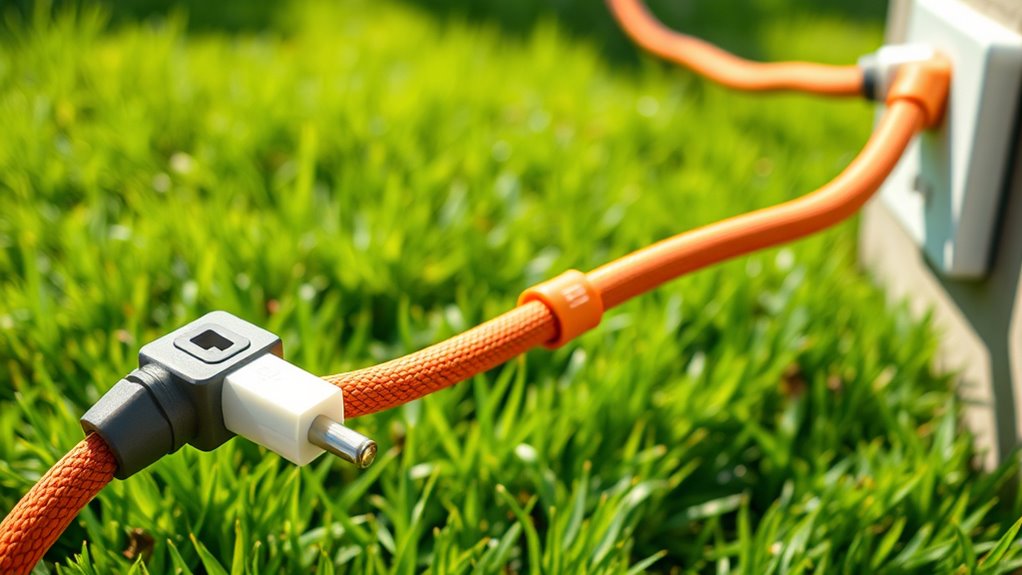
Choosing the right extension cord is essential to prevent voltage drop from causing performance issues. Selecting the appropriate cord guarantees your tools get enough power, avoiding damage or inefficient operation. Focus on the cord’s gauge and length—thicker wires with a lower gauge number handle more current and reduce voltage loss. Always opt for a cord rated for your specific load to maintain safety and efficiency.
Consider these key points:
- Use the shortest cord possible to cut down on voltage loss
- Choose a heavy-duty cord with a lower gauge (like 12 or 14)
- Verify the cord’s power rating matches your tool’s requirements
- Avoid cheap, thin cords that can cause dangerous voltage drops
Making informed choices keeps your equipment running smoothly and safely.
Practical Tips for Reducing Voltage Drop During Use
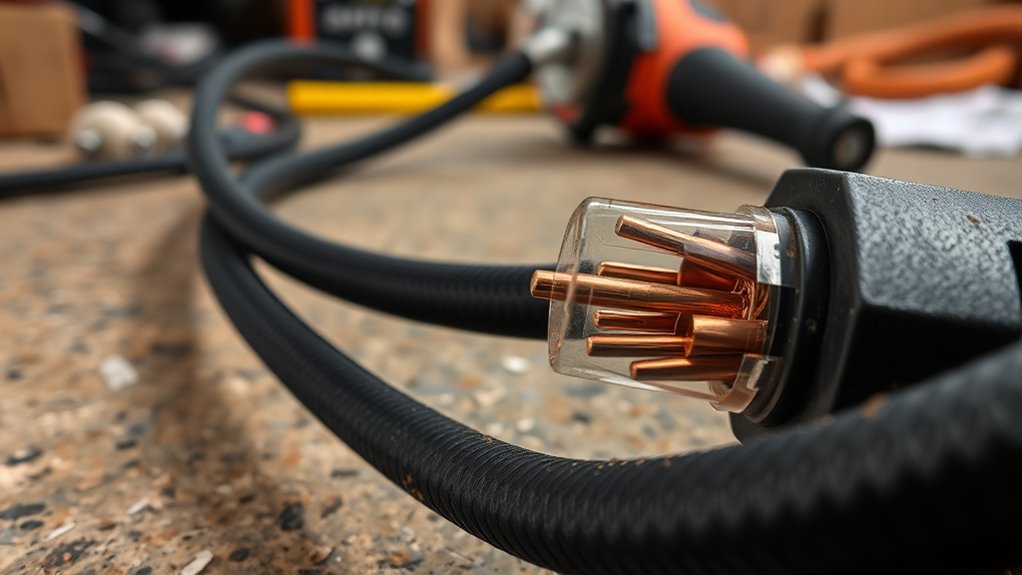
To minimize voltage drop during use, you should prioritize keeping your extension cord as close to the power source and your tools as possible. This reduces the length of wiring that current must travel, decreasing resistance and voltage loss. Avoid running cords around corners or through obstacles where they might stretch or bend excessively, which can increase resistance. Use the shortest cord necessary for your task, and consider plugging high-draw devices directly into the outlet if possible. Make sure connections are secure; loose plugs can cause additional resistance. Regularly inspect your extension cords for damage or wear, replacing any that are compromised. Additionally, avoid overloading the cord beyond its rated capacity, as this can worsen voltage drop and pose safety risks.
When to Replace or Upgrade Your Extension Cord
Knowing when to replace or upgrade your extension cord helps guarantee safe operation and consistent performance. If you notice frayed wires, cracks, or exposed insulation, it’s time for a new cord. A damaged cord can cause electrical shocks or fires, so don’t ignore visible wear. Also, if your current cord isn’t rated for your device’s power needs, upgrading is essential to prevent voltage issues. Consider replacing your extension cord if you experience frequent tripping breakers or persistent overheating. In conclusion, if the cord feels hot during use or shows signs of melting, stop using it immediately.
- Frayed or damaged insulation
- Excessive heating or melting
- Inability to handle your device’s power
- Frequent electrical trips or outages
Frequently Asked Questions
How Does Wire Material Affect Voltage Drop in Extension Cords?
Wire material substantially impacts voltage drop in extension cords. Copper, with its high conductivity, allows electricity to flow efficiently, reducing voltage loss over distance. Aluminum, however, has higher resistance, leading to greater voltage drops, especially in longer cords. When choosing an extension cord, opt for copper wiring if you need to minimize voltage drop, ensuring your tools and appliances work safely and effectively without losing power along the length of the cord.
Can Using a Thicker Wire Reduce Voltage Drop Effectively?
Yes, using a thicker wire can effectively reduce voltage drop. Thicker wires have lower resistance, which means less voltage is lost as electricity travels through the cord. When you choose a cable with a larger gauge number, it carries current more efficiently over longer distances. This helps guarantee your devices get the proper voltage and operate safely. So, upgrading to a thicker wire is a smart way to minimize voltage drop on long extension cords.
What Safety Precautions Should I Take When Dealing With Voltage Drop Issues?
Think of safety as your shield when tackling voltage drop issues. Always unplug equipment before inspecting cords, avoid daisy-chaining multiple extensions, and use proper-rated cords for your tools. Keep cords away from water and high traffic areas to prevent accidents. Use a multimeter to check voltage levels regularly. By staying vigilant and following safety guidelines, you safeguard yourself and ensure your equipment works safely and efficiently.
Do Outdoor Extension Cords Experience Different Voltage Drop Characteristics?
Yes, outdoor extension cords tend to experience different voltage drop characteristics because they are often longer and exposed to environmental factors like moisture and temperature changes. These conditions can increase resistance, leading to more significant voltage drops. To minimize this, choose cords with thicker gauges, keep connections secure, and avoid overloading the cord. Regularly inspect outdoor cords for damage to guarantee safe and efficient operation.
How Does Temperature Influence Voltage Drop in Extension Cords?
Temperature considerably affects voltage drop in extension cords. When it’s cold, your cord’s insulation and conductor resistance increase, causing higher voltage drop. Conversely, warm weather reduces resistance, allowing electricity to flow more efficiently. If you’re using an extension cord outdoors in varying temperatures, expect more voltage loss during colder conditions. To minimize issues, choose cords with appropriate gauge and materials designed to handle temperature fluctuations effectively.
Conclusion
Just like Odysseus steering treacherous waters, understanding voltage drop helps you steer clear of hidden pitfalls. By choosing the right extension cord and following practical tips, you can keep your tools and appliances running smoothly—no sirens or storms needed. Stay vigilant, and don’t let your long cords turn your home into a modern-day Odyssey. With a little knowledge, you’ll conquer voltage drop and keep your electrical voyage safe and efficient.