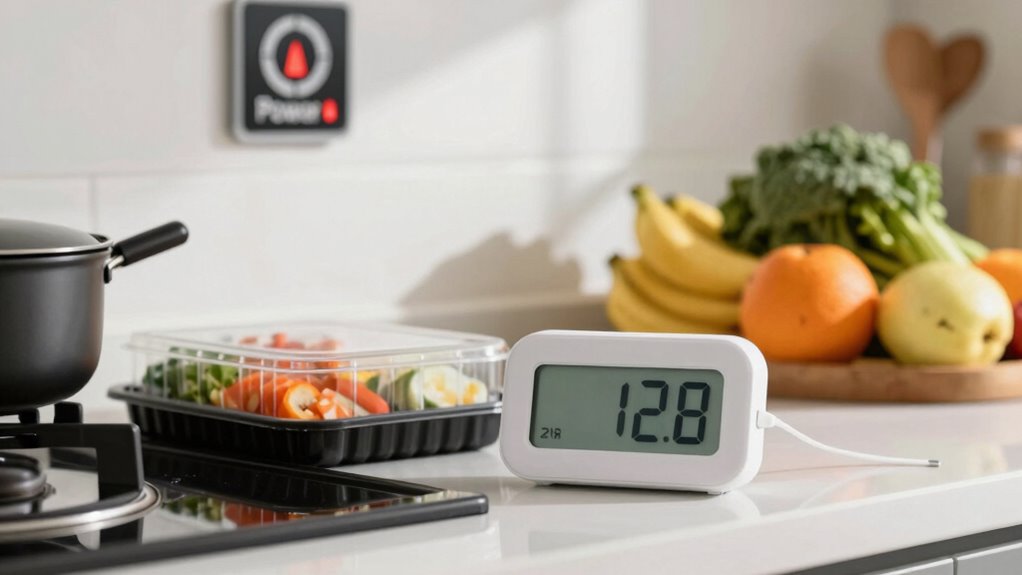

During a power outage, it’s vital to follow the 2-hour and 4-hour rules to keep your food safe. Perishable foods like dairy, meat, and leftovers should be discarded if they’ve been above 40°F for more than 2 hours. If your fridge stays cold below 40°F, your food might be safe longer, but if it warms up, you’ll need to act fast. To protect yourself, understanding how to manage your food during outages is essential — keep going to learn more.

Turn your quiet moments into listening time
- Thousands of audiobooks, podcasts and originals
- Listen on your phone, tablet or Echo — also offline
- Cancel anytime
Key Takeaways
- Perishable foods should be discarded if kept above 40°F for more than 2 hours to prevent bacteria growth.
- The 2-hour rule helps determine food safety; beyond this, foods may become unsafe to consume.
- If power is out longer, use a thermometer to check fridge and freezer temperatures before deciding to keep or discard food.
- Keeping refrigerator and freezer doors closed maintains cold temperatures and extends safe storage time during outages.
- The 4-hour rule advises consuming or refrigerating perishable foods within 4 hours of power loss to minimize health risks.

Power outages can quickly compromise food safety if you’re not prepared. When the power goes out unexpectedly, your first priority should be emergency preparedness—knowing exactly what steps to take to prevent food spoilage and keep your family safe. The key to effective food spoilage prevention during a blackout lies in understanding the 2-hour and 4-hour rules. These guidelines help you determine whether perishable foods can be safely kept or need to be discarded, minimizing waste and health risks.
As soon as the power fails, you should act quickly to assess your situation. Perishable foods like dairy, meat, seafood, and cooked leftovers typically stay safe at temperatures below 40°F (4°C). Without refrigeration, these foods generally remain safe for about two hours. Once that window passes, bacteria can multiply rapidly, increasing the risk of foodborne illnesses. If the outage lasts longer than two hours, it’s essential to evaluate whether the food is still safe to eat. Use a food thermometer if possible; if the internal temperature of the food has risen above 40°F for more than two hours, it’s best to discard it. This practice is grounded in the 4-hour rule, which states that perishable foods should be either consumed or refrigerated within four hours of losing power to prevent bacterial growth.
To improve your emergency preparedness, keep a cooler filled with ice or ice packs nearby, so you can transfer perishable items promptly if the power outage extends beyond two hours. A well-stocked cooler can keep food cold for an additional four hours or more, buying you valuable time. Place thermometers inside your refrigerator and freezer so you can monitor temperatures during outages. If your fridge is still cold, the contents are likely safe, but if the temperature rises above 40°F, you’ll need to act quickly. Remember, once food has been above 40°F for more than two hours, it’s safer to discard it rather than risk foodborne illness. Additionally, proper storage techniques can help maintain food safety standards during outages.
Additionally, avoid opening the refrigerator or freezer unnecessarily, as every opening allows cold air to escape and accelerates warming. Keep the doors closed as much as possible to maintain the cold temperature. Planning ahead by organizing your emergency kit with batteries, flashlights, and extra ice can greatly enhance your response. Staying informed about the estimated duration of outages through weather alerts or utility updates helps you decide whether to consume or discard perishable foods. Overall, understanding and applying these time-based rules—especially the 2-hour and 4-hour guidelines—are essential for food spoilage prevention during power outages. Proper emergency preparedness ensures you can protect your food, prevent waste, and keep your loved ones safe until power is restored.
Frequently Asked Questions
How Can I Tell if Frozen Food Has Thawed Completely?
You can tell if frozen food has thawed completely by checking its food temperature; if it’s above 40°F, it’s thawed. Use proper thawing methods like in the refrigerator, cold water, or microwave. Feel the texture—if it’s soft and no ice crystals remain, it’s fully thawed. Always guarantee your food stays within safe temperature ranges to prevent bacteria growth and keep it safe to eat.
Are There Safe Methods to Refreeze Partially Thawed Foods?
You can safely refreeze partially thawed foods if they’ve been kept at safe temperatures and haven’t been in the danger zone for over two hours. Follow proper refreezing procedures, and be aware that food texture changes may occur, affecting quality but not safety. If the food has an unusual odor or color, discard it. Always verify the food is cooked thoroughly after refreezing to eliminate any bacteria.
What Are the Signs of Spoiled Canned or Preserved Foods?
Did you know that 20% of food poisoning cases come from spoiled canned goods? To spot spoiled canned or preserved foods, rely on a visual inspection for bulging, leaks, or rust, and do a smell test—if it smells off, sour, or rancid, toss it. Don’t taste it, as bacteria can be present without visible signs. When in doubt, discard to avoid health risks.
How Do I Safely Clean up After a Power Outage?
After a power outage, you should prioritize hygiene practices when cleaning up. Wear gloves and use cleaning supplies like disinfectants to sanitize surfaces, especially in areas where spoiled food or water may have contaminated. Dispose of any spoiled food safely, and clean refrigerators and counters thoroughly to prevent bacteria growth. Confirm all utensils and surfaces are sanitized before preparing or handling food again, reducing health risks.
What Supplies Should I Keep Handy for Food Safety During Outages?
You should keep an emergency kit stocked with essentials like a thermometer, bottled water, and batteries for your flashlight. Also, maintain proper food storage supplies, such as coolers and ice packs, to keep perishables cold. These supplies help you manage food safety during outages, ensuring you can monitor temperatures and prevent spoilage. Being prepared with these items allows you to act quickly and keep your food safe until power is restored.
Conclusion
Remember, knowing the 2-hour and 4-hour rules can prevent foodborne illnesses during power outages. For example, if your freezer loses power, and it’s been more than 4 hours, you should discard perishable items to stay safe. Staying vigilant and acting quickly can protect your health and prevent waste. So, keep these guidelines in mind, and always check food temperatures before deciding what to keep or toss. Your health depends on it!
Evergreen bestsellers Picks
bestsellers
As an affiliate, we earn on qualifying purchases.