

Natural light plays a essential role in boosting your productivity by improving your mood, alertness, and cognitive function. It helps regulate your circadian rhythm, keeping you awake and focused during the day while supporting better sleep at night. Exposure to natural light also increases serotonin and dopamine levels, enhancing motivation and happiness. To maximize these benefits, optimize window placement and leverage strategies to bring more daylight into your space. Keep exploring to discover how you can harness natural light for greater well-being.
Key Takeaways
- Natural light regulates circadian rhythms, improving alertness, mood, and sleep quality, which enhances overall productivity.
- Exposure to natural light boosts serotonin and dopamine levels, increasing motivation, focus, and cognitive function.
- Proper placement of windows and reflective surfaces maximizes daylight in indoor spaces, reducing reliance on artificial lighting.
- Natural light supports vitamin D synthesis, contributing to better mood and physical health, indirectly boosting productivity.
- Limiting artificial light exposure, especially in the evening, helps maintain circadian health and improve sleep patterns essential for productivity.

Caromolly Light Therapy Lamp, Happy Lamp 10,000 LUX UV Free with 3 Color Temperature & 5 Brightness Level, Full Spectrum Light Wood Base Round Flaxen Fabric Shade for Home, Office, 4" × 8.4”
Light Therapy Lamp 10,000 lux: Linen shade designed to provide bright but not dazzling, stable, and non-flickering lighting….
As an affiliate, we earn on qualifying purchases.
As an affiliate, we earn on qualifying purchases.
How Natural Light Boosts Mood and Motivation
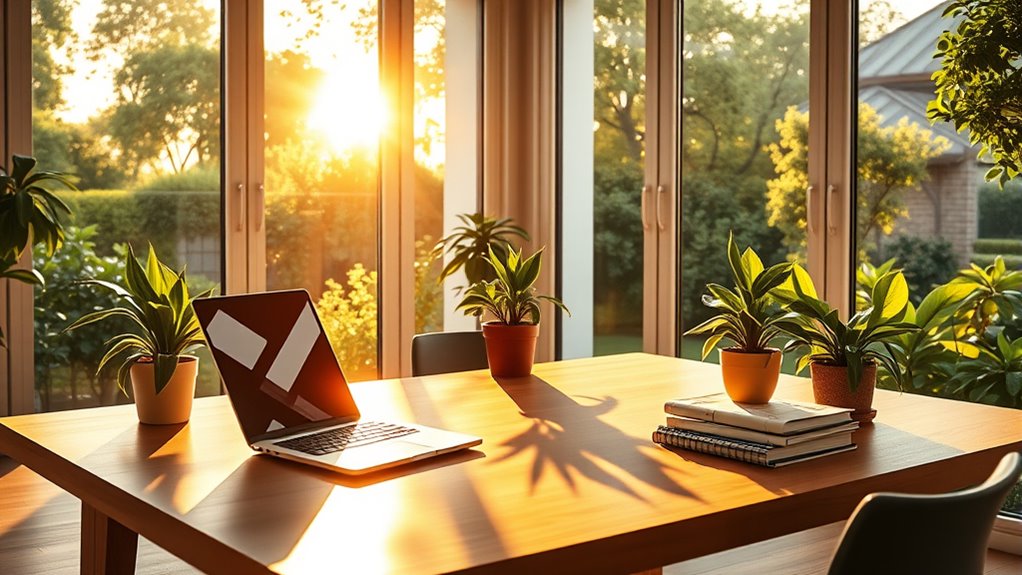
Natural light has a powerful effect on your mood and motivation. When sunlight floods your space, it triggers your brain to produce serotonin, the hormone linked to happiness and focus. This boost helps you feel more alert and positive throughout the day. Natural light also regulates your circadian rhythm, improving your sleep patterns and making you more energized during waking hours. When you’re exposed to sunlight, you’re less likely to experience feelings of depression or fatigue. The brightness lifts your spirits and encourages you to stay engaged with your tasks. Incorporating natural light into your environment isn’t just about aesthetics — it’s a simple way to elevate your overall mood and drive. Understanding circadian rhythms can help you optimize your exposure to natural light for maximum benefit. Additionally, light exposure guidelines can assist in determining the ideal amount and timing of sunlight for optimal health. Recognizing the importance of color temperature adjustments can further enhance the positive effects of natural light on your well-being.

Neporal Full Spectrum Light Bulb 15W LED=100W, 5000K Flicker-Free Daylight, UV-Free & High CRI & Eye-Caring Natural Sunlight Light Bulbs for Humans, Home, Office, Plant – E26/E27, 30000H Lifespan,3PK
🔆 Mimic Natural Sunlight for Daily Energy: Neporal full spectrum light bulb mimics real 5000K daylight using UV-free…
As an affiliate, we earn on qualifying purchases.
As an affiliate, we earn on qualifying purchases.
The Science Behind Sunlight and Cognitive Function

Sunlight influences brain activity by affecting the production of key neurotransmitters and hormones that are essential for cognitive function. When you’re exposed to natural light, your body increases serotonin levels, which boost alertness, focus, and mood. Serotonin production is directly stimulated by light exposure, promoting a positive mental state. Similarly, exposure to natural light has been linked to improved mental clarity, supporting sharper thinking and better decision-making. Sunlight also plays a crucial role in hormonal regulation, which impacts your overall mental well-being. Additionally, sunlight helps regulate melatonin production, improving your sleep quality—crucial for memory and decision-making. Exposure to light also stimulates the release of dopamine, enhancing motivation and reward processing. These chemical changes directly impact your ability to concentrate, learn, and solve problems. Scientific studies confirm that people working in well-lit environments experience sharper cognitive performance and reduced mental fatigue. Moreover, light exposure can help reduce stress levels, further supporting mental resilience. Additionally, neurotransmitter regulation plays a vital role in maintaining mental resilience and overall brain health. In short, sunlight doesn’t just brighten your day; it actively enhances your brain’s capacity to function at its best.

Haton Window Privacy Film One Way Window Tint for Home, Sun UV Blocking Heat Control Reflective Mirror Film, No Glue Static Cling See Out Not in Glass Door Covering, Silver, 17.5" x 78.7"
Heat Control, Save on Energy – BillsTired of high AC costs? Our reflective window film blocks external heat…
As an affiliate, we earn on qualifying purchases.
As an affiliate, we earn on qualifying purchases.
Optimal Placement of Windows and Workstations

To maximize the benefits of daylight, careful placement of windows and workstations is essential. Position your desks near windows that face east or south to receive consistent, indirect sunlight throughout the day. Avoid placing screens directly in front of windows to reduce glare, which can cause eye strain and decrease productivity. Instead, set workstations perpendicular to windows, allowing natural light to illuminate your workspace evenly. Keep windows unobstructed, removing heavy curtains or furniture that block light. If possible, orient workstations to minimize shadows and harsh contrasts, which can cause visual fatigue. Think about the natural flow of light and how it shifts during the day, adjusting your setup accordingly. Proper placement ensures you harness daylight’s benefits while maintaining comfort and efficiency. Incorporating natural light management techniques can further enhance your workspace ambiance and productivity, especially by understanding solar angles for optimal light exposure. Additionally, considering light diffusion can help distribute natural light more evenly, reducing glare and enhancing comfort. Being aware of natural light patterns can aid in designing a workspace that optimally uses daylight throughout the year and maximize productivity.
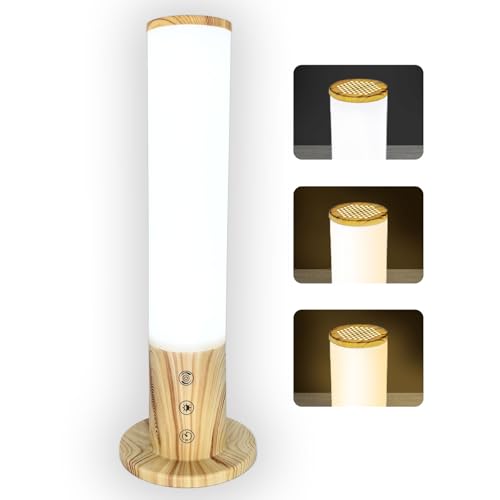
VUSIHOO Light Therapy Lamp 10,000 Lux Happy Sunlight Lamps UV-Free with 3 Color Temperatures, Adjustable Brightness,Timer & Memory Function, Sun Lamp, Full Spectrum Light for Home, Office
Our Light Therapy Lamp uses wood grain design, warm and artistic beauty, accompany you day and night, warm…
As an affiliate, we earn on qualifying purchases.
As an affiliate, we earn on qualifying purchases.
Tips for Maximizing Natural Light in Your Space
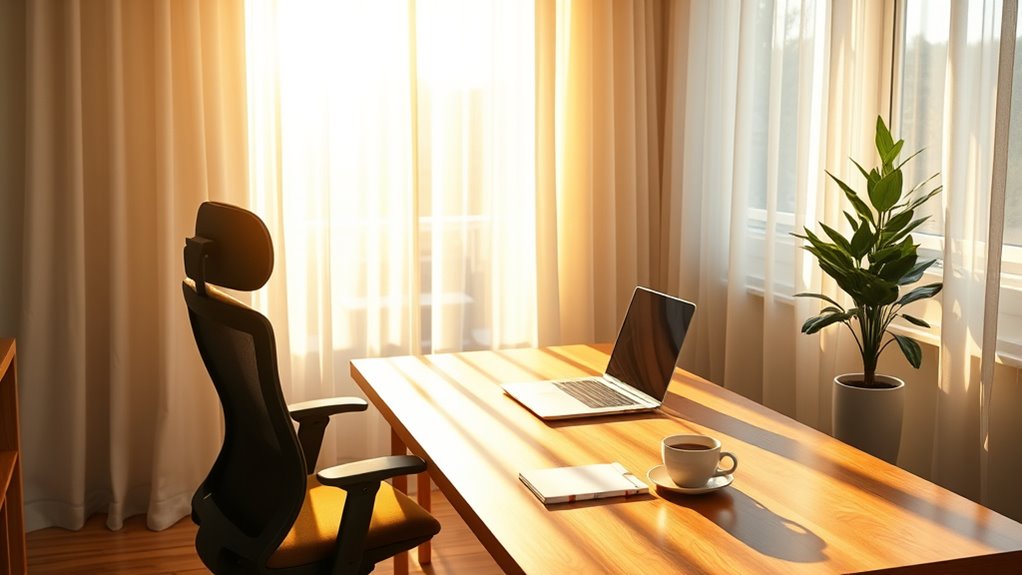
Looking for simple ways to boost the natural light in your space? Start by keeping windows clean—dirt and dust can block sunlight. Use light-colored or reflective surfaces like mirrors, white walls, and glossy furniture to bounce light around the room. Rearrange furniture to avoid blocking windows and let light flow freely. Consider installing sheer curtains or blinds that open fully during the day, allowing maximum sunlight without glare. Trim outdoor plants or trees that shade your windows. If possible, add skylights or solar tubes to bring in additional light from above. Keep window areas clutter-free to prevent obstructions. Additionally, choosing appropriate window treatments can help optimize daylight exposure. These small adjustments can make a big difference, helping you enjoy more natural light and create a brighter, more productive environment. Incorporating natural light optimization strategies can also contribute to energy savings and overall wellbeing. For example, window placement plays a crucial role in maximizing sunlight entry and should be considered when designing or renovating a space. Paying attention to dark psychology tactics in your environment can also help you create a space that fosters positive mood and focus.
The Impact of Light on Sleep and Overall Well-Being
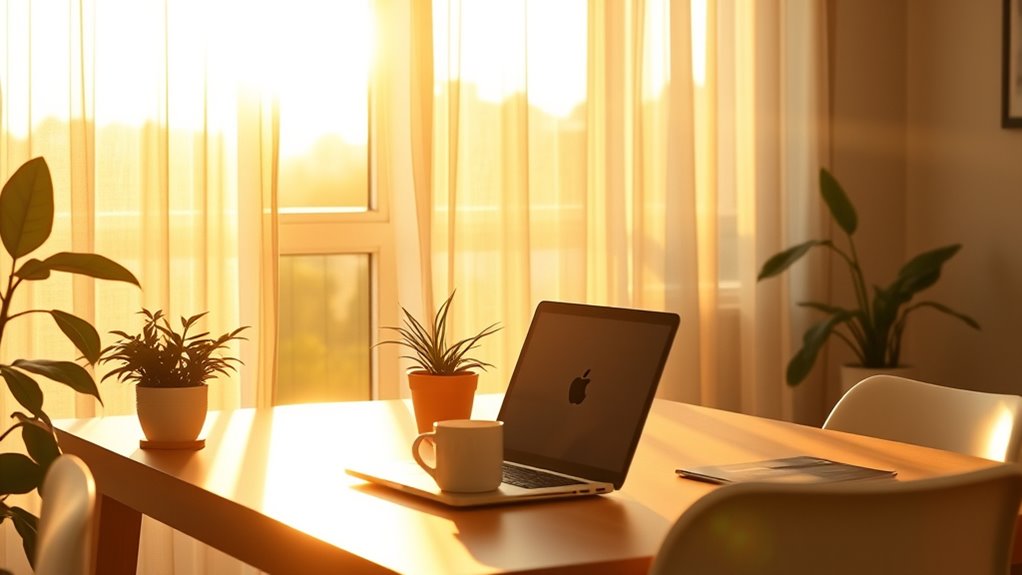
Maximizing natural light during the day not only boosts productivity but also plays a vital role in regulating your sleep and overall well-being. Exposure to natural light helps maintain your circadian rhythm, ensuring you feel alert during the day and sleepy at night. When your body receives sufficient light during daylight hours, it suppresses melatonin production, promoting wakefulness. Conversely, reduced light in the evening signals your body to produce melatonin, helping you fall asleep more easily. Consistent natural light exposure can improve mood, reduce stress, and enhance cognitive function. Proper light exposure can also influence vitamin D synthesis, which is important for overall health. Neglecting this exposure, on the other hand, can lead to sleep disturbances, fatigue, and even mood disorders. Regular natural light exposure strengthens your biological clock, leading to more consistent sleep patterns and better health outcomes. Additionally, air quality can influence sleep quality, as pollutants and allergens in the environment may disrupt restful sleep and impact overall health. Poor indoor air quality levels can further exacerbate sleep issues and reduce overall well-being. Incorporating light management strategies, such as opening curtains or spending time outdoors, can significantly improve your sleep quality and daily functioning.
Comparing Natural Light With Artificial Lighting
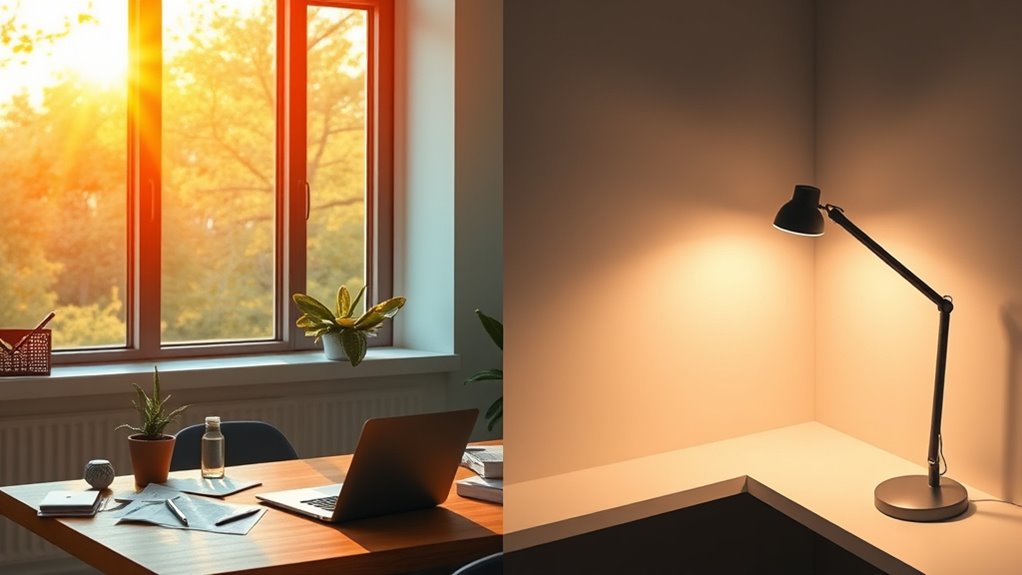
Natural light surpasses artificial lighting in supporting your health and productivity because it provides a full spectrum of wavelengths that our bodies are naturally tuned to. Sunlight helps regulate your circadian rhythm, boosting alertness and mood throughout the day. In contrast, artificial lights often lack the broad spectrum, especially the blue wavelengths that influence your sleep-wake cycle. While artificial lighting can be controlled for brightness and color temperature, it rarely mimics natural light’s dynamic qualities. Prolonged exposure to artificial light, especially in the evening, can disrupt your sleep patterns and reduce overall well-being. Natural light encourages a more balanced and energizing environment, helping you stay focused and productive. Additionally, adaptive lighting systems can simulate natural daylight patterns indoors, further supporting circadian health. The presence of natural lighting in workspaces has been linked to increased productivity and overall well-being. Overall, daylight offers a more holistic, health-promoting lighting solution compared to most artificial options.
Practical Strategies for Incorporating More Daylight
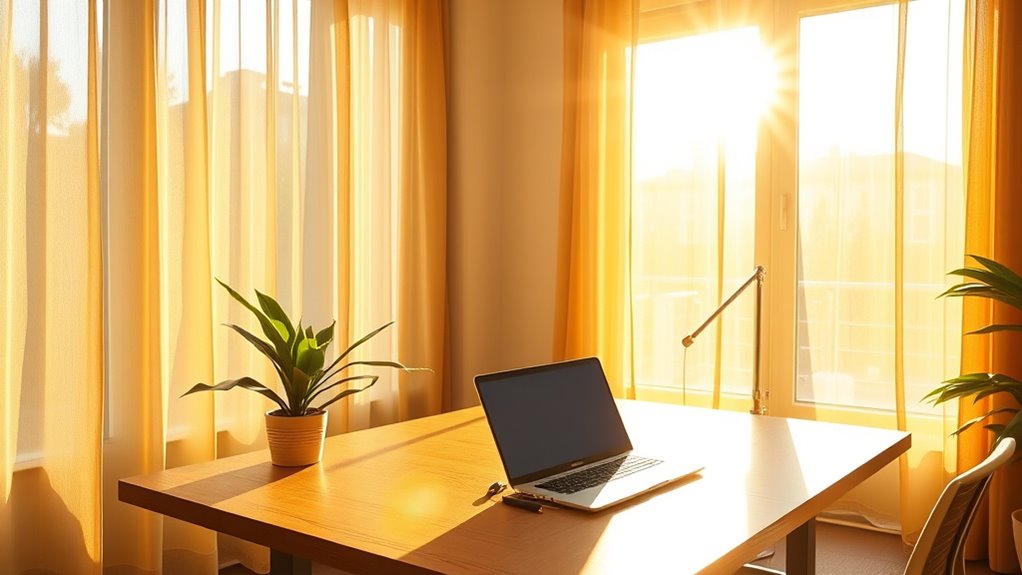
To incorporate more daylight into your daily environment, start by arranging your workspace near windows or in rooms with ample natural light. This simple change can boost your mood and focus throughout the day. You can also consider using light-colored walls and reflective surfaces to maximize sunlight. Keep window treatments minimal to prevent blocking light, and use mirrors strategically to bounce daylight into darker corners. Additionally, schedule tasks that require high concentration during peak sunlight hours. Finally, take regular breaks outside to recharge and benefit from natural light directly.
Maximize natural light with windows, reflective surfaces, and outdoor breaks for a brighter, more energized workspace.
- Choose workspaces with large, unobstructed windows
- Use light, airy curtains or blinds that can be pushed aside
- Keep your furniture low to avoid blocking light
- Incorporate reflective surfaces like glass or mirrors
- Plan outdoor breaks during sunny parts of the day
Frequently Asked Questions
How Does Natural Light Influence Creativity in the Workplace?
Natural light boosts your creativity by enhancing your mood and reducing fatigue. When you’re in a well-lit space, your brain stays alert and engaged, making it easier to think outside the box. You’ll find yourself more inspired and motivated to generate ideas. So, if you want to boost your creativity at work, try to maximize natural light in your workspace—it’s a simple change that can make a big difference.
Are There Specific Types of Natural Light That Are More Beneficial?
Have you ever wondered if some natural light types are better? Bright, indirect sunlight is generally most beneficial, as it reduces glare and eye strain while boosting alertness. Morning light, rich in blue wavelengths, can enhance your focus, while warm afternoon light creates a calming atmosphere. So, next time you’re planning your workspace, consider how different natural light qualities can optimize your comfort and productivity. Isn’t that worth exploring?
How Can Natural Light Reduce Energy Costs in Buildings?
You can reduce energy costs in buildings by maximizing natural light through strategic window placement, large windows, and skylights. This allows you to rely less on artificial lighting during the day, lowering electricity bills. Additionally, natural light helps warm your space naturally, reducing heating costs in colder months. By optimizing your building’s design to harness sunlight effectively, you save money and create a more sustainable environment.
What Are Safety Considerations When Increasing Natural Light Exposure?
When increasing natural light exposure, you should consider glare, which can cause discomfort and reduce visibility. guarantee windows are properly shaded or have adjustable blinds. Be mindful of heat gain, which may increase cooling costs, and install UV filters to protect skin and furnishings. Regularly maintain window cleanliness to maximize light entry, and be cautious of potential hazards like broken glass or structural issues during installation.
Can Natural Light Help in Managing Seasonal Affective Disorder (SAD)?
You might find it amusing that something as simple as natural light can lift your mood during bleak winter days. Yes, natural light helps manage seasonal affective disorder (SAD) by boosting your serotonin and regulating your sleep patterns. So, instead of relying solely on medication, soaking up sunlight can be a surprisingly effective, free remedy. Just make sure to get outside during daylight hours and enjoy the sunshine whenever you can.
Conclusion
Embracing natural light is like opening a window to better your life—you’ll notice your mood, motivation, and overall well-being flourish. By optimizing your space for sunlight, you release a powerful tool that fuels productivity and enhances your health. Don’t let shadows hold you back; instead, let daylight be your guiding star toward a brighter, more energized you. After all, the sun isn’t just outside—it’s waiting to brighten your day from within.