
Turn your quiet moments into listening time
- Thousands of audiobooks, podcasts and originals
- Listen on your phone, tablet or Echo — also offline
- Cancel anytime
Set up a comfortable meditation seat
This guide helps beginners choose and use a meditation cushion and mat for a stable seated practice. You will compare basic cushion and mat options, adjust the seat to your body, and check your posture before beginning. Allow about 20-30 minutes to select and set up your space, then start with a 10-20 minute session. You do not need special flexibility or prior meditation experience.

hunnidspace Zafu and Zabuton Meditation Cushion Set, Buckwheat Hull and Memory Foam, Navy Blue
- ✔ Set contents: Zafu and zabuton (2 cushions)
- ✔ Filling: Buckwheat hulls and shredded memory foam
- ✔ Cover: Polyester velvet

Leewadee Meditation Cushion Set with Kapok Zafu and Roll-Up Zabuton Mat
- ✔ Included pieces: Zafu cushion and zabuton mat
- ✔ Filling: 100% natural kapok fiber
- ✔ Cover: 100% polyester

Hihealer Velvet Meditation Cushion with Buckwheat Filling
- ✔ Brand: Hihealer
- ✔ Filling: Buckwheat hulls
- ✔ Cover: Velvet, removable and machine washable
Difficulty: Beginner | Time: 20-30 minutes for choosing and setup; allow 10-20 minutes for a first session
hunnidspace Zafu and Zabuton Meditation Cushion Set, Buckwheat Hull and Memory Foam, Navy Blue
The hunnidspace set earns our top spot because it combines a raised buckwheat zafu with a shredded memory foam zabuton. That gives us a more complete floor arrangement than the Hihealer, which supplies a round cushion without a mat. The two filling types also create a useful distinction within the set: the zafu provides firmer seated support, while the square cushion adds a softer layer beneath the body.Both cushions have removable filling, so we can adjust firmness and height to suit our posture and floor. This flexibility is an advantage over Leewadee’s firm kapok filling, which is described as needing a break-in period. The covers are removable and machine washable, making routine care more straightforward than Leewadee’s spot-clean-only fabric. Mandala embroidery gives the navy covers a decorative finish, although appearance matters less than the fit of the set to our practice.There is a clear limit: the zabuton is listed as 3 inches thick. That may not offer enough cushioning for sensitive knees, ankles, or a particularly hard floor. We should also account for the square cushion’s 32-by-32-inch dimensions when planning storage. For buyers who want a two-piece setup they can tune, hunnidspace is the most versatile choice here; those needing a thicker or more portable mat may prefer Leewadee.
Pros:
- Pairs firm buckwheat zafu support with a softer memory foam floor cushion.
- Removable filling in both pieces lets users adjust height and firmness.
- Removable, machine-washable covers simplify routine care.
- Provides a two-piece floor setup for meditation, yoga, or seated floor activities.
Cons:
- The zabuton’s listed 3-inch thickness may feel limited on hard floors.
- The 32-by-32-inch floor cushion takes more storage space than a single zafu.
- Covers are specified for tumble drying only on low heat.
Best for: Meditators who want a matching zafu and floor cushion with adjustable filling and washable covers.
Not ideal for: Anyone who needs a particularly thick mat for sensitive joints or wants a compact cushion-only setup.
Bottom line: For an adjustable, washable two-piece meditation setup, hunnidspace offers the broadest fit in this group, provided its mat thickness suits our floor and joints.
“For an adjustable, washable two-piece meditation setup, hunnidspace offers the broadest fit in this group, provided its mat thickness suits our floor and joints.”
Leewadee Meditation Cushion Set with Kapok Zafu and Roll-Up Zabuton Mat
Leewadee makes the most sense when our priority is a traditional-feeling set that covers both the seat and the floor. Its firm kapok zafu is intended to lift the pelvis, while the zabuton cushions the knees and ankles. Unlike the hunnidspace set, whose filling can be removed to alter firmness, Leewadee emphasizes a firm, ready-made feel. That may appeal to people who want a stable seat without adjusting fill, though the product notes that the kapok may need a few sessions to break in.Portability is a defining advantage. The roll-up tie and carry handle make it easier to bundle the mat and transport the cushion than a set with a large square floor piece and no stated carry features. At 3 pounds, the listed item weight also supports occasional moving between rooms or practice locations. Hihealer is simpler to store as a single cushion, but it does not provide Leewadee’s dedicated knee and ankle layer.Care is the main compromise. The polyester cover is listed for spot cleaning with a damp cloth and air drying, rather than machine washing like the covers on hunnidspace and Hihealer. The dimensions also appear in several forms in the supplied details, so we should confirm the intended mat and set measurements before planning a tight storage space. Choose this set for a firm, portable cushion-and-mat pairing; skip it if easy laundering or adjustable firmness is essential.
Pros:
- Zafu lifts the pelvis for cross-legged, lotus, or seiza-style sitting.
- Zabuton adds cushioning under knees and ankles.
- Roll-up tie and carry handle support transport and storage.
- Natural kapok filling provides a firm seated feel.
Cons:
- Cover requires spot cleaning and air drying rather than machine washing.
- Firm filling may need a break-in period.
- Supplied dimensions are listed in multiple forms, making fit worth checking.
Best for: Practitioners who want a firm kapok seat and a mat that rolls up for storage or transport.
Not ideal for: Buyers who need machine-washable covers, adjustable filling, or a softer seat from the outset.
Bottom line: Leewadee is the stronger pick for a firm, portable cushion-and-mat set, as long as spot cleaning and a break-in period fit our routine.
“Leewadee is the stronger pick for a firm, portable cushion-and-mat set, as long as spot cleaning and a break-in period fit our routine.”
Hihealer Velvet Meditation Cushion with Buckwheat Filling
Hihealer is the straightforward option for readers who mainly need a raised seat. Its buckwheat hull filling is described as adjustable, giving us a way to tune firmness and support. The removable velvet cover is machine washable, a practical care advantage over Leewadee’s spot-clean-only set. Unlike hunnidspace, Hihealer does not include a separate zabuton, so it is a better fit for an existing mat or a practice where extra knee and ankle padding is not needed.The stated design is intended for meditation as well as yoga, reading, and resting. That flexibility may suit someone who wants one cushion to move between floor activities. Its role in this lineup is deliberately narrower than the two complete sets: we get a seat, not a coordinated seat-and-mat arrangement. If we often sit on a hard floor or want cushioning beneath our knees, hunnidspace or Leewadee is the more complete purchase.We should pay close attention to the listed 11-by-5-inch dimensions. Those measurements may not suit every body or sitting position, and the supplied information does not clarify a larger footprint. The two-unit count is also listed in the specifications, so buyers should confirm what is included and how it matches their needs. Hihealer works best when compact simplicity and a washable cover matter more than a dedicated floor mat.
Pros:
- Buckwheat hull filling offers adjustable firmness and stable support.
- Removable velvet cover is machine washable.
- Designed for meditation, yoga, reading, and resting.
- Single-cushion format is simpler than storing a two-piece set.
Cons:
- Listed 11-by-5-inch dimensions may not suit every user.
- No separate zabuton is included for knee and ankle cushioning.
- The supplied unit count of two may need clarification before purchase.
Best for: Buyers who want an adjustable buckwheat seat for meditation and other floor activities, especially if they already own a mat.
Not ideal for: Anyone seeking a complete zafu-and-zabuton setup or who needs a generously sized seating surface.
Bottom line: Hihealer is a practical cushion-only choice when we already have floor padding, but the listed dimensions make fit a key consideration.
“Hihealer is a practical cushion-only choice when we already have floor padding, but the listed dimensions make fit a key consideration.”
As an Amazon Associate we earn from qualifying purchases.
What You’ll Need
Tools & Materials:
- A meditation cushion, firm pillow, or folded blanket
- A mat, rug, or nonslip surface
- Comfortable clothing that allows your hips and knees to move
- A timer or clock, if you want to time the session
Knowledge:
- No meditation experience is required
- Be able to sit on the floor or choose the chair alternative if floor sitting is uncomfortable
Choose a quiet, level spot with enough room to extend your legs and change position. If you have persistent knee, hip, back, or circulation concerns, use a chair or ask a qualified health professional about suitable positions. Do not force a cross-legged posture or sit through sharp pain.
Before You Start
Decide whether your main priority is floor comfort, posture, portability, or easy cleaning. A cushion raises the hips; a mat cushions the knees and ankles and helps define the sitting area. They serve different purposes, so a mat alone may not make floor sitting comfortable. Start with household items if you are unsure what height or firmness suits you. Keep the floor surface dry and clear of objects that could press into your legs.
Step-by-Step Instructions
Step 1: Choose a sitting position
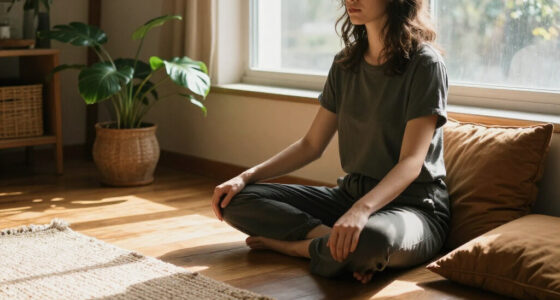
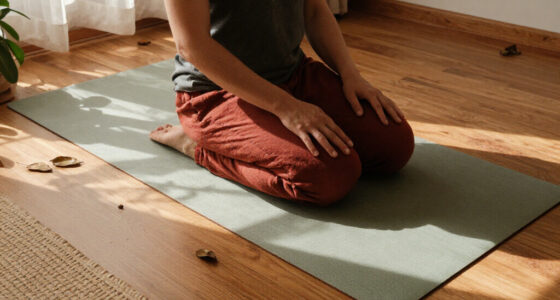
Try a comfortable position before selecting equipment. Sit cross-legged on the floor, kneel with a cushion between your legs, or sit upright on a chair. Rest your hands on your thighs and notice whether your knees, hips, or back feel strained. Select a position you can hold without forcing your joints.
Tip:If sitting cross-legged causes discomfort, try a chair or kneeling position. Meditation does not require sitting in a particular pose.
Check: You can sit for a few minutes with steady breathing and without sharp pain or a strong urge to shift because of joint pressure.
Step 2: Select a cushion height and filling
Choose a cushion that raises your hips above your knees when you sit. Common options include round cushions, crescent cushions, and firm rectangular cushions. A round cushion suits many cross-legged positions; a crescent shape can provide room for the ankles; a rectangular cushion can work for kneeling. Buckwheat hulls tend to feel firm and adjustable, while foam or cotton fillings may feel softer or more uniform. Check that the cover can be removed if you want to wash it.
Tip:Do not choose by appearance alone. A very soft cushion may flatten under your weight and stop supporting your hips.
Check: When seated, your hips are slightly higher than your knees and the cushion stays supportive rather than collapsing or rocking.
Step 3: Choose a mat or floor layer
Pick a mat that protects the areas touching the floor. A thin meditation mat or folded blanket can reduce pressure under your ankles and knees. A thicker mat may feel more comfortable on a hard floor, but check that the cushion does not wobble on it. If the floor is already soft and stable, a mat may not be necessary. For a kneeling posture, place padding beneath the knees and ankles.
Tip:Use a nonslip layer when the floor is smooth. Avoid stacking soft, loose layers that slide as you move.
Check: The mat lies flat, the cushion remains stable, and your knees or ankles have enough padding for the planned session.
Step 4: Arrange the cushion and mat
Place the mat on a level floor and center the cushion on it. Sit near the front edge of the cushion rather than sinking into its middle. If the cushion has a shaped or higher edge, turn it until the shape supports your preferred leg position. For kneeling, place the cushion between your lower legs and pad the knees as needed. Leave enough room to stand up safely.
Tip:Test the setup before starting your timer. Adjust the cushion angle or mat position if either shifts when you sit down.
Check: Your seat feels balanced, and the cushion and mat stay in place when you settle into position.
Step 5: Adjust your posture
Sit tall without stiffening your back. Let your pelvis tilt slightly forward, lengthen through the crown of your head, and relax your shoulders. Rest your hands comfortably on your thighs or in your lap. Allow your knees to lower toward the floor, but do not press them down. Keep your jaw relaxed and adjust your position if you notice numbness, sharp pain, or increasing strain.
Tip:If your lower back rounds, raise the cushion or sit closer to its front edge. If your knees feel strained, use more padding or switch to a chair.
Check: You can breathe comfortably, your spine feels upright but not rigid, and no part of your body is being forced into position.
Step 6: Start a short session and reassess
Set a timer for 10-20 minutes and begin your practice. Keep your attention on your chosen meditation focus, such as the breath. If discomfort builds, change position or end the session; do not treat pain as something you must endure. Afterward, note where you felt pressure and adjust cushion height, mat padding, or posture before your next session.
Tip:Beginners often do better with several short, comfortable sessions than with one long session that leaves them sore.
Check: You complete the planned session or make a deliberate adjustment when discomfort arises, then can identify whether the setup needs a change.
Common Mistakes to Avoid
- Starting with a long session before checking pressure points. — Test the setup for a few minutes, then begin with a short timed session and adjust based on how your body responds.
Troubleshooting
Problem: Your legs become numb or tingly.
Solution: Change position promptly and allow sensation to return. Reduce pressure beneath the legs, shorten the next session, or use a chair; seek medical advice if numbness continues.
What Success Looks Like
Your cushion and mat remain stable, your hips are supported, and you can maintain a relaxed upright posture while breathing comfortably. Your knees, ankles, and back are not under sharp or increasing pressure. After a short session, you can name any adjustment needed, such as more height, firmer support, extra padding, or a different sitting position.
Next Steps
After each session, note how long you sat and whether any area felt uncomfortable. Change one part of the setup at a time so you can tell what helped. Air out the cushion if its care instructions recommend it, and wash the cover according to its label. If the filling shifts or compresses, redistribute or replace it. Build session length gradually only while your posture remains comfortable.
Frequently Asked Questions
Do I need both a meditation cushion and a mat?
No. A cushion raises and supports your hips, while a mat pads the areas that touch the floor. Try a cushion alone on a soft surface or add a mat if your knees and ankles need padding.
How high should a meditation cushion be?
Use enough height to let your hips sit slightly above your knees without making you feel perched or unstable. Adjust the filling or add a folded blanket, then check whether your back can stay comfortably upright.
Can I meditate on a regular pillow?
Yes, for a trial session. Choose a firm pillow that does not flatten too much under your weight. If it shifts, collapses, or leaves your hips low, try a firmer cushion or folded blanket.
What should I do if floor sitting hurts?
Stop the position that causes pain and try a chair with both feet supported, or use another comfortable posture. Persistent or sharp pain is a reason to seek qualified medical guidance.